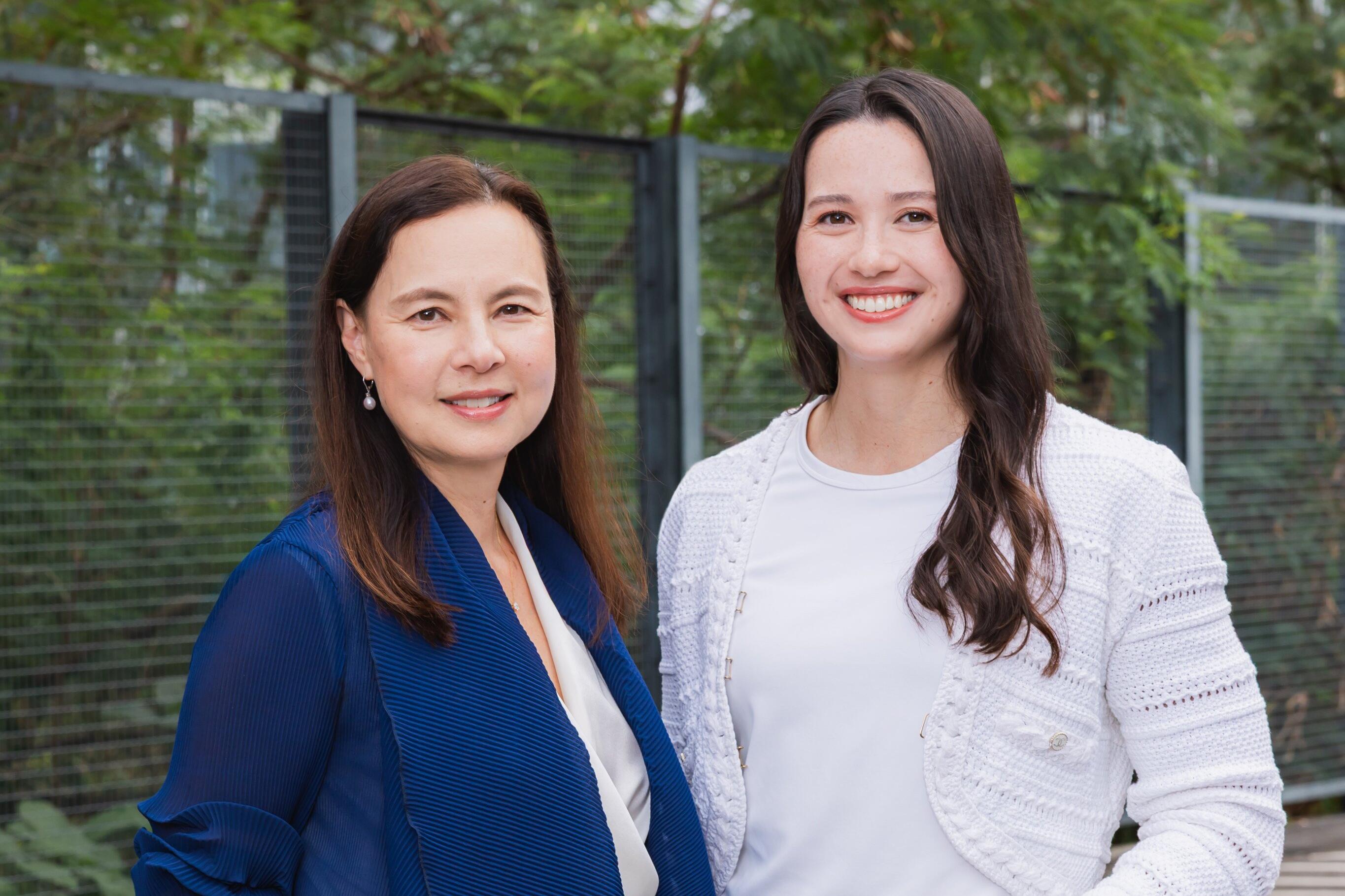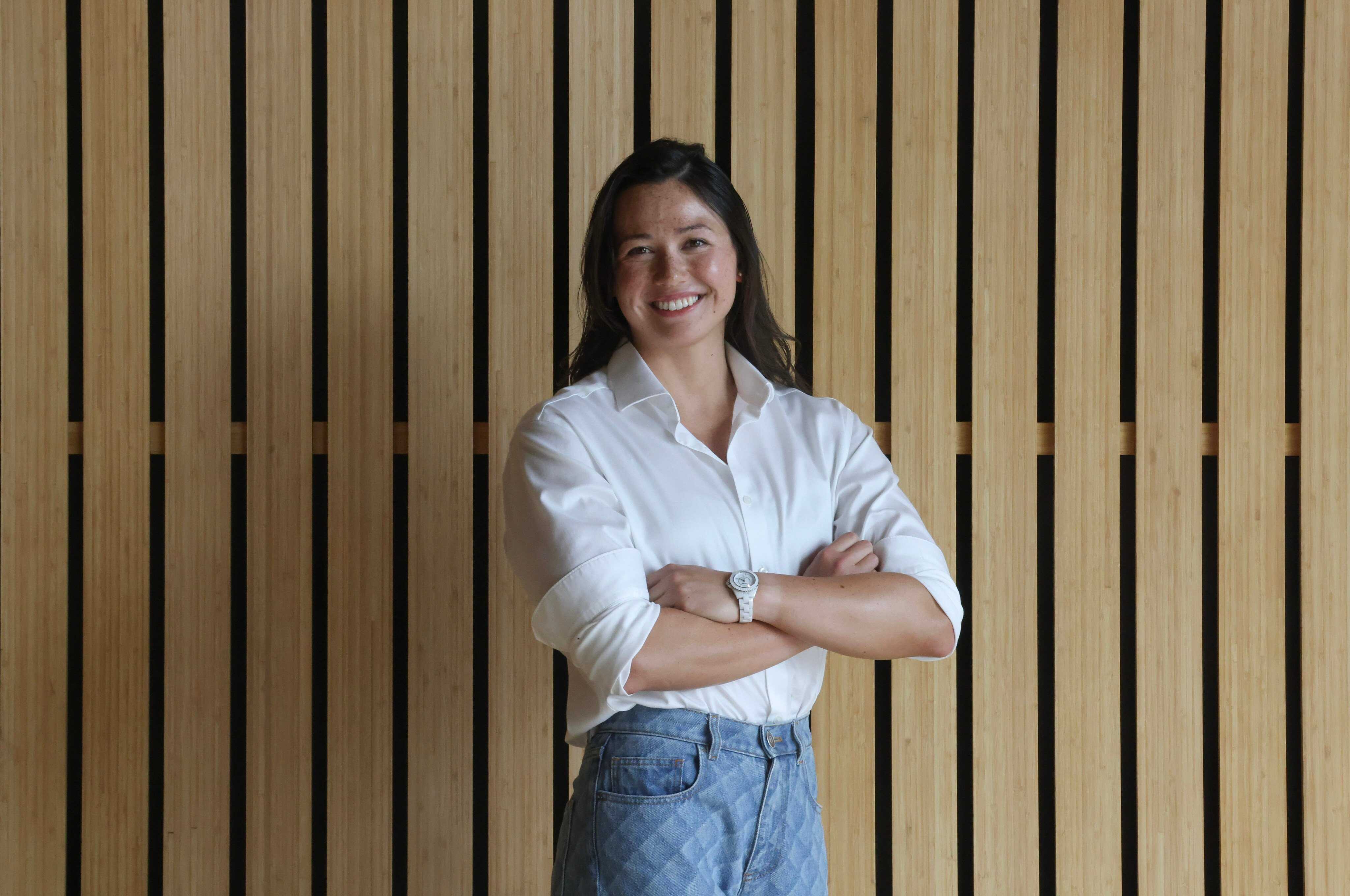
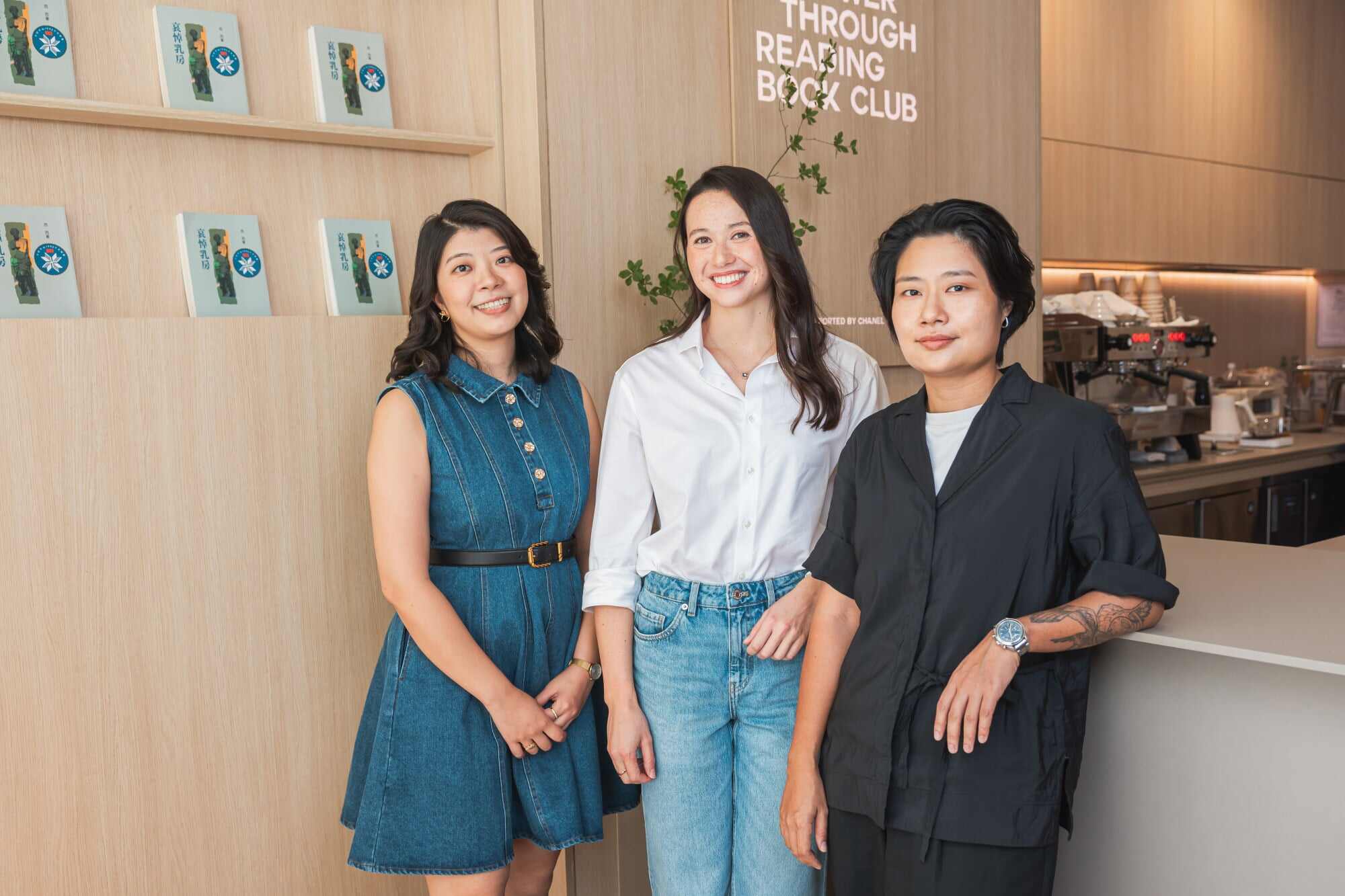
Hong Kong Olympic swimmer Siobhan Haughey’s latest community book club gathering focused on empowering women while nurturing critical thinking, self-confidence and meaningful literary dialogue.
The project, titled Empower Through Reading, was launched three years ago in partnership with Chanel and aims to foster consistent reading habits and self-expression in young Hongkongers.
Although Haughey has spearheaded the initiative since its inception, this summer gathering marked the first time she stepped up as the sole host and lead moderator for three sessions.
“Balancing my own thoughts while keeping time, reading the room and steering the flow was a completely new challenge, but it pushed me out of my comfort zone in the best way possible,” she said.
The latest student sessions were specifically tailored to provide young women with a safe space to share their distinct life perspectives through literature.
“We actively encouraged open discussion to help nurture confidence and compassion,” Haughey said. “We built an environment where respectful disagreement was welcomed because true community grows when people feel safe to voice diverse opinions and explore meaningful discourse.”
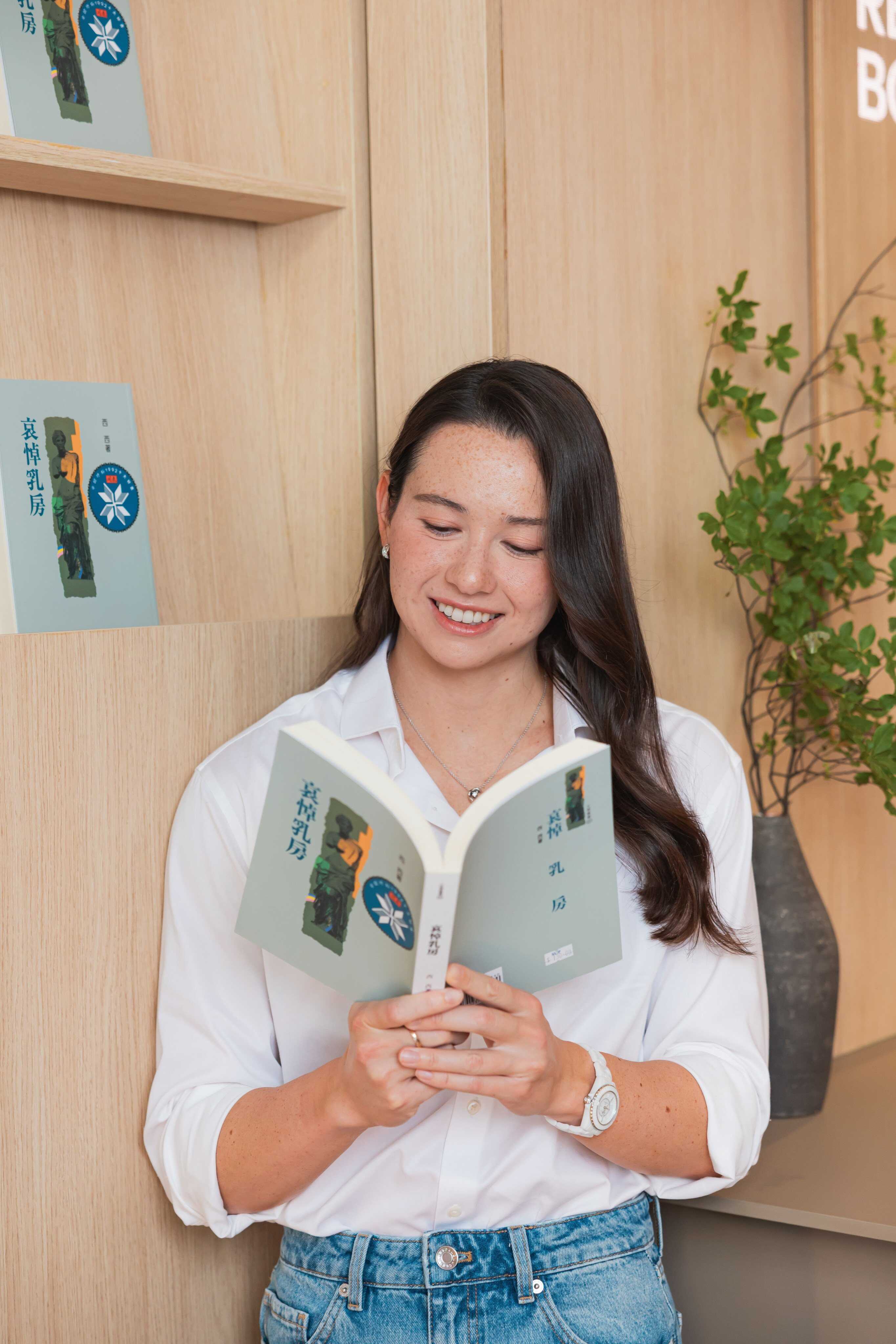
Around 100 participants attended the sessions, where Haughey guided discussions on two featured texts: Mourning a Breast by the late Hong Kong author Xi Xi and Lessons in Chemistry by American novelist Bonnie Garmus.
Stories that transcend time
Student representatives Inaaya Saeed, 17, a pupil at Pok Oi Hospital Tang Pui King Memorial College, and Hayden Ma, 17, a student at the Academy of Innovation (Confucius Hall), sat alongside Haughey to share how they were inspired by Mourning a Breast – writer Xi Xi’s memoir about battling breast cancer.
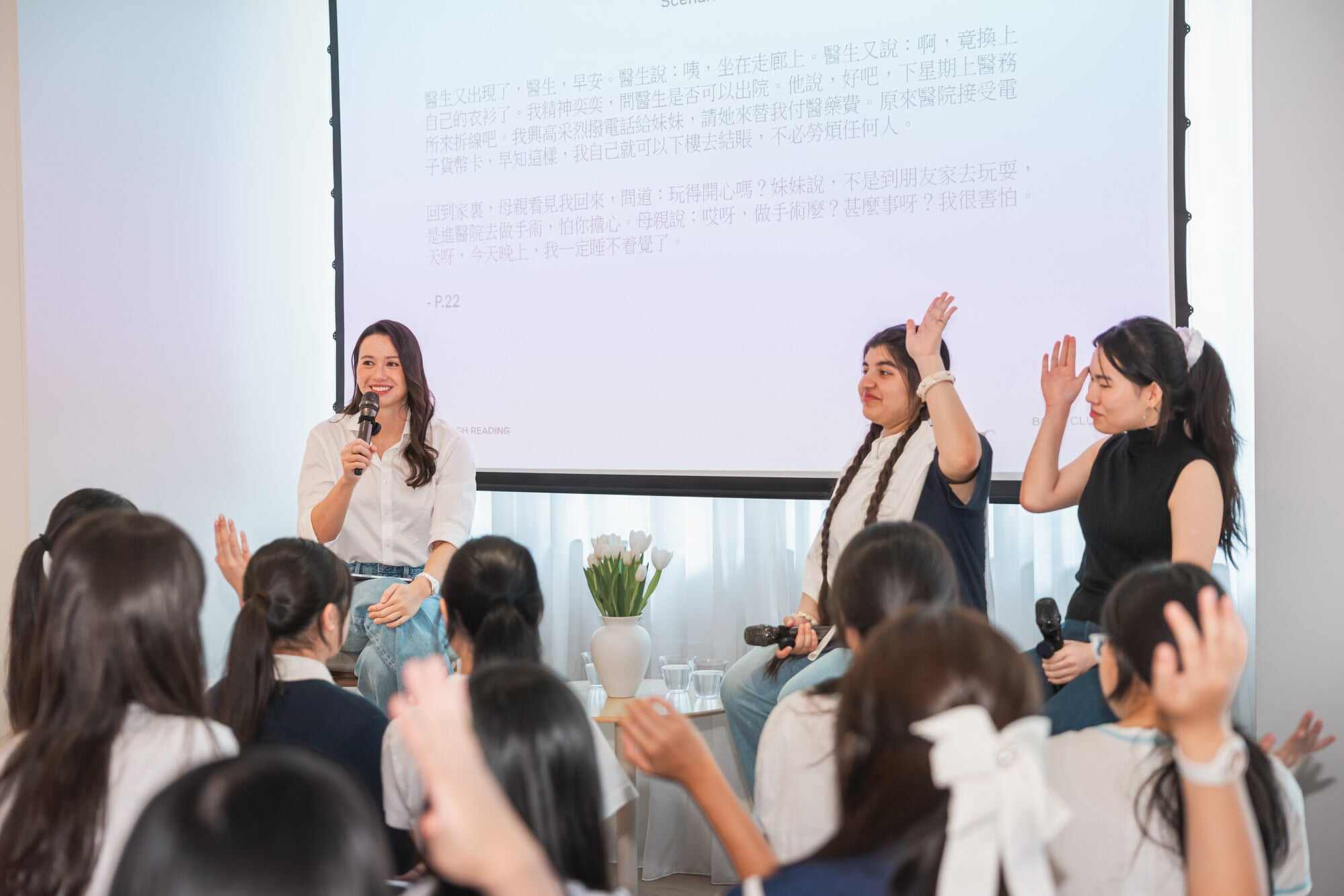
Local authors Lam Sam-wai and Eva Wong also joined Haughey for a panel discussion on the book.
“I hope students learn about the experiences of women in the 1990s, including their mothers and grandmothers, to build intergenerational empathy and understanding,” Lam said. “I also want them to realise that life offers choices and that they have the right to express or choose not to express themselves.”
Wong highlighted the subtle depth of Xi Xi’s writing style in the memoir: “Xi Xi’s work can be understood without using a dictionary, but as you read slowly, you discover very deep meaning expressed through a child’s perspective of caring for the world,” she said.
“I want students to feel a sense of hope. The title sounds sad, but it is actually a book that offers hope rather than just pain. There is growth within hardship.”
Wong added that observing young participants engage with classic Hong Kong literature demonstrated how meaningful books remain across generations.
“Seeing that students could connect with the text ... made me very happy,” she said. “Good books can transcend time and region, remaining relevant for discussion over many years.”
Tackling tough topics
Held at Commaa, a coffee shop in Sheung Wan, the book club session gave secondary school participants a chance to address topics such as illness and body image.
“Back in the ’90s, people were most likely more reserved and wouldn’t share their illnesses with others, but then Xi Xi did something unusual,” said Cherish Chiu, 16, a student at Leung Shek Chee College, after attending the event.
“She wrote it out as a book, as a biography, with some funny slang and descriptions, and it makes reading her book quite enjoyable.”
The discussions also prompted participants to reflect on the physical impact of academic pressure while preparing for public exams.
“How often do we feast on knowledge, yet starve our own bodies?” asked Cherine Yip Cheuk-kiu, 18, a student at the True Light School of Hong Kong.
“During Xi Xi’s brave battle with breast cancer, she struck upon a startling truth: while we eagerly enrich our intellects with academics and soothe our souls with music and literature, we routinely neglect our physical selves.”
Yip noted that her preparation for the Diploma of Secondary Education (DSE) examinations mirrored this dynamic. “Now, transitioning into university offers a perfect opportunity to break this unhealthy cycle,” she said.
“We hear so much about work-life balance, but maybe it’s time we start championing body-mind balance, too.”
Power of literature
For student writers, Xi Xi’s playful approach to narrative structure provided a model for creative expression.
“Xi Xi’s willingness to lay bare her cancer journey was revolutionary for her time,” said Emily Lam Hin-kwan, 18, a student at Tsuen Wan Public Ho Chuen Yiu Memorial College.
“When illness was heavily stigmatised and viewed through a lens of judgment – as though getting sick was somehow a personal failure – Xi Xi became a pioneer. She broke the silence not with bitterness but with a lighthearted, gentle courage.”
The student writer added that analysing the text broadened her understanding of creative writing techniques.
“I found Xi Xi’s narrative style to be a complete revelation,” she said. “She refused to let storytelling remain rigid, seamlessly stepping out of the plot to break the fourth wall ... Seeing how effortlessly she blurred the boundary between reality and prose taught me to be less tense in my own creative work.”
To Haughey, the discussions and the lessons students learned illustrate the importance of literature.
“Whether you read every day or haven’t picked up a book in years, I invite you to open one today, even for just a few pages, to rediscover the quiet power, clarity and sanctuary that reading brings to your life,” she said.