Eason Xie Yichen spends his spare hours on foundational research in quantum computing, physics and astrophysics. The 16-year-old student at La Salle College believes that fundamental science quietly reshapes the world.
“I keep coming back to foundational research because it helps reshape how we live. It operates ... years ahead of any obvious use – yet those early insights become the invisible scaffolding of our future,” he said.
Eason highlighted pioneers like Nobel laureate Charles Kao, who demonstrated why light scatters in optical fibres long before there was a need for it.
That same physics now serves as the foundation of the internet.
“Marie Curie studied radiation without a plan to treat cancer, and her curiosity changed medicine forever. That’s why basic science matters: it creates the principles that let humanity build things we can’t yet imagine,” he said.
Journey into research
Eason’s passion for quantum computing began early.
“In primary school ... I devoured every single article I could find about it. I was captivated by the idea that it could be the future of computing – promising exponential speed-ups and a radically different way to solve problems,” he explained. “It felt futuristic and full of possibility, and that sense of wonder pulled me in and never let go.”
Today, Eason is particularly interested in Hamiltonian simulation, which is a fundamental aspect of quantum information science and computational physics. By secondary school, he was already balancing AI projects with an increasing emphasis on quantum research, actively looking for ways to combine the two fields.
Eason’s persistence opened doors. After his emails were ignored by top scientists, he discovered student competitions and used them to show his abilities.
“I dove in – learning the theory, experimenting with hybrid ideas and competing in challenges that let me collaborate with researchers from [around the world],” the teen noted.
“These competitions let me show what I could do ... I started approaching top researchers with concrete competition projects as proof of my skills, and that direct, evidence-based approach opened doors that ‘cold emails’ never did.”
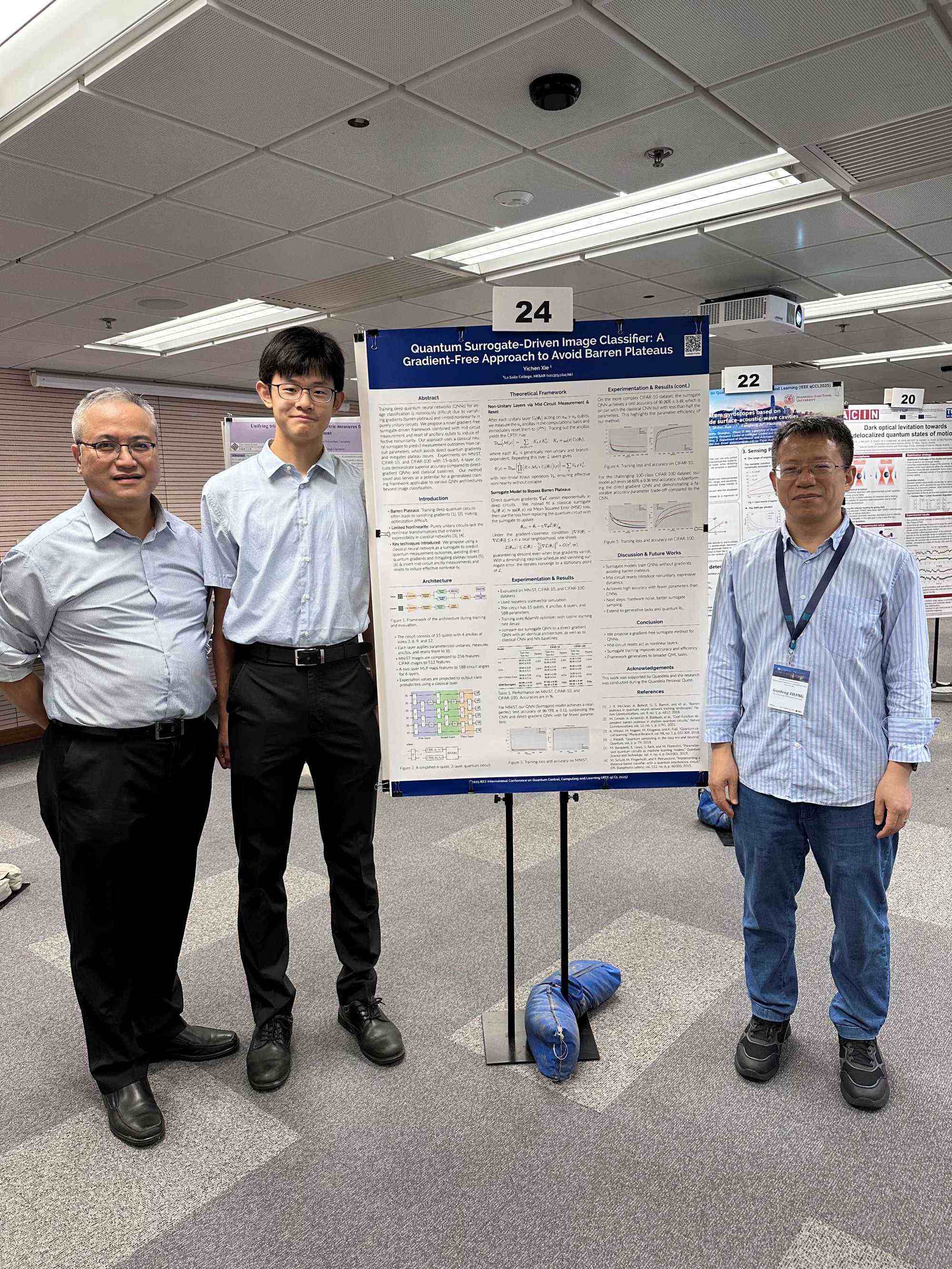
He has worked with researchers at the Cavendish Laboratory at the University of Cambridge to model complex biological and chemical systems. This research has the potential to change the study of molecular dynamics and ground-state properties.
Eason also investigates photonic machine learning, attracted by its promise of energy-efficient artificial intelligence (AI).
“Because information is carried optically rather than electrically, there’s almost no resistive heating and far less energy dissipated when moving signals around a system,” he explained.
Some of these efforts resulted in published papers in globally recognised scientific journals, as well as practical applications such as financial modelling.
Competitions and hands-on projects have taught him to value mistakes as part of a learning process.
“Mistakes give me experience so that I know exactly what to avoid next time,” he said. “Research experience teaches you the details and the traps around a problem, so you don’t get caught off guard again.”
Those insights have also changed his priorities.
“I used to chase projects that looked good on a CV; now, I’ve become choosier and only take on problems that truly interest me,” he added.
“I stopped chasing prestige and started focusing on curiosity – the problems that keep me up at night are the ones I want to solve. The main goal for me is to step out of my comfort zone, interact with new people and experience different research environments.”
Passing his passion to others
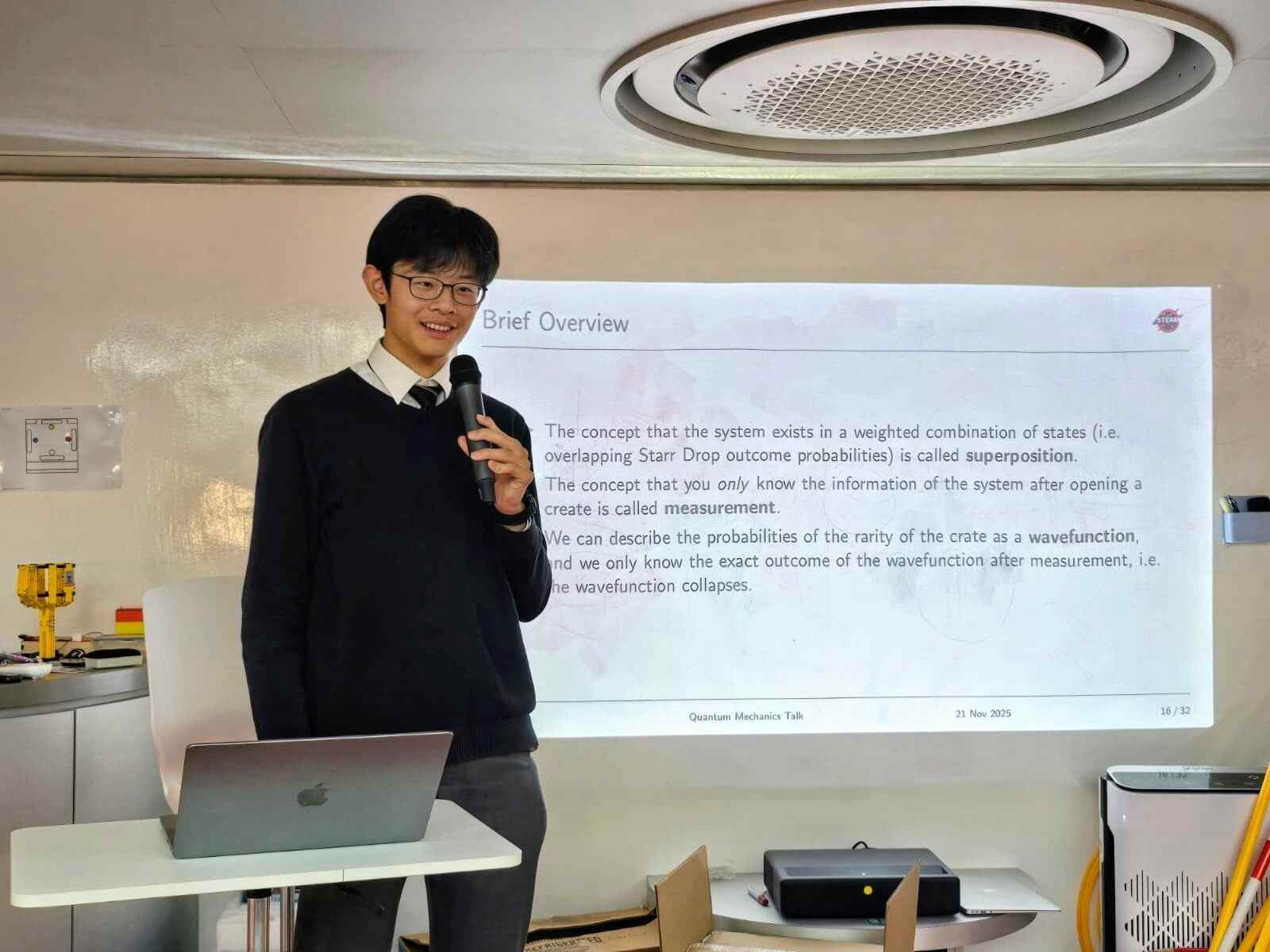
Eason also channels his enthusiasm into mentoring others: “I became captain of the school’s STEAM team because I want to teach others and make them understand the fields I work in,” he said.
He organises workshops on topics such as AI, quantum computing and astrophysics, teaching the mathematics behind the ideas and the challenges of research.
“I don’t just show polished results – I walk people through the long process of research, trial and error,” he shared.
“I show failed experiments and dead‑end calculations so students can see the messy reality of research – not the movie version where everything is fixed by pressing a few buttons.”
For Eason, the reward is seeing curiosity spread.
“Students with real passion come together; sharing knowledge and sparking interest has to evolve over time,” he said.
“Interacting with students and inspiring them to pursue their own questions is why I mentor – I want them to keep going after what excites them.”
Eason plans to study at a university abroad to immerse himself in a new academic environment. After his studies, he intends to return to Hong Kong and contribute to its development as a hub for quantum computing.
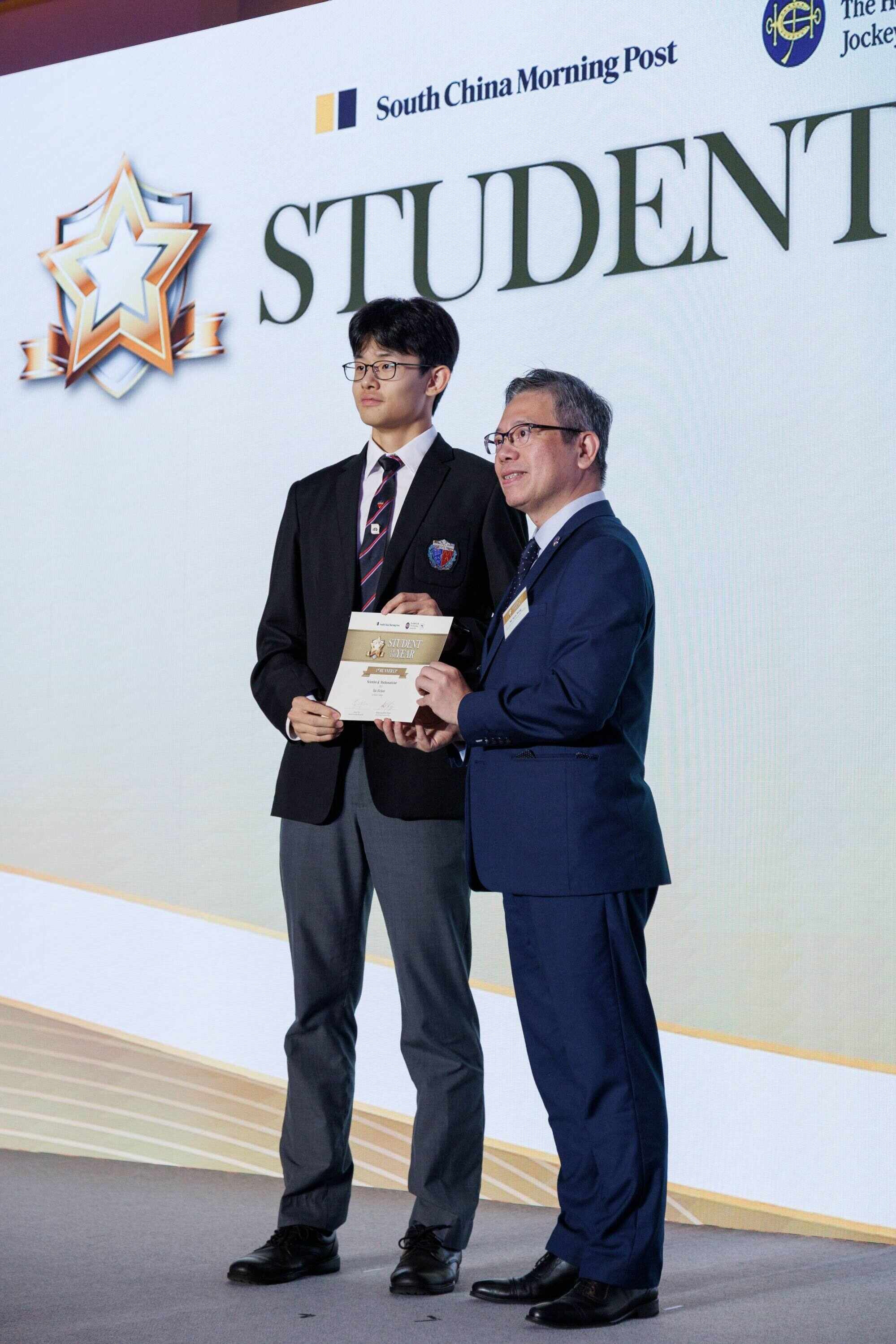
His dedication to research was acknowledged when he became a finalist in the Scientist and Mathematician category of the 2025/26 Student of the Year Awards, organised by the South China Morning Post and solely sponsored by The Hong Kong Jockey Club.