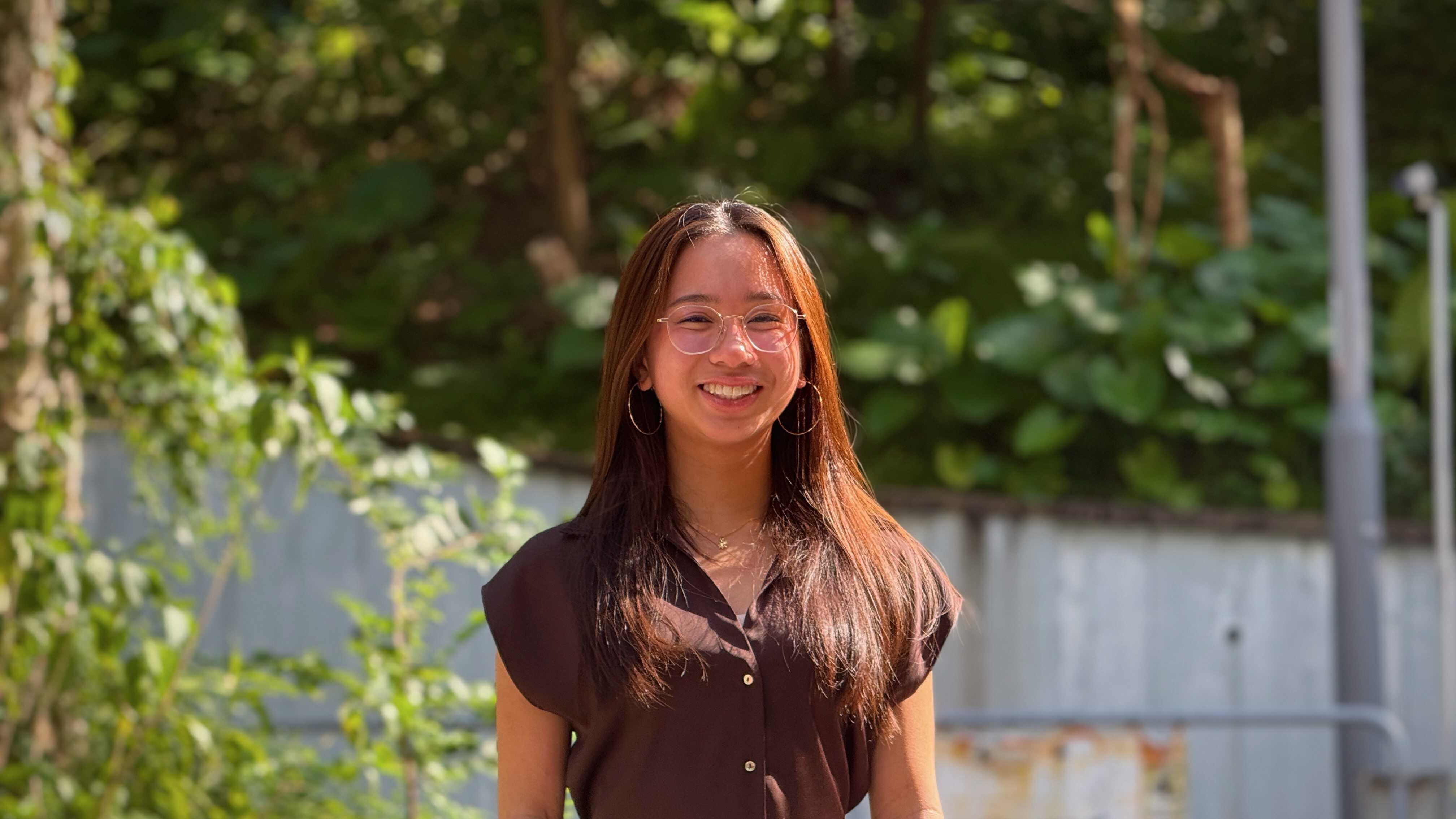
Hillary Lee Hiu-lam is an emerging contemporary artist who transforms fragments of daily life – from food to packaging – into meditative and whimsical works of art.
At 17, she lives with an anxiety disorder and channels her creativity to remain calm and inspire others.
“Everyday things are my starting point – the little patterns on product packaging, the way a box unfolds, a scrap of handwriting – they all trigger ideas,” said the Form Six student at The Chinese Foundation Secondary School.
“A repeating motif can suddenly remind me of waves seen on a family trip, and that ordinary detail expands into a full scene in my mind. I collect these moments carefully.”
Embrace the mess
These projects began when Hillary was still a child.
“Once, I transformed an empty chicken essence box into a tiny theatre by putting a sound device inside so that opening it set off an alarm,” she recalled.
Hillary uses mixed media to create her pieces, from boxes, birthday cards and even food. She draws with watercolour and charcoal pencils.
For her three-dimensional pieces, she chooses materials that resonate with her and allows them to guide the storytelling. Additionally, she takes photographs, gathering visual fragments that later appear in her artwork.
“The ordinary is where I find the extraordinary,” she explained.
Art has freed her from a fear of mistakes that once defined her: “Growing up, I was terrified of making mistakes; I thought art had to be beautiful in a certain way, like something an artist would approve of,” she said.
That changed in Form Four, when she realised that art did not have to fit into one format – it could be messy and still be true.
“The turning point was a piece made from food. I deliberately changed the recipe, altered the gelatin-to-water ratio, used gelatin to preserve ingredients, sliced them into tube shapes and reassembled them into a new form. Familiar textures and colours disappeared so the work no longer looked like food,” she recalled.
“That experiment taught me to embrace accidents and let the materials lead.”
Her process is improvisational: “When I start a piece, I rarely follow a rigid plan. I make a rough sketch, break the idea into separate parts and let the materials tell me what to do next,” Hillary noted.
A drawing might evolve into a three-dimensional installation; a hand-drawn mark could be layered onto product packaging; a sculpture might be built from objects that come together to form a narrative.
Last year, she entered a 3D Model Design Competition with her classmates, where they won first runner-up and bagged the award for greatest cultural value.
“We mixed bamboo with old Hong Kong symbols and icons, reworking traditional motifs into a contemporary structure,” she said.
Judges told her the bamboo piece brought back memories they thought were lost to the younger generation, she noted.
“Seeing them smile, hearing them say we’d taken them back to the old streets, I felt how art could heal: it could reawaken fond memories,” she said.
“I want my work to tap into collective experiences and remind people of things they’ve lived through together.”
Healing through creativity
The healing power of art is central to Hillary’s approach.
“I see art as a way to accompany people and ease the stress of study and everyday life,” she said.
For instance, she discovered ways to engage with people while operating a small portrait booth at a school open day.
“I did not rush and began chatting with each sitter, and added patterns and designs they liked. Those conversations became part of the portraits,” she said. “When visitors received the drawings I had made of them, their faces lit up with this quiet happiness.”
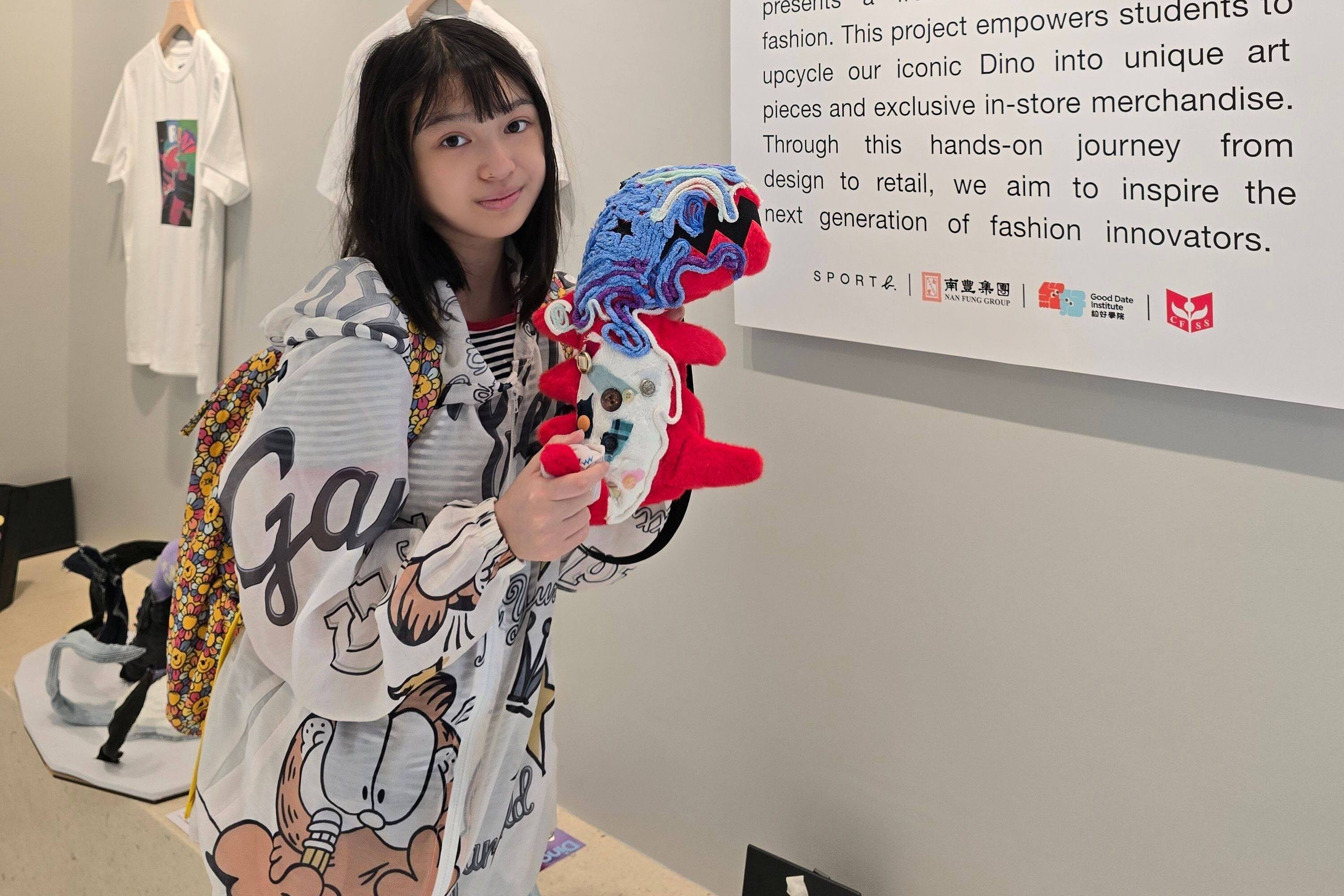
Hillary and her classmates have created artwork for charity, such as a piece made with buttons her grandmother had saved over decades.
“I stitched them into a dinosaur form, layering buttons of different sizes and patterns and weaving in colourful strings to show how love is tied and passed down through generations, which is the theme of this piece,” she said.
“It carried traces of different eras and felt like a family archive turned into playful sculpture.”
They exhibited and sold their work to raise money for charity at the Project RE:DINO exhibition in July.
The positive response showed Hillary that creative work can connect personal histories with real social needs.
Looking ahead, Hilary wants her art to both heal and provoke thought, and she plans to study art therapy at university.
Her outstanding achievements earned her a place as a finalist in the Visual Artist category in the 2025/26 Student of the Year Awards, organised by the South China Morning Post and solely sponsored by The Hong Kong Jockey Club.