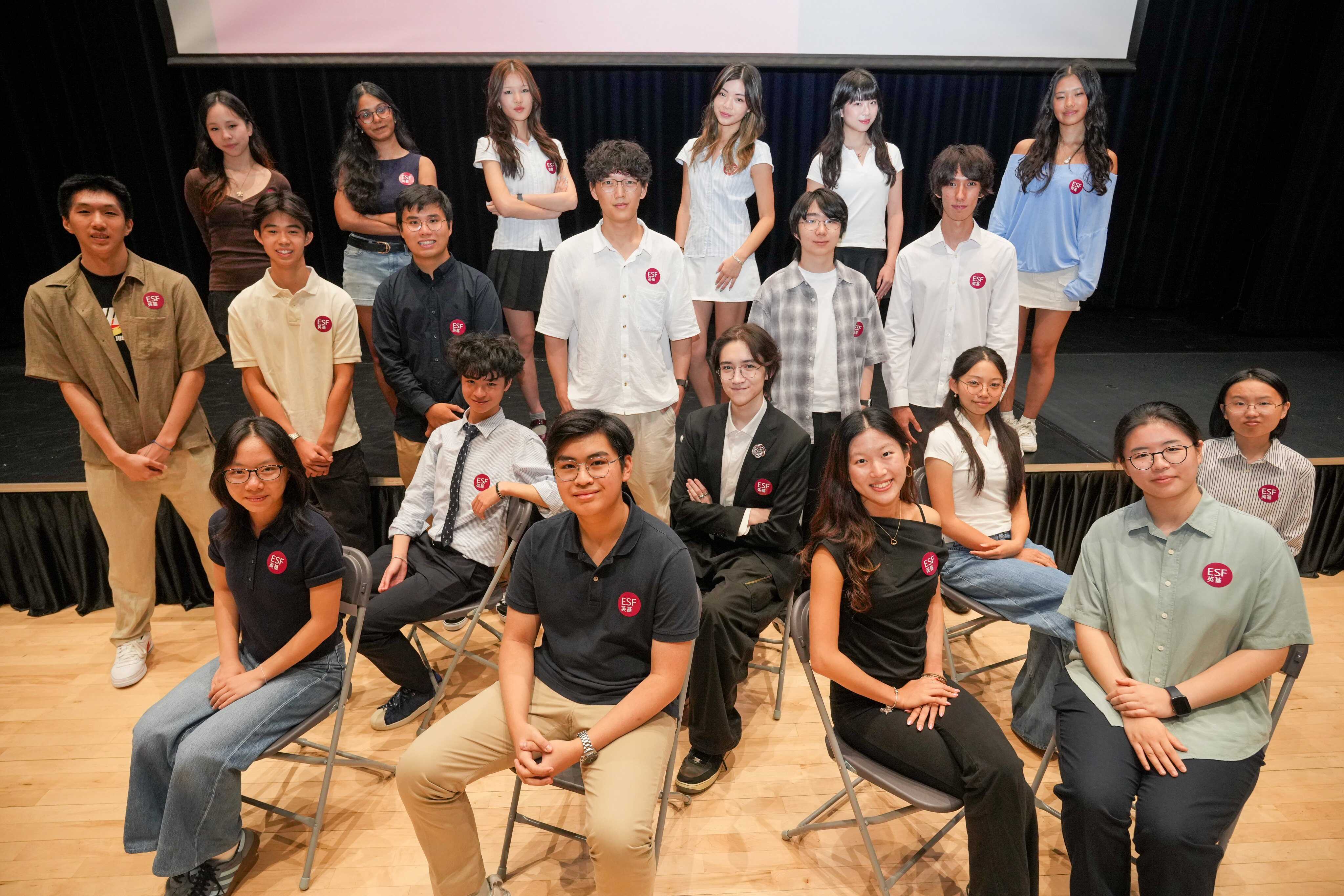
Fourteen out of the 27 top scorers in this year’s International Baccalaureate (IB) programme from Hong Kong’s largest international school group plan to study medicine. Some of these students credit their success to discipline, the consumption of miso soup and using a Nokia phone with limited internet access.
The English Schools Foundation’s top achievers shared their plans and study tips on Tuesday after learning their IB results the previous day. The number of ESF perfect scorers was nearly double last year’s tally of 15.
At least 73 students from 17 schools across Hong Kong attained a full score of 45 points in the IB exams.
Out of the 27 top performers, 14 students plan to study medicine, including 13 in Hong Kong. Three will pursue mechanical engineering, and two are considering business and global management.
Speaking to the media at Island School, most of the top students said they felt relieved and excited after receiving their grades.
“It was honestly a roller coaster of emotions,” said Joshua Sean Chow, 18, one of the top scorers who will study medicine at the University of Hong Kong.
“I remember just going through each subject one by one and feeling surprised. In the end, I was very proud that I managed to achieve the full score.”
Some of the high-fliers also shared their study tips for students just embarking on their IB journey.
“The most important thing is to stay consistent throughout the two years of the IB,” said Mark Chan Hin-tong, who is planning to study mechanical engineering at Imperial College London.
“I know a lot of people during summer don’t do that, they tend to fall behind on some work so it’s important to stay consistent and stay ahead.”
Sian Lee, 18, is looking to study psychological and behavioural sciences at the University of Cambridge. She echoed Chan’s remarks, adding that it could not be overstated “how important organisation and time management are”.
“You need to maintain a good work-life balance because at the end of the day it’s a marathon not a sprint and we should keep up the fuel in order to perform at our best.”
The top scorers also noted that their success was not just about endlessly reading textbooks, but also about taking care of themselves and staying connected with friends and family during the stressful examination period.
Evans Wong Hau-yan, who is looking to study medicine but is undecided between King’s College London and the Chinese University of Hong Kong (CUHK), said she took effective study breaks by exercising.
“I think my biggest advice would be to take care of yourself – don’t neglect the other parts. It’s not just about academics; you should always take care of yourself, whether that’s your diet, because that plays a huge role in how much you can focus,” she said.
She also shared some of her own unconventional tactics during the revision period. “I drank miso soup every single morning because I read somewhere that it helps boost your brain,” she said.
“I also used a Nokia throughout the exams. It really helped me lock in because social media really distracts us from what we do.”
ESF pupils achieved an average score of 36.4 points, matching last year’s figure and surpassing the global average of 30.8, the foundation said.
Among ESF schools, some of the strongest performances came from King George V School and Sha Tin College. King George V School had seven perfect scorers, followed by Sha Tin College with six.
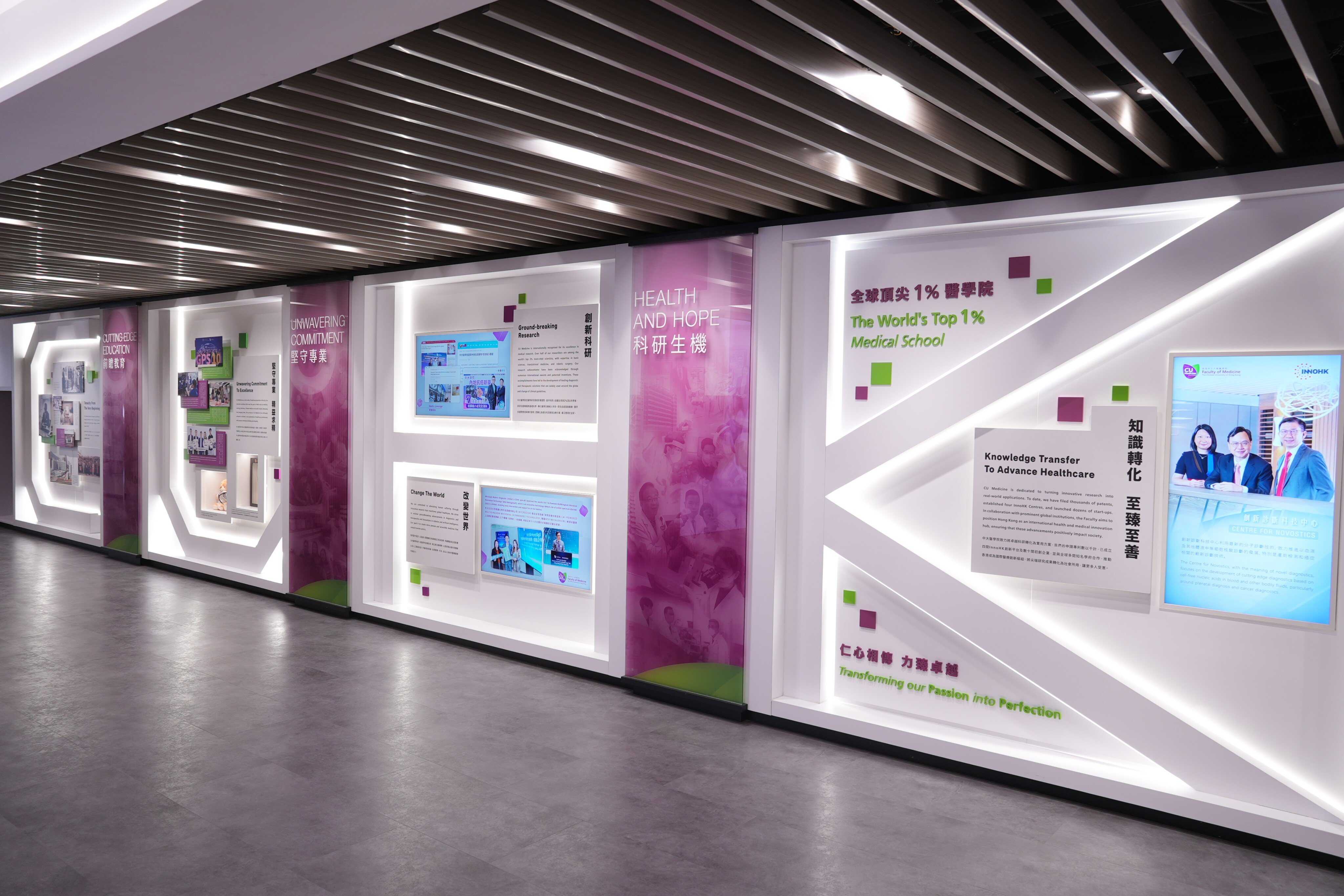
Meanwhile, CUHK’s medical faculty said it had admitted 35 top scorers from this year’s IB programme, underscoring the appeal of medicine among the city’s highest achievers.
With 73 top scorers across Hong Kong, CUHK’s intake amounts to nearly half of the city’s total.
The faculty also announced the CUHK Fenghuang Scholarship, a new scheme for top scorers in public exams that will cover tuition fees and support exchange opportunities for at least four consecutive years, worth more than HK$1.6 million in total.
The university said the award was designed to encourage students to broaden their horizons through local and overseas learning experiences.
Of the 209,607 IB candidates worldwide, 2,912 were from Hong Kong. The average score of local students who took the exams in May rose to 37.02 points, up from 36.72 last year.