Top British universities are focusing on real curiosity and the ability to overcome challenges instead of strict test preparation and “perfect personal statements,” said leading admissions officials at an education summit in Hong Kong.
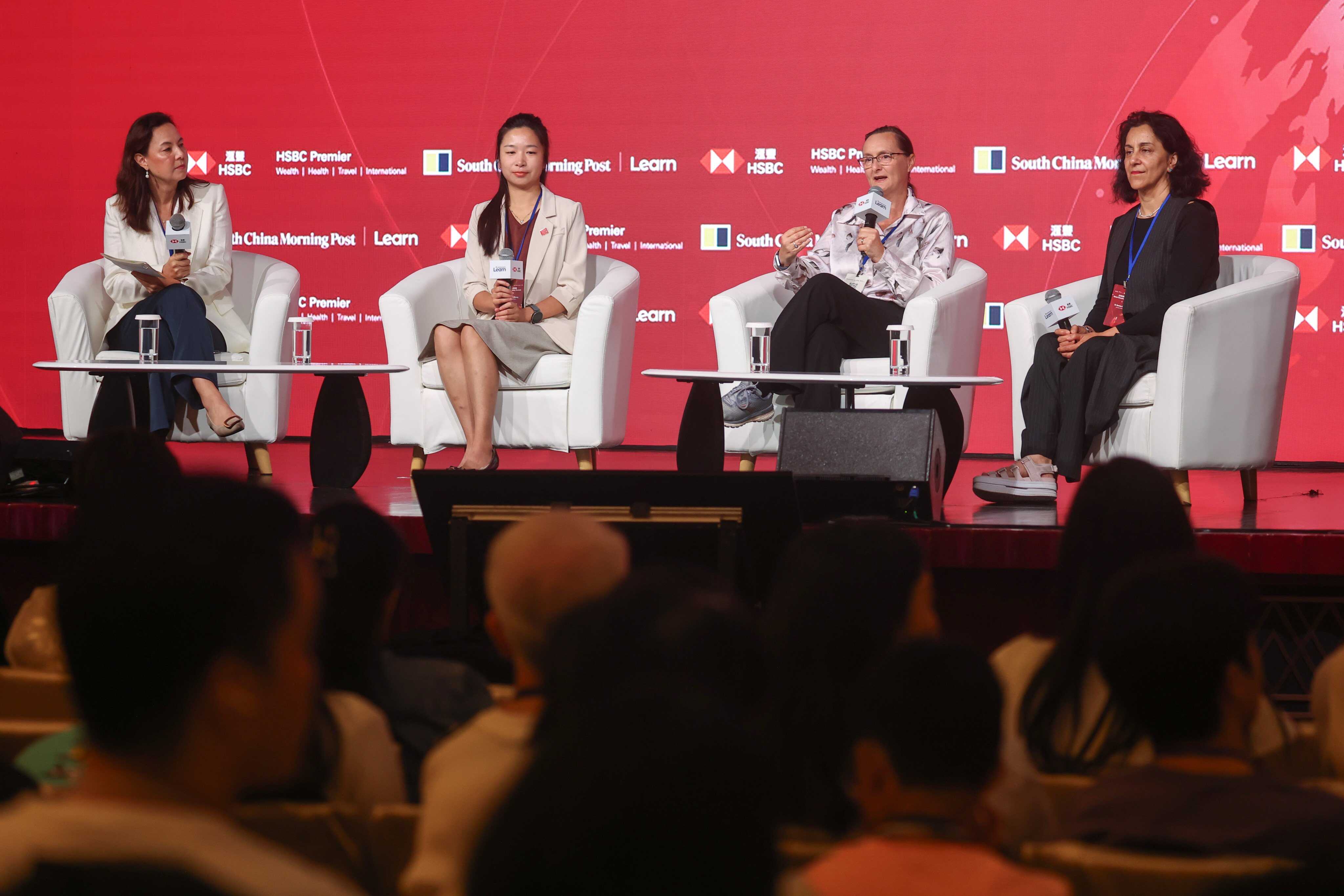
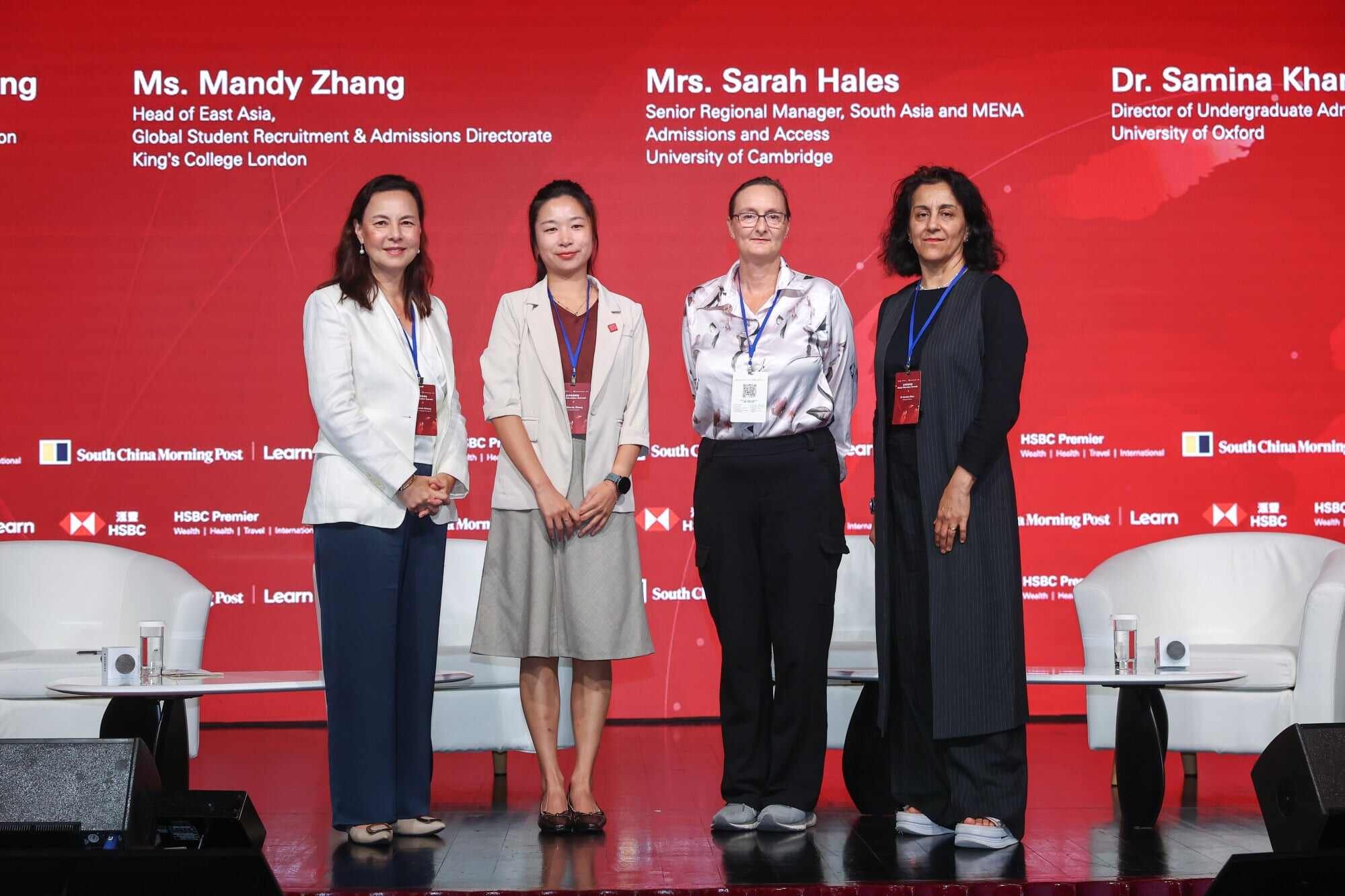
Representatives from top universities, such as the University of Oxford, the University of Cambridge and King’s College London, spoke on the second day of the Global Education Summit, which was organised by the South China Morning Post and HSBC Premier.
The discussion was about studying abroad. About 11,000 people attended the two-day summit.
“At the heart of the admissions process at Oxford is a passion for the course that you want to study,” said Samina Khan, director of undergraduate admissions and outreach at the University of Oxford, during a panel curated by SCMP Learn, the newspaper’s education arm.
“Whether you’re doing an A-level or a Hong Kong diploma, don’t just stick to what you’re being taught in school. You should be researching, you should be reading, listening to TED Talks to expand your knowledge.”
Admissions leaders emphasised that high grades represented only a starting baseline.
Sarah Hales, senior regional manager in admissions and access at the University of Cambridge, said the university selected candidates with genuine intellectual drive.
“Last year we welcomed students from around the world, including over 140 countries. But students from Hong Kong have always been and will remain just valued students at the university,” Hales said.
Hales noted that artificial intelligence (AI) was expanding beyond traditional technical majors into the humanities.
She highlighted growing engagement with fields such as digital humanities, adding that while course choices remained stable, the modules students selected were evolving.
To distinguish top applicants, Cambridge evaluates how students handle small-group academic discussions during interviews, which mirror the university’s core supervision teaching model.
“It’s not always the students with the top grades,” Hales said. “Sometimes it’s those students that want to go beyond that. It’s quite often the ones that might question what a teacher says.”
She added that interviewers looked for students who constantly investigated and challenged assumptions, as this demonstrated genuine excitement for the subject. During these sessions, the university tested motivation by working through complex problems with the applicant.
Khan stressed that successful Oxford candidates had to demonstrate academic resilience and a deep, self-driven interest in their subject that extended beyond the classroom.
She noted that the university was moving to standard UAT-UK admissions tests for the first time, retiring its long-standing in-house assessments.
Applicants for 2027 entry must sit these standardised tests during the October 2026 window. Oxford is also aligning its testing platform with Cambridge to simplify the application process for international families.
“The admissions tests help us understand who has the academic ability and who will perform really well in an intensive environment,” Khan said, noting that candidates must adapt to Oxford’s rigorous weekly tutorial system.
Meanwhile, British Council research shows that six in 10 Hongkongers are considering the UK as a study destination.
More than 16,000 students are currently enrolled in British universities, according to Andrea Hales, acting director for Hong Kong and head of English and exams at the British Council.
While families seek assurance that higher education will yield better career outcomes, driving peak interest in engineering and data science, the report stressed that top employers increasingly look beyond technical knowledge.
Mandy Zhang, head of East Asia for the global student recruitment and admissions directorate at King’s College London, highlighted that top British universities prioritised authentic personal reflection in applications.
“We’re not looking for a sort of shocking list of things that the student has done. The most important thing is to relate those activities to the course that you are applying for,” Zhang said.
She noted that students did not need costly external education consultants to build a competitive file.
“We want students to show real stories and competencies, developed either inside the classroom or externally using free online and in-person resources. You don’t have to pay for services to apply or write a personal statement,” Zhang added.
Sarah Hales from Cambridge also cautioned against generic introductions, urging applicants to explain exactly what sparked their interest and how they explored the subject outside school through extra reading or personal research projects.
“We don’t want to hear that ever since I was a child I’ve been interested in this subject,” she said.
“We’re interested to know what got you interested in this subject. What did you do outside school to explore that subject? Was it extra reading? Did you challenge yourself to do a personal research project?”