The government of Hong Kong is set to enhance education in science, technology, engineering, arts and mathematics (STEAM) and plans to provide additional land for higher education institutions. This initiative aims to shift the conventional study-abroad trend from a “one-way street to a two-way global highway”, as stated by the education secretary.
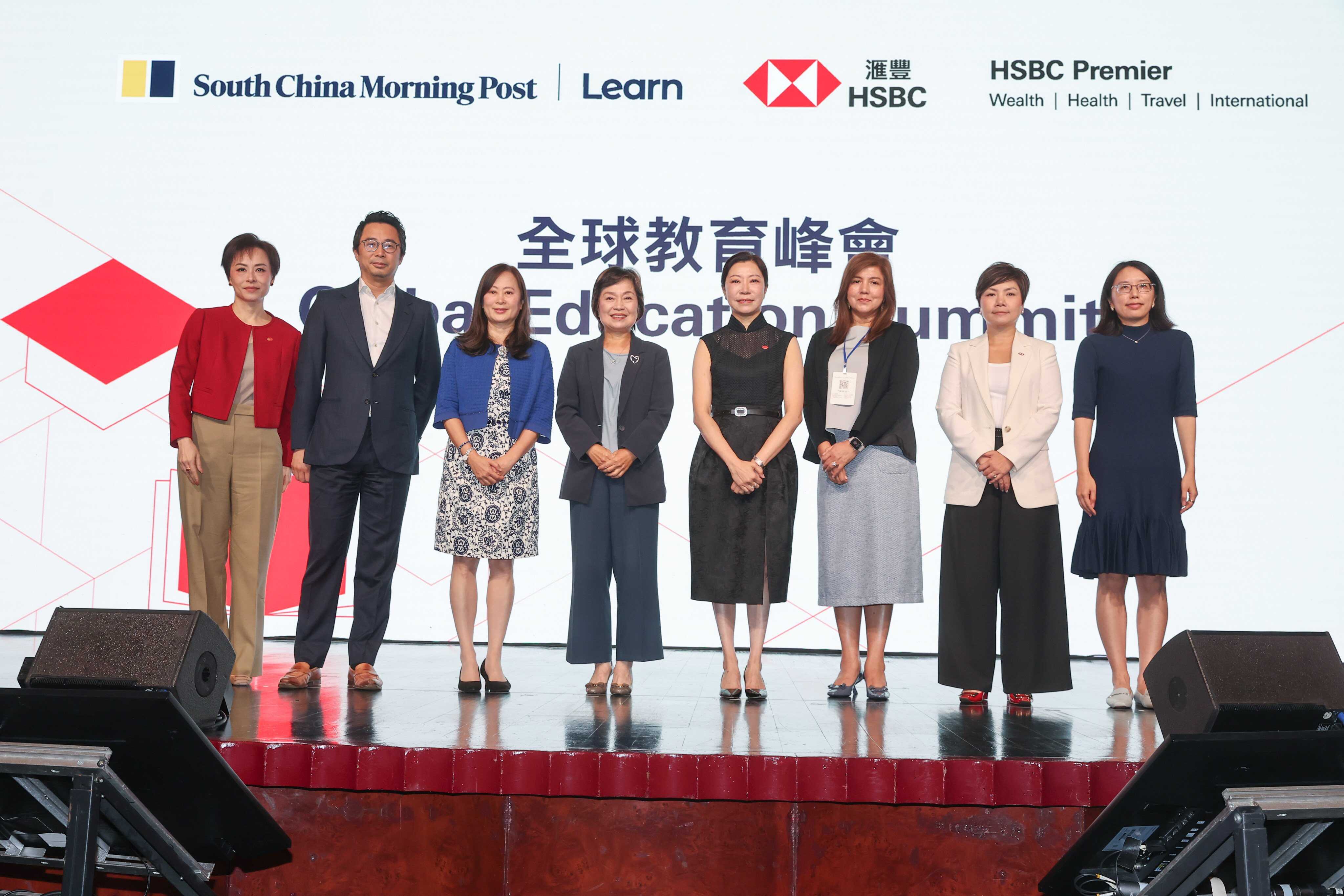
Secretary for Education Christine Choi Yuk-lin delivered the remarks at the inaugural Global Education Summit, co-organised by the South China Morning Post and HSBC Premier.
“We have set a clear goal. By the 2026-27 academic year, 35 per cent of all undergraduate students at our government-funded universities will be enrolled in STEAM disciplines,” Choi said.
The event brought together more than 5,000 policymakers, educators and parents from around the world to discuss regional talent development, the integration of artificial intelligence (AI) and evolving academic pathways.
Attendees at the two-day summit included principals and admissions officers from more than 40 leading secondary schools and universities, including the University of Cambridge and the University of Oxford in the UK.
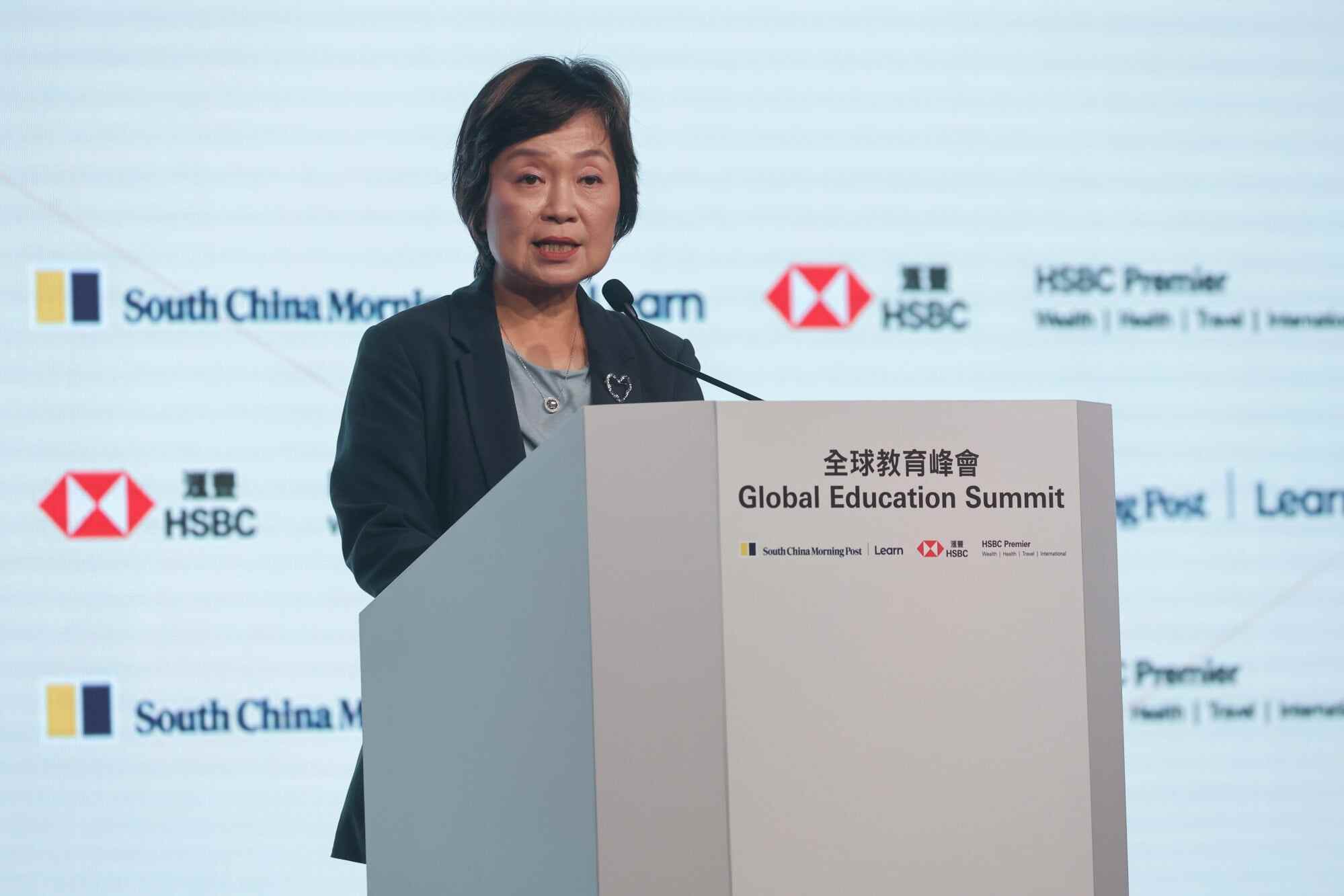
Elaborating on the targets, Choi noted that the drive to expand relevant degree programmes was matched by a broader effort to build the infrastructure needed to connect education, research and industry.
“To support this, in the 2025-28 triennium, our universities are launching 27 undergraduate programmes related to STEAM, including AI, cybersecurity, creative industries, sustainable development and data science,” Choi told the summit at the Grand Hyatt Hong Kong hotel in Wan Chai.
“These are not theoretical courses,” she said, detailing plans for the flagship Northern Metropolis University Town (NMUT).
“We drastically increased the reserved land for the campus area of the NMUT from the initial 60 hectares to approximately 300 hectares. When integrated with surrounding technology paths, industry zones, and vibrant communities, the broad and macro area of the NMUT spans more than 1,000 hectares.”
She said the project would follow a “one town, five elements” model integrating education, technology, talent, industry and urban development.
Choi noted that Hong Kong had welcomed 30,400 non-local students from more than 100 countries and regions in the 2025-26 academic year, a 30 per cent increase over two years.
SCMP publisher Tammy Tam said Hong Kong’s role as a regional hub gave it distinctive strengths in attracting international talent and strengthening its long-term competitiveness.
“Hong Kong is uniquely positioned with our open society, international outlook, and deep global connections, most of all with the special governing formula of ‘one country, two systems’, to serve as that elite gateway to the world,” she said.
“Hong Kong’s future relies on talent. Nurturing, re-skilling, and attracting bright minds is fundamental to our city’s continued vitality.”
A panel, curated by SCMP Learn, the newspaper’s education arm, featured leaders from Hong Kong’s leading universities and explored how local institutions could help shape the future of education.
The discussion brought together Professor Jay Siegel, vice-president and pro-vice-chancellor for teaching and learning at the University of Hong Kong (HKU), Professor Irwin King, pro-vice-chancellor for education at the Chinese University of Hong Kong (CUHK), and Hong Kong University of Science and Technology (HKUST) provost Professor Yike Guo.
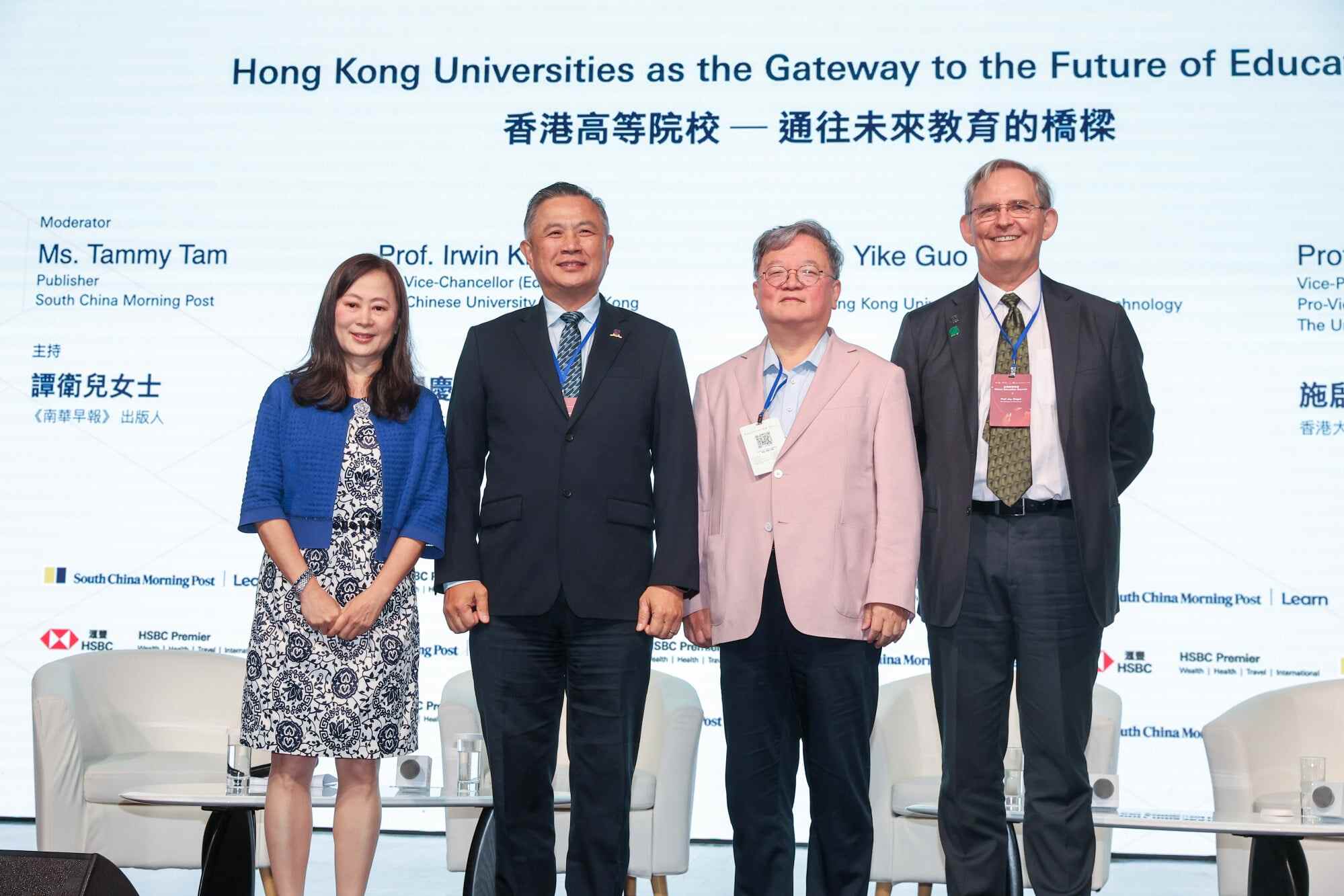
The panellists discussed how higher education must adapt to prepare students for an AI-driven workforce.
“In the next phase of this AI era, universities must integrate more skills and the right attitude into their curriculum,” said King, advising parents not to focus solely on traditional academic performance.
He added that CUHK had recorded a 75 per cent increase in non-local student intake last year, attracting applicants from more than 100 countries.
“We’re looking for great students who are passionate about what they do. And sometimes the passion is not inside your GPA, but in the extracurricular things that you do and the things that you’re involved with,” he said.
Siegel, speaking about early childhood development, warned against exposing young children to AI tools too soon. He said excessive reliance on technology at an early age could impede cognitive development and affect long-term mental health.
“If we think that AI is going to turn three- to eight-year-olds into geniuses, then we’ve lost the lesson of child development,” he said.