With a 94-year-old woman in her care when the Tai Po fire broke out, Filipino domestic worker Jonalyn Duran made a split-second decision that saved their lives.
The 47-year-old grabbed her sling bag, her identification card and her employer’s medicines, and they stepped into a lift on the 23rd floor of Wang Sun House.
“We prayed for it not to stop,” Duran said.
Against all odds, the lift descended safely. Duran described their survival as a “miracle”.
“I almost collapsed. My hands were shaking. But I had to be strong because I was with popo,” she said. “Somebody said you shouldn’t use the lift. But it saved us.”
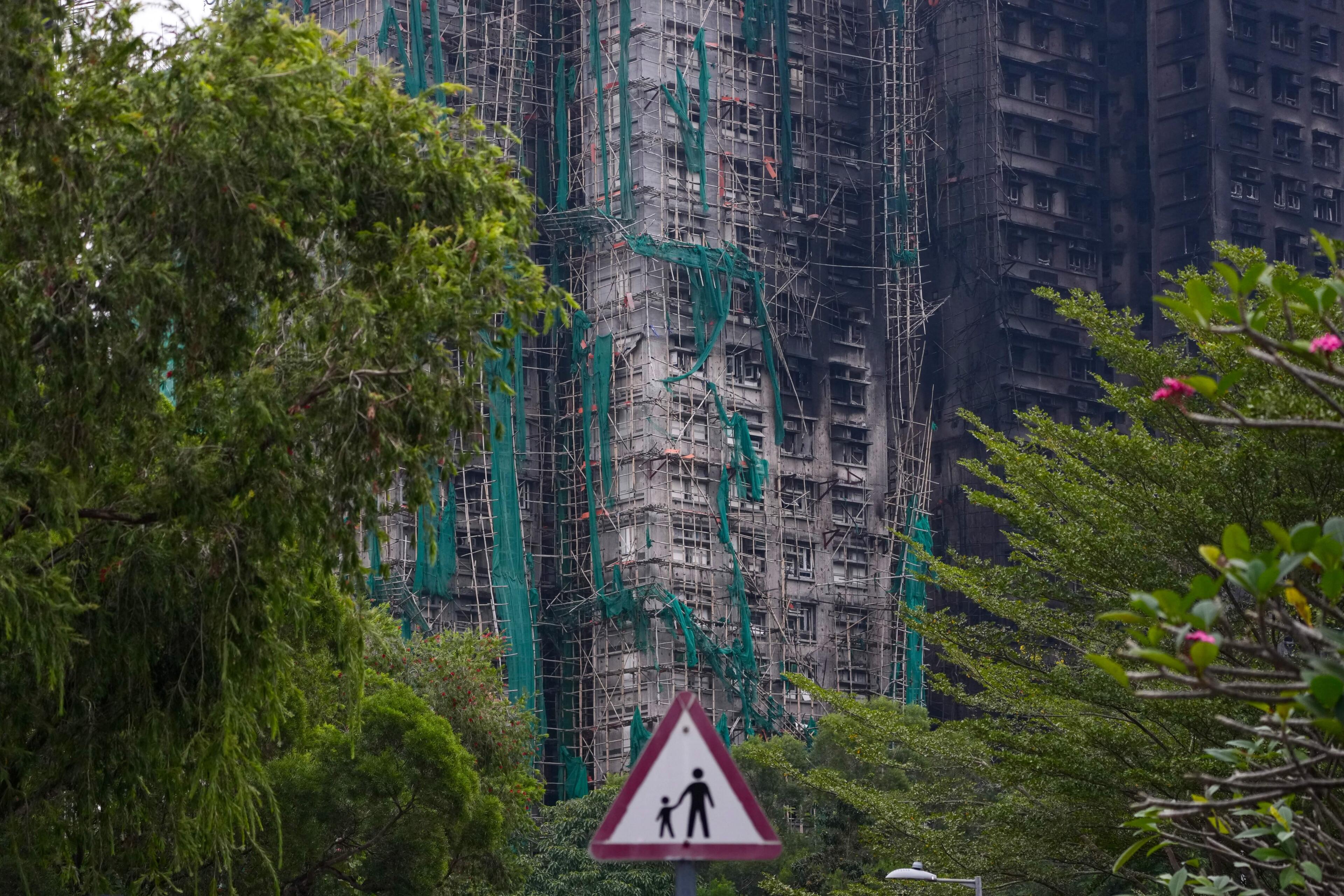
The blaze at Wang Fuk Court in November claimed 168 lives and is Hong Kong’s deadliest fire in seven decades.
After moving into the home of the elderly woman’s daughter, Duran asked to attend free health check-ups offered by NGOs for affected domestic helpers, but the daughter responded with anger.
“She got really mad and pointed at me, saying I already had a disease,” Duran said. “‘You’re sick. Don’t give me trouble,’ she told me.”
The next day, her employment was terminated after 10 years of service. The reason stated on her termination letter: “incompatible personalities”.
“I was shocked,” Duran said, adding that she had only taken half-days off for years. “I didn’t do anything wrong. I love popo ... I only asked permission. I know my rights.”
She cried as she read messages from her employer’s family members who were sad about her dismissal.
“She had no empathy for me as a helper,” Duran said.
“I’m a human, not a robot.”
Now, Duran is looking for new employment and holding on to hope that she will find a good employer.
How domestic workers are faring after the tragedy
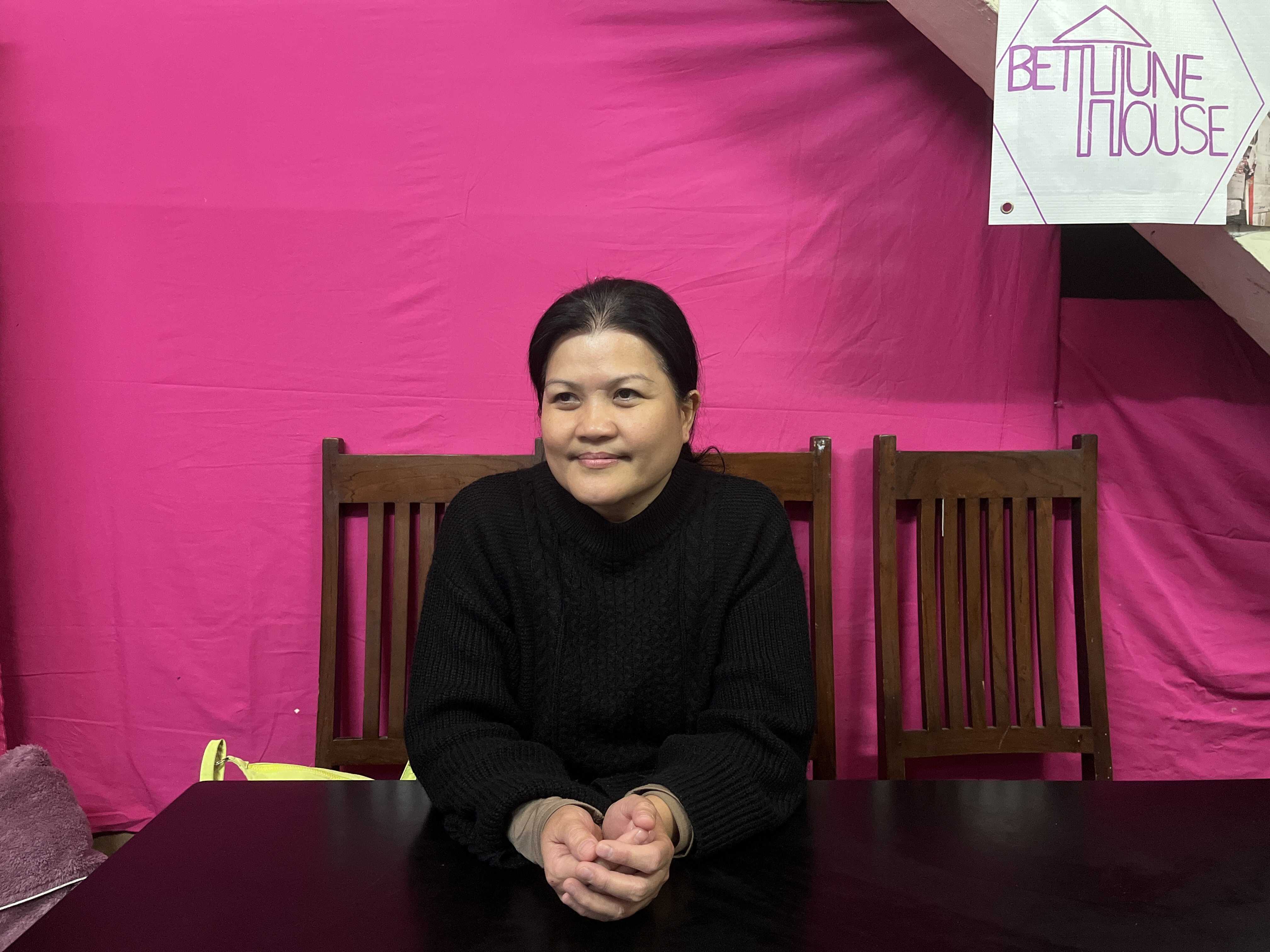
As of last week, according to two NGOs, Mission for Migrant Workers and Bethune House, Duran is among seven domestic workers laid off by their employers following the blaze.
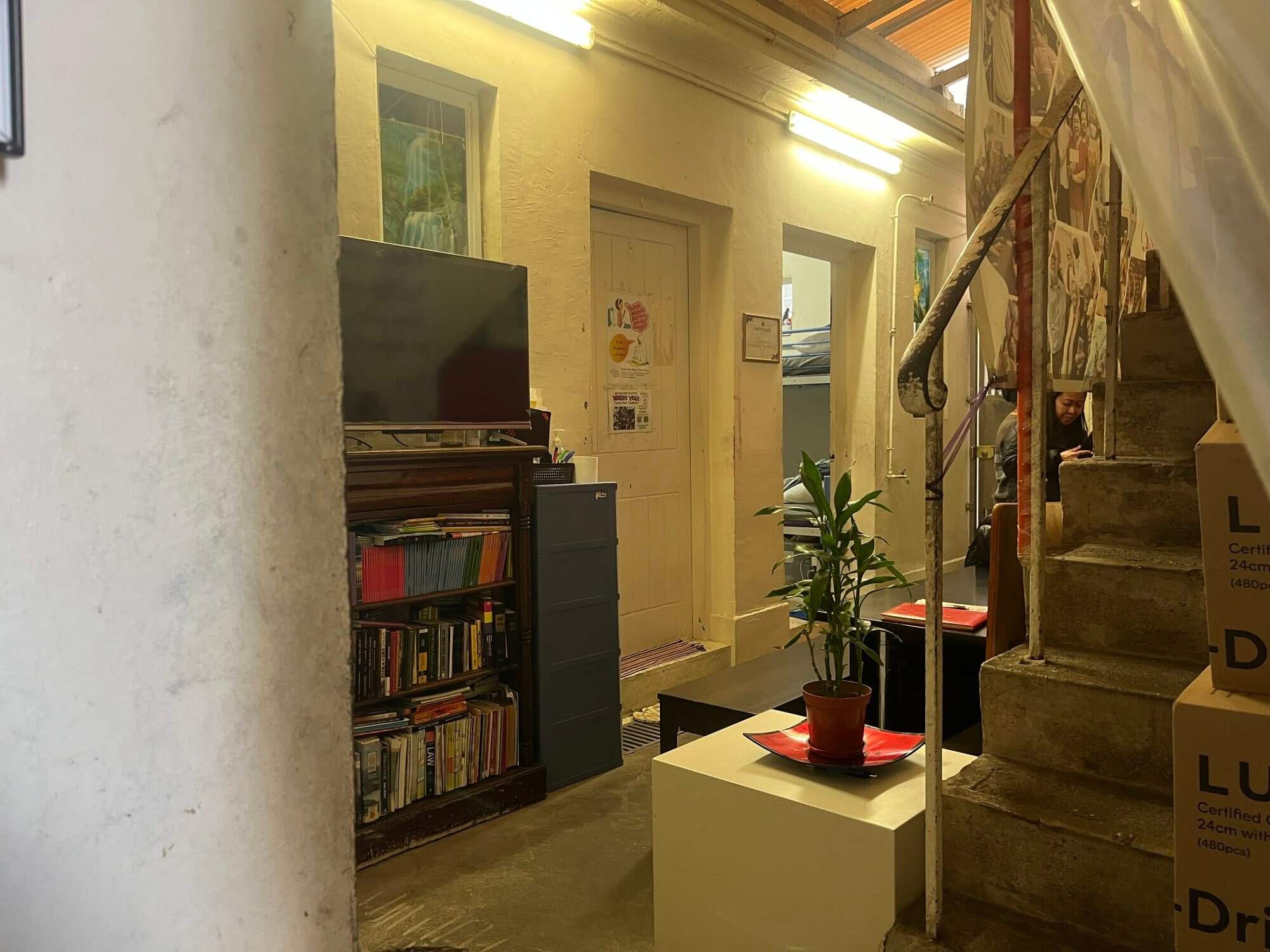
The NGOs have been working to support those affected by the Wang Fuk Court fire, offering emergency relief, shelter, food, clothing, medical and mental health care, translation services and legal guidance. They are in contact with about 110 domestic workers affected by the blaze, comprising around 70 Indonesians and 40 Filipinos.
Typically, migrant domestic workers must leave Hong Kong within two weeks after their contracts are terminated. But due to the fire, the government has granted a three-month visa extension for affected workers.
Johannie Tong, community relations officer at Mission for Migrant Workers, said most helpers affected by the fire survived, but some remain hospitalised.
She said several workers were dismissed within days of the blaze, not because of wrongdoing, but because their employers had lost their homes.
“Some employers told their workers, ‘I no longer have a home – you should find a new job as soon as possible,’” Tong said. “Their future was uncertain, and space was an issue.”
The charity worker also said that some employers were struggling to pay wages because of financial difficulties.
“It becomes complicated to determine when those circumstances cross the line into labour violations,” she noted, adding that most of the affected domestic workers had stayed with their employers.
“We’ve heard that many families have rented new flats in Tai Po, and ... they are slowly settling down,” she said.
However, she noted that the crisis had strained employer-worker relationships.
“Some employers were also emotionally affected by the fire, which made communication difficult,” Tong said. “In those cases, mediation is needed.”
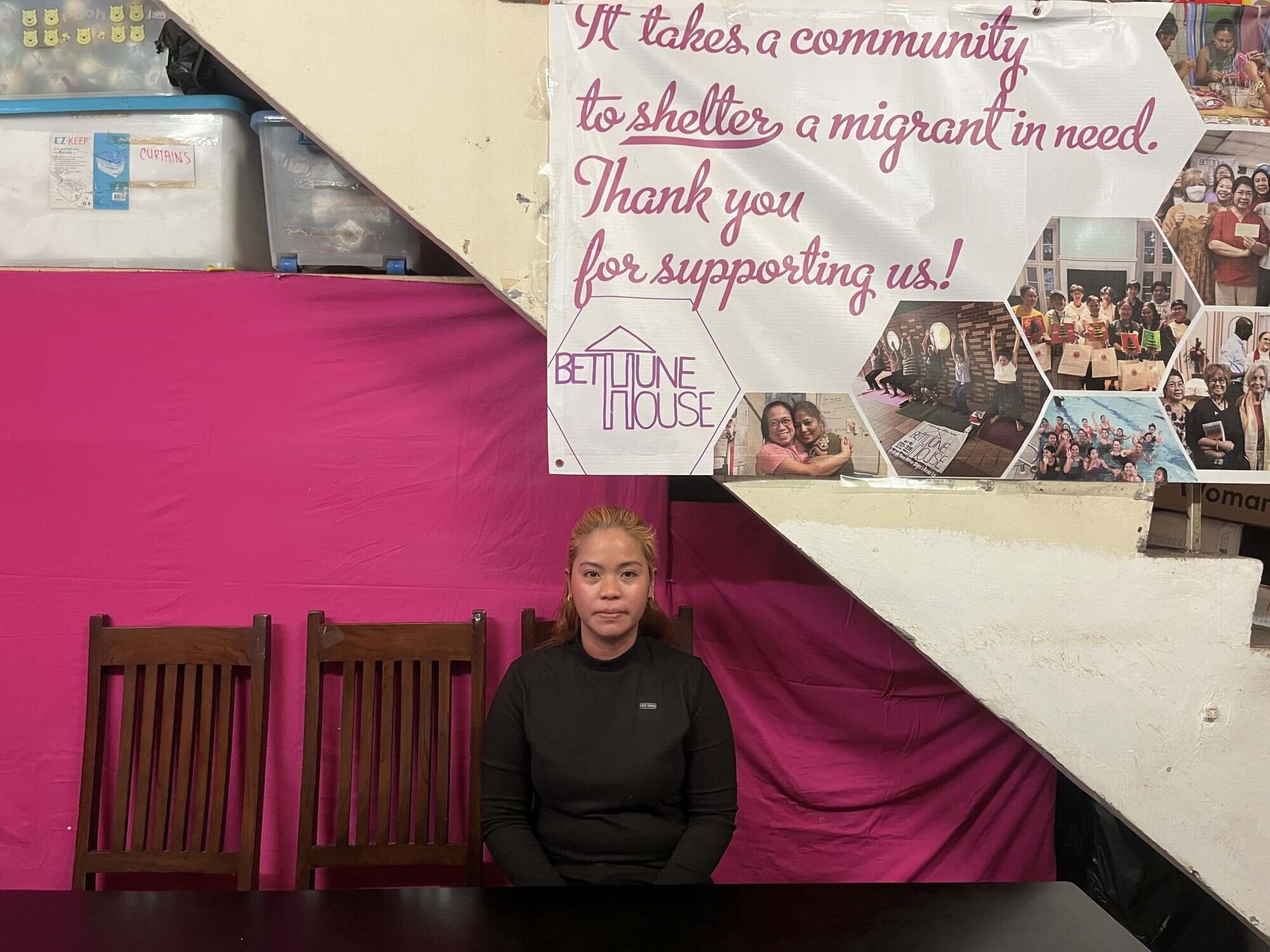
‘I want to live’
Filipino domestic worker Vame Mariz Wayas Verador was washing clothes in the kitchen when she heard her employer, a grandmother in her 60s, panicking as she spoke to the neighbours.
Moments later, Verador smelled smoke.
The 39-year-old grabbed the keys, a bottle of water and a jacket to wrap around the two-year-old child in her care.
The flat was on the 17th floor of Wang Tai House. As the trio went down the stairs, the grandmother struggled to keep up. Cradling the toddler in her left arm, Verador kept running back up the stairwell to make sure the grandmother was not left behind.
“My body was shaking. I was in pain. I was so thirsty,” Verador said.
But she said one thought cut through the chaos.
“What would happen to my kids if I died?” asked the single mother of four children who are looked after by her family in the Philippines. “I want to live. I want to go home to the Philippines alive.”
When Verador finally pushed open the exit door, she was met with a sight that has haunted her since: nearby buildings engulfed in flames and debris falling from above.
“All on fire,” she said. “A lot of people there. The fire, the bamboo, the net.”
The grandmother, the child and Verador were lucky to make it out alive.
Since the fire, Verador has had repeated flashbacks that bring her back to the sight of Wang Fuk Court in flames.
On December 7, she attended a medical check-up arranged by Mission for Migrant Workers. A doctor later issued a letter detailing her condition, which included back pain and moderately severe post-traumatic stress disorder.
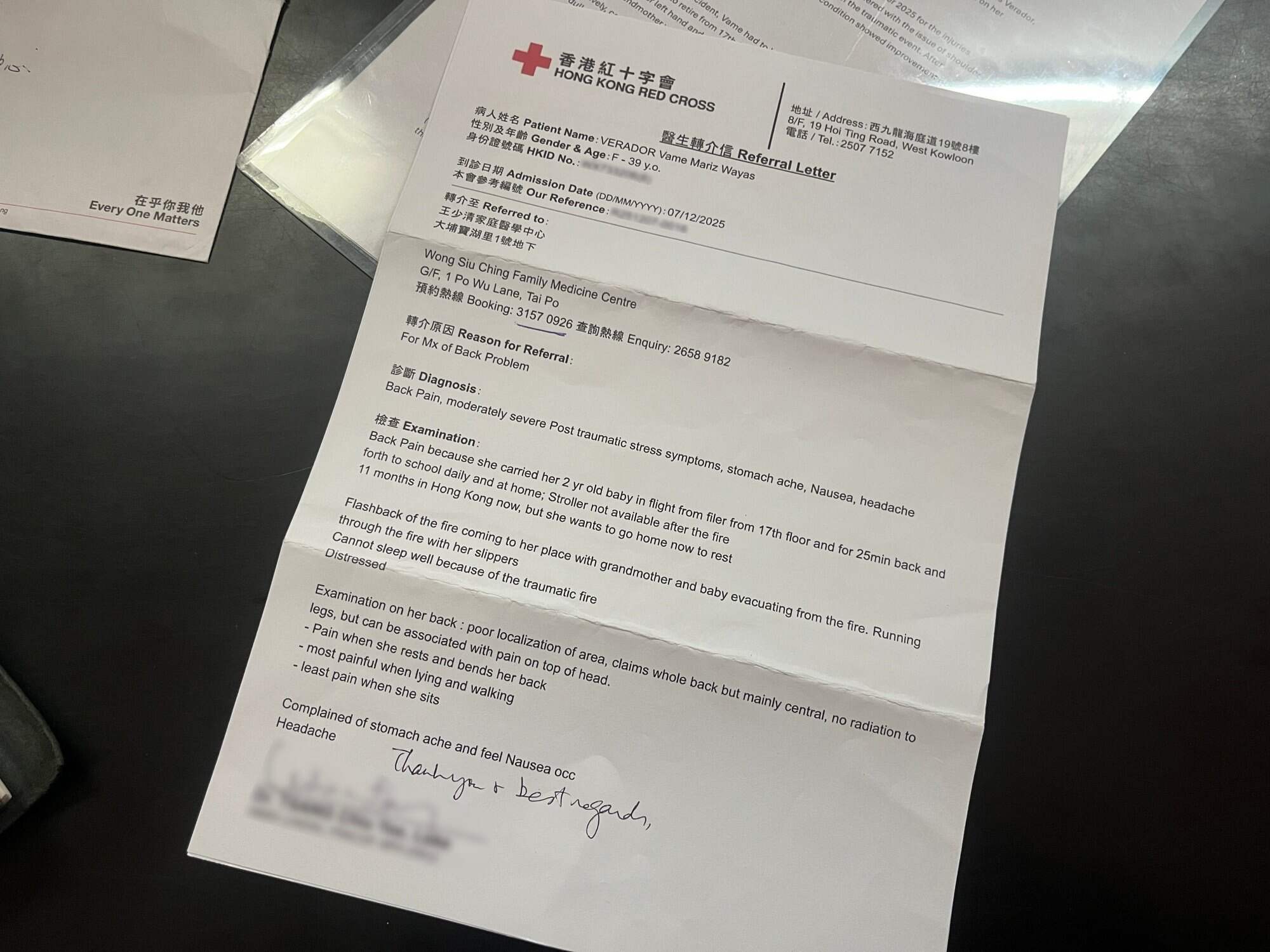
The next day, her employer terminated her contract, saying that the family was facing financial problems.
“I thought we were going to the hospital,” Verador said. “But instead, she laid me off.”
Soon after, Verador moved into Bethune House’s shelter. She is receiving therapy and medical support thanks to various NGOs. Her biggest wish is to recover so that she can continue to support her children’s education.
“I want to fight for this life right now,” she said.