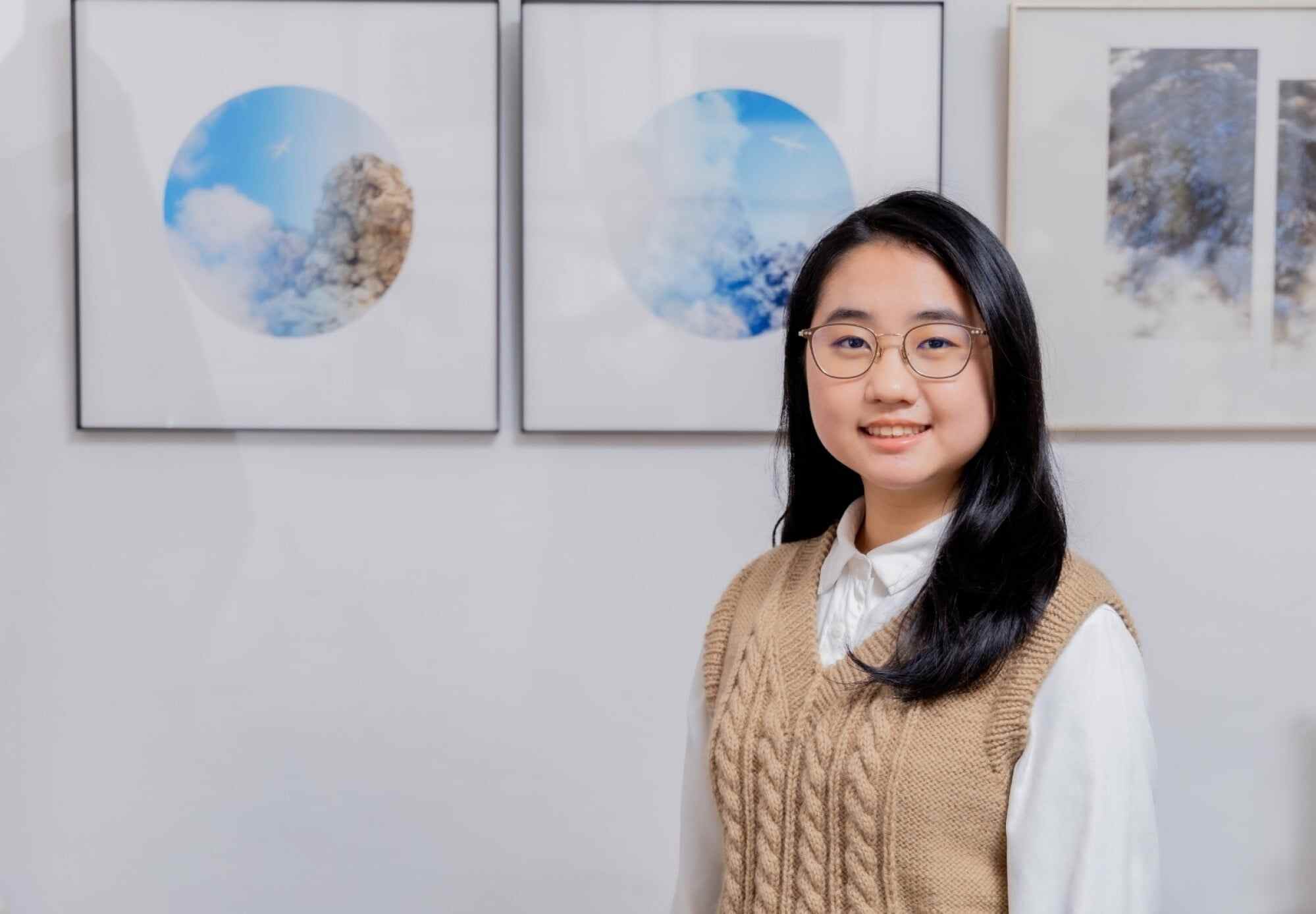
Award‑winning artist Stella Lo Chau, a graduate of Buddhist Sin Tak College in Hong Kong, is dedicated to creating innovative works that resonate with audiences.
“My passion for visual art began at age seven,” said the 19-year-old who is now studying fine arts at the Chinese University of Hong Kong.
Her journey in art started when she watched a teacher set up easels and paint outdoors. From that moment on, her path was set. Lo recalled being “deeply impressed” by the seriousness of those sketching sessions. With her family’s support, she began attending weekend classes that laid the foundation for the drawing skills she still relies on today.
Her mentor played a significant role in her artistic development, and long afternoons spent painting with classmates reinforced her belief in art as both a craft and a community.
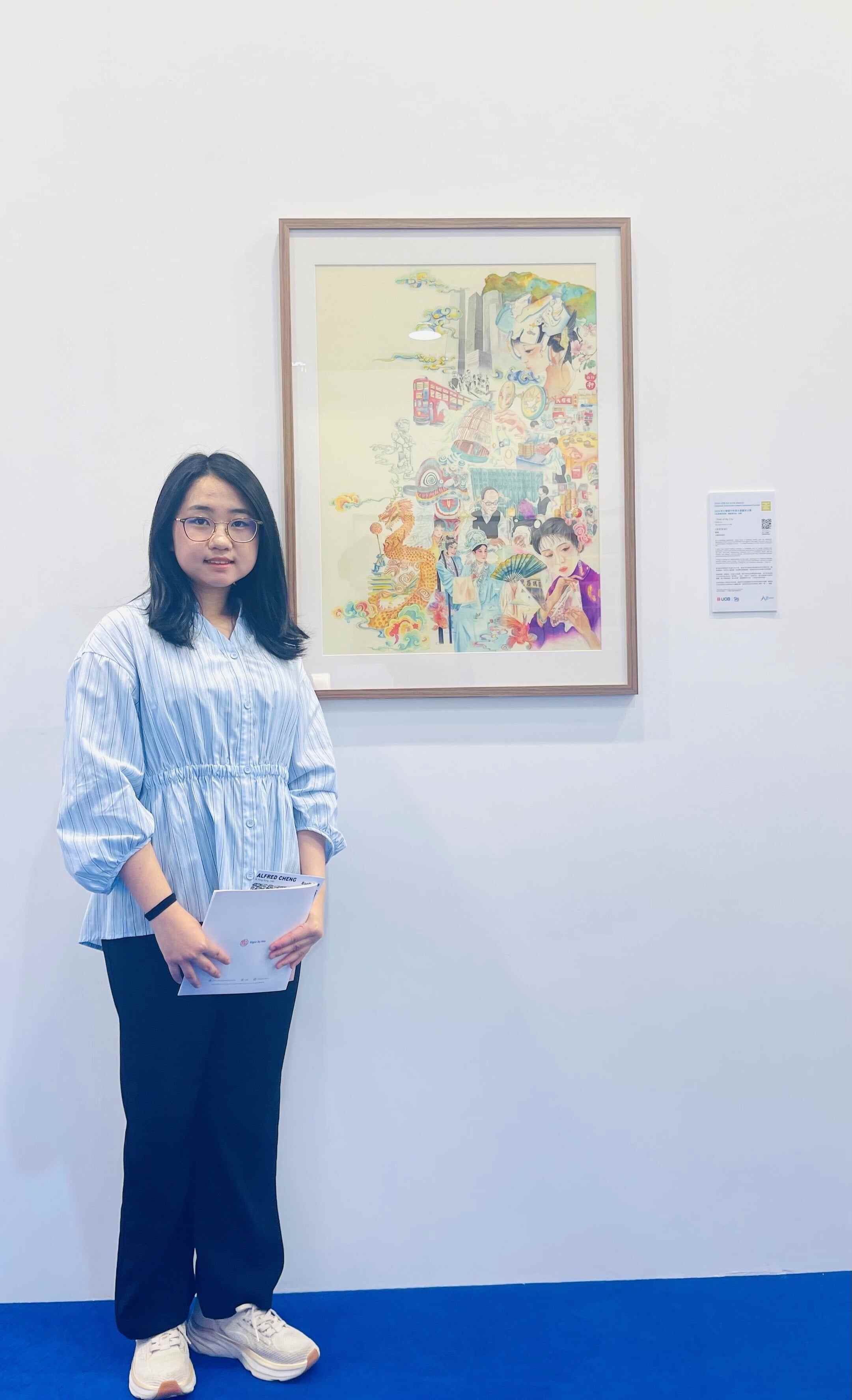
Lo’s work is characterised by a purposeful blend of traditional and contemporary elements. Cherished afternoons spent with her grandmother and experiences watching Cantonese opera prompted her to consider what future generations might feel nostalgic about. She incorporates silk and gongbi – an intricate style of Chinese painting – into her layering to explore themes of modern life.
“In my award-winning piece, I Think My City, I used the layering technique of gongbi painting, but depicted a highly advanced futuristic city,” she explained, describing how she paints the future in stark black and white while reserving bright, vivid colours for traditional elements.
Blank spaces preserve the “breathing room” of ink painting even as dense, futuristic skylines crowd the composition. The contrast is intentional.
Winning the Gold Award and the Most Promising Artist of the Year Award at the 2024 UOB Art in Ink Awards reinforced Lo’s belief that maintaining a personal voice is important. The prizes sharpened her self-awareness.
Lo said the awards “made me more aware of my shortcomings” and motivated her to deepen her technical foundation.
But now, her definition of success has shifted: it is no longer the tally of trophies, but whether a work can make viewers pause and reconsider their relationship with the city, tradition and time.
Lo’s leadership in her school’s art club reflects her desire to connect. She frequently organised activities and even led a group of beginners to paint a school staircase. The challenge was not logistics but confidence-building: many participants believed they “couldn’t paint well”.
Lo’s method was practical – breaking complex images into chalk sketches and encouraging students to begin with what they felt able to do.
The mural concluded with signatures and broad smiles; for Lo, the true achievement was the conversation the process sparked between people and their creative selves.
Lo’s commitment to art as social practice is perhaps most visible in her award-winning WhatsApp sticker project on mental health. Entering the “If Difficult, Walk Together” competition organised by the Samaritan Befrienders Hong Kong, she chose stickers because they are “a light, everyday and easily shareable medium that can gently convey care without adding pressure”.
“If someone feels a little warmth while downloading or sending a sticker, that is the most real impact art can have as a tool for social change,” she said.
She learned that art’s power lies in small exchanges thanks to a moment at a service-learning site when a participant smiled after a simple hand-holding exercise.
Lo’s innovative approach to art earned her recognition as a finalist in the category of Visual Artist of the 2024/25 Student of the Year Awards, organised by the South China Morning Post and exclusively sponsored by The Hong Kong Jockey Club.