More than 2 billion people worldwide still lack access to safely managed drinking water, according to a report from the United Nations. The UN warned that progress toward universal coverage is not occurring quickly enough.
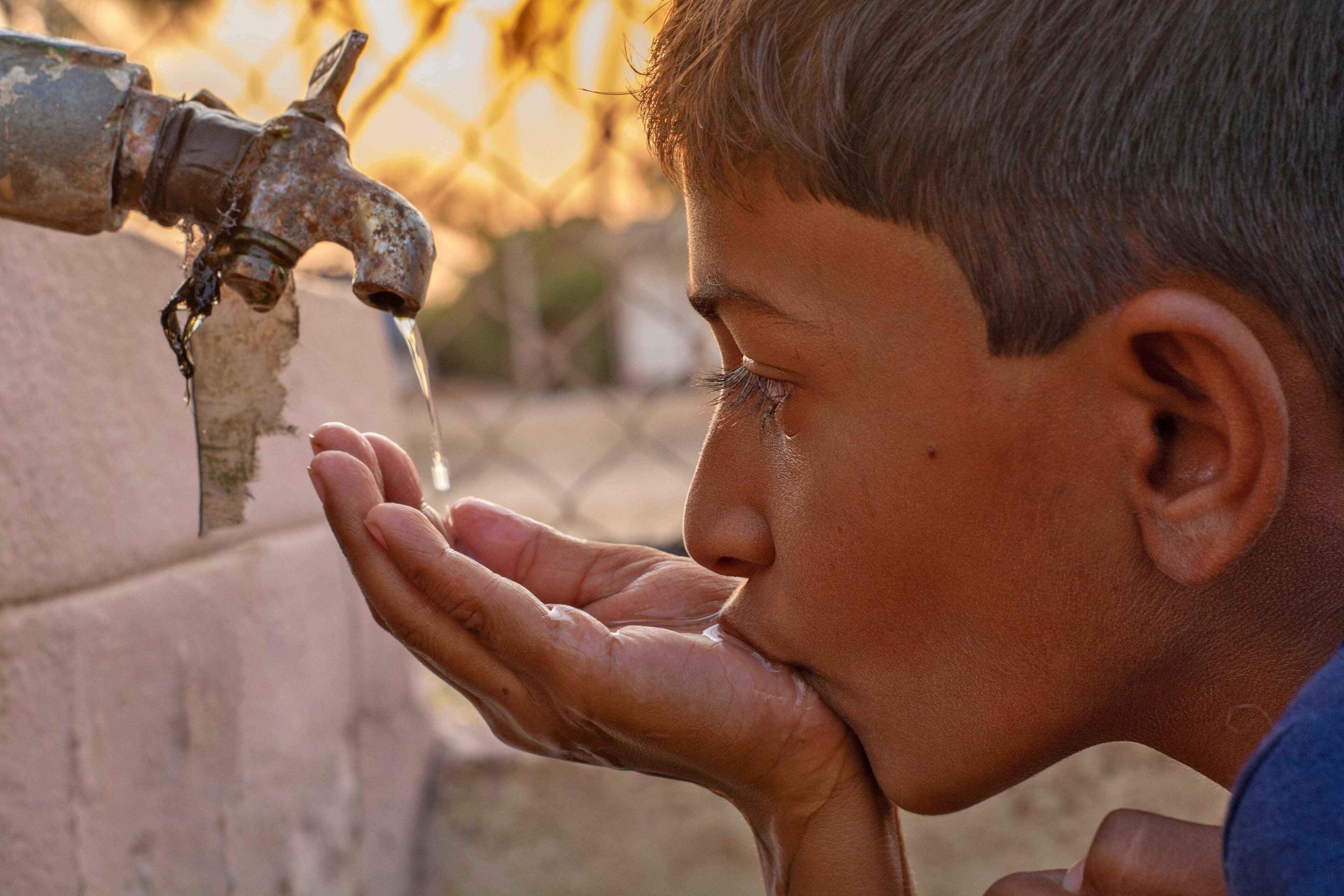
The health and children’s agencies of the UN stated that one in four people globally did not have access to safely managed drinking water last year. Over 100 million people still rely on surface water sources, such as rivers, ponds and canals, for their drinking needs.
The World Health Organization (WHO) and Unicef emphasised that inadequate water, sanitation and hygiene (WASH) services leave billions at a heightened risk of disease. In their joint study, they indicated that the world is far from reaching the goal of universal coverage of these services by 2030. Instead, they warned that this target “is increasingly out of reach”.
“Water, sanitation and hygiene are not privileges: they are basic human rights,” said the WHO’s environment chief Ruediger Krech. “We must accelerate action, especially for the most marginalised communities.”
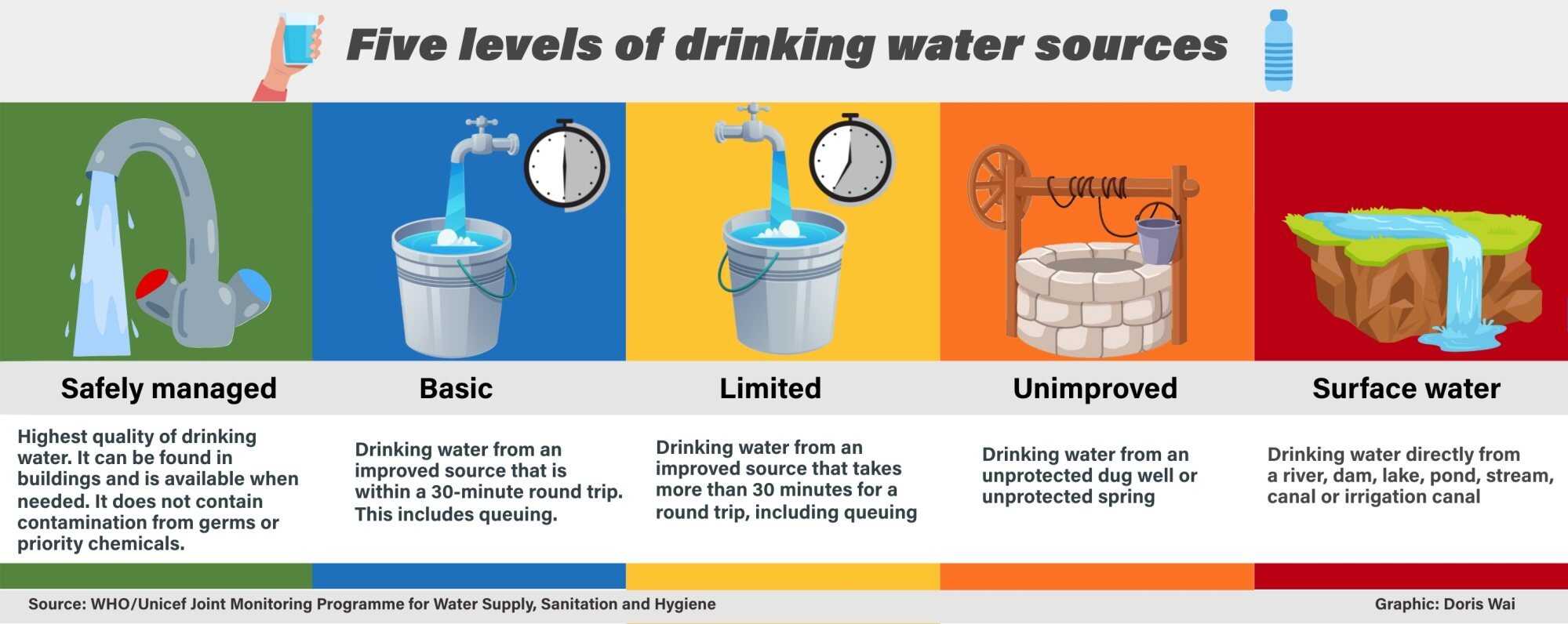
The report examined five levels of drinking water services (see graphic).
Since 2015, 961 million people have gained access to safely managed drinking water, increasing coverage from 68 per cent to 74 per cent.
Of the 2.1 billion people still lacking access to safely managed drinking water services last year, 106 million used surface water, representing a decrease of 61 million over the past decade.
The number of countries that have eliminated the use of surface water for drinking rose from 142 in 2015 to 154 in 2024. As of 2024, 89 countries had achieved universal access to at least basic drinking water services, and 31 of these countries provided universal access to safely managed services. The 28 countries where more than one in four people lack basic services are primarily in Africa.
In terms of sanitation, 1.2 billion people have gained access to safely managed sanitation services since 2015, increasing coverage from 48 per cent to 58 per cent.
These services are defined as improved facilities that are not shared with other households and where excreta are either safely disposed of on-site or removed and treated off-site. The number of people engaging in open defecation has decreased by 429 million, bringing the total down to 354 million in 2024, or 4 per cent of the global population.
Since 2015, 1.6 billion people have gained access to basic hygiene services – specifically, handwashing facilities with soap and water at home – resulting in an increase in coverage from 66 per cent to 80 per cent.
“When children lack access to safe water, sanitation and hygiene, their health, education and futures are put at risk,” warned Cecilia Scharp, Unicef’s director for WASH. “These inequalities are especially stark for girls, who often bear the burden of water collection and face additional barriers during menstruation. At the current pace, the promise of safe water and sanitation for every child is slipping further from reach.”
What is the difference between an improved and an unimproved water source?
An improved water source is one that is protected from contamination and where the water is more likely to be safe to drink without further treatment. Examples of improved water sources include water piped directly into homes and public taps.
These sources of water are separated from human and animal waste, which are major causes of waterborne diseases like cholera and typhoid.
For someone to have “safe drinking water”, their water source needs to be free from contamination, located at home and available whenever needed.
An unimproved water source is any source that does not offer the same level of protection from contamination. Water from these sources is at a higher risk of being unsafe to drink. Examples include wells that do not have a proper wellhead or cover and surface water from a river, dam, lake, pond or stream. 452 million people currently do not have access to safe drinking water.