US President Donald Trump has announced a sweeping naval operation targeting the Strait of Hormuz, one of the world’s most important oil transit chokepoints, which risks deepening a global crisis.
“Effective immediately, the United States Navy, the Finest in the World, will begin the process of BLOCKADING any and all Ships trying to enter, or leave, the Strait of Hormuz,” Trump said in a social media post on Sunday.
Later in the day, US Central Command (CENTCOM) said American forces would begin “impartially” implementing the blockade against “all maritime traffic entering and exiting Iranian ports” starting on Monday at 10am Eastern Time. The measure applies to all Iranian ports along the Persian Gulf and the Gulf of Oman.
The statement added that CENTCOM forces would not hinder freedom of navigation for vessels transiting the Strait of Hormuz to and from non-Iranian ports.
Trump earlier said that “at some point, we will reach an ‘ALL BEING ALLOWED TO GO IN, ALL BEING ALLOWED TO GO OUT’ basis”, but for now, he had instructed the US Navy to “seek and interdict” every vessel in international waters that had paid a toll to Iran.
“No one who pays an illegal toll will have safe passage on the high seas. We will also begin destroying the mines the Iranians laid in the Straits. Any Iranian who fires at us, or at peaceful vessels, will be BLOWN TO HELL!”
The announcement was part of a barrage of remarks issued after 21 hours of talks between the United States and Iran in Pakistan ended without an agreement.
Iran responds to Trump threat
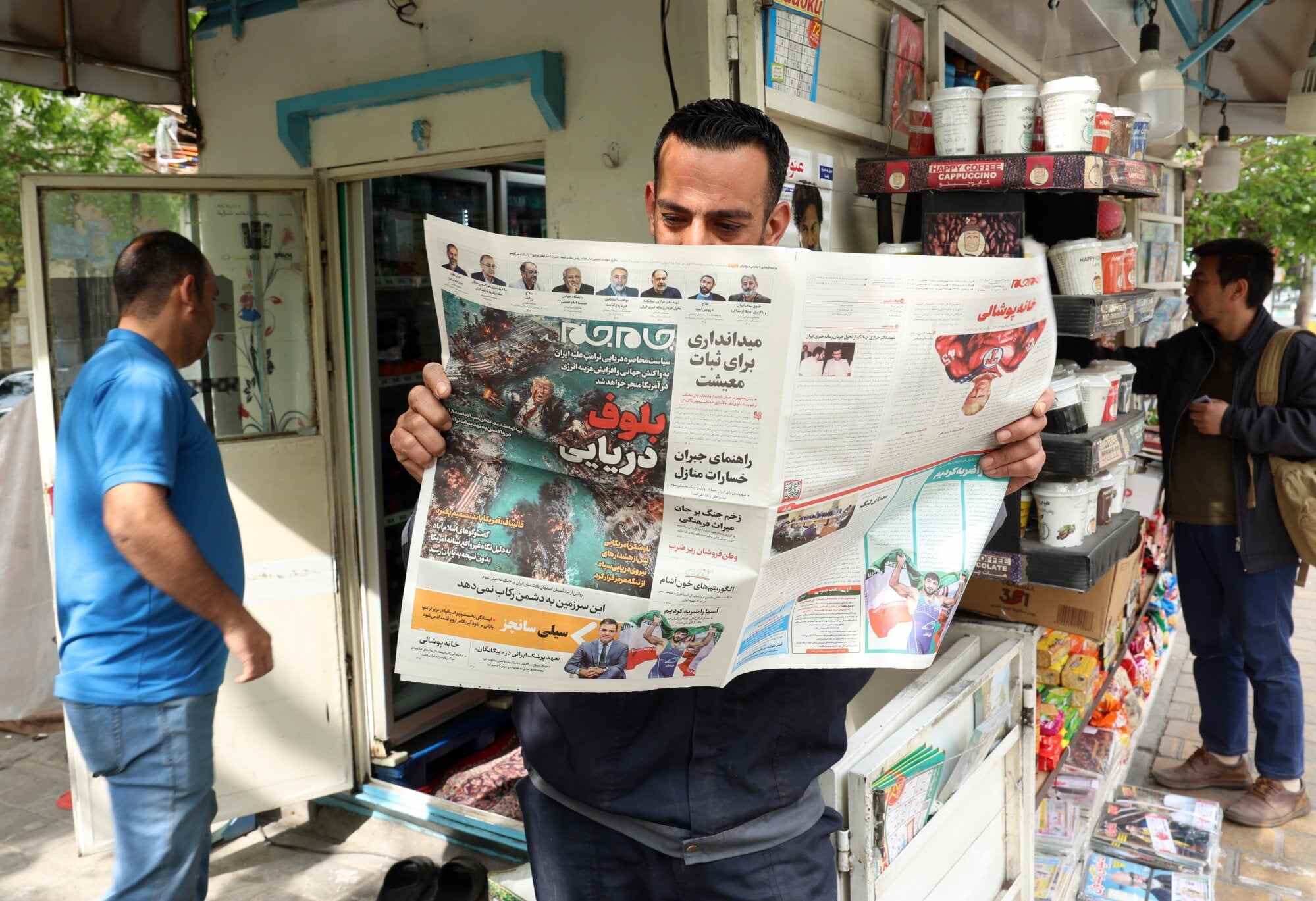
In response to Trump’s statements, Iran’s Revolutionary Guard Corps issued a message on social media, claiming Iranian forces had “full control” of the strait.
“The enemy will become trapped in a deadly vortex in the Strait if it makes the wrong move,” the statement read.
Iran’s top negotiator Mohammad Baqer Qalibaf pledged to fight back, but added that if “you come forward with logic, we will deal with logic”.
The failure of the Islamabad negotiations casts doubt over the future of a ceasefire that capped more than a month of intensifying conflict, triggered by joint US-Israeli strikes on Iran.
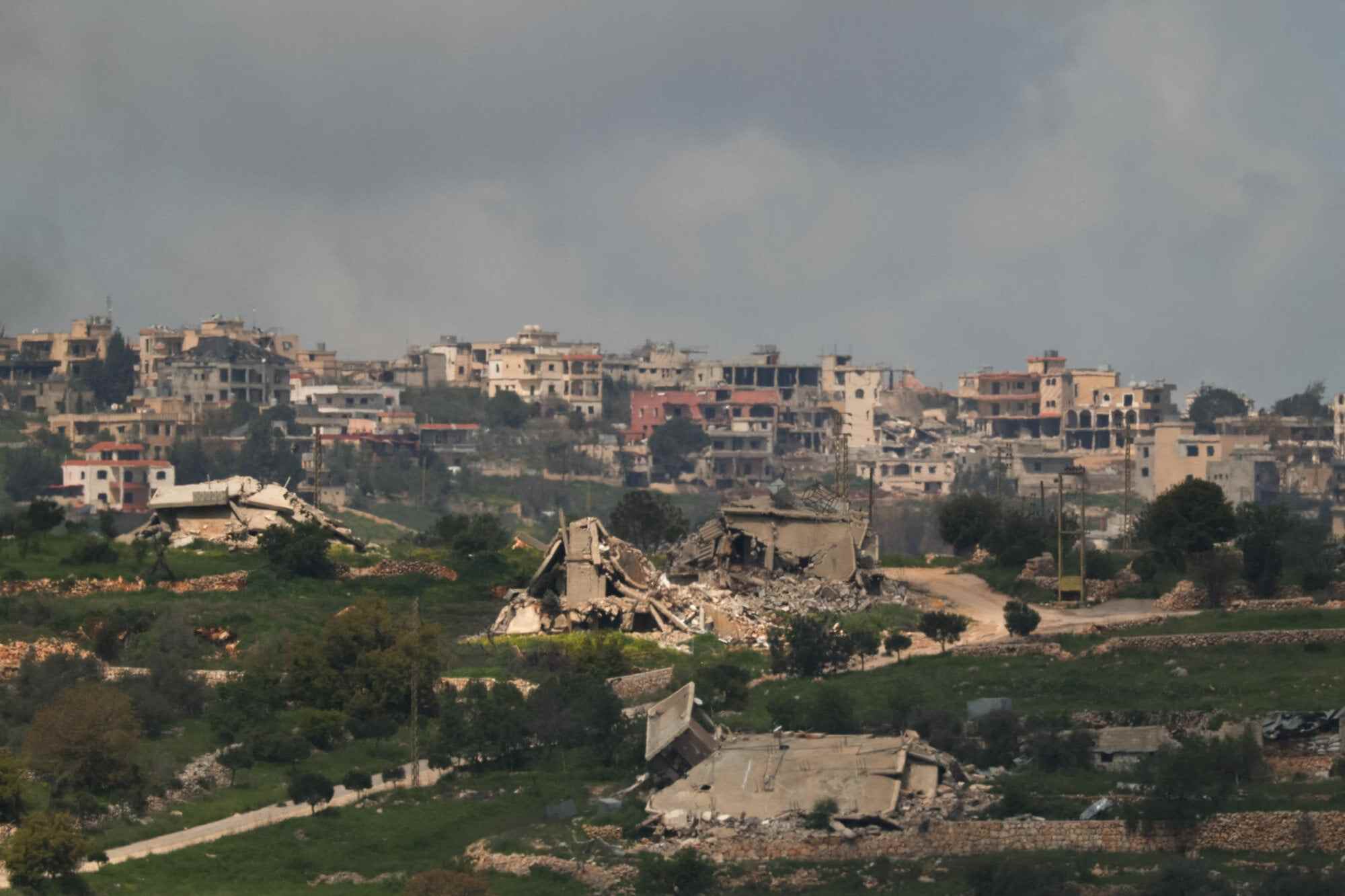
In the weeks since those strikes, Iran has hit back by blocking the Strait of Hormuz, an action that has upended global oil and gas supply chains and rattled energy markets, driving up fuel prices.
It has also threatened to impose tolls on maritime traffic through the waterway.
In the meantime, Tehran has reportedly adopted a “selective passage” system for the strait, allowing limited transit for vessels from certain countries under direct arrangements with Iranian authorities.
Reports indicate that ships linked to US allies such as the Philippines, along with those from India and Pakistan, have secured negotiated passage, while China has also acknowledged that its vessels have been able to transit the channel under similar understandings.
‘All in, all out’ approach in Hormuz
The US blockade aims to end that, according to Trump, who claimed that other unspecified countries would be aiding his efforts.
“It’s called all in and all out,” he said in an interview with Fox News, adding, “It won’t be a friend of yours, like a country that’s your ally, or a country that’s your friend – it’s all or nothing.”
Responding to media reports that US intelligence indicated Beijing was preparing to send a weapons shipment to Tehran, Trump threatened a 50 per cent tariff on Chinese imports if he found that the report was true.
The Chinese embassy in Washington rejected the report.
Just over a month remains until Trump is scheduled to hold a face-to-face meeting with Chinese President Xi Jinping in Beijing.
Asked if his blockade decision would send energy prices even higher in the approach to November’s midterm elections, Trump said oil and gas prices “could be lower” by then or “maybe a little higher”.
Analysts warned that a US-led blockade risked compounding the crisis, further constricting trade flows and amplifying economic shock waves worldwide.

Warning that the “locked and loaded” US military would “finish up the little that is left of Iran”, Trump on Sunday described Iran’s collection of tolls for crossing the strait as an “illegal act of extortion”.
“They want money and, more importantly, they want Nuclear,” he said.
While Trump noted that “most points” of a potential peace negotiations were settled, the talks in the Pakistani capital of Islamabad on the weekend reached a terminal impasse over Iran’s refusal to dismantle its nuclear programme.
“There is only one thing that matters – IRAN IS UNWILLING TO GIVE UP ITS NUCLEAR AMBITIONS!” the “America first” president said.
Earlier in the day, Iran’s embassy in Austria warned that “a blockade blocks” and urged all sides to “bend to reason”.
“[A blockade] cannot ‘open’ the Strait of Hormuz – only restrict it,” the embassy said, adding that the only way out of this “self-made problem is openness and flexibility in negotiations”.