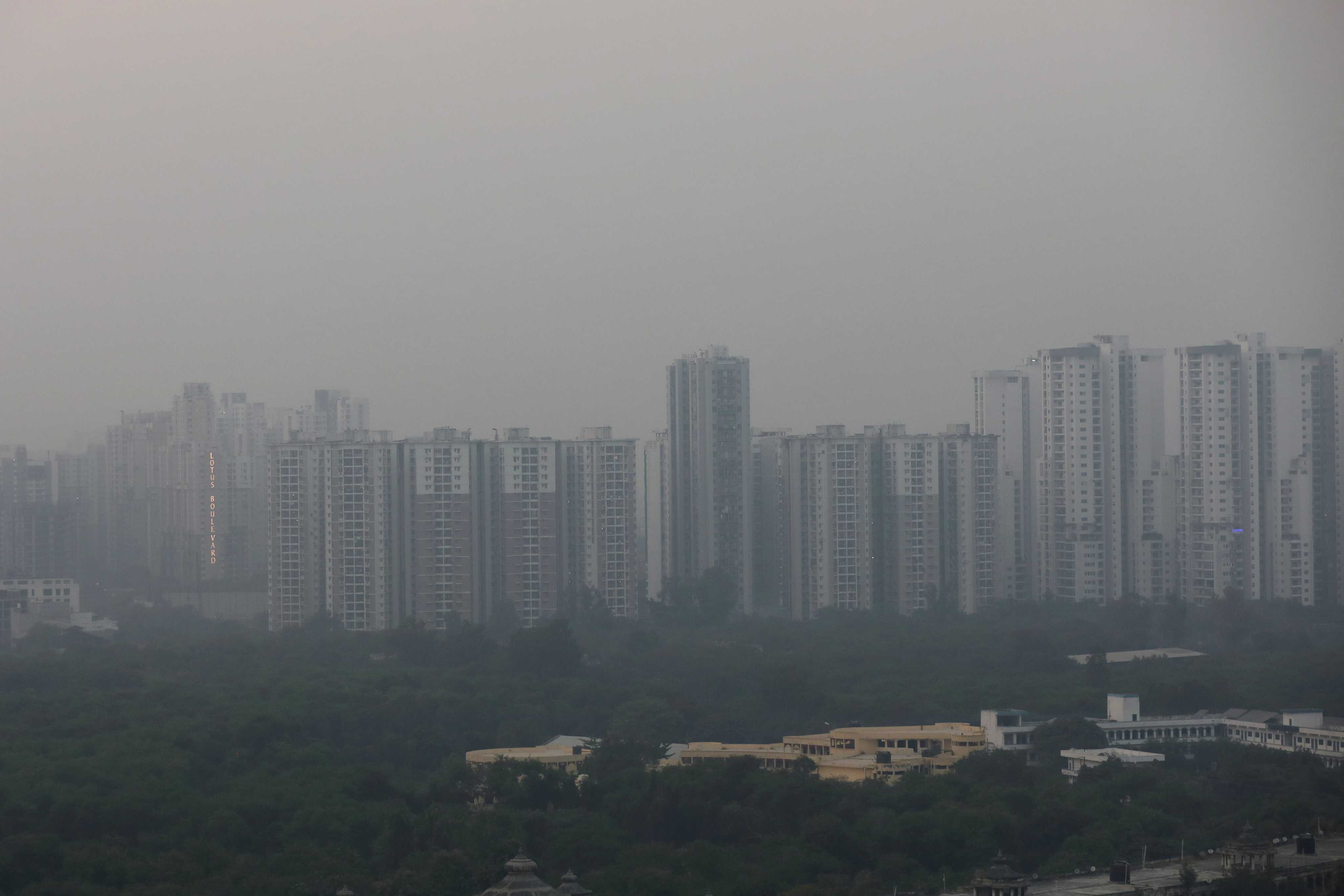
A thick winter smog has once again settled over New Delhi, enveloping the Indian capital in toxic haze and prompting residents to take to the streets in protest as doctors warn of an escalating public health crisis.
Environmental researchers and health experts warn that the worsening winter smog in Delhi highlights deeper structural issues, including unchecked emissions and crop burning, as well as inadequate regional coordination. They emphasise that the city’s livability is at risk, as stagnant air traps increasing concentrations of toxic particles.
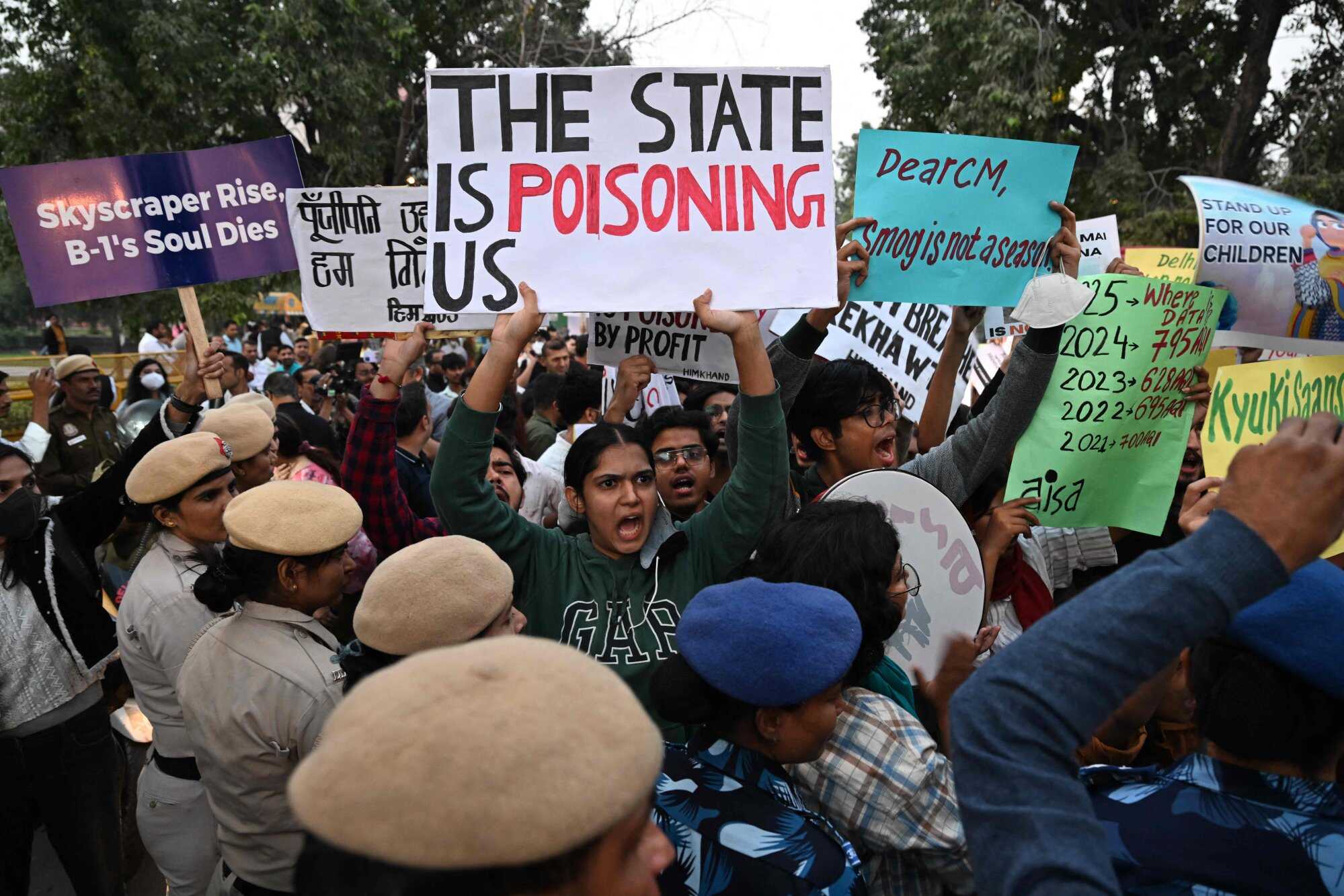
The poor air quality prompted hundreds of people to gather at Delhi’s historic India Gate, a landmark monument. This rare protest aimed to urge authorities to take action. Many participants wore masks and carried placards, with one reading, “I miss breathing”, while others simply stated, “Clean Air”.
The police later confiscated the placards and banners and urged the protesters to disperse, citing that they did not have permission to demonstrate. Meanwhile, India’s Supreme Court instructed lawyers to refrain from attending in person and to argue their cases virtually instead, due to worsening air quality in the capital.
Every winter, Delhi and the surrounding areas are covered in thick smog caused by a harmful mix of farmers burning crop debris and pollution.
The former ruling party in Delhi, the Aam Aadmi Party (AAP), was defeated in an election by Prime Minister Narendra Modi’s Bharatiya Janata Party (BJP) in February this year. AAP has accused the government of manipulating pollution data to downplay the severity of the issue. The BJP responded by attributing the crisis to the AAP’s decade in power, arguing that the previous administration’s failures could not be rectified so soon.
Priyanka Gandhi Vadra, a leader of the opposition party, the Congress, described her return to Delhi from her constituency in the southern state of Kerala as feeling like she “was like entering a gas chamber”.
Doctors warned that the declining air quality levels can no longer be dismissed as a short-term phenomenon, as the number of people falling ill continues to surge.
“Every breath in Delhi National Capital Region today comes with a major health cost – we’re seeing more patients struggling with breathlessness, asthma and heart problems, especially among children, the elderly and those with chronic diseases,” said Dr Harshal Ramesh Salve of the All India Institute of Medical Sciences.
India experienced approximately 1.72 million deaths from outdoor air pollution in 2022, a 38 per cent increase from 2010, as reported in the Lancet Countdown on Health and Climate Change 2025.