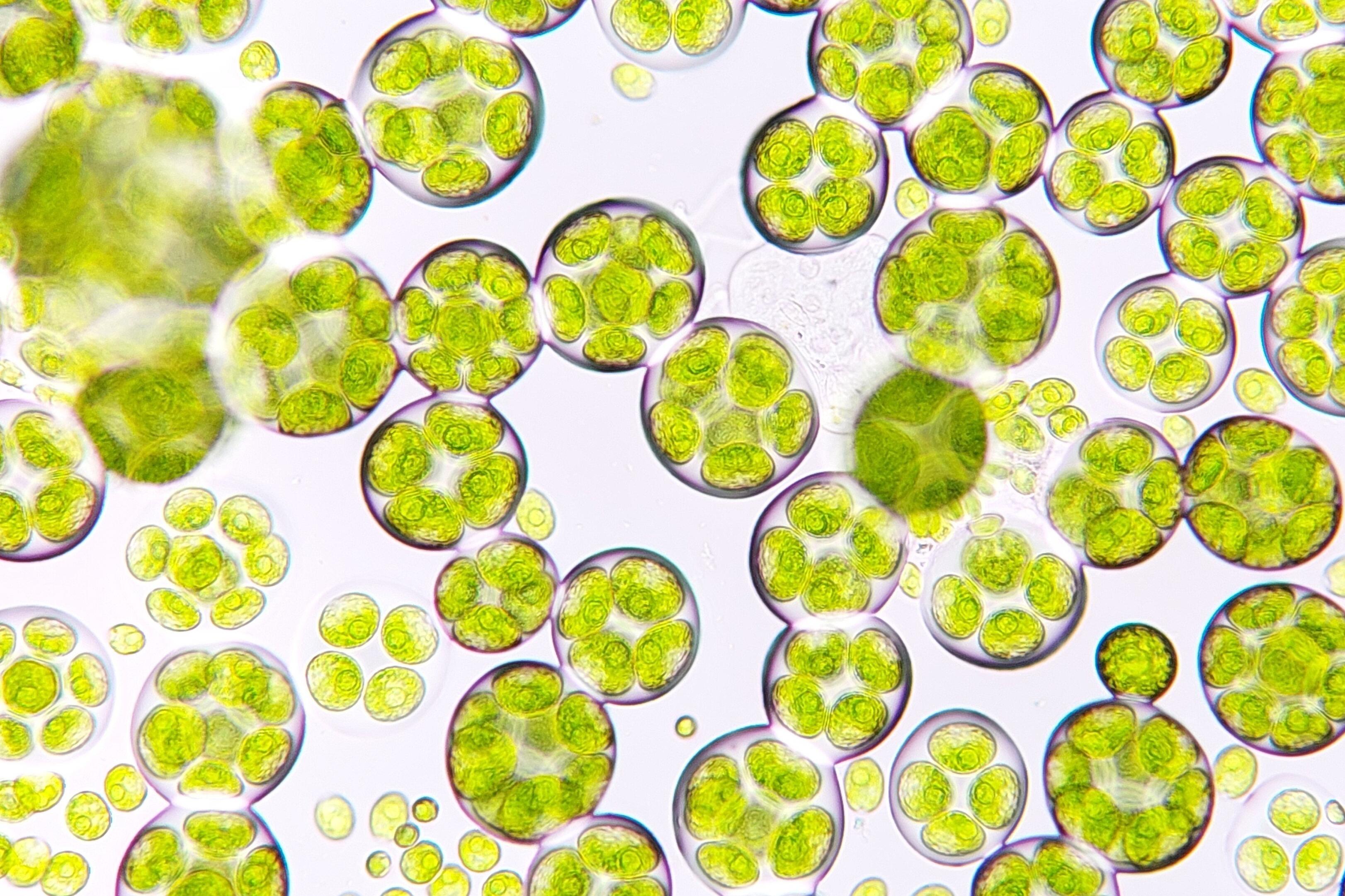
While regular algae, like seaweed, are large enough to see and touch, microalgae are single-celled organisms that can only be seen through a microscope.
Often dismissed as mere pond scum, these tiny heroes play a surprisingly crucial role in our battle against climate change.
Among the oldest forms of life on Earth, microalgae inhabit a range of natural environments, from freshwater rivers and lakes to the open oceans. More than 30,000 species of microalgae have been identified so far, but their true biodiversity remains largely unexplored, suggesting that the actual number could be far greater.
How do microalgae fight climate change?
These organisms capture carbon dioxide using photosynthesis. Like plants, most microalgae harness sunlight to convert carbon dioxide and water into organic compounds that contain carbon, such as carbohydrates, while releasing oxygen as a by-product.
For many species of microalgae, this process can be highly efficient. Thus, they have significant potential to help reduce the greenhouse gases that drive climate change. Depending on the species and its environment, they can convert carbon dioxide from a gas into organic compounds at rates 10 to 50 times higher than those of land-based plants.
This efficiency is linked to several biological advantages.
Microalgae have a specialised carbon concentrating mechanism. Think of it as a built-in pump that packs extra carbon dioxide in their cells. This supercharges rubisco, the key enzyme responsible for carbon fixation, allowing the cells to be far more effective as they trap and convert carbon dioxide from their surroundings.
A few other factors also help them lock away carbon dioxide much faster than land-based plants. Microalgae grow incredibly fast; certain species can double their numbers in a few hours. They also have a high ratio of surface area to volume, facilitating an efficient exchange of gas and nutrients.
What else can scientists do with microalgae?
Since microalgae thrive in diverse environments, they can even be cultivated on non-arable land to fight climate change without taking up valuable farmland.
Researchers are developing high-performance photobioreactors to grow microalgae and optimise their ability to capture carbon. These systems act as smart greenhouses, shielding the algae from external contaminants while allowing for the control of temperature, pH, light intensity and nutrients.
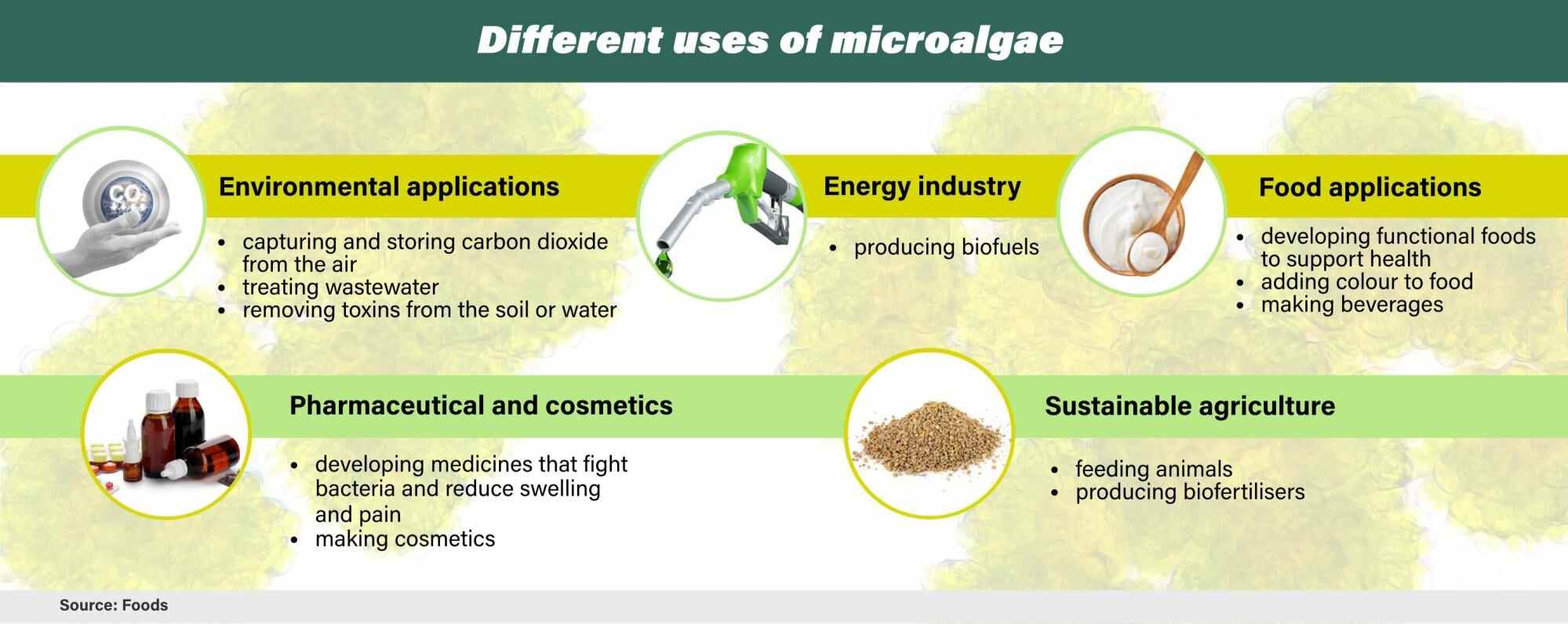
Microalgae also have a wide range of uses, including as a source of animal feed, energy and fertiliser (see graphic). Certain species that are rich in lipids can be processed into sustainable biofuels. This could potentially become a carbon-neutral alternative to fossil fuels. They can also be used to produce biofertilisers, which would reduce industrial pollution and protect our planet.
These microscopic organisms show nature’s remarkable ability to offer innovative solutions to pressing environmental challenges.
Find out more about these amazing organisms at the Hong Kong Science Museum’s new exhibition, “Living Tech Gallery”, where you can explore more living technologies that are transforming our world.
Young Post has partnered with Hong Kong Science Museum and Hong Kong Space Museum to encourage your pursuit of science. Every month, the museums answer questions about the world around us, the cosmos and beyond.