Have something to say? Send us a letter using this form.
Red packet traditions
Jane Zhang Yingxin, GCCITKD Lau Pak Lok Secondary School
The rise of e-red packets and a growing obsession with the “market value” of gifts have led many to worry that the original essence of ya sui qian – money given to wish protection and health for the younger generation – is being lost.
Regional customs have fostered a culture of intense financial pressure in many areas. The shift to digital e-red packets has only intensified this trend, fuelling a “comparison culture” among peers.
In my opinion, the traditions in Guangdong province present a refreshing perspective. There, it is common to receive small amounts in each envelope. This lai see culture emphasises the act of giving rather than the amount given, thereby maintaining the tradition’s original purpose: to share luck and goodwill.
To appreciate the importance of this tradition, we must acknowledge the effort that goes into giving a gift. The older generation may find it challenging to provide these gifts, yet they prioritise our well-being above their own struggles.
The true value of a red packet lies not in its thickness or the number of zeros displayed on a screen. No matter the sum, the real gift is the love tucked inside.
Safety regulations re-evaluated
Chuengjadee Chulawat, Fung Kai No 1 Secondary School
The seat belt law, enacted on January 25, was abruptly suspended soon after.
Although it was intended to improve public safety, the policy had a critical flaw in its implementation: it applied only to buses registered on or after the law’s release date. This inconsistency left commuters confused about which rules applied to different vehicles, causing unnecessary chaos.
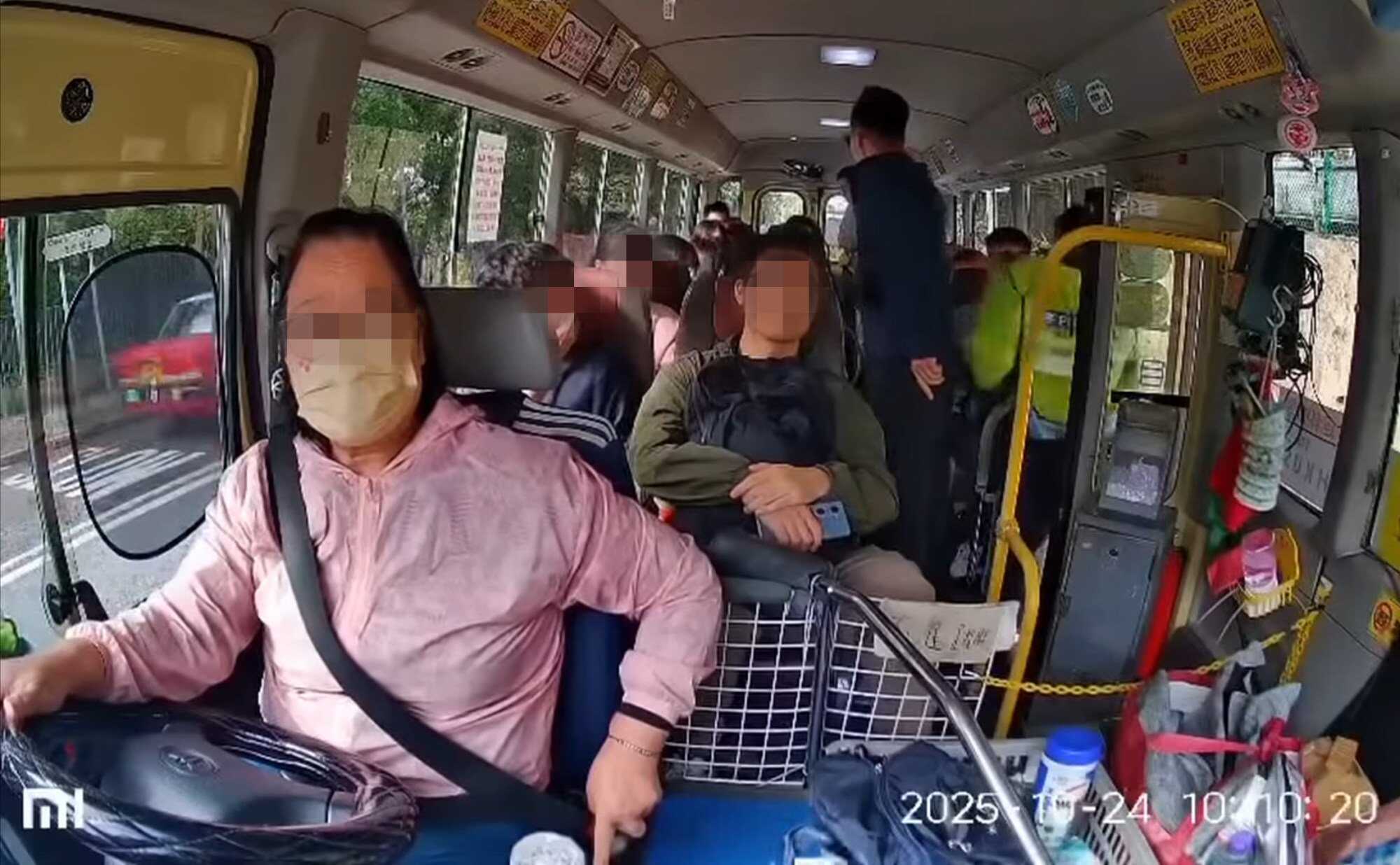
A Citybus incident on January 29 highlights the risks associated with the hurried roll-out of new safety measures. According to police reports, a passenger was trapped on a bus for about 45 minutes due to a jammed and faulty seat belt.
This problem was particularly evident in older fleet models. In many of these vehicles, safety equipment was found to be tangled, damaged or unusable, turning what should be a safety feature into a potential hazard.
Cancelling the mandate was not an admission of failure; rather, it was a responsible acknowledgement that the infrastructure was not yet ready.
With the law now rescinded, authorities have a vital opportunity to conduct thorough vehicle inspections and make necessary upgrades.
Rules rule
Constance Cheung Tsz-yin, St Francis’ Canossian College
Students often find school rules annoying, and as a student myself, I understand how they feel. Yet these rules exist for good reason – they maintain order, promote fairness and teach responsibility.
Take my school’s recent rule requiring students to leave their phones at the teacher’s desk before using the restroom during class. Many thought it was unnecessary, but it prevents students from hiding in bathrooms to scroll on their phones and missing important lessons. It also helps ensure that toilets are not occupied for too long.
Other rules encourage personal responsibility and respect for others. For example, students are expected to bring their own belongings to school each day rather than rely on parents to deliver forgotten items at lunchtime. Some may argue that domestic helpers or grandparents are willing to bring things to school since they have the time, but the rule reminds us that we should be accountable for ourselves.
While it is easy to see school rules as restrictive, their real purpose is not to control but to guide and protect. They help everything run smoothly and, more importantly, shape us into responsible individuals.
AI versus the classroom
Tania Wong Cheok-lam, Pui Ching Middle School (Macau)
The rapid rise of artificial intelligence (AI) has sparked a global debate: should high school students shift to AI-driven self-study at home, or is the traditional classroom still essential?
While AI provides unprecedented access to information, the human aspect of education is irreplaceable.
Celine Mak, a Form Four student, shared her thoughts: “AI is incredibly helpful for providing immediate feedback, such as correcting compositions. However, I still prefer the school environment because it offers the structure and discipline I need to truly focus on my studies.”
Parents express this sentiment, emphasising the developmental importance of the classroom.
“I truly believe that face-to-face instruction is better for middle and high school students,” one parent remarked.
While AI-powered self-study may seem efficient at first glance, many educators, parents and students disagree. The collaborative environment found in schools provides advantages that technology alone cannot replicate.
As AI continues to advance and students increasingly depend on it, the traditional school experience will remain an essential foundation.