Have something to say? Send us a letter using this form.
The power of language
Agnes Cheng Yee-on, St Paul’s Secondary School
I recently watched the BBC World Service video titled “Why scientists think humans started speaking,” which explores the evolutionary puzzle of language emerging around 135,000 years ago. The video explains how humans possess a unique hyoid bone and a FOXP2 gene mutation that enable us to produce complex sounds that primates cannot.
Speech evolved to strengthen social bonds, enabling us to share ideas, signal identities and envision futures. As a student, this discovery sparked my curiosity about the everyday magic of language. Even without physical contact, brief phone conversations can create emotional connections.
In Hong Kong, I’ve noticed that many teenagers often use emojis and abbreviated texts, which strip away the depth that speech was originally designed to provide.
To address this issue, schools should consider launching casual conversation clubs to encourage rich dialogue.
Families could prioritise meaningful conversations, while multilingual voice-chat apps might reignite expressive exchanges among young people. By honouring the social heritage of language, we can preserve its vital role in bringing us together.
Redefining success together
Megan Lam, Heep Yunn School
We are often told that to succeed, we need three things: to be bold, to compete and to climb. We imagine the journey to success as the daring adventure of an ancient Greek hero, like Odysseus in Homer’s The Odyssey.
But what if success isn’t just about the hero’s battles? What if it’s about a quieter, smarter kind of strength?
Real success requires two key elements: a destination and a foundation. Odysseus’s struggle has one clear goal: to return to Ithaca, his home. Our student life can be seen as an odyssey, with exams and distractions acting as our monsters. But what are we truly fighting for?
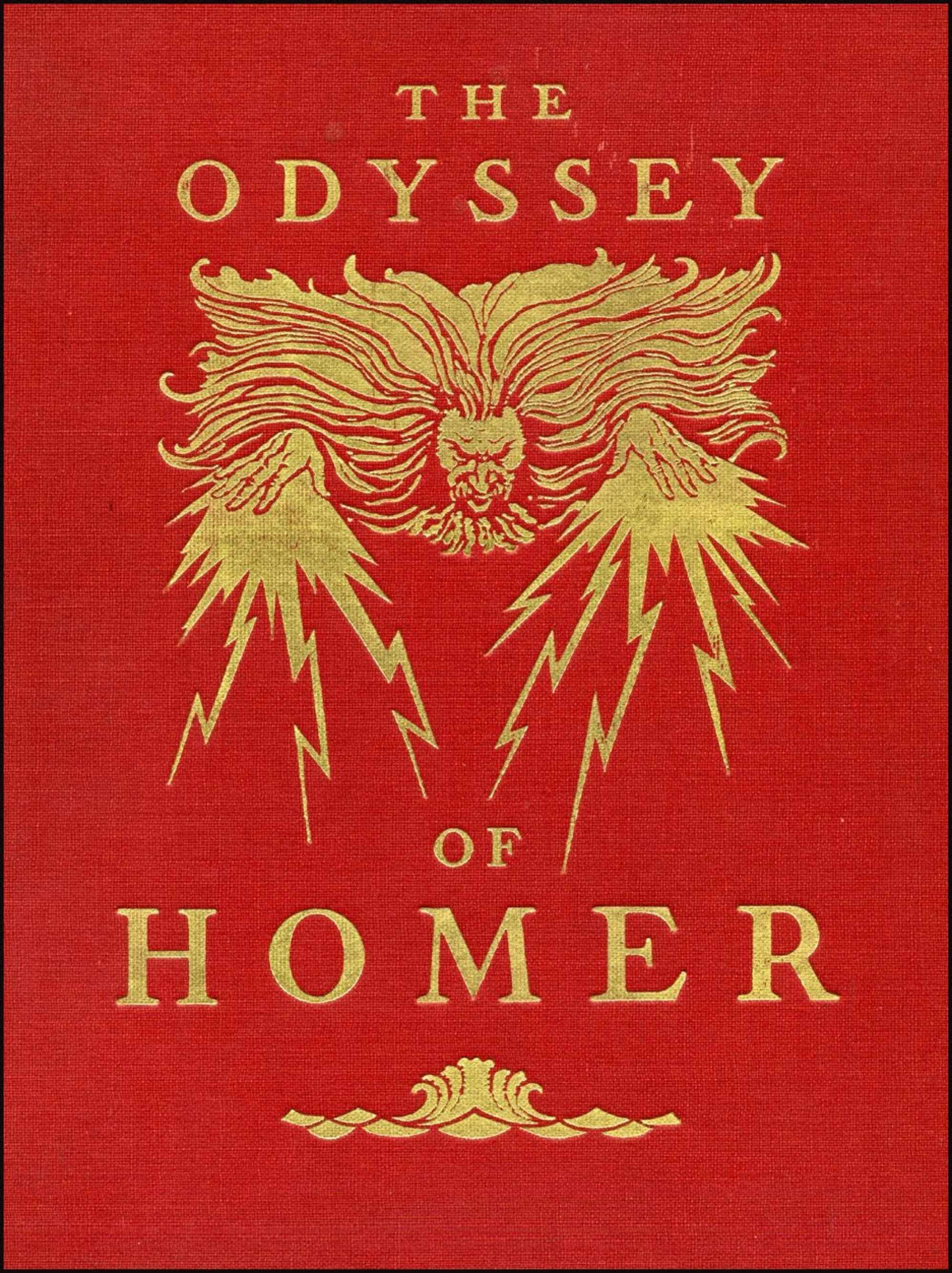
A goal is meaningless if you burn yourself out before you reach it. This is where we can learn from the true genius of the epic: Penelope. Faced with 100 suitors invading her home, she does not submit to their demands. Instead, she promises to choose a husband only after weaving a shroud.
To us, the “suitors” we confront are burnout and anxiety. Part of achieving success is having the courage to sometimes “unweave” to protect our mental well-being and preserve our peace. If we sacrifice all of that for a trophy, have we truly succeeded?
Therefore, success is not a single act but a balance.
Empowering young adults
Michelle Shen Meixuan, Lung Kong WFSL Lau Wong Fat Secondary School
I am responding to the topic of whether parents should influence their children’s college decisions, as discussed in this newspaper.
I believe it is wiser for parents not to participate in their children’s college choices. To begin with, I don’t think parental guidance necessarily enhances children’s autonomy. Some parents, believing they have more experience, try to control their children’s decisions.
Typically, these decisions do not align with the child’s preferences.
Young adults, who are just coming of age, prefer to make their own decisions. This is an important lesson in their lives, teaching them to bear the consequences of their choices.
I also disagree with the idea that parents will make better decisions based on their own experiences. If parents have lived through economic recessions, their choices may tend to be more conservative.
In contrast, young adults are often more willing to take risks and may opt for more innovative paths. While traditional decisions offer stability, innovative choices can lead to long-term success.
I don’t believe parents should interfere in their children’s university decisions. Allowing young adults to make their own choices will help them develop independence.
AI’s dual impact
Enakshi Mandal, YMCA of Hong Kong Christian College
There is a classroom where some students spend hours crafting essays, sketching diagrams, and rehearsing speeches, and others quietly open an app that can do all three in seconds. No research or group discussions, just screens lighting up with instant answers and polished work.
Generative AI, instead of just recognising patterns, creates new content, such as stories, images, code, and even voices, based on what it has learned.

Generative AI differs from traditional AI in that it engages with what many of us see as personal and creative skills, such as writing and drawing.
I stand somewhere between curiosity and caution.
I don’t want to run away from generative AI; that would be like refusing to learn how to use a calculator.
At the same time, I don’t want it to become the ghostwriter of my education.
When I look around that classroom, some students are sweating over drafts while others are tapping prompts into a glowing box.
I hope we choose a future where traditional AI stays our silent helper and generative AI is a clearly labelled tool, not a short cut.