




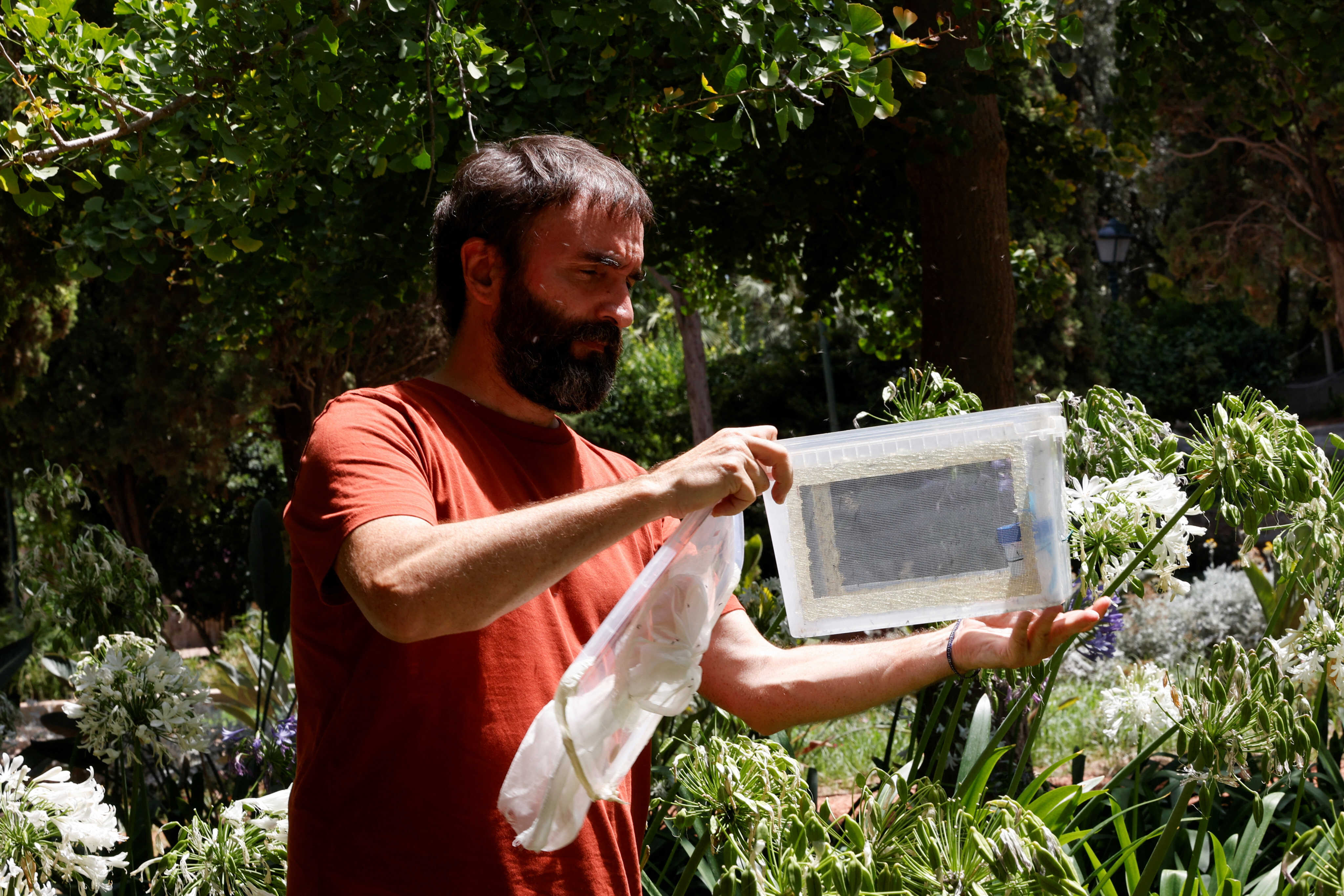
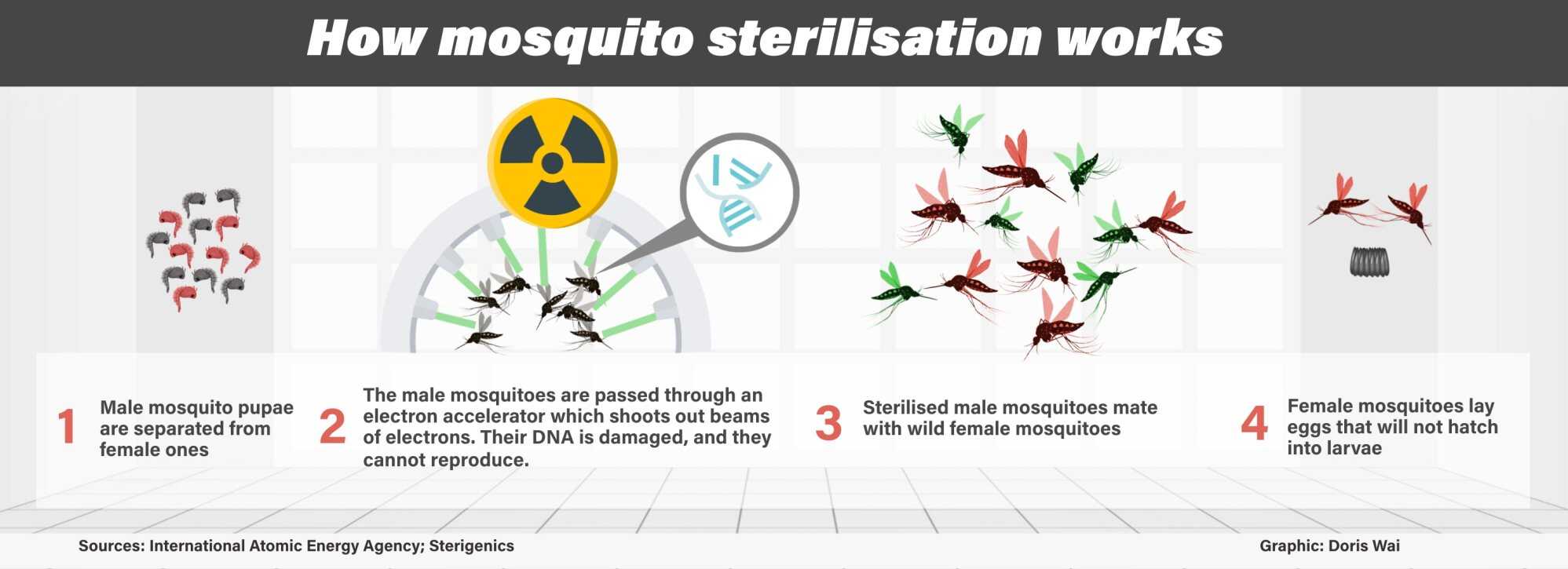
A Spanish laboratory is breeding and sterilising thousands of tiger mosquitoes to fight dengue fever and other diseases. It means they are making sure the mosquitoes cannot reproduce. Climate change is encouraging the species to spread across Europe.
The Biological Pest Control Centre in Valencia sterilises and releases about 45,000 male mosquitoes every week. They then pair with females – whose bite transmits diseases to humans – and will eventually reduce the overall mosquito population (see graphic). Scientists use a machine to separate female pupae, a life stage between immaturity and maturity, from the males. The next step is to sterilise the males.
Viruses like dengue spread through the bites of infected tiger mosquitoes called Aedes albopictus. These are the same types of mosquitoes that spread the Zika and chikungunya viruses.
“[Tiger mosquitoes are] ... becoming more common with climate change ... There is a favourable environment for its development for longer periods throughout the year, and its populations are increasing all the time,” said Vicente Dalmau of Valencia region’s health, agriculture and fisheries department.
Europe is facing growing concern over a rise in mosquito-borne diseases.
Data from the European Centre for Disease Prevention and Control shows a rising West Nile virus and dengue outbreak in Europe.
The striped tiger mosquito is spreading north, east, and west in Europe and now has self-sustaining populations in 13 countries, including Spain.
The World Health Organization said last year that dengue rates were rising globally. A warmer climate is thought to help mosquitoes multiply faster.
Reuters
How can I tell the difference between different mosquito species?
There are more than 3,500 mosquito species in the world, but only a few of them can spread disease. Here are three common ones:
Aedes mosquitoes can transmit diseases like dengue, Zika, yellow fever, and chikungunya. They often live outdoors near houses and are commonly found in cities. Aedes mosquitoes usually bite in the early morning and late afternoon. They have black bodies with white or silver patches on their legs and other parts of their bodies.
Anopheles mosquitoes spread malaria. During the day, they prefer to rest in dark, quiet places. They usually bite people at night.
They can live as long as a month, but usually live for around two weeks.
Culex pipiens mosquitoes can spread diseases like Japanese Encephalitis virus, West Nile virus, and Usutu virus. They can be found in places with cooler weather and often live near homes. They typically bite between dusk and dawn, and their bodies are usually brown.
