What do an old Beyblade, a Coca-Cola yo-yo and a 1980s McDonald’s napkin have in common?
According to Alfred Lee, owner of the vintage store SapGau, these items each reveal unique narratives about Hong Kong’s history.
Since he was a child, Lee, who is now 27, has had a passion for collecting vintage toys and common objects. His fascination started when he observed his father collecting items manufactured in Hong Kong.
“I don’t do this because I like the aesthetic. I like the stories behind them, the history. I learn things I didn’t know, and that’s what I enjoy,” said Lee, who works as a freelancer to support his vintage shop.
“I want to know its history so I can pass these stories on to the next person.”
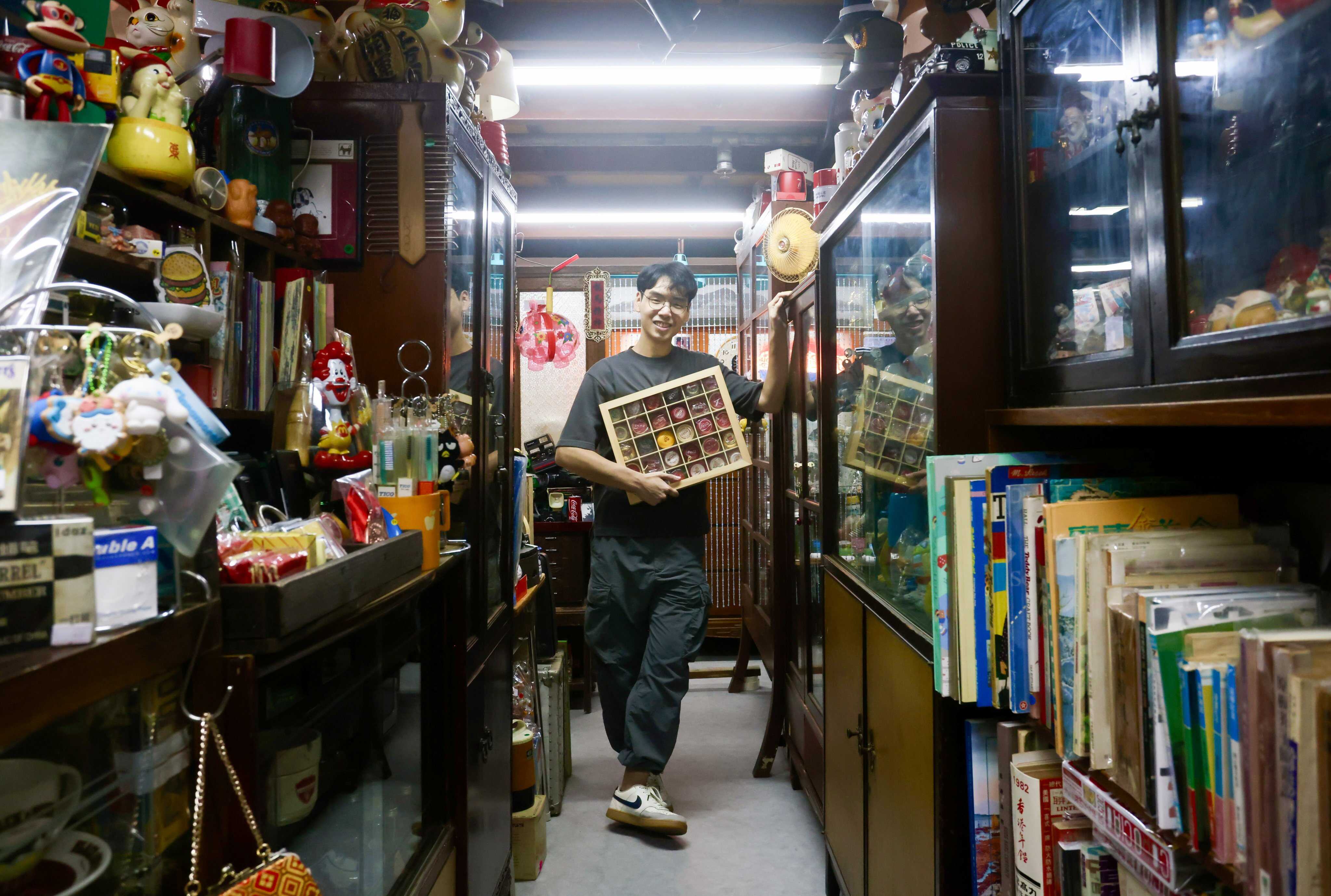
SapGau, which means “to rediscover the old” in Cantonese, is located in an industrial building in Tsuen Wan. The store is filled with items from Hong Kong dating from the 1960s through the 1990s.
As reflected in the store’s name, Lee aims to help visitors reconnect with the beauty of the city’s past.
“I want to help everyone find their own memories from the past through old objects,” he said.
His collection journey
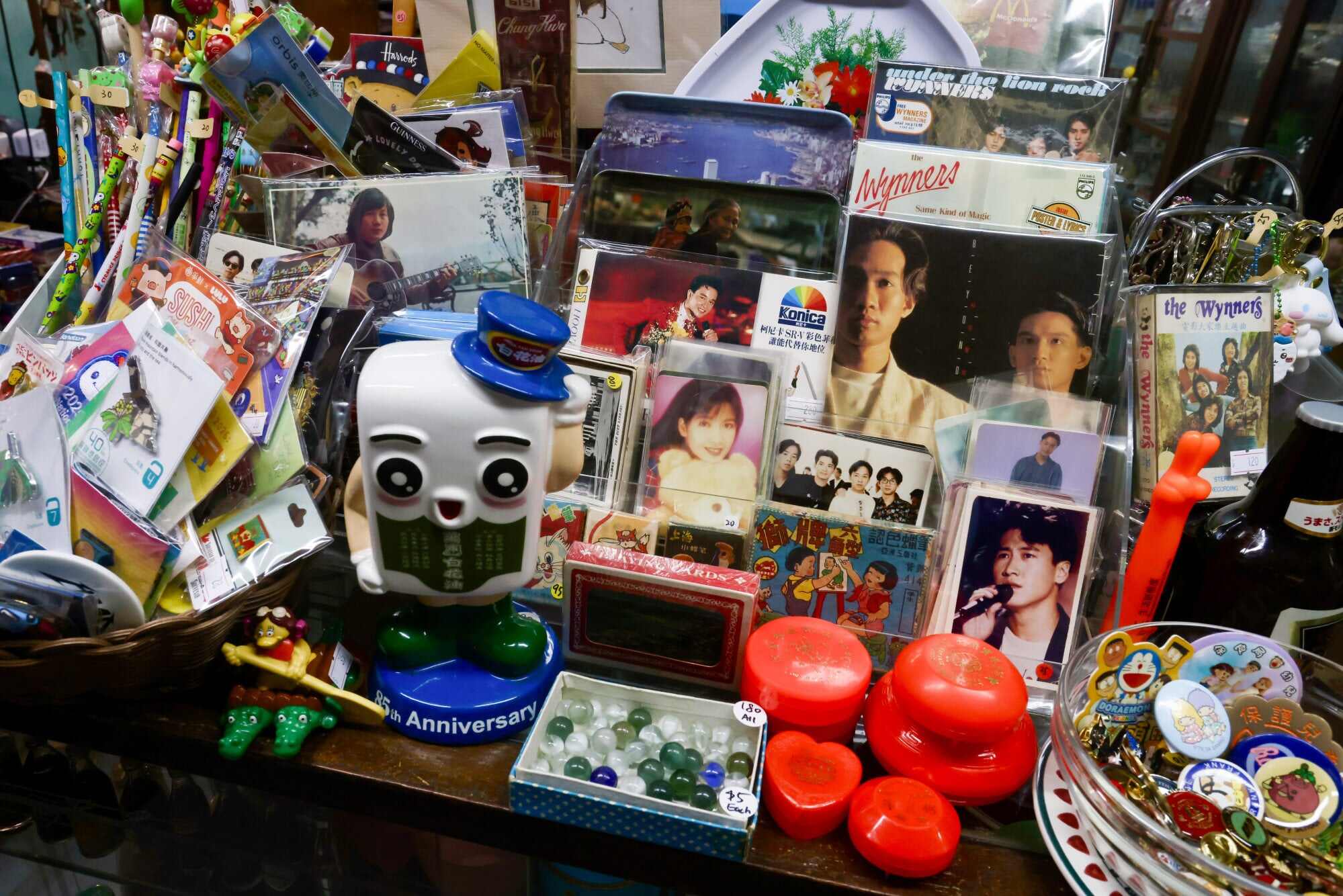
Some of Lee’s earliest acquisitions were classic Hong Kong-made toys from his childhood, as well as other popular items like Beyblades and Gundam figures.
“Just owning them made me happy,” he recalled.
As he grew older, Lee’s enthusiasm for collecting deepened. After graduating from secondary school, he began setting up pop-up stalls at local markets to display and sell his items.
Four years ago, he rented a space for his first vintage store in an industrial building in Kwun Tong. But as his collection grew, the warehouse became congested.
He then relocated to his current shop in Tsuen Wan, where he can showcase his collection more effectively.
His shop is packed with items that easily could have ended up in a landfill. He sources these treasures from nearby thrift stores and international flea markets.
A significant portion of the toys Lee collects from Hong Kong can be traced to a catalogue he discovered, which featured local items produced during the 1980s.
“It became like a ... guide – [I was] trying to find the actual items listed in the book,” he said.
One of Lee’s notable collections began when his father took him to explore street markets and bought him a used Coca-Cola yo-yo. In the latter half of the 20th century, the American beverage company promoted its international presence by selling various yo-yos in different countries.
Years later, Lee’s father gifted him a unique tin yo-yo from his own assortment. Lee eventually learned that it was one of the first Coca-Cola yo-yos made in Hong Kong.
“My dad gave it to me as if it were junk. Who knew it would turn out to be so hard to find and so precious?” Lee said.
That discovery sparked a challenge: “If I already had the hardest one to find, why not collect all the others?”
Lee now estimates that he owns over 1,000 Coca-Cola yo-yos, which feature about 300 designs from Hong Kong, Japan, the Philippines and Mexico, created between the 1960s and 2000s.
What he has learned
Although some of Lee’s items may seem unusual, such as a collection of unused 1980s McDonald’s napkins, his goal is to “find the things Google can’t show you”.
“Things that are more about everyday life – museums might not necessarily have them,” he said. “But everyday items are more down-to-earth, showing how people’s living conditions really were at the time.”
Through his shop, Lee also tracks how Hong Kong has changed over time – for example, how piggy banks show technology’s impact on our approach to saving money.
“Back then, piggy banks represented a strong saving mindset,” Lee explained.
“Today, keeping cash sitting around loses value to inflation, so people invest instead. Simple items like that reveal shifts in our economy, technology and culture.”
Lee also studied toy details from the 1960s to the 1980s and discovered how manufacturing has changed over time – earlier packaging relied on hand-painted artwork while later versions shifted heavily towards photography as cameras became more accessible.
Not a final owner
Although Lee started collecting long before vintage styles became popular, he has noticed a growing interest in Hong Kong’s old culture among young people. He has seen an increase in the number of secondary school students visiting his shop.
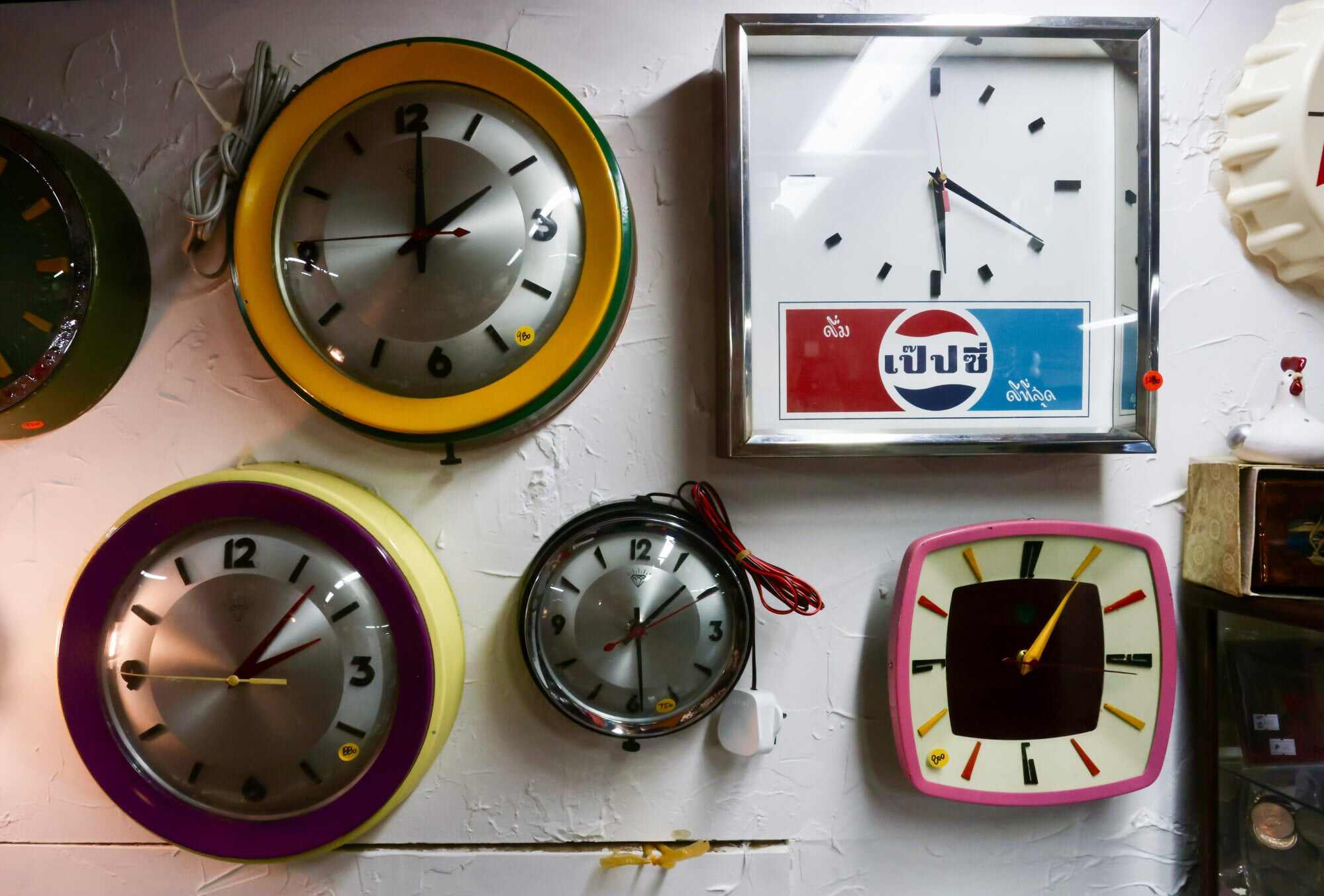
Some come in searching for Pokemon cards and end up discovering older items around them. Others come specifically looking for decorative retro pieces, such as old banknotes, clocks and lamps.
Lee believes that part of this trend is driven by curiosity about an era they never experienced.
“I think there’s a bit of longing – a sense that life was better before. People are curious about what life was really like,” he said.
Lee personally finds the 1980s appealing as “it just seemed like people lived more comfortably, with fewer worries”.
Despite his emotional attachment to his items, he does not see himself as the last owner of these objects – if a visitor shows a genuine passion for a specific item, Lee is happy to pass it on.
“I’m just an intermediary,” he explained. “I’m just someone who owned them for a moment.”
Lee believes Hong Kong’s limited living space makes his work particularly important for preserving sentimental belongings that people would otherwise have to discard.
“Do you think everyone wants to throw things away?” Lee asked. “Most of the time it’s just because there’s no choice.”
But Lee’s shop gives some objects a second chance.
“Whether it’s helping Hong Kong conserve some stories or keeping these stories because I like them myself, I think it’s about preserving a story for everyone,” Lee said.