Every week, Talking Points gives you a worksheet to practise your reading comprehension with exercises about the story we’ve written.
On a Sunday evening, the fluorescent lights dimmed in a 32-year-old cha chaan teng in Hong Kong.
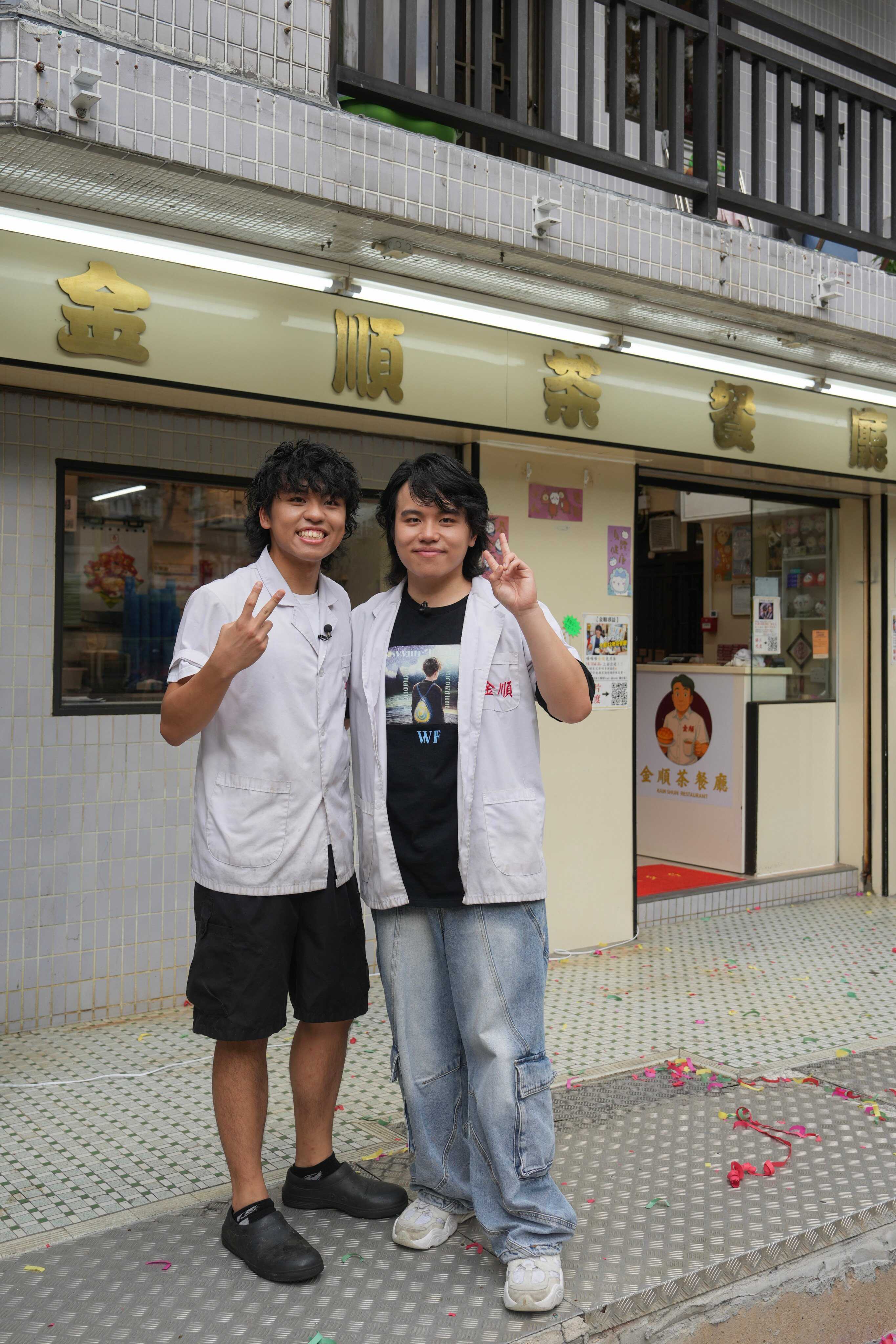
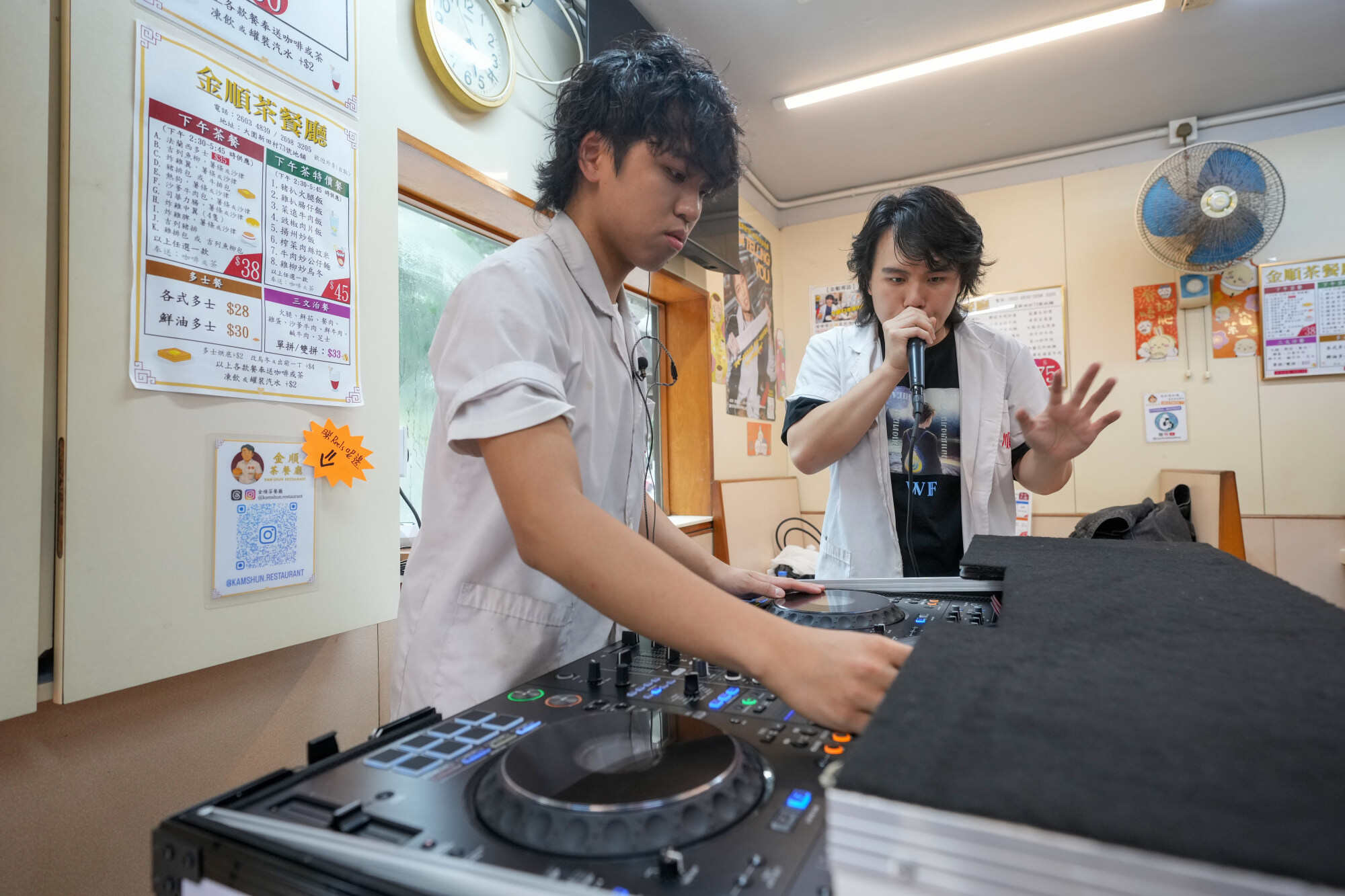
The owners – Theo Ko, 23, and his 25-year-old brother, Lavitt Ko – taped soundproof foam over the entrance and dragged away tables to make room for a turntable, preparing the space for a “milk tea rave”, complete with beatboxing.
Tucked away in Sun Tin Village in Tai Wai, Kam Shun Restaurant is a humble neighbourhood restaurant surrounded by public housing estates.
Like many other local eateries, it had long been struggling to stay afloat.
But since the Ko brothers took over from their parents last December, their goal has been to make their cha chaan teng cool again. The milk tea raves have been key to their mission.
“Sometimes people would call us just to ask if there are events happening here,” Theo said. “Diners have become really curious about the place, and it’s helped more young people discover us.”
The spark for their experiment came from the viral “coffee rave” concept, popular with young people who don’t want to drink alcohol to enjoy dancing to music.
“Foreigners might rave with coffee, but Hongkongers drink milk tea. Why can’t we blend them together?” Lavitt noted.
An unexpected inheritance
Seven days a week, Theo holds down the fort while finishing his final year of studies as a business major at the Chinese University of Hong Kong (CUHK). He mans the drinks, slings orders and scrubs down the grease at closing time.
Lavitt, who works full-time as a teaching assistant at CUHK’s Business School, pitches in on weekends.
But taking over the business was never part of the plan. In fact, the brothers’ late father sought to shield them from the relentless grind of operating a restaurant and had originally left the shop to their uncle instead.
“My dad actually didn’t want us entering this industry because he knew how constraining running a cha chaan teng can be,” Theo shared.
But through a twist of fate, management of the restaurant found its way back to the brothers.
“Suddenly, I felt this intense sense of duty,” Theo said. “I just knew I wanted to breathe life back into this place, so I didn’t overthink it – I just dove straight in.”
When he stepped in, the restaurant had been running on fumes amid a sluggish economy and a lack of hands-on management. The kitchen equipment was ageing; service speed was slowing; and the eatery’s physical environment was decaying.
The family’s limits had already been tested when their mother suffered a stroke in 2019. After she recovered, her speaking pace slowed, and Theo felt the need to step up.
“Because of everything their bodies have been through, I felt a heavy responsibility to ease their burden,” Theo explained. “I don’t let my mum do heavy lifting any more. I handle all the gruelling staff work myself. Her only job now is to be our good luck charm and chat with our regular customers.”
New energy
Cha chaan teng have long been considered the bedrock of Hong Kong’s culinary soul, beloved for staples like macaroni soup sets and pineapple buns with thick slabs of butter.
But for the younger generation, these neighbourhood institutions have faded in favour of trendy Instagram-friendly cafes.
To keep their cha chaan teng alive, the brothers are fighting the cultural stagnation of the traditional diner.
“How can we break that stereotype so young people don’t think it’s boring?” Lavitt said.
“Their impression of a cha chaan teng might just be a bunch of middle-aged uncles wearing earphones and reading the horse racing pages.”
For both brothers, taking over the eatery wasn’t just about family – it also aligned with their career goals.
“We didn’t want to just climb the corporate ladder; we wanted our own business, a place where our own ideas could actually ... come to life,” Lavitt said.
But stepping into the restaurant industry meant confronting a harsh economic reality. Shifts in spending habits have left Hong Kong’s small eateries vulnerable.
“For instance, on Saturdays and Sundays, everyone heads north to mainland China to spend money. You can really see that foot traffic is much worse than before,” Theo explained.
To break the mould, Theo looked to his own decade-long passion as a beatboxer. He had long served as an underground event organiser, constantly hunting for spaces to host battles.
“Now, it just so happens that I have my own space,” Theo said. “It might not be massive, but it’s perfect for mini-events and beatbox battles where the community can jam together.”
So far, the brothers have organised three milk tea raves with beatboxing at their restaurant – and they hope to continue hosting one every two months.
Ultimately, they believe youth entrepreneurship is not limited to tech start-ups – they hope that the younger generation can work on saving Hong Kong’s heritage trades.
“Take cha chaan teng culture ... hardly any young people enter this industry any more,” Lavitt said. “But traditional culture needs to be preserved, and to do that, you have to find new ways to innovate.”