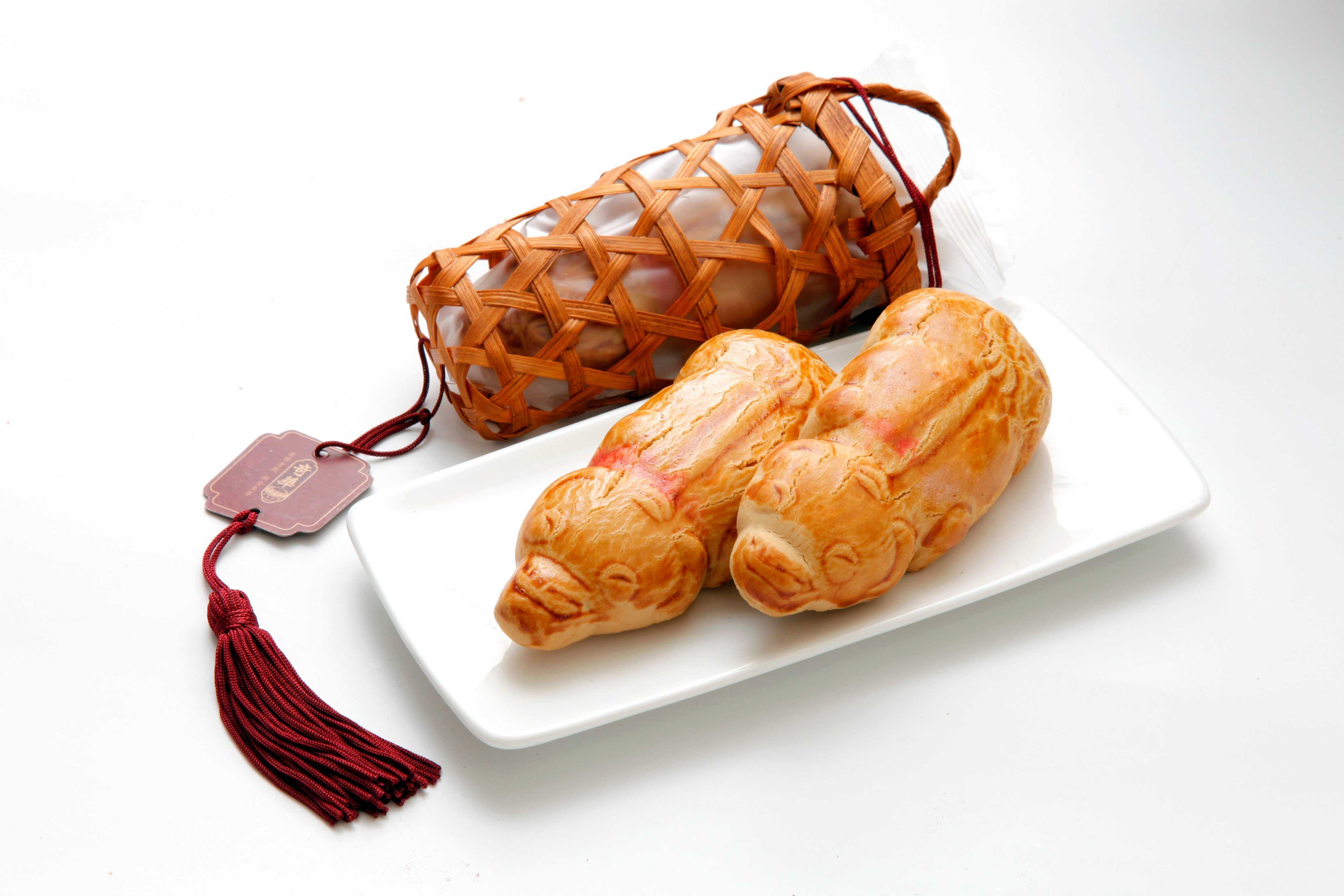
It’s smaller than your palm, comes in a basket and looks like a pig. This is a piggy biscuit (豬仔餅), an old Mid-Autumn Festival treat in Hong Kong. Though it might not be as famous as the classic mooncakes, it is every bit as delightful.
Piggy biscuits were popular among Hong Kong children in the 1960s. It is believed that they came about as a way for bakers to check the oven temperature before making mooncakes. They would test the heat by baking small pieces of extra dough shaped into little pigs. This also helped them use up extra dough from making mooncakes.
These biscuits were cheap because they did not use expensive ingredients like lotus root paste or salted egg yolks. Adults would buy them for children before the Mid-Autumn Festival and save the expensive mooncakes to eat on the actual holiday.
To make them more attractive, bakeries began selling piggy biscuits in small baskets that looked like pig cages. This became a hit with young children, who would often put a candle inside the basket and turn it into a lantern.
“Even without any filling, piggy mooncakes taste similar to gingerbread. That appealing taste is no doubt why they were so popular with young children back in the day,” said Kathy Ng Yiu-fan from Kat-Spirit Nutrition Centre.

A balance of health and tradition
This baked treat is traditionally made with flour, syrup, oil and lye water. The lye water gives the biscuits their soft texture and golden-brown colour.
A 30-gram serving of piggy biscuits contains 130 calories, six grams of fat, 18 grams of carbohydrates, 10 grams of sugar and two grams of protein.
The senior nutritionist pointed out that piggy mooncakes were smaller and much less filling than full sized mooncakes.
She added: “Traditional mooncakes ... contain a dense filling made from ingredients such as lotus seed paste, red bean paste or salted egg yolk.”
A standard lotus seed paste mooncake contains 716 calories. With the addition of a salted egg yolk, this mooncake would have 790 calories.
Although these treats are considered unhealthy, Ng noted they were still an important part of culture and tradition. Instead of avoiding them altogether, they can be shared on special occasions with friends and family.
Ng also suggested pairing them with tea or a herbal drink to balance out the sweetness. You also do not have to finish the entire snack at once.
“You can turn the leftover piggy biscuits into a healthy snack by crumbling them over a bowl of low-fat yogurt or oatmeal,” Ng said.
Mini golden piggies
Ingredients (makes 18)
-
155g of plain flour
-
34g of cake flour
-
2 tablespoons of vegetable oil
-
100g of honey
-
300g of unsweetened red bean paste
-
50g of dried cranberries
-
2 egg yolks
-
36 black sesame seeds
Directions
-
Sift the cake flour and plain flour together. In a separate bowl, whisk the honey, vegetable oil and 1 egg yolk.
-
Mix the liquid mixture with the sifted flour and knead the dough slightly. Cover the dough in cling film and set it aside for 30 minutes.
-
Mix the dried cranberries with the red bean paste. Divide the filling into 18 balls of 27g each.
-
Create 18 portions using the rested dough. Each portion should weigh 15g. You should have some dough left for the pig’s ears, nose and tail.
-
Flatten a portion of dough and wrap it around a ball of filling. This forms the pig’s body. Place two sesame seeds on the pastry for eyes. Roll a tiny piece of dough into a short string, curl it and attach it to make the pig’s tail. For the ears, create tiny triangles, and for the nose, roll a small ball and then flatten it slightly.
-
Preheat your oven to 180 degrees Celsius. Bake the biscuits for 10 minutes. Remove them from the oven and let them cool for 5 minutes.
-
Mix 1 egg yolk with 1 tablespoon of water. Once the pastries have cooled, brush the egg wash onto them.
-
Bake the biscuits for 10 more minutes until they are golden brown.