As humans, most of us would struggle to navigate the world without arms and legs. But long ago, ancient snakes gradually lost their limbs through evolution.
But why would losing limbs be beneficial? Imagine trying to squeeze through a narrow tunnel with four limbs projecting from your body. Instead of helping, those limbs might get in the way. For an animal that burrows or travels through tight spaces, a long, streamlined body can make movement easier.
Today, snakes’ long, flexible bodies help them push through soil, move across land, swim through water and wind their way among branches.
From squamates to serpents
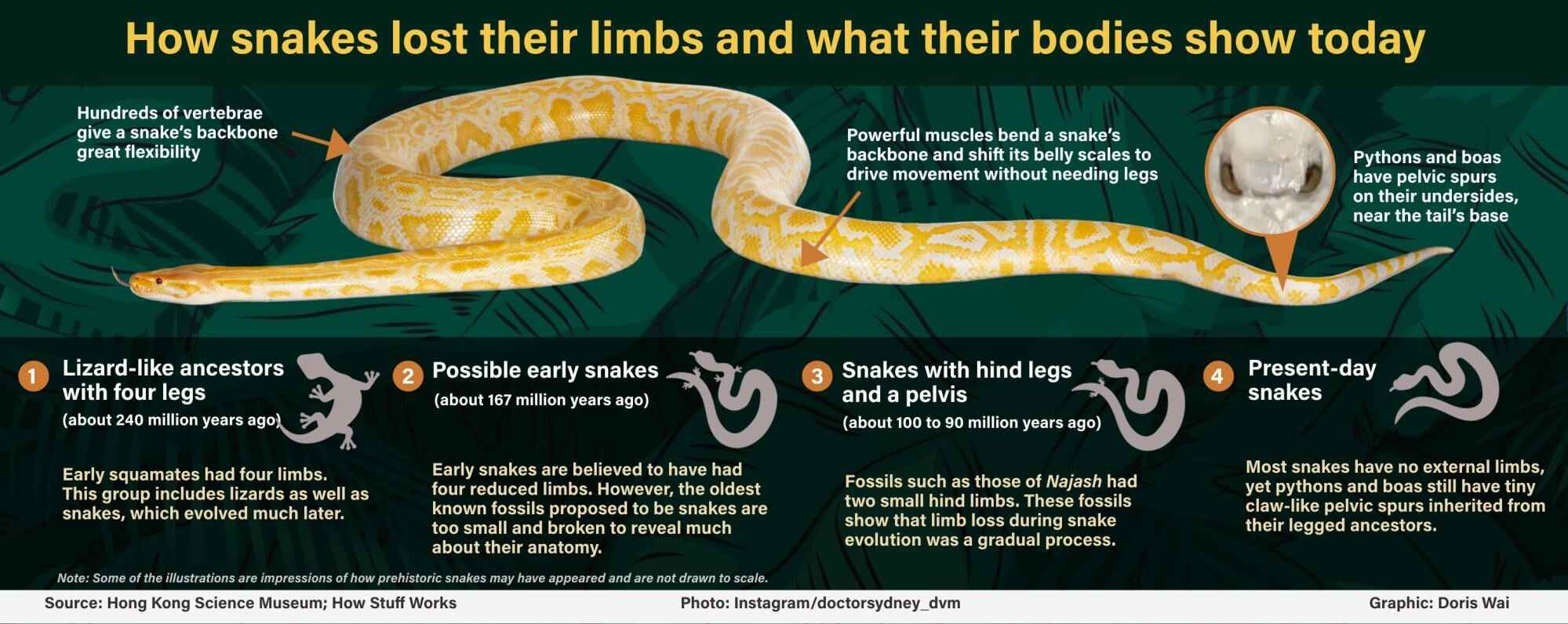
Snakes belong to the Squamata order of reptiles, alongside lizards. The squamate lineage dates back at least 240 million years. Snakes’ ancestors had four limbs, but millions of years of gradual change produced the limbless bodies of modern snakes.
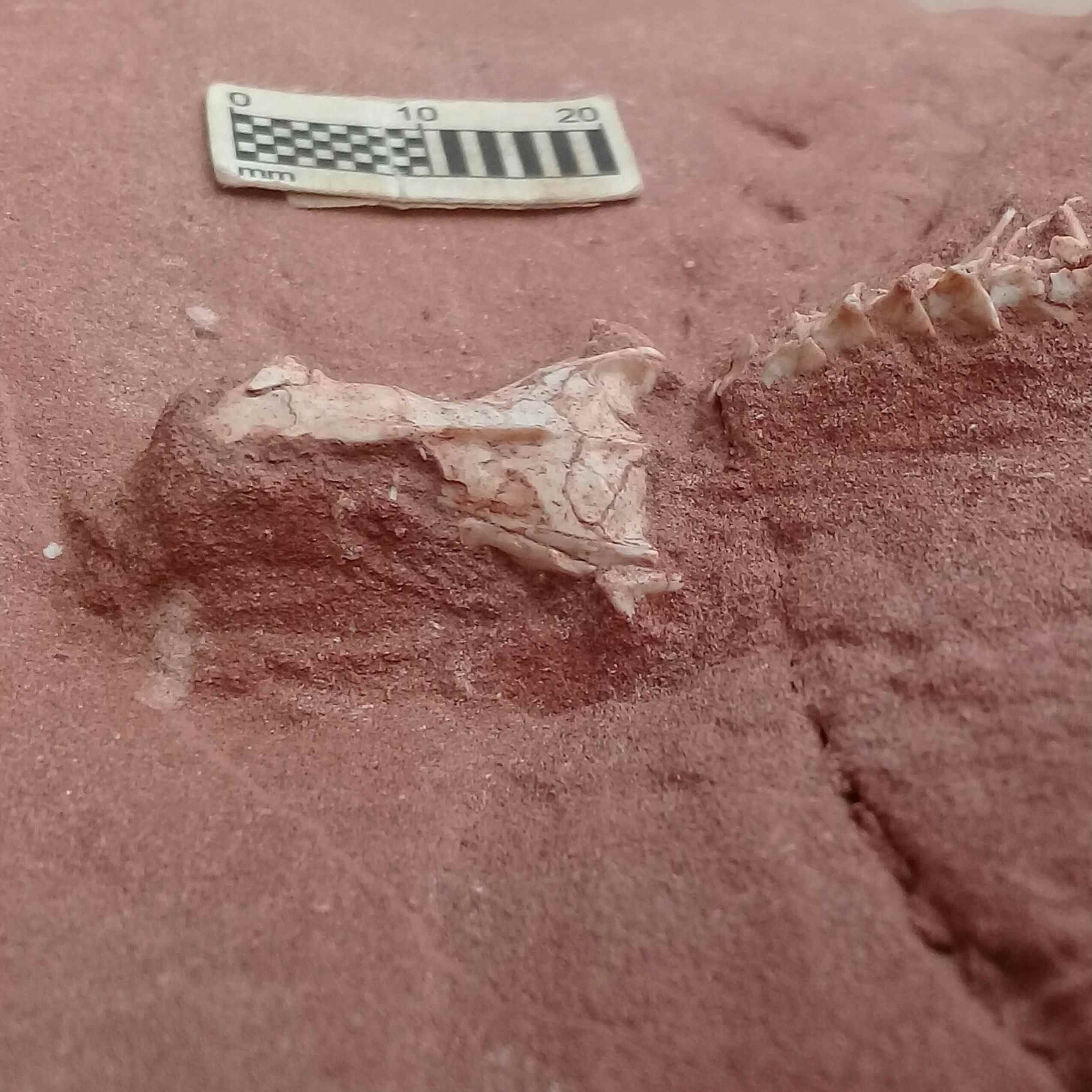
Some of the oldest fossils proposed to be early snakes date to about 167 million years ago, during the Middle Jurassic period. These early fossils consist mainly of fragments of jaws and other skull bones, which reveal little about what the animals’ bodies or limbs looked like.
Nonetheless, early snakes are thought to have already begun their transition to having four reduced limbs.
Younger snake fossils provide a clearer picture.
For instance, fossils of the snake Najash, which lived about 95 million years ago, include a partial skeleton with small hind limbs and a pelvis.
Discoveries like this one show that the transition from a four-limbed ancestor to today’s long, limbless snake body was a gradual process (see graphic).
When less can be more
Fossil evidence indicates that ancient snakes lost their forelimbs first, while some retained hind limbs and parts of the pelvis. This two-legged transitional body form remained successful for millions of years before most snakes eventually lost their external hind limbs as well.
Natural selection favours inherited traits that help organisms survive and reproduce in their environments.
If smaller limbs allowed some early snakes to move more efficiently, those individuals may have been more likely to survive and produce offspring. Over many generations, traits associated with reduced limbs became increasingly common.
As their limbs became smaller, snakes underwent another major transformation: their bodies grew longer and developed many more vertebrae. Coordinated waves of muscle movement now bend the snake’s flexible backbone and shift the belly’s skin and scales, allowing snakes to travel efficiently without legs.
This is a clear example of how evolution does not always make organisms “better” in every way. Instead, it favours traits that suit a particular environment and way of life.
Traces of legs in modern snakes
Most modern snakes have no external limbs. However, pythons and boas possess tiny, claw-like structures called “pelvic spurs” near the cloaca at the base of the snake’s tail. These pelvic spurs are remnants of their ancestors’ hind limbs and offer a fascinating glimpse into snakes’ four-legged past.
In fact, male pythons and boas use their pelvic spurs while courting females, so these leftover “legs” still have an important job.
Young Post has partnered with Hong Kong Science Museum and Hong Kong Space Museum to encourage your pursuit of science. Every month, the museums answer questions about the world around us, the cosmos and beyond.