Difficulty: Summiteer (Level 3)
Chinese lanterns require bamboo splints, scissors and axes, as well as fabrics and paper in loud colours.
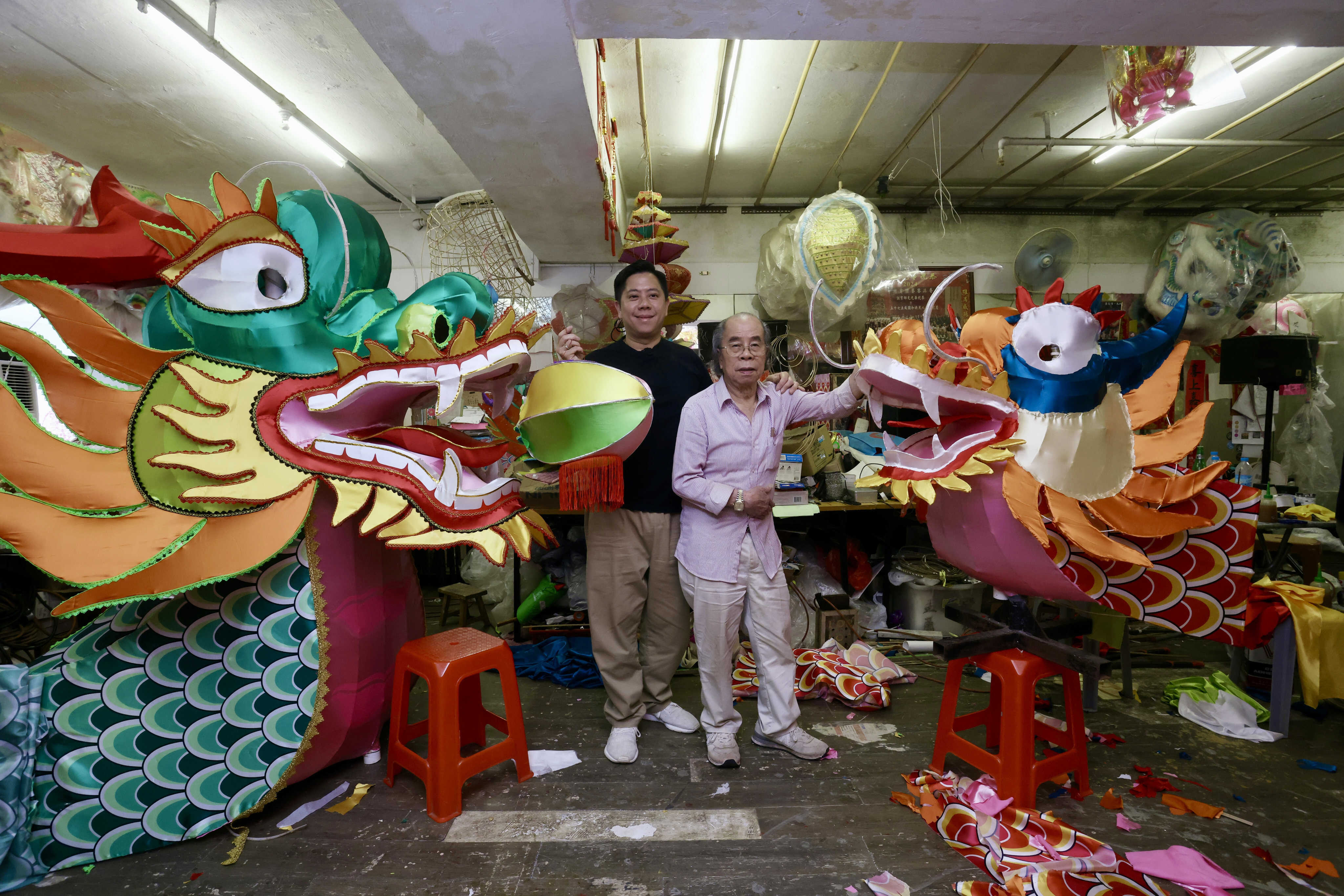
Hui Ka-hung is the 47-year-old founder of Hung C Lau, which specialises in making Chinese lanterns in Hong Kong.
Unlike other traditional family businesses, Hung C Lau was not passed down by the older generation of the Hui family. Instead, Hui’s 80-year-old father only joined him two decades ago as an “apprentice” to learn traditional Chinese papercraft after retirement.
“I couldn’t afford to hire any staff back then, so he started helping out,” the son said. “It’s actually great because, as it turns out, it keeps his body and mind active.”
The younger Hui became involved in papercraft from a young age, patching up old lion dance costumes at six years old and making his own at 11. He tried selling his creations to different shops and ended up being an apprentice in the trade.
How lanterns are made
Making traditional lanterns is a labour-intensive process.
The craftsman starts by splitting bamboo to the right thickness to create the skeleton, held together by strong paper at the joints and a glue made of rice. He then mounts pieces of fabric or paper on different sides, carefully cutting away the excess.
The next step is a test for the steadiness of one’s hands: adorning the fabric with calligraphy of festive blessings or drawings of auspicious symbols. Lastly, piping and tassels are added before the lantern is lit.
“Some consider [papercraft] a sunset industry, but I say it’s not. ‘Sunset’ means there is no market, right? There is actually a demand year-round with different celebrations that call for papercraft decorations and religious offerings,” Hui pointed out.
Burnt offerings form an integral part of traditions, such as Chinese New Year, the birthdays of different deities, Ching Ming Festival, Double Ninth Festival and the Hungry Ghost Festival.
He stressed: “Some even consider us top-notch around the world. It’s definitely something worth preserving.”
The future of tradition
Hui has taken his work far beyond Hong Kong, creating and selling specific artistic installations in Australia, the US, Malaysia, Japan and Thailand, as well as cities in mainland China.
“The best way to pass on the tradition is to keep doing it. I also organise a lot of classes and promote the craft, and hopefully, I can find more passionate and capable craftspeople to join me,” he said.
“Papercraft is now on the representative list of intangible cultural heritage in Hong Kong, but it’s not on the national list yet. That’s my goal – to put papercraft on the national list, so there is more recognition for the industry and more resources for development.”