YoungPost Club Learn
DOWNLOAD OUR APP
appstoregoogleplay
FIND US AT
My JourneyMy Vocabulary BuilderMy Leaderboard
My AccountSearchFAQAbout UsContact Us
Subscription Plan
School Subscription
YOUNG POST
NewsTrendingBeing wellLearning zoneShare with usQuizzes
SPARK
NewsTrendingBeing wellLearning zoneShare with usQuizzes
POSTIES
Big readEye on the newsHa-ha-happeningsThings to doYour saySteam studioHealth and happinessQuizzes
Subscribe to Young Post Club to access our great content
ABOUT US|CONTACT US|WRITE FOR US|PRIVACY POLICY|TERMS & CONDITIONS
©2026 Young Post Club. All rights reserved.
My Journey Hello
Brand Avatar
Young Post
My Journey illustration

With a subscription, you can answer quizzes and track your reading progress.

result
Learn new words with our vocabulary challenge!
My Journey illustration

With a subscription, you can answer quizzes and track your reading progress.

result
Learn new words with our vocabulary challenge!
My Journey illustration

With a subscription, you can answer quizzes and track your reading progress.

Read / Big read

The timeless legacy of Chinese musical instruments

Uncover the fascinating evolution of instruments from ancient times to today’s orchestras
byCherish Chiu
Published: 1:00am, 12 Oct 2026
Length: 416 words
The timeless legacy of Chinese musical instruments

Track the evolution of Chinese music, from ancient bone flutes to modern orchestras, highlighting key instruments like the pipa and erhu. Photo: Shutterstock

Difficulty: Challenger (Level 2)

In Chinese mythology, Ling Lun is known as the person who started music. The Yellow Emperor asked him to create a system of pitch pipes. He made 12 bamboo pipes to copy the harmonious sounds of the mythical phoenix.

The history of Chinese musical instruments goes back over 8,000 years. They have changed from simple bone flutes in prehistoric times to the complex instruments used in today’s orchestras. Early Chinese societies had a vibrant musical culture that dates back to the Zhou dynasty, which was around 1046-256BC. During that time, people grouped instruments by the materials they were made of.

Today, modern Chinese orchestras are organised into four main groups: plucked strings, bowed strings, wind instruments and percussion.

Plucked strings: pipa (琵琶)

The pipa is a four-stringed instrument shaped like a pear. It was likely brought to China from West Asia over 2,000 years ago. It is famous for its expressive and dramatic sound. Thus, it has occupied a key position in modern Chinese orchestras.

The characters pi and pa in its name depict the inward and outward plucking action of playing the instrument. Many classic pieces still live on with the pipa’s help, such as Ambush from Ten Sides (1818).
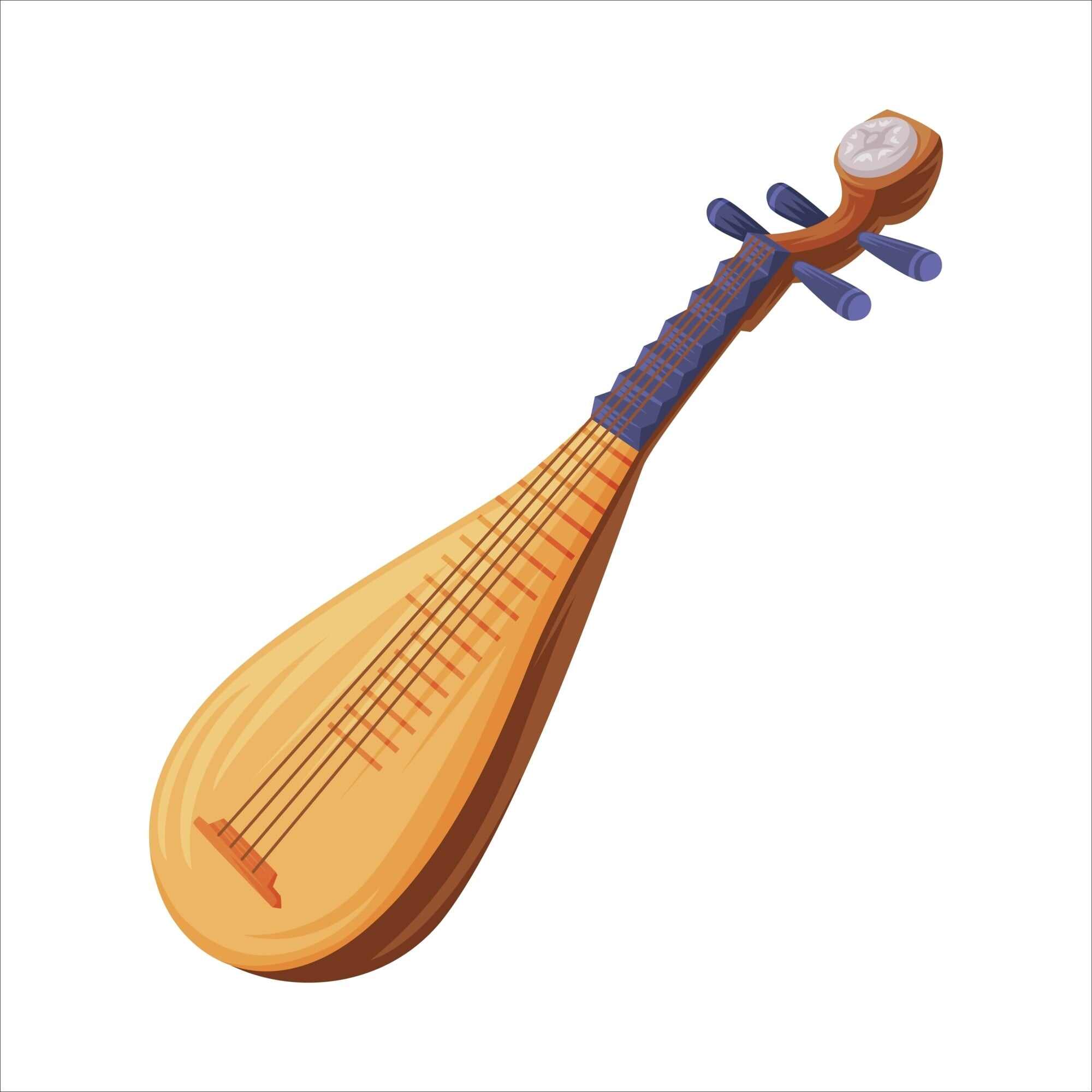
The pipa is a four-stringed instrument shaped like a pear. Photo: Shutterstock

Bowed strings: erhu (二胡)

The erhu, often called the “Chinese violin”, is a two-stringed instrument. It has a handle that runs through its body. It is played with a bow that moves between the strings, producing an emotional, weeping tone. This instrument has a rich history, having been used in China for over 1,000 years.
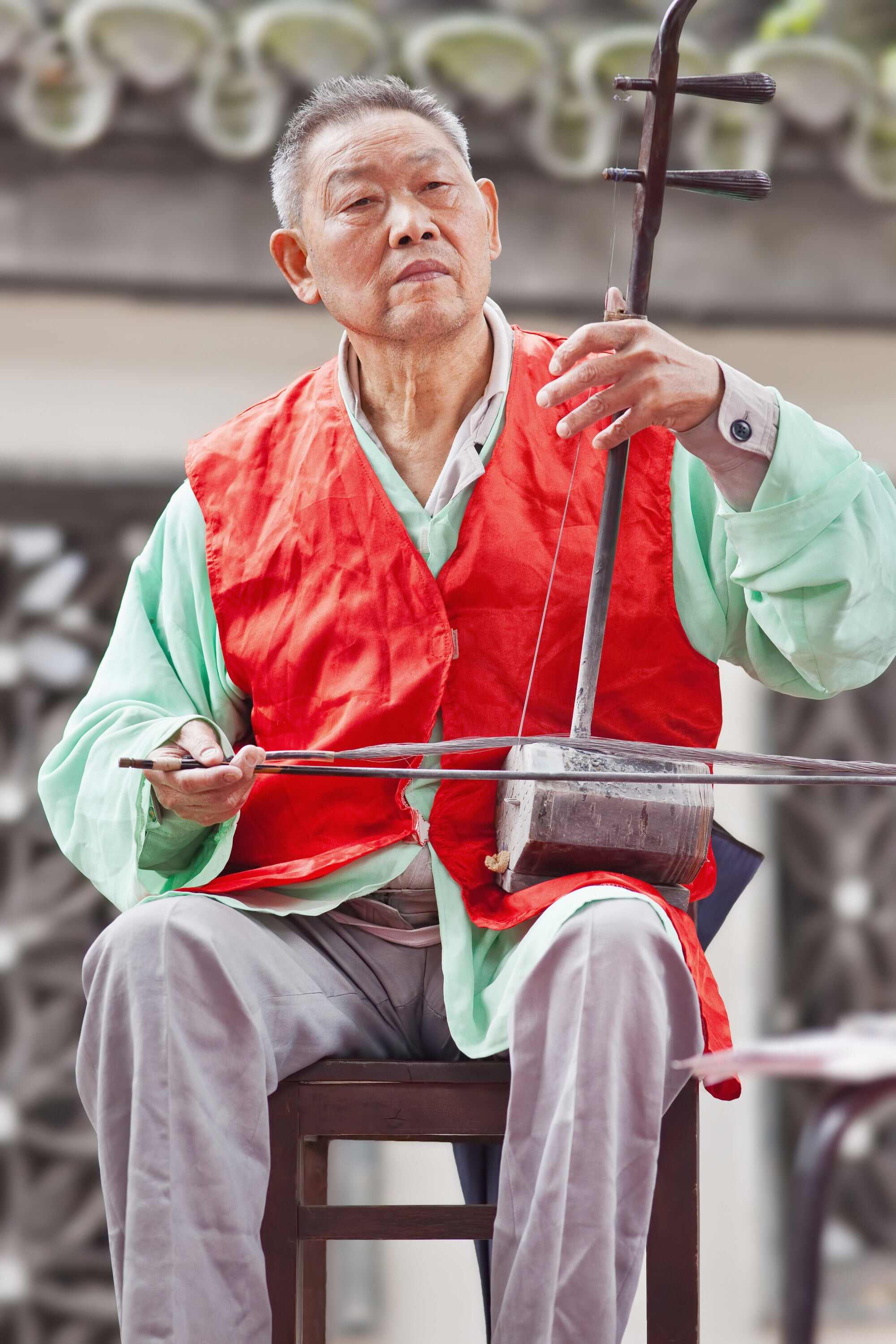
A man plays the erhu, a two-stringed bowed fiddle, on the streets in Beijing. Photo: Shutterstock

Wind instruments: sheng (笙)

The sheng is an ancient mouth-blown instrument dating back to at least 1100BC. It is made of small bamboo pipes arranged in a circle around a wind chamber. Each pipe features a free reed made of metal or bamboo. When a finger covers a pipe’s hole, the reed vibrates, producing sound.

A man plays the sheng in a park in Beijing. Photo: Shutterstock

Percussion: bianzhong (編鐘)

This musical instrument dates back to the earliest records of Chinese civilisation. Bronze bells first appeared during the Zhou dynasty. They were historically played to signify status and power.

The bianzhong serves as both a primary lead and a rhythmic anchor in modern Chinese orchestras. A full set of these bells requires two or more people to play, but smaller sets are often featured in modern concerts.
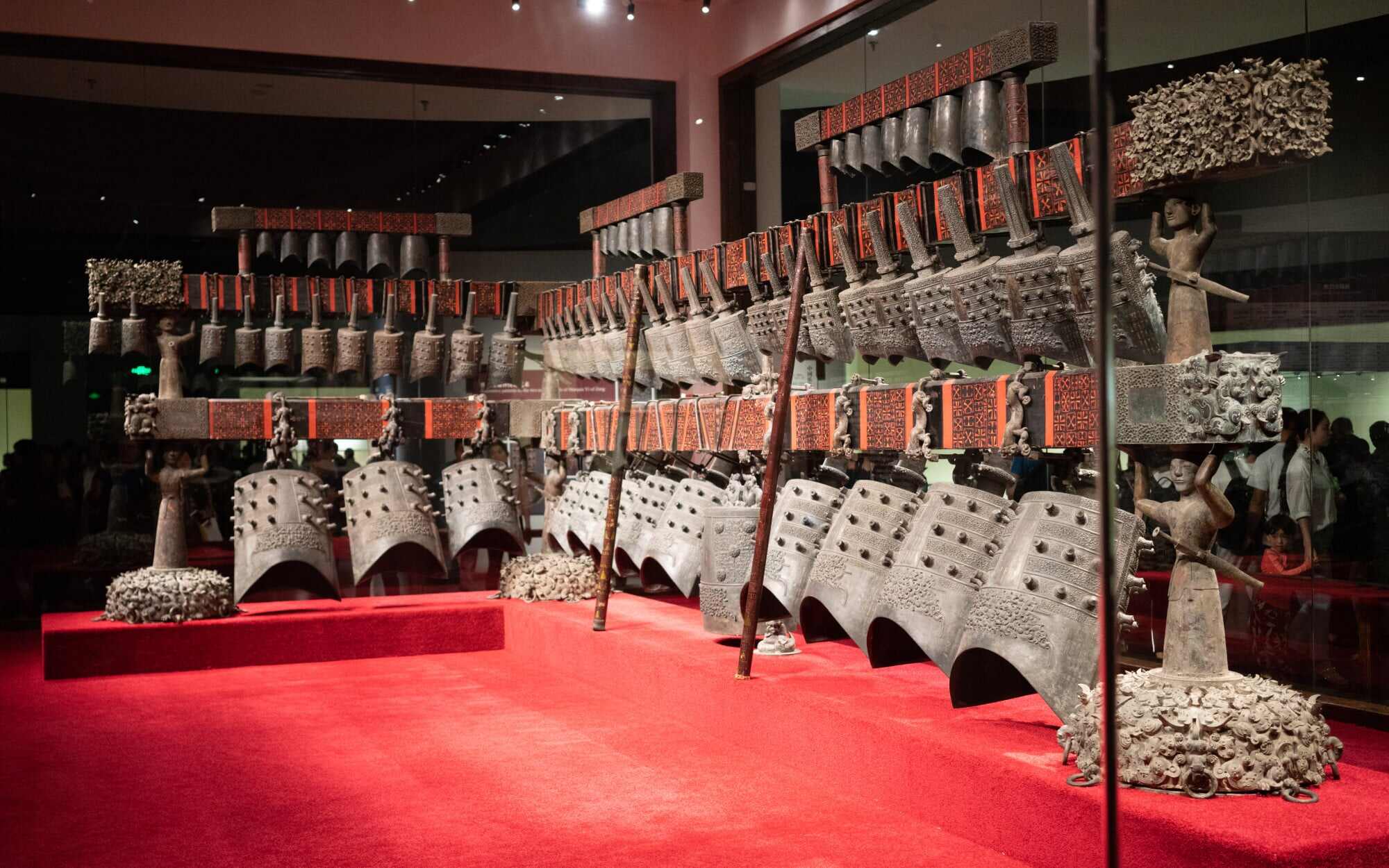

“Bianzhong” instruments at the Hubei Provincial Museum in Wuhan. Photo: Shutterstock
IN THIS ARTICLE
China
Music
History

KEEP READING
cover
Eye on the news
What does a black hole sound like? A scientist’s answer was turned into music
31 Aug 2026
cover
Big read
How music therapy can transform the lives of children with autism
04 May 2026
cover
Eye on the news
Hong Kong twins’ violin journey from autism diagnosis to grand hall
26 Apr 2026