YoungPost Club Learn
DOWNLOAD OUR APP
appstoregoogleplay
FIND US AT
My JourneyMy VocabularyMy Leaderboard
My AccountSearchAbout UsContact Us
Subscription Plan
School Subscription
YOUNG POST
NewsTrendingBeing wellLearning zoneShare with usQuizzes
SPARK
NewsTrendingBeing wellLearning zoneShare with usQuizzes
POSTIES
Big readEye on the newsHa-ha-happeningsThings to doYour saySteam studioHealth and happinessQuizzes
Subscribe to Young Post Club to access our great content
ABOUT US|CONTACT US|WRITE FOR US|PRIVACY POLICY|TERMS & CONDITIONS
©2026 Young Post Club. All rights reserved.
My Journey Hello
Brand Avatar
Young Post
My Journey illustration

With a subscription, you can answer quizzes and track your reading progress.

Read / STEAM studio

Do your eyes hurt after looking at the solar eclipse? Here’s what to know

Staring directly at the sun for as little as five seconds can damage your eyes, and looking for longer can permanently alter your vision
byTribune News Service, Doris Wai
Published: 10:45pm, 21 Apr 2024
Length: 273 words
Do your eyes hurt after looking at the solar eclipse? Here’s what to know

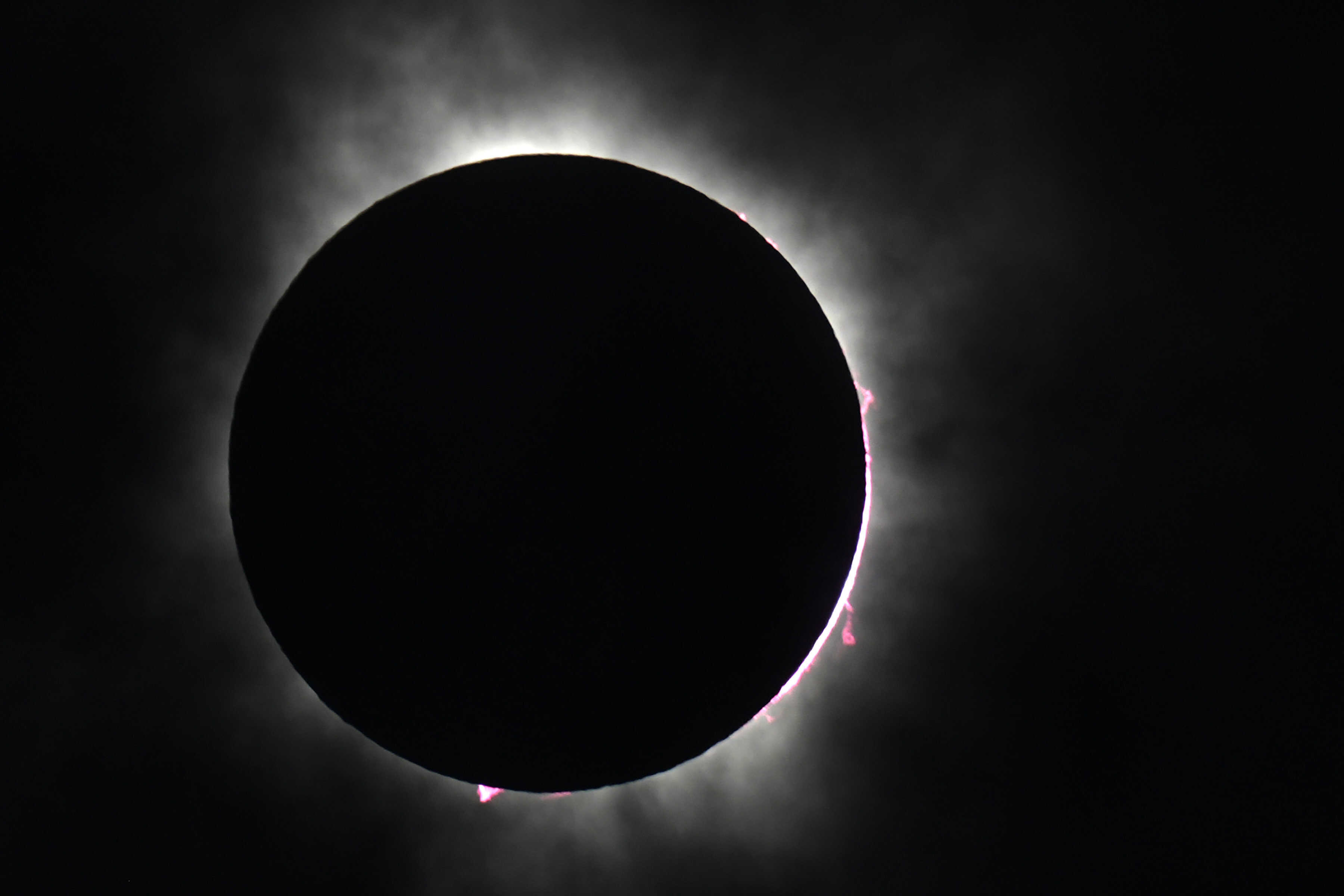
The moon covers the sun during a total solar eclipse, as seen from Fort Worth, in the US state of Texas, on April 8, 2024. Photo: AP

Difficulty: Challenger (Level 2)

Millions of people wore special eclipse glasses to watch the solar eclipse that took place earlier this month. If you wonder if looking at the sun directly during an eclipse is safe, the answer is no.

Doctors say staring at the sun for as little as five seconds can damage your eyes. Looking for longer can make the damage permanent.

It is only safe to look at the sun without eclipse glasses during total eclipse. This is a short period of time when the moon covers the sun completely. However, the sun cannot be seen at all through eclipse glasses during total eclipse.

Dimitrios Karamichos, executive director of the North Texas Eye Research Institute at the University of North Texas Health Science Center in the US, said permanent damage to the retina can happen in 60 to 100 seconds or less (see graphic).
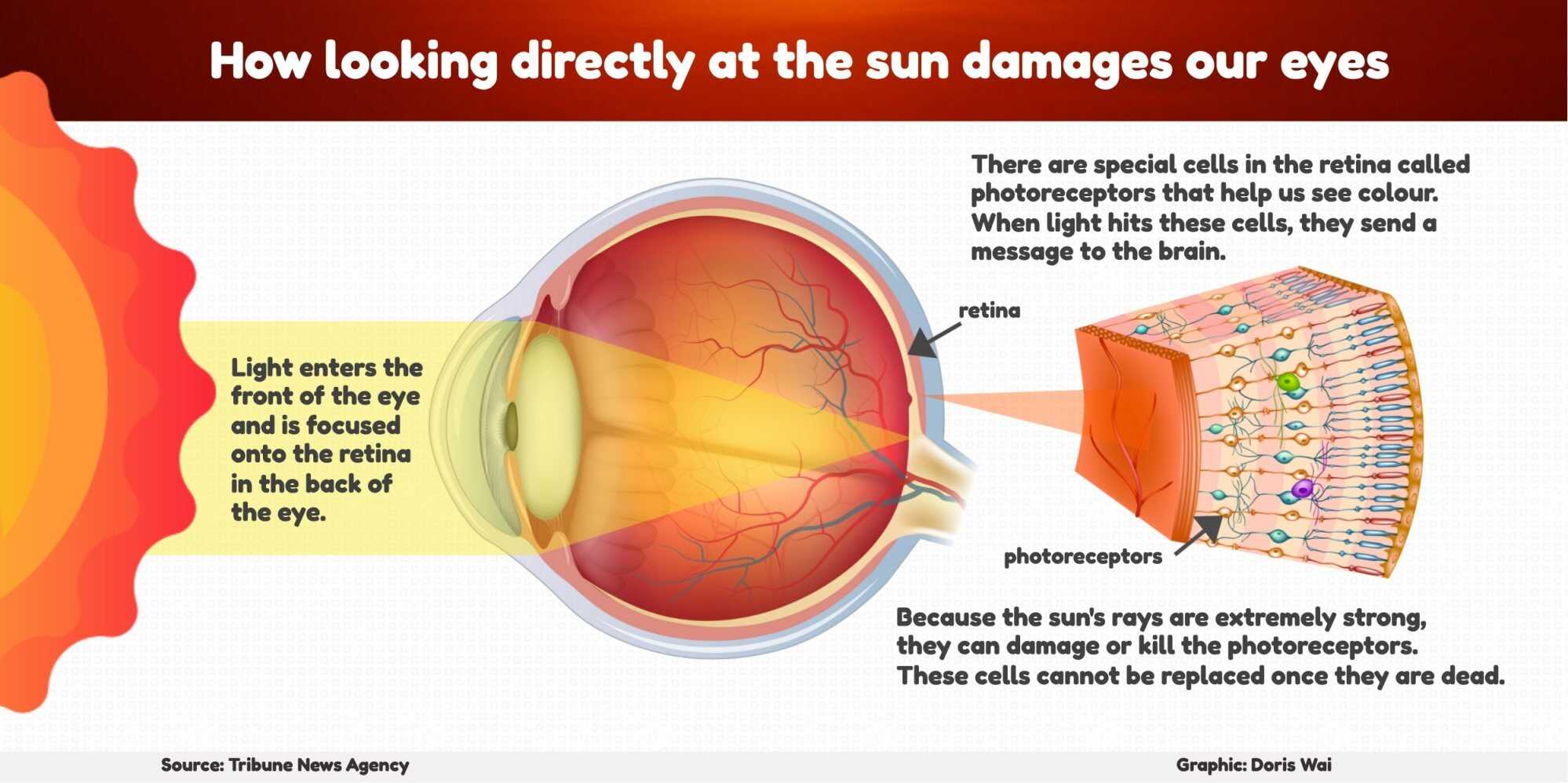
This condition is called solar retinopathy. Symptoms include dark or yellow spots, dimmed or blurred vision, and loss of vision in the centre of the eye.

There is no treatment for eye damage caused by the sun. Even if vision improves, some distortion and dark spots may remain.

Those who experience any of the symptoms of solar retinopathy should see an eye doctor immediately.
IN THIS ARTICLE
Learning
Science

KEEP READING
cover
STEAM studio
Understand how the Earth’s angles impact the seasons
31 Dec 2023
cover
Your say
Vinci Ip’s top picks: Usborne Beginners Science
06 Nov 2023
cover
Eye on the news
‘Ring of fire’ eclipse brings cheer as it moves across the Americas
29 Oct 2023