Difficulty: Challenger (Level 1)
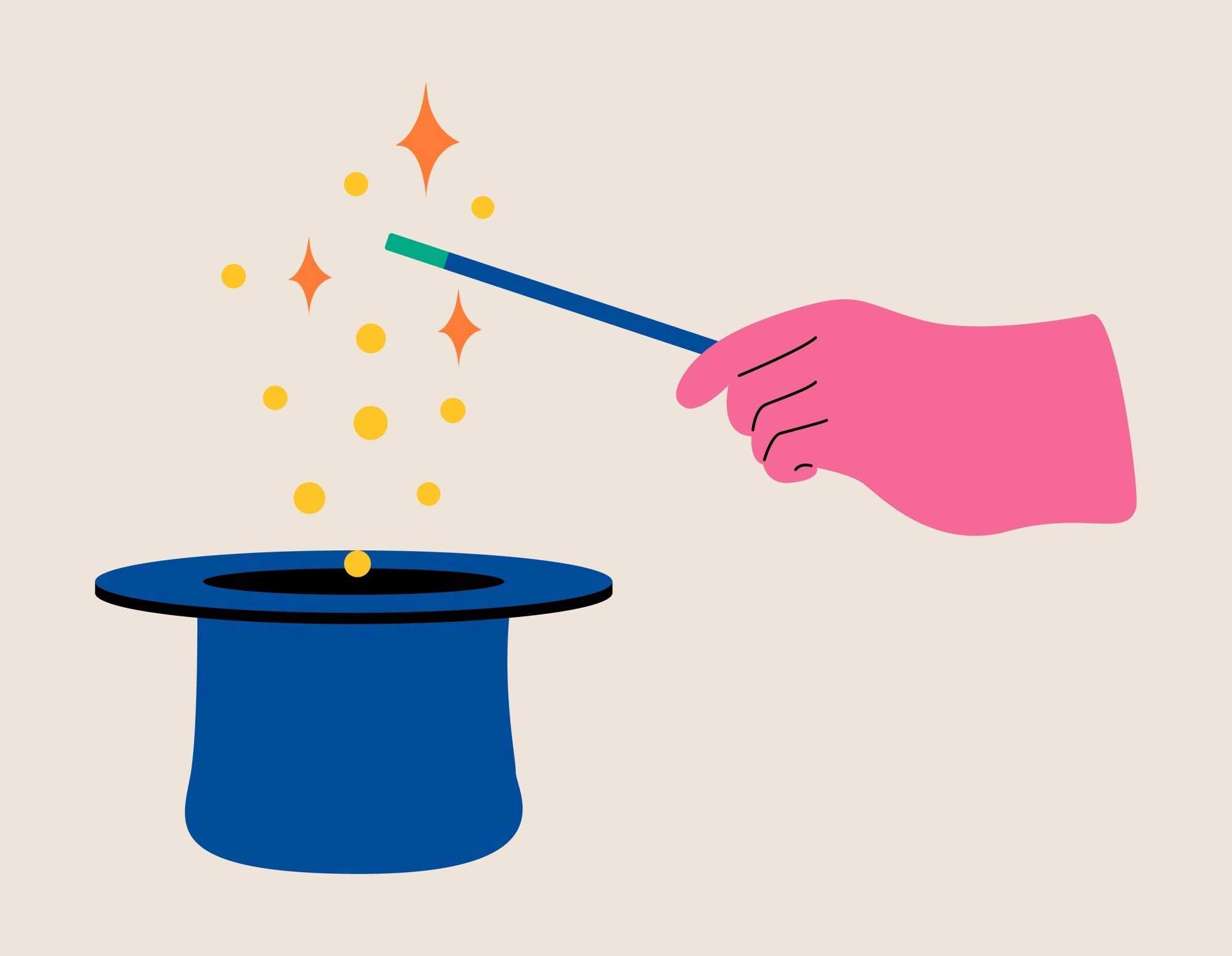
Magic wands appear in many different folktales and fantastical stories. Fairies, elves, and witches are shown with magic wands. The hit Harry Potter series popularised them even more.
Did you know that magic wands originated in ancient Egypt? Priests and magicians used rods and staffs made from materials like ivory, and wood. They were seen as godly tools.
Wands were also a symbol of power. They were used in religious rituals and ceremonies.
Magic wands can also be found in stories from ancient Greece and Rome. The Greek god Hermes, called Mercury in Rome, used a staff decorated with wings and snakes.
Nowadays, anyone can make and use a magic wand for their own fun and imaginative games!
Magic wand
Materials
-
wooden disposable chopstick
-
hot glue (with a parent’s help)
-
coloured construction paper
-
glitter
-
ribbon
-
scissors
Instructions
1. Draw a large star on the construction paper and cut it out. Use that star to trace another star of the same size on the paper and cut it out.
2. Glue the stars together, but leave an opening at the bottom. This is where you will insert the chopstick.
3. Decorate the stars with glitter. You can also glue short ribbons to the star.
4. Put the chopstick in the opening of the stars and glue it in place.
5. Let your wand dry before playing with it!
Simple magic trick

Have you always wanted to be a magician? Using this simple trick – and a little bit of science – you can make an empty can roll without even touching it!
Materials
-
empty soda can
-
blown-up balloon
-
a person with hair
-
a smooth, flat surface
Instructions
1. Place the empty can on a smooth, flat surface, like a large table or a hardwood floor.
2. Rub the balloon on someone’s head. You will notice that their hair will stick up.
3. Hold the balloon near the can and watch the can move towards the balloon!
How does this work? Most things emit small electric charges, both positive and negative. Rubbing a balloon across your hair causes tiny, negatively charged particles called electrons to move from your head to the balloon.
The metal can is made of particles that have both negative and positive charges. These charges attract each other. This is why the can rolls towards the balloon.