Every week, Talking Points gives you a worksheet to practise your reading comprehension with exercises about the story we’ve written.
When you zoom in on a fern leaf, the world does not become simpler. It reveals a pattern known as a fractal, where the part reflects the whole in an endless loop.
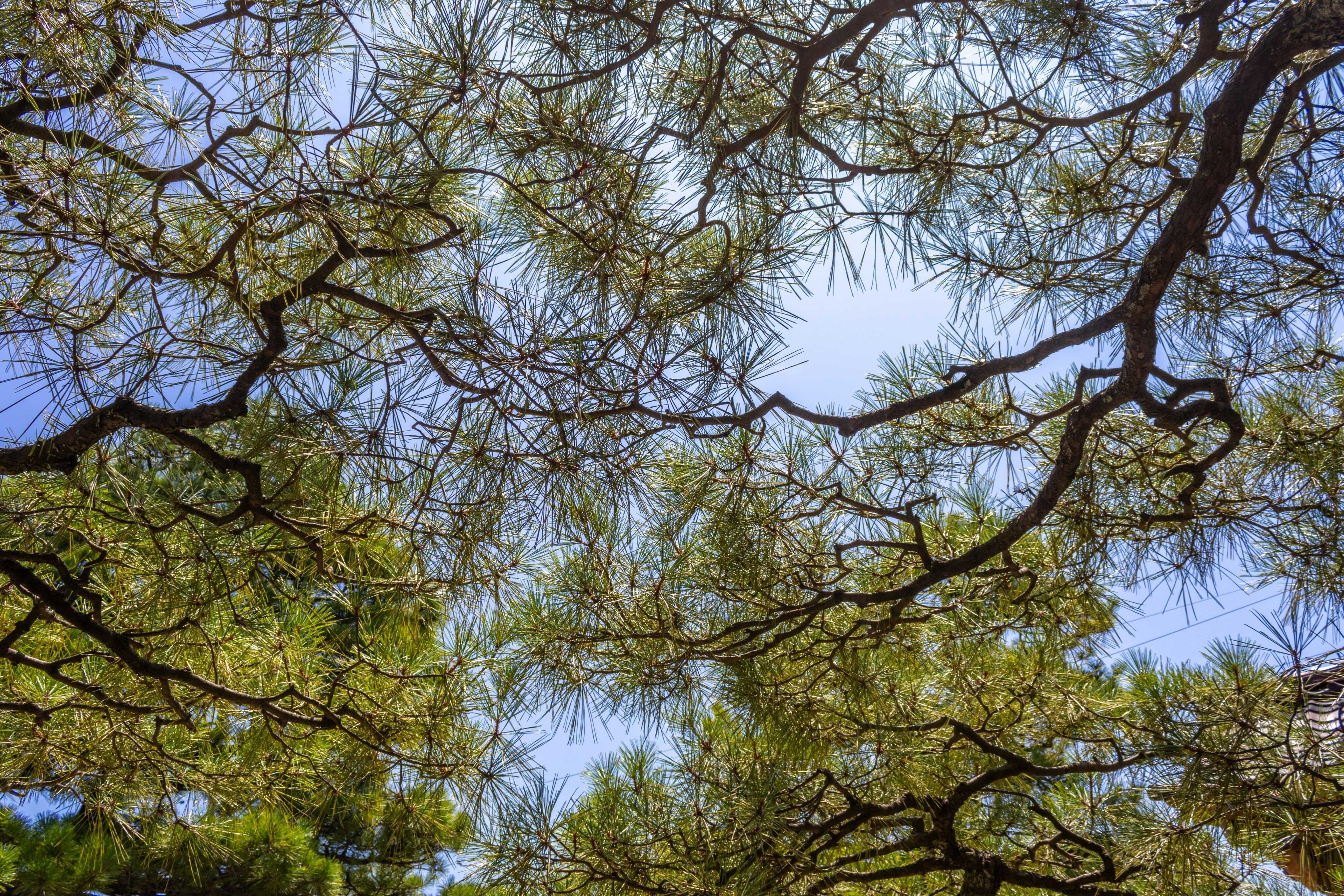
You can see repeating patterns everywhere in nature, like in clouds and tree branches. Fractals are not only beautiful to look at, but they might also help us feel less stressed. Since people have been around these patterns for a very long time, some scientists think our brains have learned to understand them really well.
If this is true, psychologist Ken Fung, who started Your Relationship Clinic in Hong Kong, said that our brains are good at handling complicated things easily.
Paying attention usually takes a lot of thinking and effort. But seeing repeating patterns can seem very easy.
Unlike the straight lines and perfect shapes of modern buildings, nature has patterns that are a bit unpredictable. Fung says this irregularity might be linked to how our brains work, which could make natural settings feel more relaxing.
“We feel naturally drawn to these patterns and can look at them for long periods without feeling drained. This is because the geometry of nature matches the wiring of our brains, which is why we find nature so restorative,” Fung said.
Fostering mental calmness
Fung discussed a 2006 review of studies on how people see fractal patterns. This review was published in the journal Leonard. It found that people feel less stressed when they look at patterns with a fractal dimension, or D-value, between 1.3 and 1.5.
The complexity of a picture affects its D value. For example, a simple design, like a single crack in a sidewalk, would have a low D value of 1.1.
A messy and tangled bunch of thorny bushes would have a higher D value of 1.9.
Even though patterns that are between 1.3 and 1.5 look complex, Fung said our brains can easily understand them.

He added: “In this sweet spot, our brain processes complex shapes with minimal effort, and during this process, it activates the parasympathetic nervous system.”
The parasympathetic nervous system is part of the autonomic nervous system. This is a network of nerves that controls the automatic actions we take to survive, such as breathing.
Our autonomic nervous system has two main parts: the sympathetic and the parasympathetic. The sympathetic nervous system is our “fight or flight” mode, and it turns on when we feel stressed or threatened. On the other hand, the parasympathetic nervous system calms the body down, helping us relax.
“By looking at fractals, we signal to our brain we are safe,” Fung said.
Fractals for teen well-being
Fung noted that fractals can be a helpful way for teens to calm down without talking about their feelings.
“Since fractals don’t require any complex verbal explanation, simply viewing them when stressed can help teens regain some sense of emotional balance,” he said.
These repeating shapes help us feel closer to nature, which is important in big cities.
While spending time outdoors is ideal, digital nature can serve as a useful alternative. Fung suggested creating a collection of images featuring water ripples, flowing rivers and lush green plants for your phone’s screen saver. For optimal results, combine these visuals with nature sounds to enhance the experience.
“In fact, this is one of the rare times I would encourage a teen to look at their screen while on a train or stuck indoors,” Fung said.