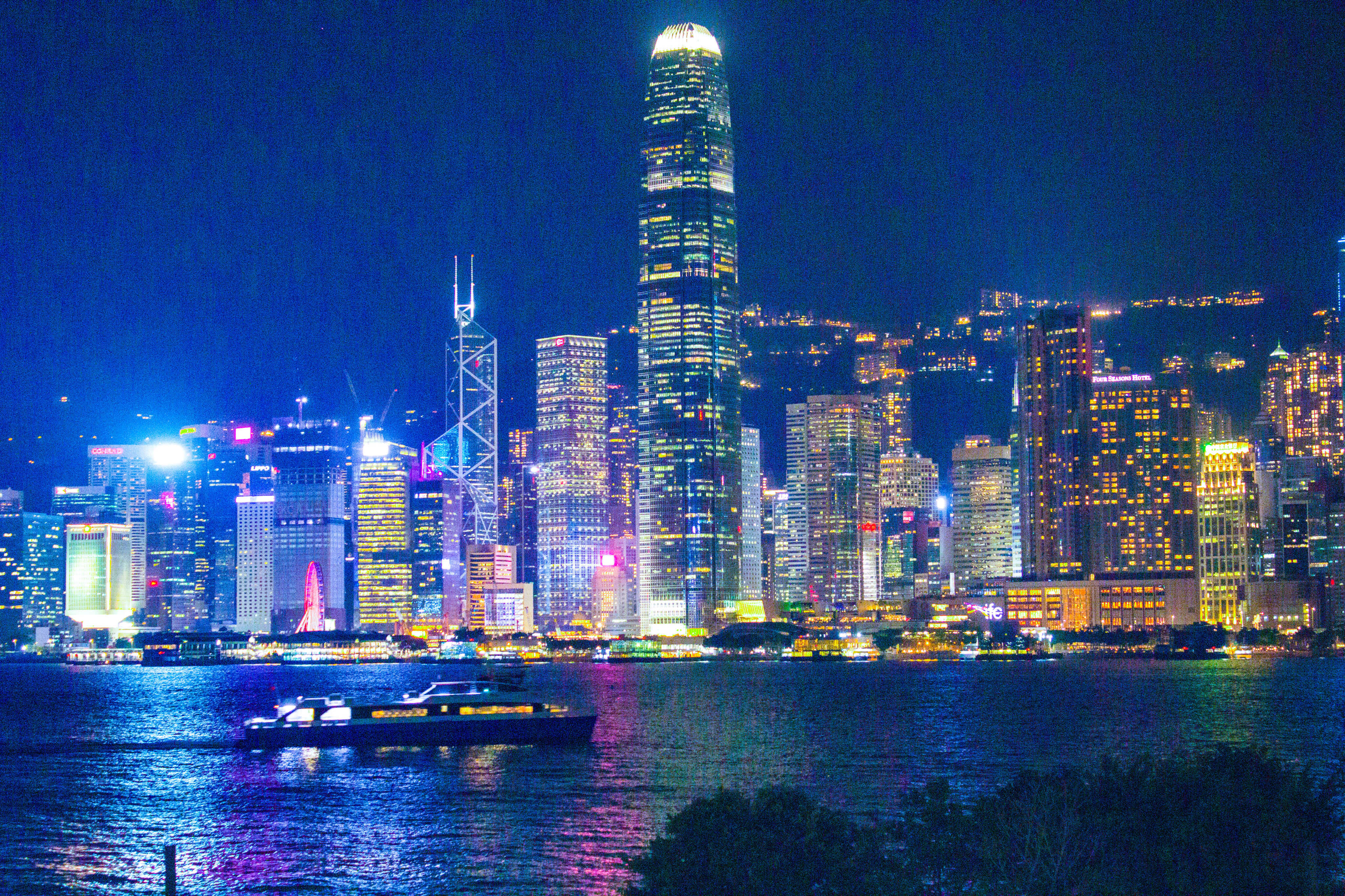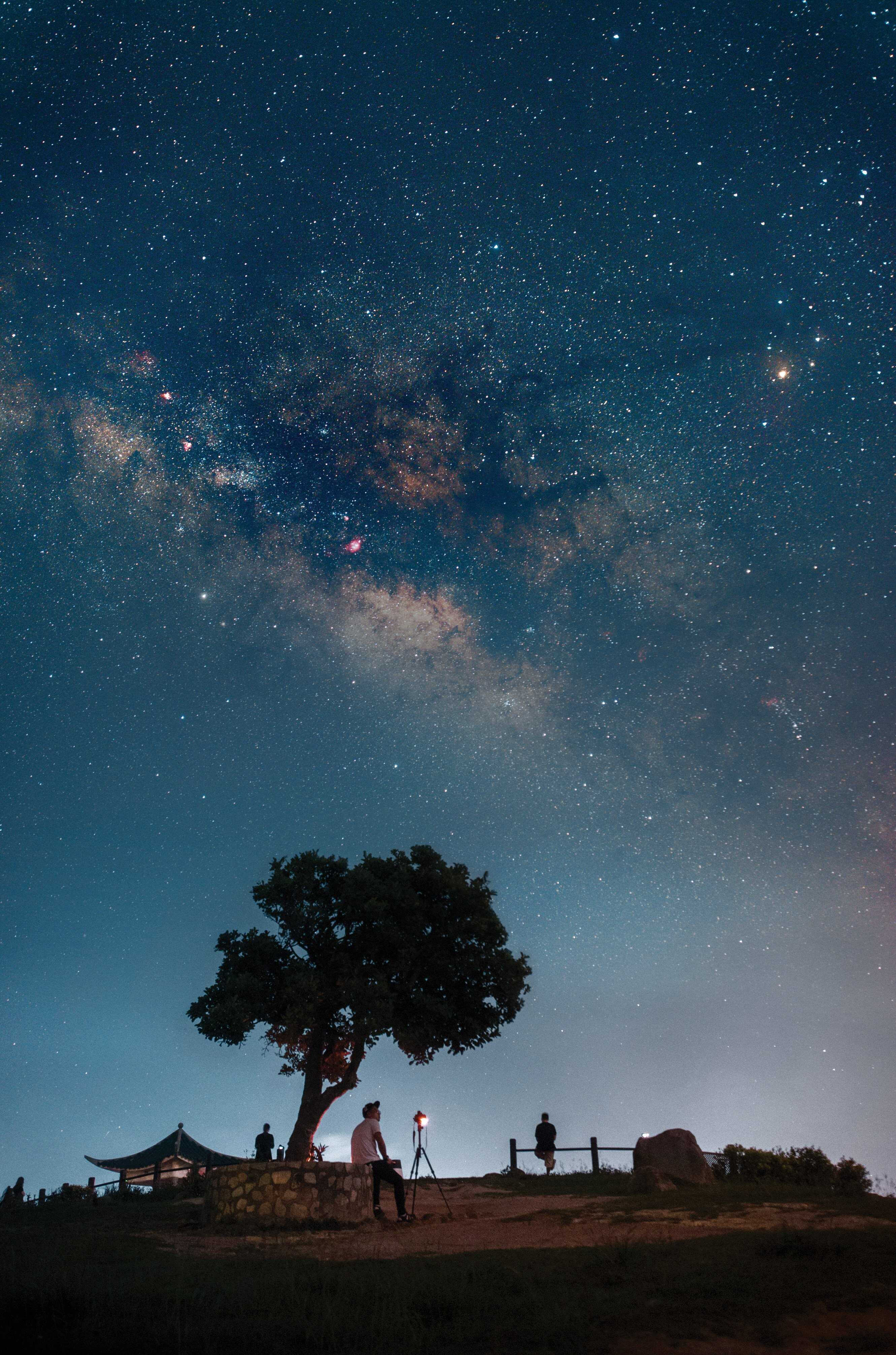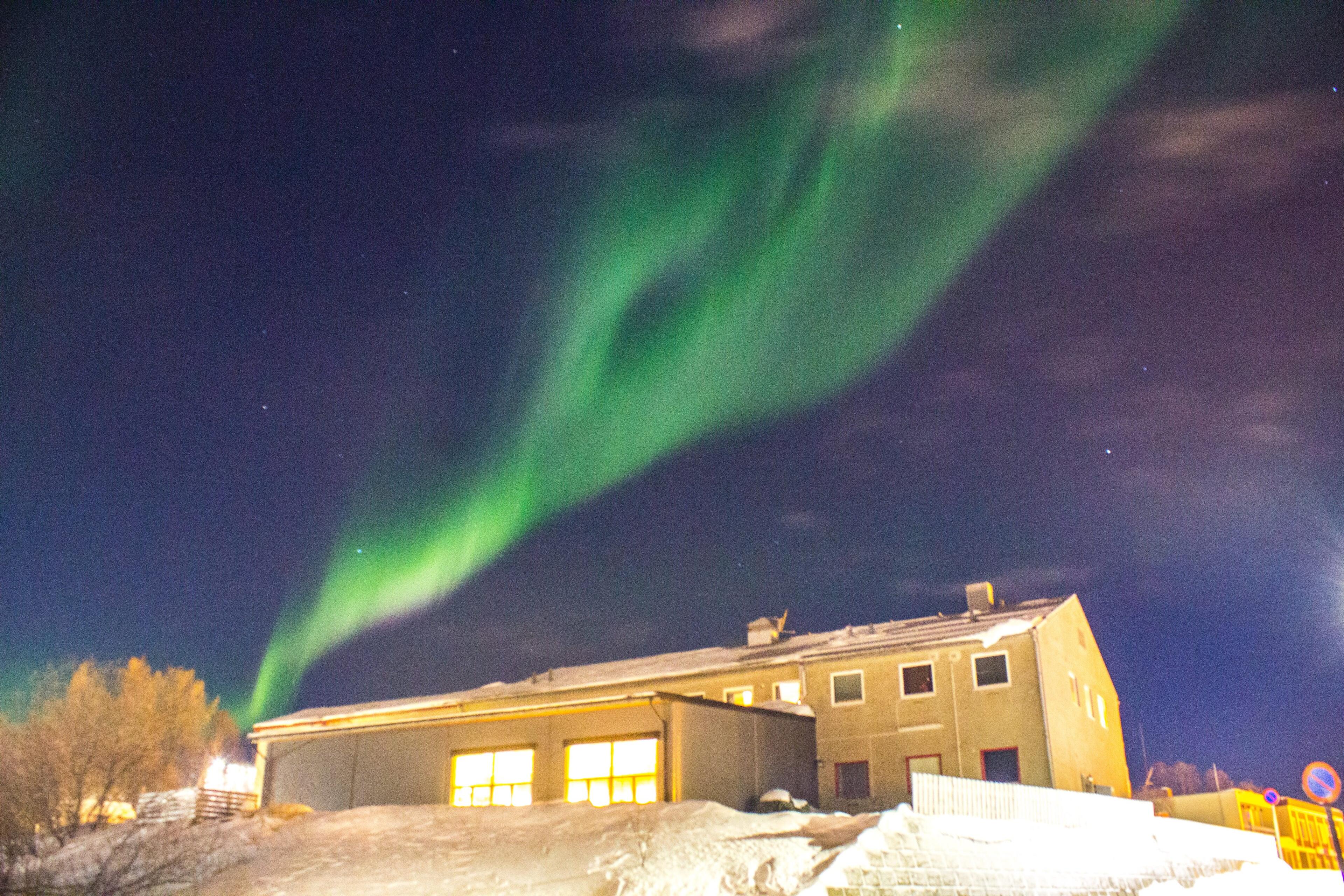
In Arctic regions, magical lights dance in the sky. These amazing natural light shows are called the Aurora Borealis or Northern Lights.
Let’s learn how these beautiful colours appear and where you can see them.
How are the Northern Lights formed?
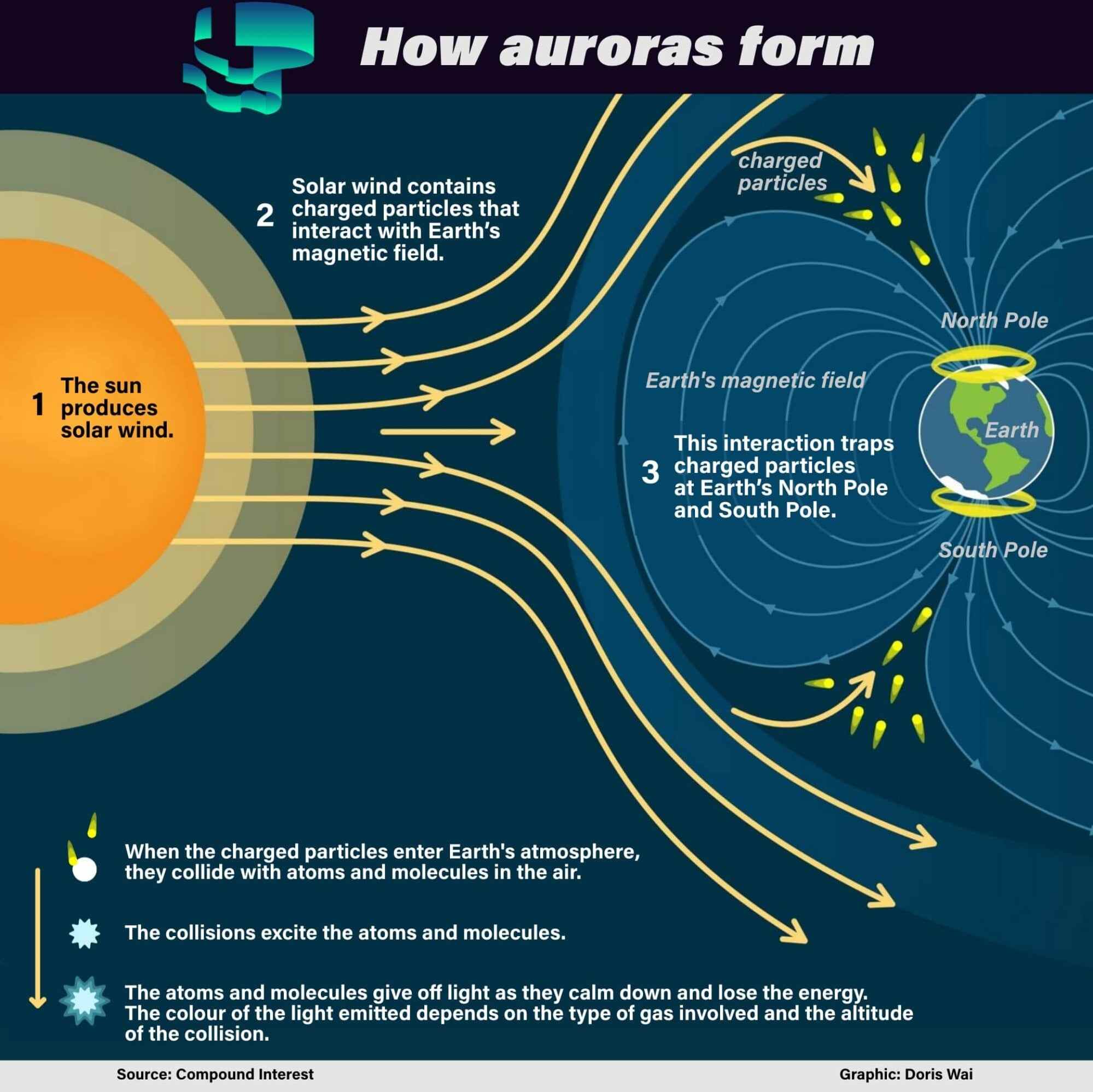
Solar wind carries tiny energetic particles from the sun to Earth. The particles interact with our planet’s magnetic field and collide with gases in the upper atmosphere around the magnetic poles near the North Pole and South Pole (see graphic).
Aurora colours depend on the gases that collide with the solar particles and the altitude where this occurs. Oxygen makes green and red. Nitrogen creates blue and purple. Mixtures of the gases produce pink and white.
Where can you see auroras?
The best places to watch the Northern Lights are near the Arctic Circle.
Some famous spots to see auroras include Greenland, Iceland, Norway, Sweden, Finland, Russia, the US state of Alaska and the Canadian city of Yellowknife. These places lie in what scientists call the Auroral Oval, where auroras often appear between September and March.
If you go to the southern part of the world, you might have a chance to see the Aurora Australis, also called the Southern Lights. You might be able to spot them in the Australian state of Tasmania or the South Island of New Zealand.
If there is a geomagnetic storm, you will have a higher chance of seeing auroras in the southern part of the world. These usually look pink or purple.
A geomagnetic storm is a significant disturbance in Earth’s magnetosphere. It happens when solar wind interacts with Earth’s magnetic field, disrupting satellites, communications and power systems.
When is the best time to see auroras?
It is best to look for auroras during the winter months when nights are long.
During summers near the poles, the sun stays out all day and night – this is called the Midnight Sun or Polar Day. Because it never gets dark, the aurora lights cannot be seen.
Seeing the aurora is like watching the sky dance in beautiful colours. It is a magical experience that connects us with the sun, Earth and space. Next time you look up at the stars, imagine the light show happening in the polar skies. Maybe, one day, you will be an aurora hunter too.
Exodus Sit is an astronomy educator, popular science author, astrophotographer and science communicator in Hong Kong. He is currently the chair of the National Astronomy Education Coordinator Team for China, Hong Kong, of the International Astronomical Union Office of Astronomy for Education.