Deep Dive delves into hot issues in Hong Kong and mainland China. Our easy-to-read articles provide context to grasp what’s happening, while our questions help you craft informed responses. Check sample answers at the end of the page.
News: Hong Kong public universities admitting fewer DSE pupils
-
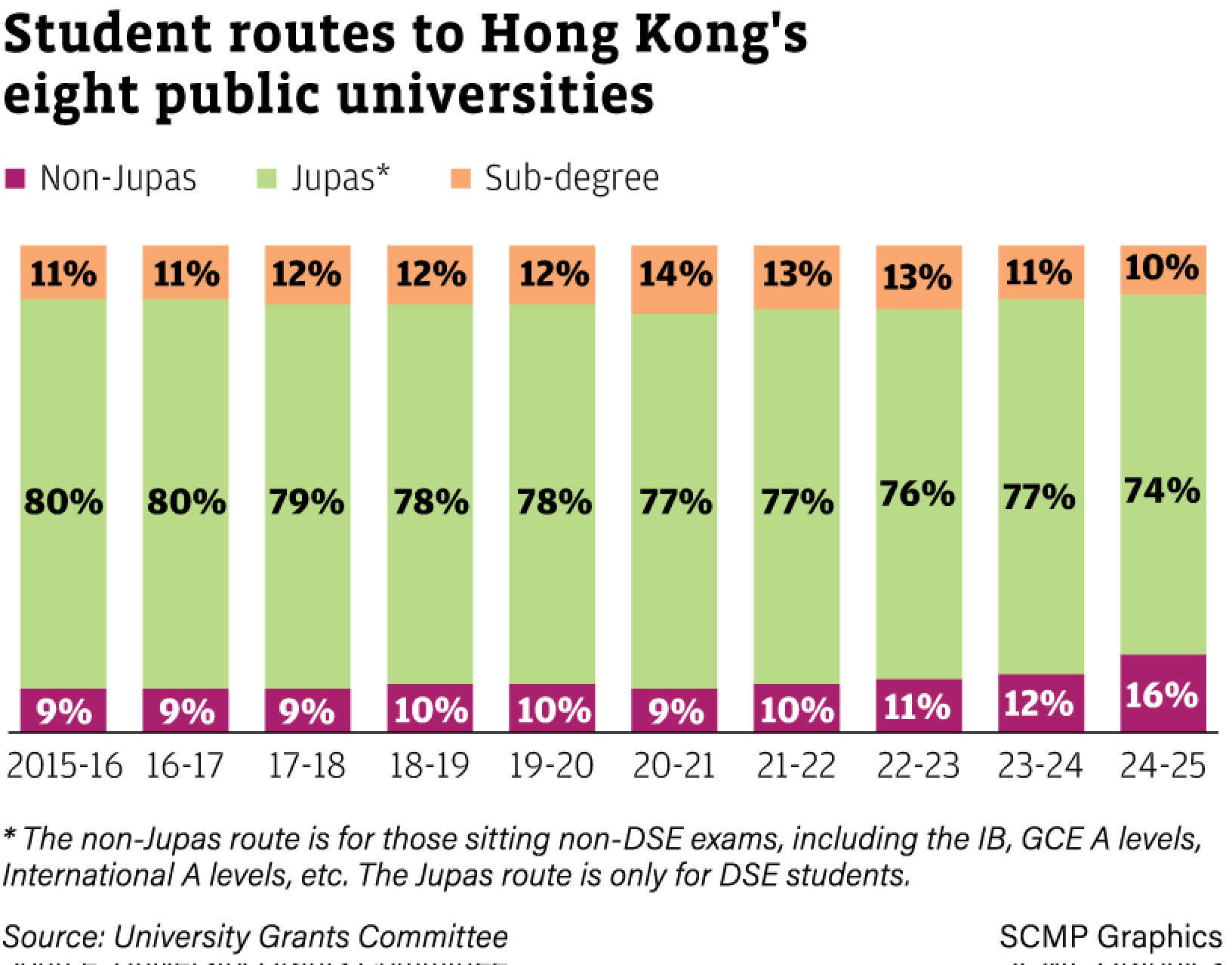
Proportion of students who followed the DSE curriculum has dropped to a record low of 74 per cent
-
Number of non-Jupas route students is on the rise
Seven of Hong Kong’s eight publicly funded universities have admitted fewer students who took the local school curriculum over the past decade.
Instead, local universities have increased their intake of Hong Kong students who sat international exams, official statistics show.
The only institution to buck the trend is the Chinese University of Hong Kong (CUHK), where the proportion of local students who sat the Diploma of Secondary Education (DSE) increased during the same period.
The latest admissions data published by the University Grants Committee (UGC) outlined the academic qualifications of first-year students admitted to the eight public universities over the past decade.
Among the 15,000 to 16,000 local students enrolled annually at all eight public universities, 80 per cent were admitted via the DSE route in the 2015-16 academic year. This figure gradually declined to a record low of 74 per cent in 2024-25. The drop amounts to around 500 fewer DSE students being admitted to public universities in 2024-25 than in 2015-16.
Secondary school students following non-local curricula – such as the International Baccalaureate (IB), GCE A levels or International A levels – pay tuition fees at international, private or semi-private schools, with annual fees ranging from around HK$30,000 to more than HK$200,000.
Hong Kong students may choose non-local curricula as a way to expand their future opportunities. They believe it could make it easier for them to study abroad after secondary school or to find jobs with international companies. Some may also feel that non-local curricula are better suited to a pupil’s individual learning.
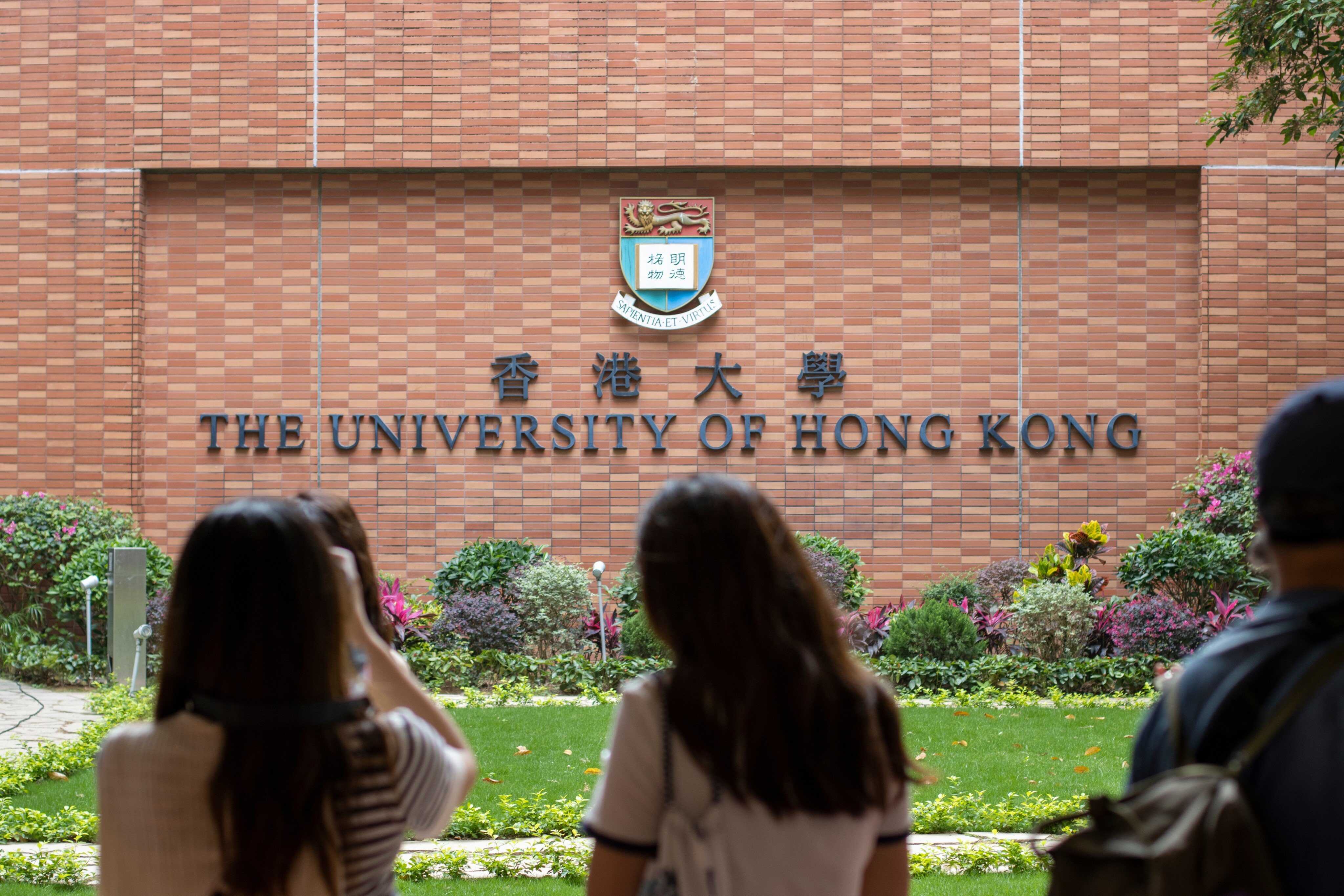
At the University of Hong Kong (HKU), around 13 per cent of first-year local undergraduates were admitted through the non-Jupas route in 2015-16, but this proportion soared to 30 per cent in 2024-25.
The share of HKU first-year local students admitted via Jupas fell from 79 per cent in 2015-16 to 67 per cent in 2024-25, representing 331 fewer students admitted through this route over the decade.
CUHK was the only public university to record an increase in the proportion of Jupas-route students – from 86 per cent in 2015-16 to 87 per cent.
As more non-Jupas local students are being admitted to Hong Kong’s public universities, the government is also considering how to attract more overseas students as part of the Study in Hong Kong campaign introduced in last year’s policy address.
Staff writers
Question prompts
1. Which of the following statements about UGC’s admissions data is false?
(1) The University of Hong Kong was the only public university to admit mostly DSE pupils last year.
(2) The percentage of students enrolled at public universities through the DSE route dropped to a record low in the 2024-25 academic year.
(3) The proportion of Jupas-route students soared in all of the city’s public universities.
(4) Around 80 per cent of students at public universities were admitted via the DSE route in the 2015-16 academic year.
A. (1), (2) only
B. (1), (3) only
C. (1), (4) only
D. (2), (4) only
2. List ONE factor that makes it harder for Hong Kong students to take the non-Jupas route to enter the city’s public universities.
3. How could recent trends in Hong Kong’s university admissions be beneficial for the Study in Hong Kong campaign? Explain using the news, glossary and your own knowledge.
Graph
Question prompts
1. Using the graph, list ONE trend in student routes to Hong Kong’s publicly funded universities over the last 10 years.
2. How could public universities benefit from students who have taken international exams? Explain using the news and your own knowledge.
Glossary
Diploma of Secondary Education (DSE): Hong Kong’s university entrance examination, which tests students on different core and elective subjects. To enrol in the city’s public universities, DSE students must apply through the Joint University Programmes Admissions System (Jupas).
University Grants Committee (UGC): a government advisory body that allocates funding to Hong Kong’s higher education institutions
non-Jupas route: other study options and curricula in Hong Kong, like the International Baccalaureate (IB), GCE A levels or International A Levels
Study in Hong Kong: a government-led initiative, announced by Chief Executive John Lee Ka-chiu in 2024, to develop Hong Kong into a hub for post-secondary education by attracting overseas students
Sample answers
News
1. B
2. Most schools that offer non-local curricula – such as the International Baccalaureate (IB), GCE A levels or International A levels – require annual tuition fees that students from low-income families might not be able to afford.
3. If more local students study international curricula before starting at Hong Kong’s universities, this will help overseas students feel more comfortable coming to Hong Kong because they could meet others who have learned the same things as them. Having students from diverse educational backgrounds will make Hong Kong’s universities more inclusive.
Graph
1. There has been a gradual decline in the number of DSE candidates being admitted to the city’s eight publicly-funded universities. / There has been an increase in the number of students following non-local curricula being admitted to Hong Kong’s public universities.
2. By admitting more students who have taken international exams, Hong Kong’s public universities can strengthen their global competitiveness, attract more capable and internationally minded students, and align with the government’s policy goals to internationalise the city’s higher education sector.