Content provided by British Council
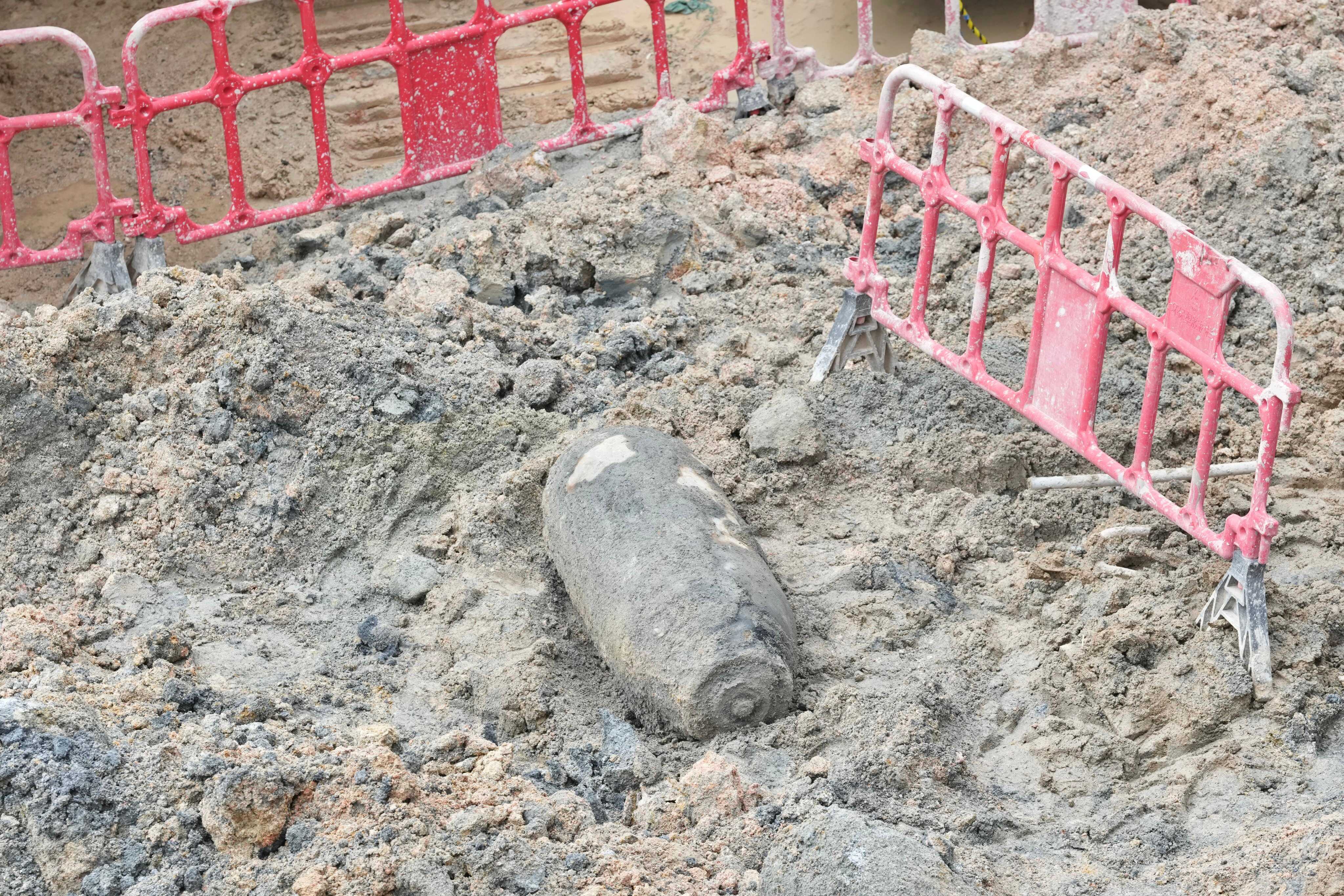
[1] A wartime bomb unearthed in Hong Kong’s Quarry Bay last month is “very likely” to have been dropped by the United States military on April 2, 1945, experts have said. They added that its explosive power is “practically intact” because of a high production standard.
[2] The 454kg bomb included 227kg of TNT explosives. It was found on September 19 at a construction site, resulting in the evacuation of 6,000 residents overnight. The bomb was successfully defused the next morning after a nine-hour effort.
[3] Professor Kwong Chi-man is a military historian at Baptist University. He said records showed the US Air Force dispatched 24 bomber planes on a raid targeting Taikoo Dockyard on April 2, 1945. Each carried six 454kg bombs.
[4] ArcGIS is a geospatial platform for mapping and analysis. It was used to georeference photos taken during the mission by the 531st Bombardment Squadron (Heavy) of the 380th Group, a unit of the US Air Force, first activated during World War II. Kwong said the analysis showed the squadron’s bombs were dropped over the Pan Hoi Street area.
[5] At the time, it was the Taikoo Sugar Refinery. The Japanese, who had occupied Hong Kong between December 1941 and August 1945, controlled the area. Kwong said the US raid aimed to destroy the dockyard. He added that the bomb remained “live” for so long because it was in a fairly stable environment, and the fuse remained intact.
[6] Kwong said it was difficult to say how many more wartime bombs remained in the city. “The WWII [unexploded bomb] rate was about 10 to 20 per cent,” he said. “More than 1,000 bombs were dropped in Hong Kong during the war.” It was difficult to pinpoint how many were still “live”, and it was still possible for them to explode, he warned.
[7] The Hong Kong Museum of the War of Resistance and Coastal Defence has several bomb casings in its collections. The largest is a 908kg bomb, according to Kwong. In 1946, the South China Morning Post reported on a 545kg unexploded US bomb on Shau Kei Wan Road. It was removed from three metres below ground after more than six hours of work. Residents in the neighbourhood were also evacuated.
[8] Suryanto Chin-chiu is a senior bomb disposal officer. He said the Quarry Bay bomb was still effective. It was handled by first cutting open a 30cm hole in its casing, followed by burning of the explosives, which were “very destructive”. “Its power was practically intact from when it was dropped in 1945,” Suryanto said. “It was meticulously made from arsenals with the sole purpose of causing mass destruction. It would have been manufactured to constantly remain in a functional state.”
[9] Suryanto said there was a higher likelihood of finding bombs in neighbourhoods that were battlefields during the second world war. The chances of discovering them in newly developed areas such as Chek Lap Kok and Tseung Kwan O were much lower, he added.
Source: South China Morning Post, September 20