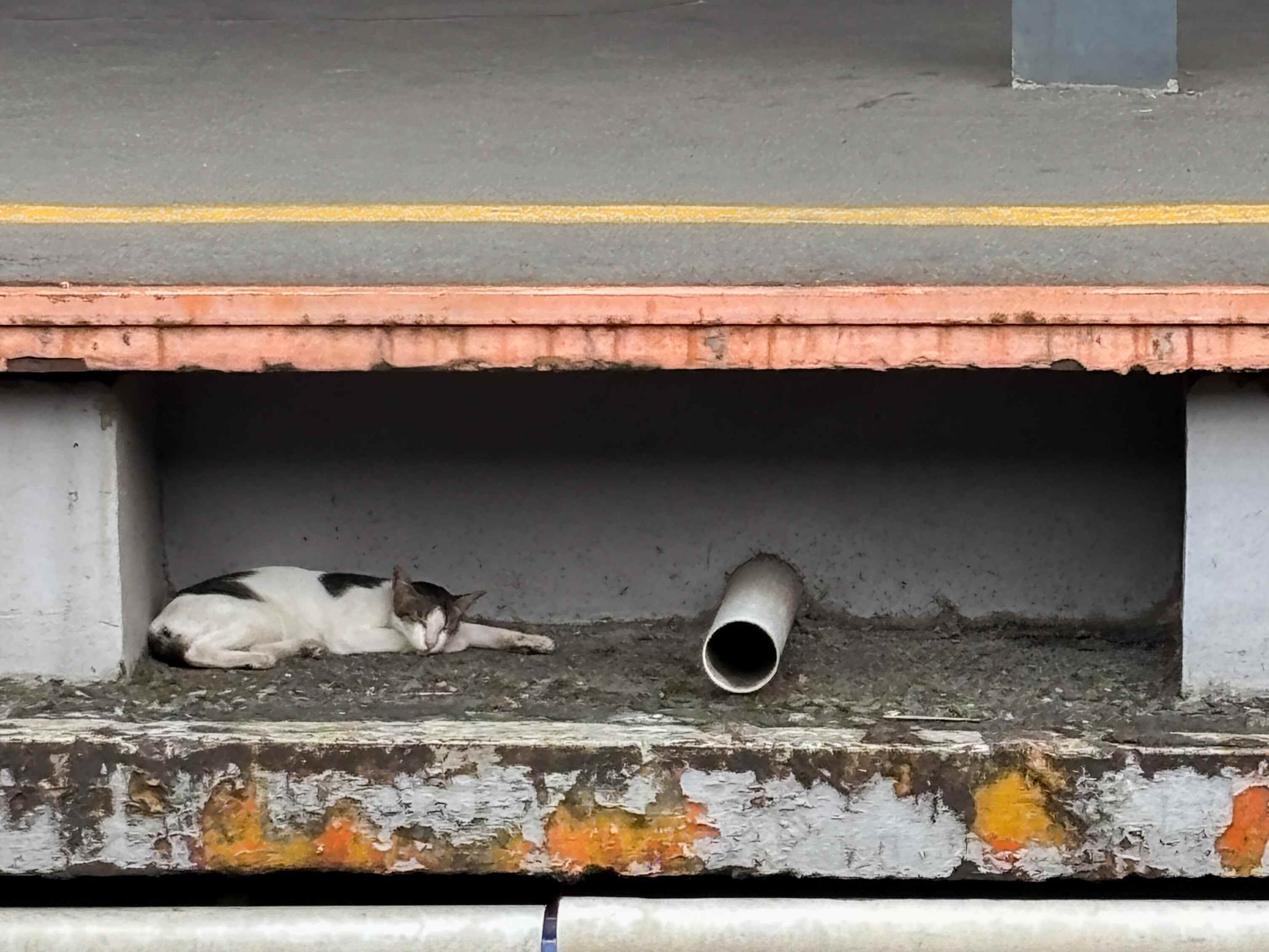
[1] Three flea-riddled kittens play near a food vendor at a busy railway station in Jakarta. The city is home to one of the biggest urban stray cat populations on Earth. There are about 1.5 million street cats in the Indonesian capital. Most people dote on them.
[2] “Cats are there to neutralise negative auras and to cheer you up,” 33-year-old vendor Saiful Faizin told Agence France-Presse. He gives the strays water and leftovers from his chicken porridge cart. He also plays with the little ones.
[3] There is no government department dedicated to domestic animal welfare. As a result, the number of stray cats in Jakarta has exploded over the years. They escape Jakarta’s traffic and depend on kind-hearted people for food and medical care. “There are too many cats here ... so they end up dying ... [in] incidents involving motorbikes,” said vendor Hilwa Tasya Sholehah, 25.
[4] Some residents welcome the free rat control. However, they also complain about smelly cat urine. There are also problems with noisy fights and property damage, such as scratches to motorbike seats. Jakarta has been free of rabies since 2004. This is because of mass vaccination of strays. However, cats can still give people other illnesses or bugs.
[5] “Some people don’t realise that giving the cats [food] without spaying or neutering them can cause another problem, which is overpopulation,” said Caolina Fajar. She works for the NGO Let’s Adopt Indonesia. “They keep mating, they keep having babies, and the population is increasing.”
[6] Let’s Adopt Indonesia spayed and neutered 2,274 cats in Jakarta last year. It receives money from private donors and overseas foundations to cover the costs. Estimates of the true number of strays in Jakarta vary wildly. One city official estimated the number at about 305,000. Another believed it could be five times that amount.
[7] Last year, the city sterilised 21,000 cats under a new programme. It budgeted 3.5 billion rupiah (HK$1.5 million) for the programme for 2026. However, the government needs much more money to achieve its goal. It aims to control the stray cat population by sterilising at least 70 per cent of strays. Jakarta’s top agriculture official is Hasudungan Sidabalok. He said the service did not have nearly enough official shelters, vets or paramedics to deal with cats in need.
Source: Agence France-Presse, June 17