Do you ever look at the night sky and wonder why the moon’s shape changes or why stars seem to fall? These are lunar eclipses and meteor showers, which you can see in Hong Kong this year if you know where to look.
Lunar eclipses
Lunar eclipses occur when Earth moves between the sun and moon. Our planet blocks the sun’s light and casts a shadow on the moon.
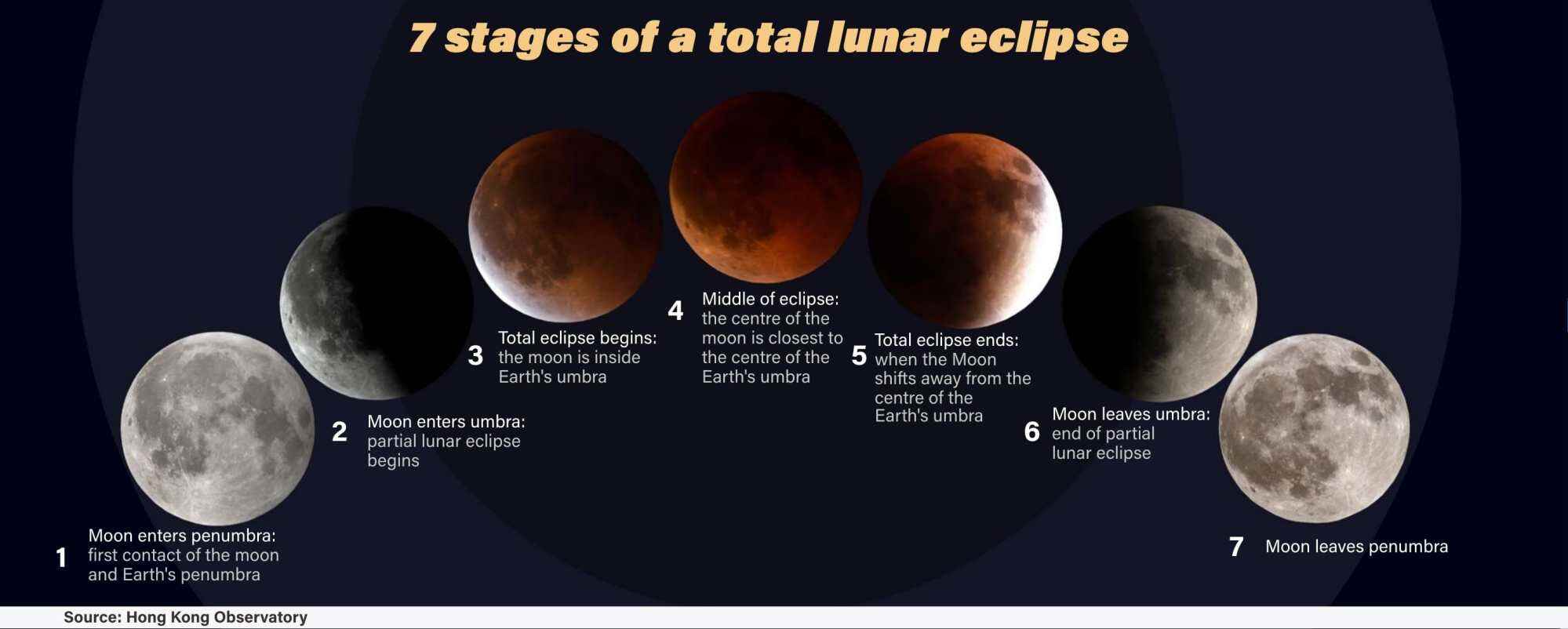
Earth’s darkest shadow is called its umbra. If the moon passes completely into Earth’s umbra, the moon’s colour is coppery-red. That is called a total lunar eclipse, which has seven stages (see graphic).
When only part of the moon enters Earth’s umbra, we get a partial lunar eclipse.
Earth’s penumbra is the outer part of its shadow. If the moon only passes through the penumbra, its brightness dims a bit. This event is called a penumbral lunar eclipse.
On March 3, the stages of penumbral and partial eclipse will almost occur when the moon is under Hong Kong’s visible horizon. You will be able to see the blood moon after the moonrise, and it will exit the penumbra at 10.25pm.
Meteor showers
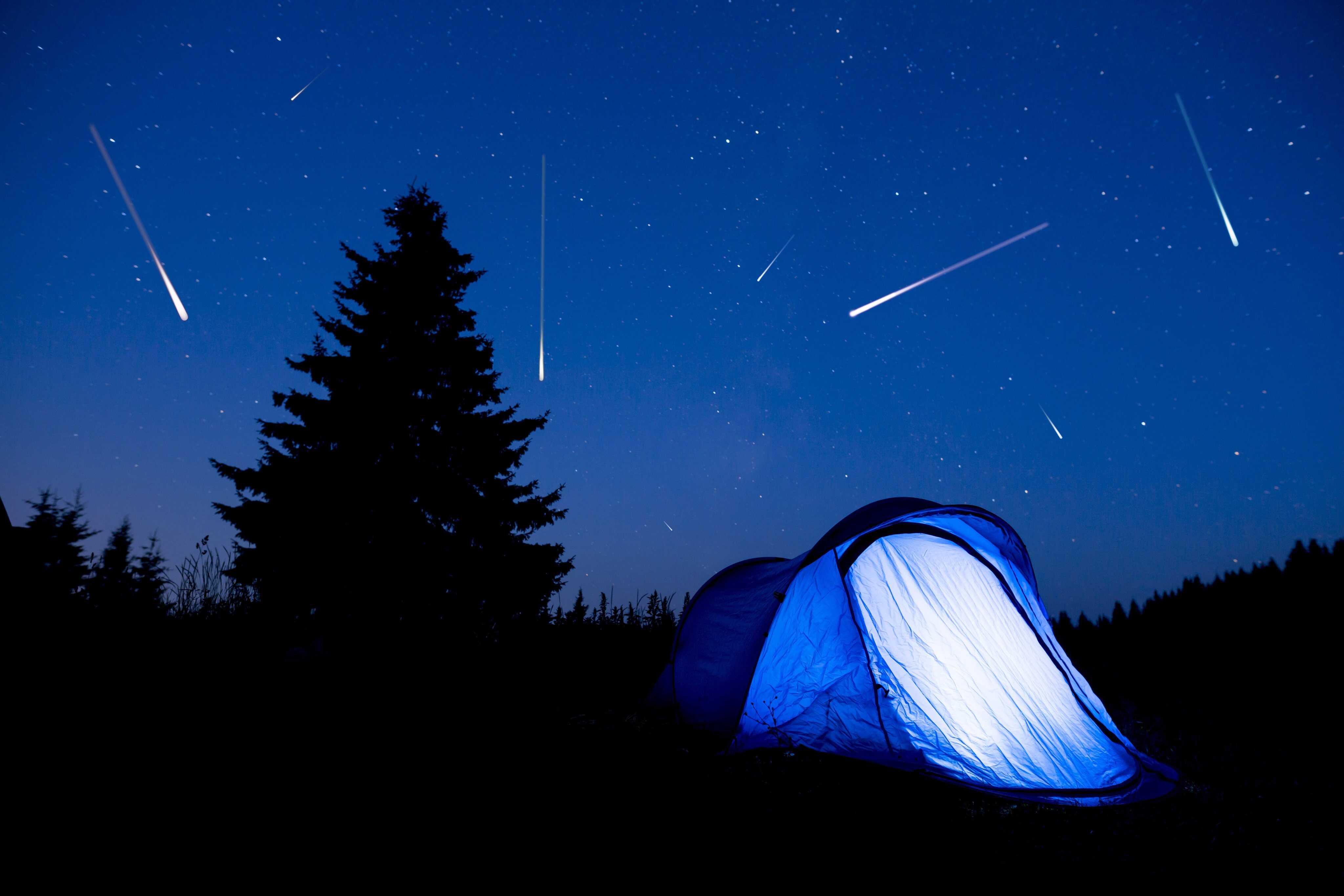
Meteor showers occur when space rocks, also called meteoroids, crash into our atmosphere. This causes them to burn up and create bright streaks of light called meteors.
Bright meteors are called fireballs. They can shine even brighter than planets. They may produce sounds and leave behind glowing trails of smoke.
When a large number of meteors flash through the same part of the sky, it is called a meteor shower.
Earlier this month, the Quadrantid meteor shower happened. In August, there will be a Perseid meteor shower. In December, the Geminids will shoot across our sky.
Under clear skies in areas where the dark sky is protected, you might be able to see up to 100 meteors every hour during a meteor shower. On a normal night, you should be able to see more than 20 to 30 meteors from Sai Kung’s country parks and outlying islands.
How astronomy connects to our daily life
We can use a telescope to look at the moon’s rocky craters and record what we see by drawing its features. We can also use our imagination and understanding of mathematics to explore how people from different cultures understand the constellations in the night sky and the stories behind them.
The night sky is not just beautiful. It also helps us understand how the universe works and reminds us that every question we ask can lead to a new discovery.