A long flight often seems like the perfect chance to finally finish a novel. However, many of us find our motivation wanes as sluggishness sets in.
Here are some reasons why flying can leave us feeling bloated and exhausted.
Altitude attitude adjustment
“When we are out of our usual routines on a flight, it disrupts what our bodies are used to,” said Dr Asimah Hanif, a medical expert working with UK travel insurance provider Staysure.
“For example, you might not be used to eating so early in the morning when they serve breakfast on a plane, and you might be served something that you don’t usually eat. So, the impact of both of those elements combined ... can disrupt digestion and contribute to sluggishness.”
Dr Mark Austin, a specialist in gastroenterology in the UK, agreed and added: “If you’re flying at funny times of the day, that can have an impact on your physiological state, and can release stress hormones and make you feel less hungry, bloated and uncomfortable.”
Sleep deprivation
“Many of us struggle to get good quality sleep on a plane, and sleep deprivation has a huge impact on your digestion and how you feel,” Austin said.
Sky-high struggles
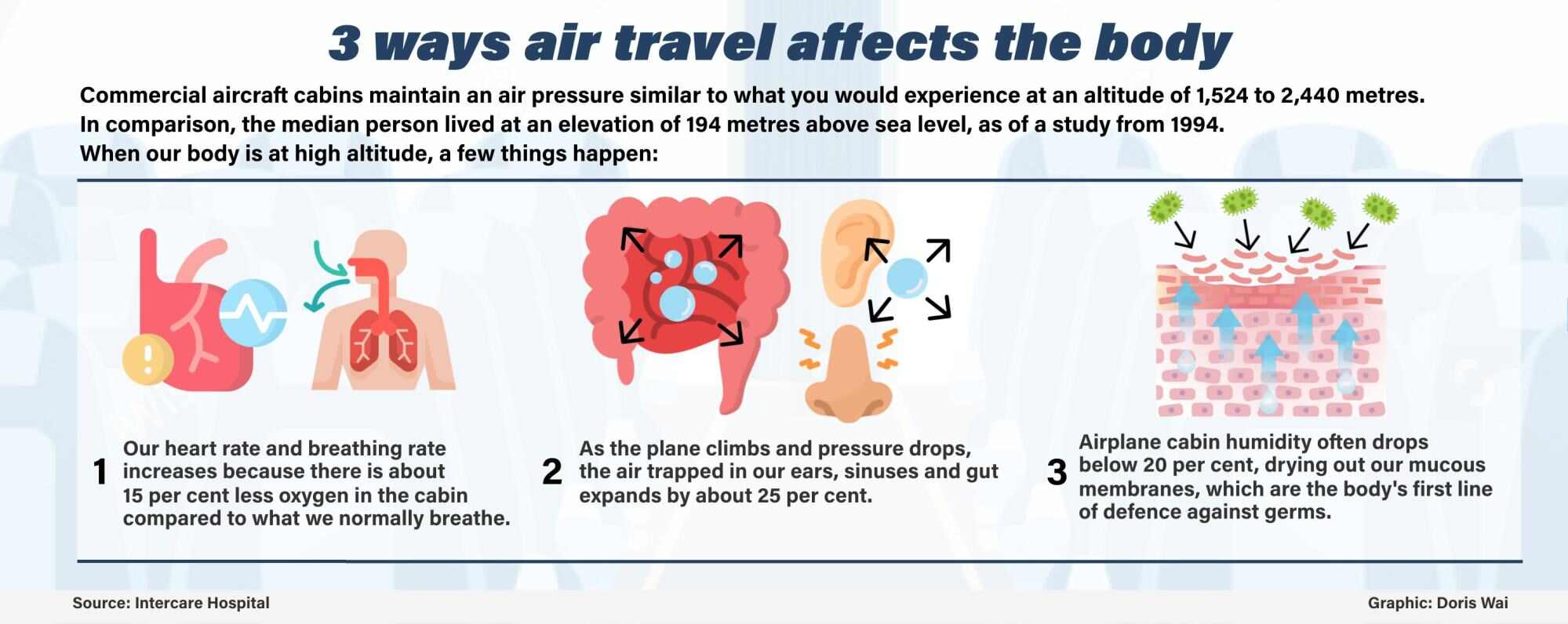
“When you’re flying at altitude, the air cabin pressure will change, and you’ll also get lower oxygen levels, which in turn could affect your digestion and your energy levels,” Hanif said. “In addition, the cabin air is conditioned, but it’s also quite dry, so people will often notice that their skin becomes dry and might feel dehydrated, which can also contribute to fatigue.” (see graphic)
Snack attack
“Airline meals often contain a high level of salt. I’ve been told that this is because your taste is altered at altitude, so the airlines often compensate for that by adding more salt to make it taste nice,” Hanif explained. “However, as a result, that can cause water retention and processing issues.”
Airline food is also often high in carbohydrates.
“The food is usually ultra-processed and often involves things like pasta, rice and bread,” Austin said.
“These types of foods fill you up and make you feel sleepy.”
Stuck in motion
“Sitting down for long periods reduces your general circulation, slows your metabolism and can impact general nutrient absorption,” Hanif highlighted.
Austin added, “People that are prone to slow gut transit and constipation need to get up and walk around, and if you’re not doing that for long periods of time, plus all the other factors that we’ve already mentioned, you’ve got a significant risk of problems with regard to slow gut transit and gas production.”
Dehydration risks
“Aeroplanes do run with very low humidity, so you’ve got a huge risk rate related to things like dehydration,” Austin said. “Dehydration can trigger a stress response where your body is trying to divert blood away from the organs that it doesn’t necessarily think are super important, which often includes your gut.”
“This will cause problems related to digestion, gut transit, bloating and problems with regard to constipation,” he added.
What are some ways to avoid feeling sluggish on a flight?
– Choose a meal that is lighter and more balanced, rather than one that is heavy in starch and carbohydrates.
– Opt for meals that include a good source of protein and plenty of vegetables. These will have less of an impact on your body.
– If you’re not feeling very hungry, it’s better to snack instead of consuming large meals.
– Consider bringing snacks like fruit, nuts and seeds on the plane.
– Make it a point to drink a glass or half a bottle of water every hour.
– Every two to three hours, get up and walk around the cabin. Movement can help relieve gas and bloating symptoms and aid digestion.