Every week, Talking Points gives you a worksheet to practise your reading comprehension with exercises about the story we’ve written.
When you zoom in on a fern leaf, the world does not become simpler. It reveals a pattern known as a fractal, where the part reflects the whole in an endless loop.
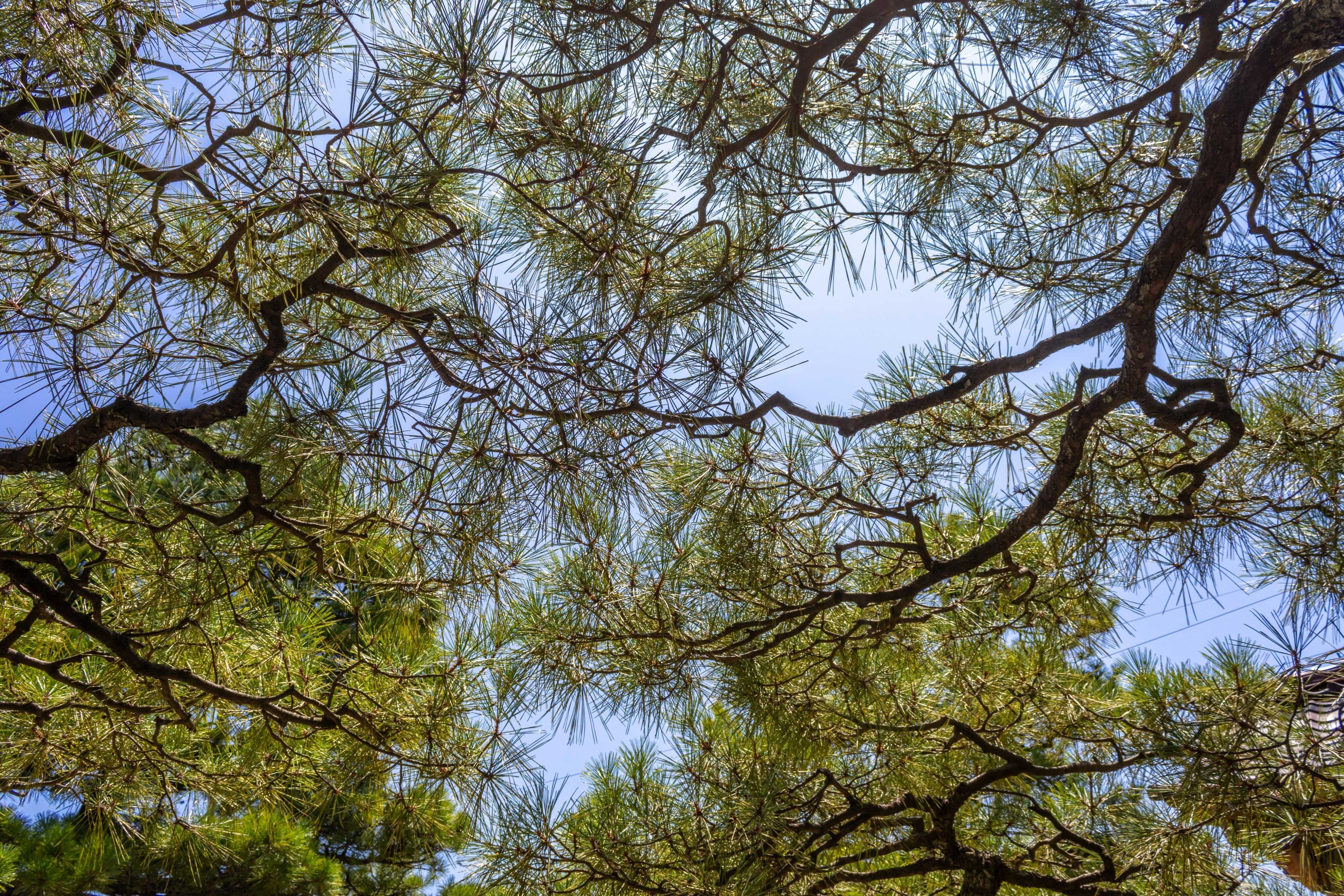
These repeating patterns are found throughout nature, such as in the shapes of clouds and the branching of trees. Fractals are not just visually captivating; they may also help reduce stress levels. Because humans have coexisted with these patterns for millennia, some psychologists suggest that our brains have developed a form of “fractal fluency”.
If this is true, psychologist Ken Fung, founder of Your Relationship Clinic in Hong Kong, explained that our brains are optimised to process complexity with ease.
Paying attention often demands considerable mental energy and a conscious shift in focus. However, noticing fractal patterns can feel effortless.
In contrast to the rigid, linear geometry of modern urban architecture, nature’s fractals exhibit a slight unpredictability. According to Fung, this imperfect order may resonate with the structure of the human brain, making natural environments more soothing.
“We feel naturally drawn to these patterns and can look at them for long periods without feeling drained. This is because the geometry of nature matches the wiring of our brains, which is why we find nature so restorative,” the clinical psychologist said.

Fostering mental calmness
Fung referenced a 2006 review of visual perception studies on fractal patterns published in the journal Leonard. The review found that individuals experience less stress when observing patterns with a fractal dimension or D-value between 1.3 and 1.5.
The complexity of an image directly affects its D value. For example, a simple pattern, such as a single crack in a sidewalk, would have a low D value of 1.1.
In contrast, a chaotic and intertwined pile of thorny bushes would have a higher D value of 1.9.
Even though patterns that fall between 1.3 and 1.5 look detailed, Fung said that our brains could understand them easily.
He added: “In this sweet spot, our brain processes complex shapes with minimal effort, and during this process, it activates the parasympathetic nervous system.”
The parasympathetic nervous system is a part of the autonomic nervous system responsible for “rest and digest” functions.
Richard Taylor, a professor at the University of Oregon in the US, wrote in a blog post that his research had found that people’s stress levels dropped by up to 60 per cent when looking at fractal patterns. Some researchers believe that the brain perceives these patterns as a relaxing exercise.
On the other hand, when people feel stress, this activates the sympathetic nervous system.
“When our sympathetic nervous system is active because of a threat, the body treats the digestive system as secondary, as it is not important for immediate survival,” he said.
Fractals for teen well-being
Fung noted that fractals can also serve as an effective non-verbal self-soothing tool for teenagers who struggle to express their feelings verbally.
Young people often go through strong emotional changes due to their hormones and developmental needs. Additionally, they are in the process of establishing their sense of self and identity.
“There is a significant amount of pressure hitting them from various directions, so it is not surprising that they experience intense emotional highs and lows,” the psychologist said.
“Since fractals don’t require any complex verbal explanation, simply viewing them when stressed can help teens regain some sense of emotional balance.”
These recurring geometric patterns also help us to connect with nature, which is important in urban areas.
Fung added: “The natural patterns act as a biological anchor that can reduce feelings of loneliness or alienation from the world.”
While spending time outdoors is ideal, digital nature can serve as a useful alternative. Fung suggested creating a collection of images featuring water ripples, flowing rivers and lush green plants for your phone’s screen saver. For optimal results, combine these visuals with nature sounds to enhance the experience.
“In fact, this is one of the rare times I would encourage a teen to look at their screen while on a train or stuck indoors,” Fung said.