





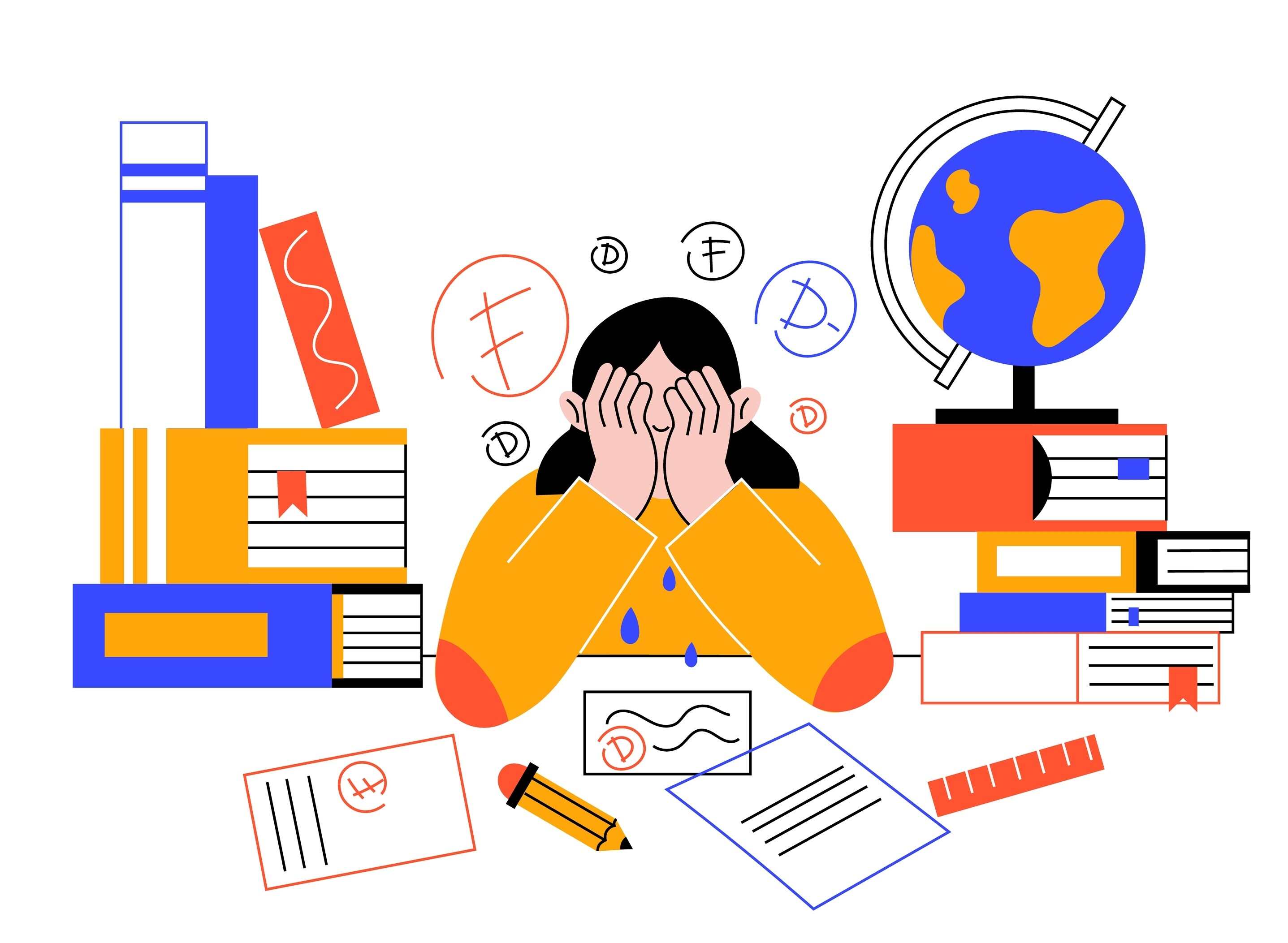
Every week, Talking Points gives you a worksheet to practise your reading comprehension with exercises about the story we’ve written.
Everyone gets stressed sometimes. It is also common to ignore these feelings and hope they go away overnight.
But stress does not just disappear.
Avis Ngan, who created a Hong Kong mental health clinic called Mindsight, warns that the problems can get worse if left alone.
This is called the stress cycle, which is used to describe how the body adapts to stress. It uses the steps: alarm, resistance and exhaustion.
Three stages of stress
“Like our phone’s ‘low battery’ alert, our body’s alarm is triggered when it realises there’s a challenge and gets ready to respond,” Ngan said.
The response is also known as “fight or flight”.
Our bodies react with an increased heart rate, heightened senses and rapid breathing.
Ngan said that school pressure and the fear of missing out were typical causes of the “alarm” stage for Hong Kong teens.
“This feeling ... can make our body and mind react as if there is danger,” he said.
“Resistance” is like a phone’s power-saving mode.

“Our body is working hard to deal with stress and stay balanced,” said Ngan, who is also a clinical psychologist.
But just like power-saving mode is not for all-day use, the body cannot stay in this high-alert state for too long without good rest.
In this stage, we may build up feelings of frustration and have difficulty concentrating.
The final stage, “exhaustion”, sets in when our body is tired.
“It’s like when your phone battery dies completely. This makes us feel completely burnt out,” the psychologist explained.
Symptoms include tiredness, mood swings, a loss of interest in your favourite activities, and health problems or allergies.
“When exhaustion hits, everything starts falling apart in ways that really matter,” Ngan said.
“Your brain feels foggy during class, making it impossible to focus even when you try.”
He said this felt like your mind and body were “running on empty, affecting everything from your academic performance to your closest relationships”.
Why are Hong Kong teens ‘lying flat’? For some, it’s ‘not as stressful’
Stuck in resistance
Ngan noted that many students got stuck in the “resistance” stage.
“They might think they are doing OK because they have not completely crashed, but their body is actually in overdrive,” he said.
These students keep telling themselves they will take a rest after revising, but there is always another test.
In this case, they will begin to get irritated easily, have difficulty focusing, and see changes in their sleep and appetite. They may also struggle to get tasks done.
“When you notice these signs, stop what you are doing and do some deep breathing, a five-minute meditation,” he said.
A quick walk can also calm you down.
Ngan suggested keeping track of your emotions.
“When stress hits, it’s like getting caught in a downpour – but you don’t have to stand there getting soaked in the stress cycle,” he said. “Your coping tools are your umbrella, and knowing your early warning signs is like having a really good weather app.”
For a daily check-in, apps like MoodMeter can help you understand your feelings. Calm and Headspace include stress-relief exercises, while Newlife.330 has tools and videos in Cantonese.
Writing your thoughts out on paper can also be beneficial.
Ngan said this could help create a connection that made it easier to accept your emotions.
To test your understanding of this story, download our printable worksheet or answer the questions in the quiz below.
