Deep Dive delves into hot issues in Hong Kong and mainland China. Our easy-to-read articles provide context to grasp what’s happening, while our questions help you craft informed responses. Check sample answers at the end of the page.
News: New section of Hong Kong’s Central Kowloon Bypass cuts travel time by 80%
-
Transport corridor links West and East Kowloon, slashing travel time to just five minutes
-
Toll waiver will remain until the entire route is commissioned later this year
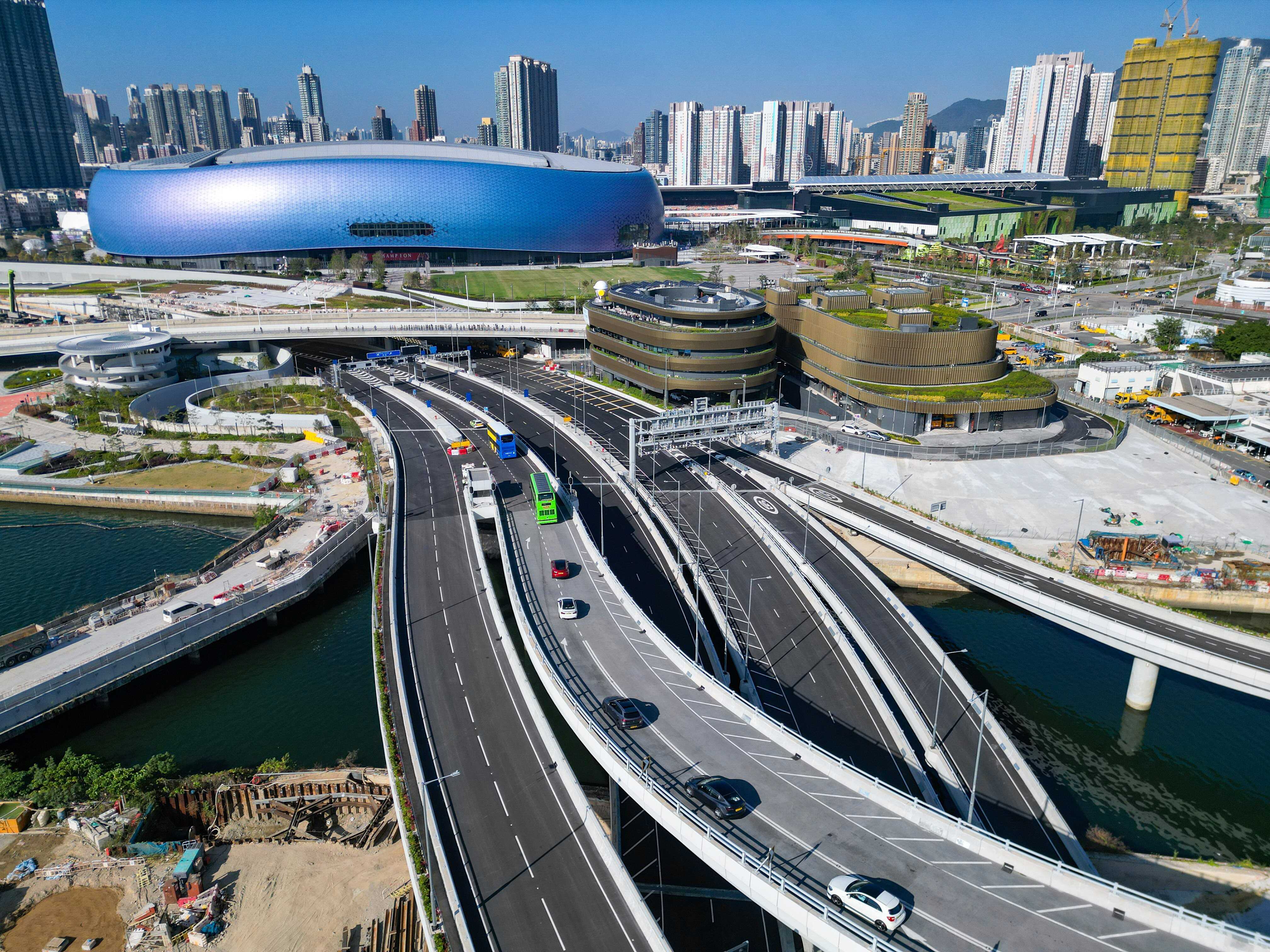
The long-awaited Yau Ma Tei section of Hong Kong’s Central Kowloon Bypass opened last month. The new 4.7km transport corridor cuts peak-hour travel time between West and East Kowloon from 30 minutes to just five. It includes a 3.9km, three-lane, two-way tunnel linking the Kai Tak Development Area and Kowloon Bay with Yau Ma Tei.
Among the first drivers eager to test the route was engineer Edwin Chan Yat-man, 36, who travelled from his home in Kwun Tong to Mong Kok. He praised the faster access.
“While it initially required some patience due to the volume of cars at the entrance, the ride was pretty smooth,” he said. “Taking Prince Edward Road West or Argyle Street is usually much slower because I need to navigate the traffic, but now I can reach my destination in about six minutes through the tunnel.”
Tsui Kwun-cheung, 32, a garment businessman from Tseung Kwan O, drove to Lai Chi Kok. He said he planned to use the link for his daily commute after his initial test run.
“Traffic was smooth driving from home to the Kai Tak entrance. From there, it only took a few minutes to arrive in Yau Ma Tei,” Tsui said. “I love the fact that I no longer need to drive through the congested and bumpy Lung Cheung Road. But I will try again after a week because you don’t know what the situation will be on the first working day.”
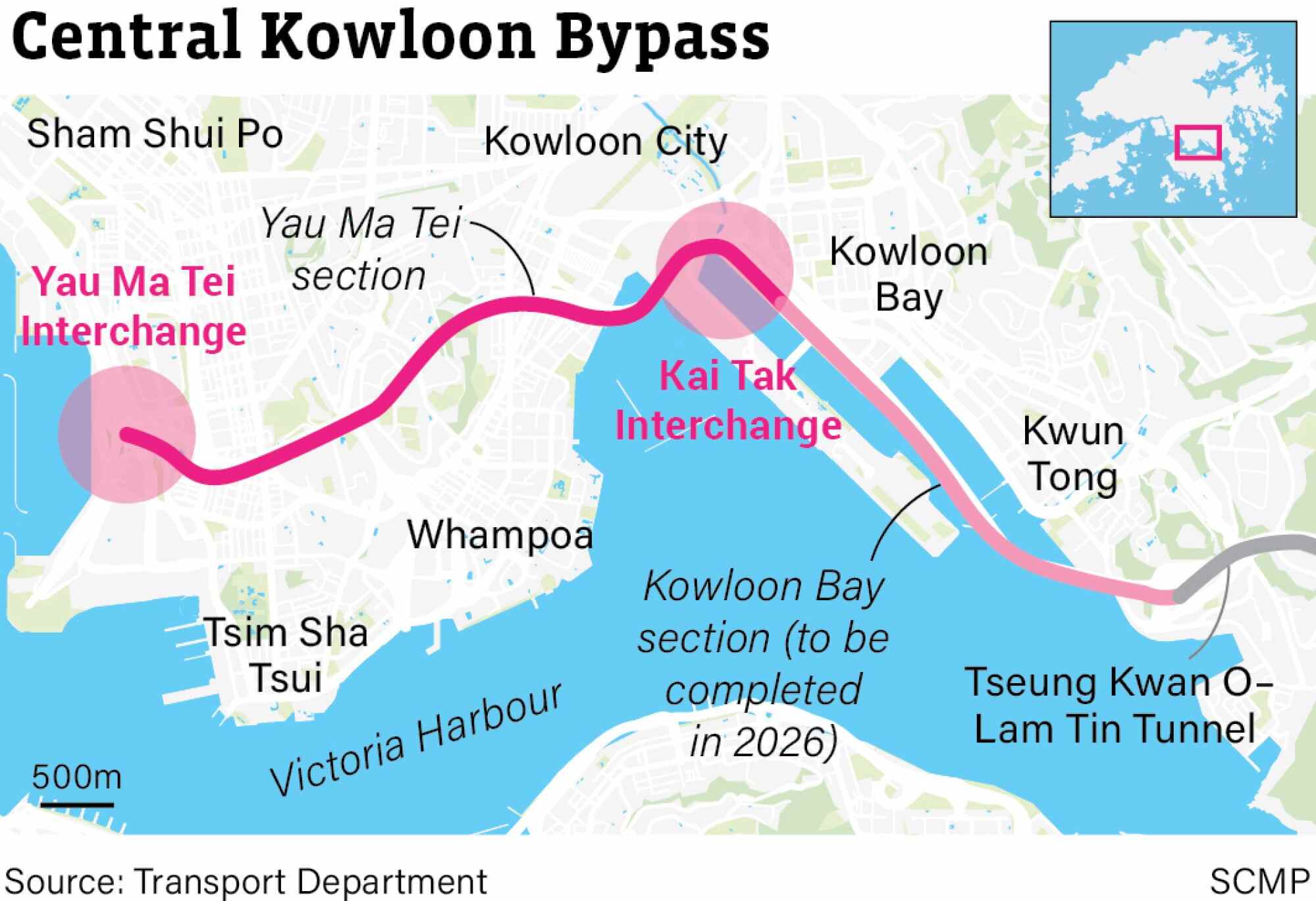
The western portal of the bypass connects directly to the Yau Ma Tei Interchange. It provides access to the Western District, Kwai Chung, Lantau, Cheung Sha Wan, Yau Ma Tei and Tsim Sha Tsui.
Its eastern portal links to the Kai Tak Interchange and the Kowloon Bay road network. This allows motorists to easily reach destinations such as the Kai Tak Sports Park, Kowloon Bay, Kwun Tong and the Kai Tak Cruise Terminal.
The Yau Ma Tei section forms a core component of Route 6, which will eventually connect with the Kowloon Bay section of the bypass. It is scheduled to open this year and will link to the Tseung Kwan O-Lam Tin Tunnel.
When completed, the travel time between Tseung Kwan O and Yau Ma Tei is expected to be reduced from the current 65 minutes to about 12 minutes.
The Yau Ma Tei section is currently free of charge. The toll waiver will remain in place until the entire route, including the Kowloon Bay section, is commissioned this year, when a standard charge of HK$8 will apply.
Staff writers
Question prompts
1. Which of the following is false, according to the information in News?
(1) The new 3.9km transport corridor cuts travel time between West and East Kowloon to about 12 minutes.
(2) The entire Central Kowloon Bypass will remain free of charge this year.
(3) Edwin Chan Yat-man used the Central Kowloon Bypass to travel from Kwun Tong to Mong Kok.
(4) Tsui Kwun-cheung used the Yau Ma Tei section to travel from Tseung Kwan O to Lai Chi Kok.
A. (1), (2) only
B. (1), (4) only
C. (2), (3) only
D. (2), (4) only
2. How does Tsui describe Lung Cheung Road, and how does it relate to News?
3. Based on your understanding of News, what has been the reaction to the newly opened Yau Ma Tei section of Hong Kong’s Central Kowloon Bypass?
Map
Question prompts
1. According to Map, which areas does the Yau Ma Tei section of the bypass connect? What will the Central Kowloon Bypass connect once completed?
2. Will the Central Kowloon Bypass benefit the city? Explain your opinion using Map, News, Glossary and your own knowledge.
Issue: Central Kowloon Bypass records first crash 3 days after opening
-
Transport chief Mable Chan urges caution after a collision in the Yau Ma Tei section of the bypass
-
Road users have shared feedback on the visibility of entrance and exit signs
The Central Kowloon Bypass’s new Yau Ma Tei section got off to a bumpy start on the first weekday of operations. Hong Kong’s transport chief urged drivers to be cautious after an accident was recorded on the road just three days after opening.
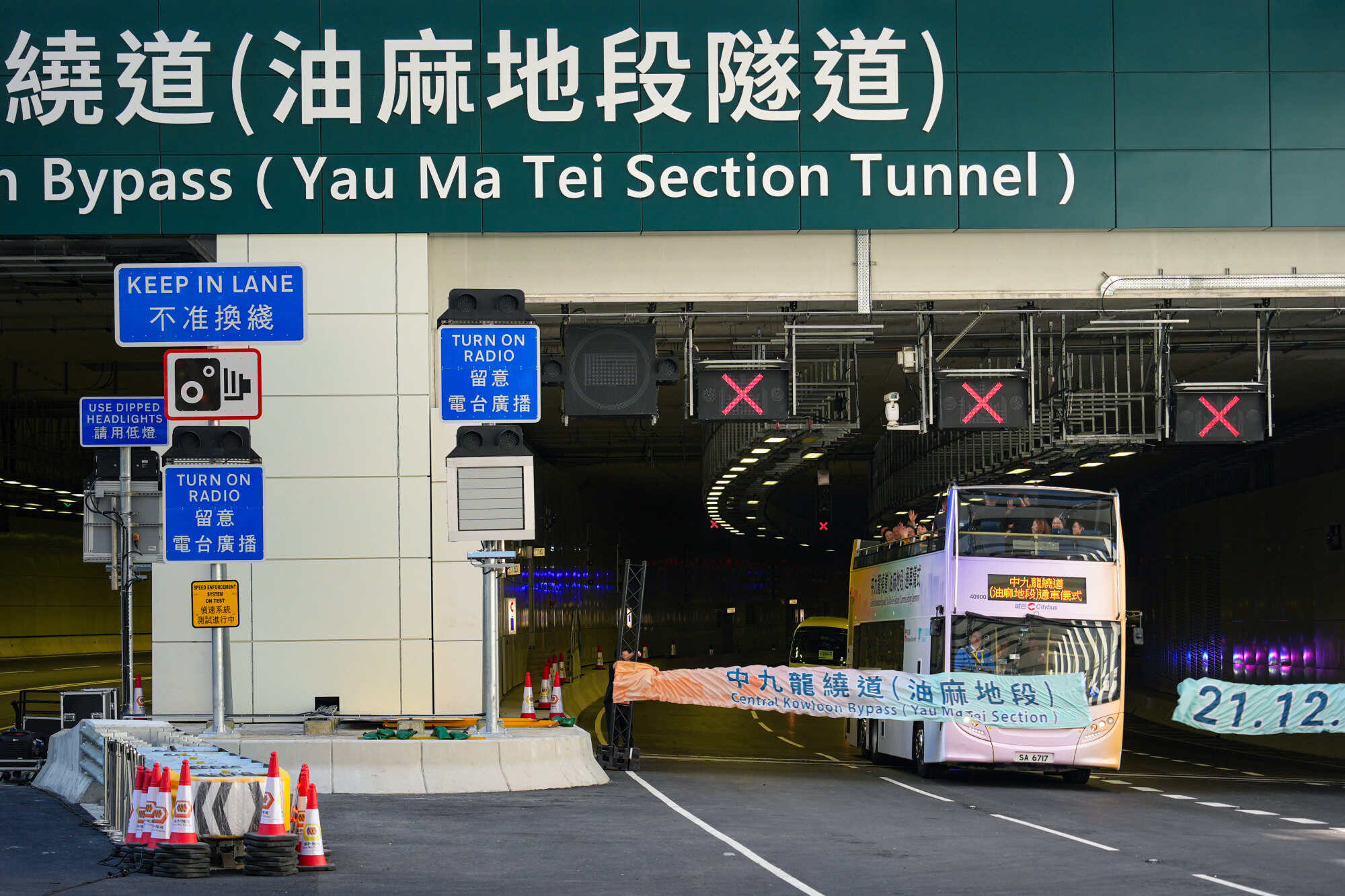
The long-awaited Yau Ma Tei section of Hong Kong’s Central Kowloon Bypass opened on December 21. Eight bus routes, including three new ones, began operating the following day.
Police said a medium-sized truck crashed into a car at 9.16am on December 23 while both vehicles were heading west towards Kwai Chung, after the truck changed lanes. No one was injured.
Secretary for Transport and Logistics Mable Chan said the Transport Department had promptly responded to road users’ feedback on the visibility of entrance and exit signs.
“Markings were added overnight both inside the bypass tunnels and in surrounding areas to maximise visibility,” she said, stressing that excessive signage could cause confusion and that signs would be placed only at appropriate locations to give drivers sufficient time to react.
She also appealed to motorists not to rush, highlighting the importance of safety as multiple routes could lead to the same destinations.
During an inspection on December 23, Chan said that 50,000 vehicles had already used the new section of the bypass since its launch. She expressed confidence in drivers’ adaptability and confirmed that authorities would continue monitoring the surrounding traffic systems.
“We can see that the traffic at the Gascoigne Road Flyover, Lung Cheung Road [and other] main trunk roads in Kowloon witnessed a marked improvement [on December 22], with conditions being remarkably smooth,” she said.
The bypass had already had a rough start on its first weekday of operation, December 22, when police were called to address drivers making U-turns at a tunnel entrance and driving in the wrong direction.
A viral clip from the same day showed a cement truck and another heavy vehicle driving down a slope towards the wrong tunnel entrance near Kai Tak, forcing an oncoming taxi to pull over to avoid a head-on collision.
Other footage captured a coach, a private car and a taxi at the bypass exit near Kai Tak cutting across double white lines to switch lanes for the Kowloon Bay exit. One clip showed the car nearly colliding with the taxi.
In Hong Kong, cutting across double white lines is considered a serious traffic offence, with penalties varying depending on the circumstances.
Eight franchised bus routes began using the bypass during peak hours from December 22, including three new services. The new routes will join five existing peak-hour services – KMB 258X, 259S, 259X, 268P and 269S – which have been rerouted to take advantage of the new link.
Staff writers
Question prompts
1. Which of the following are false, according to Issue?
(1) A viral video showed large vehicles moving against the correct flow of traffic as they went towards the tunnel entrance near Kai Tak.
(2) Mable Chan supports adding as many signs as possible in the bypass tunnels to ensure that directions are visible to drivers.
(3) According to Chan, traffic conditions are still a bit bumpy at the Gascoigne Road Flyover and Lung Cheung Road.
(4) The first accident on the Central Kowloon Bypass involved a larger vehicle and a smaller vehicle.
A. (1) and (2)
B. (1) and (3)
C. (2) and (4)
D. none of the above
2. List TWO potential reasons for the collision that took place on the Yau Ma Tei section of the Central Kowloon Bypass on December 23.
3. Based on the information in News, Map and Issue, how can officials ensure the Kowloon Bay section of the Central Kowloon Bypass has a smooth opening later this year? Give TWO suggestions.
Cartoon
Question prompts
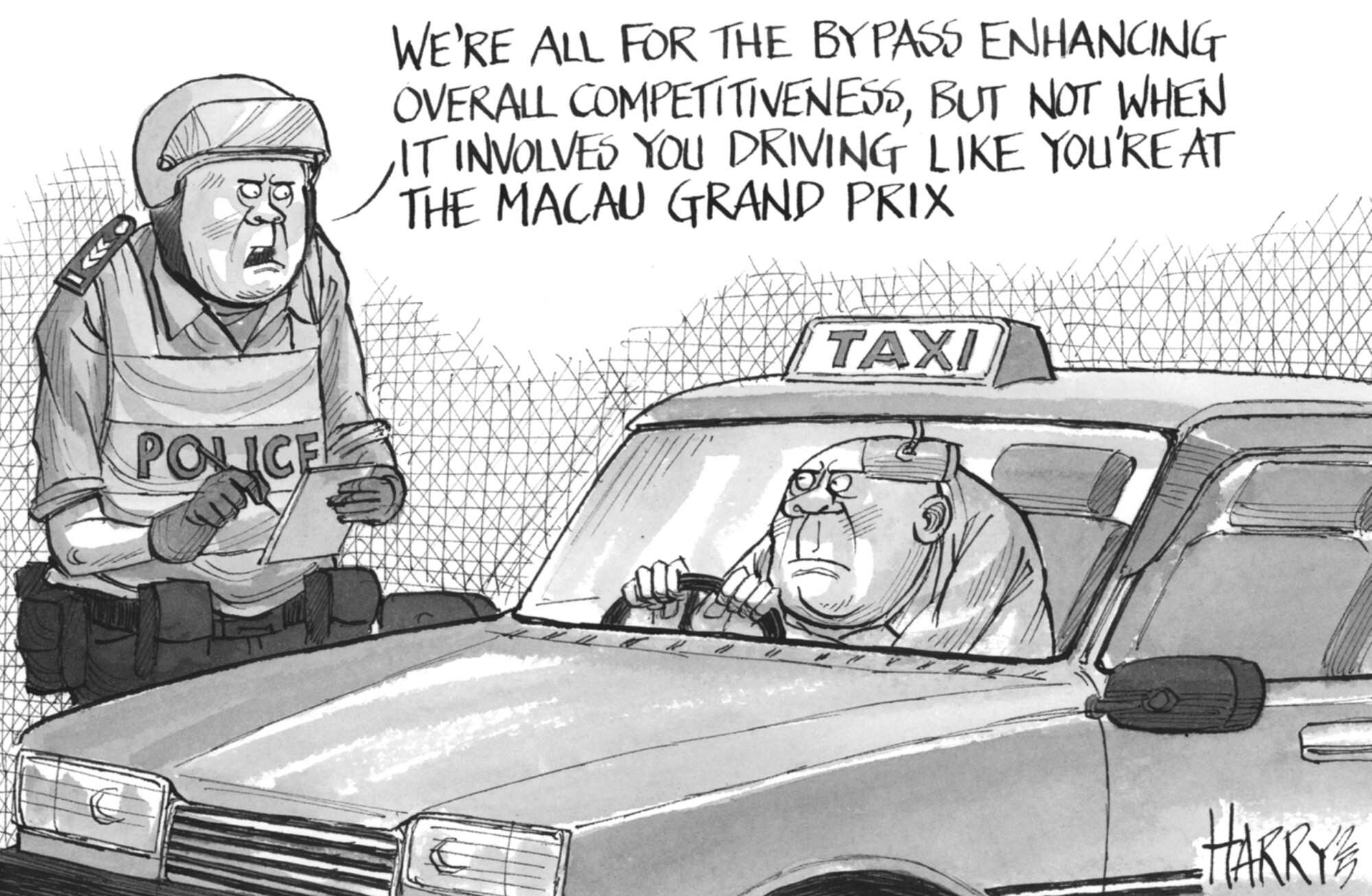
1. Describe what you see in the cartoon and how it relates to Issue.
2. To what extent do you think the chaotic driving seen on the Central Kowloon Bypass is because of poor driving skills? Explain using Issue and your own knowledge.
Glossary
Kai Tak Development Area: a government urban renewal project transforming Hong Kong’s former airport site into a hub for tourism and business. It is the location of the Kai Tak Sports Park and the Hong Kong Children’s Hospital.
Route 6: a partially opened route in Hong Kong, set to be completed in 2026, meant to relieve traffic congestion in Kowloon. It connects Tseung Kwan O and Lam Tin via the new Cross Bay Link and Tseung Kwan O–Lam Tin Tunnel and includes the Yau Ma Tei Section of the Central Kowloon Bypass.
trunk roads: major, busy roads linking up different districts. Most have multiple lanes and are designed to carry high volumes of traffic at faster speeds.
double white lines: lines used to separate traffic travelling in opposite directions
Sample answers
News
-
A
-
Tsui Kwun-cheung said Lung Cheung Road was congested and bumpy and that he loved no longer having to drive through it. He added that he plans to use the new Yau Ma Tei section of Hong Kong’s Central Kowloon Bypass instead for his daily commute. This relates to News, as it shows Hong Kong residents have been in need of options for travelling between West and East Kowloon and especially wanted a smooth, quicker route.
-
The general reception to the Yau Ma Tei section has been positive. Engineer Edwin Chan Yat-man praised the faster access. Previously, he had to navigate traffic on the slower Prince Edward Road West or Argyle Street, but can now reach his destination in about six minutes through the smooth tunnel. Tsui Kwun-cheung planned to use the link for his daily commute from his home in Tseung Kwan O. He felt the traffic was also smooth, a big difference from the route he used to take, the congested and bumpy Lung Cheung Road. However, both drivers did express some concerns. Chan said the volume of cars at the section’s entrance required some patience from him. Tsui said the first working day was not necessarily representative of the route at all times and that he would try the link again. (accept all reasonable answers)
Map
-
The Yau Ma Tei section of the Central Kowloon Bypass connects Yau Ma Tei Interchange with Kai Tak Interchange, linking the Kai Tak Development Area and Kowloon Bay with Yau Ma Tei. The entire bypass will also connect to the Tsueng Kwan O-Lam Tin Tunnel, linking the Kwun Tong and Tsueng Kwan O areas.
-
The Central Kowloon Bypass will benefit Hong Kong by giving private vehicles and public buses more options to travel between West and East Kowloon. This will significantly reduce the congestion problem in Kowloon, cutting the time between Yau Ma Tei and Kowloon Bay from 30 minutes to just five. It also serves as an alternative route to the existing Tsueng Kwan O Tunnel, connecting people living in areas such as Tsueng Kwan O and Lohas Park to the rest of Hong Kong. Finally, it provides better access to the Kai Tak Development area, which includes the Kai Tak Sports Park, Hong Kong Children’s Hospital and Airside, as well as planned private residential housing estates and government projects. (accept all reasonable answers)
Issue
-
D
-
One potential reason could have been design problems, including poor visibility of the entrance and exit signs. As road users were unfamiliar with the new bypass, markings needed to be clear inside and outside, at appropriate locations to give drivers sufficient time to react. Another potential reason could have been reckless driving. Motorists could be rushing, especially given the time, 9.16am, which is rush hour as it’s close to the beginning of a workday. (accept all reasonable answers)
-
Officials can ensure the Kowloon Bay section of the Central Kowloon Bypass opens smoothly later this year by strengthening the visibility of entrance and exit signs and adding markings inside the bypass tunnels and in surrounding areas to maximise visibility. They can also remind motorists that in Hong Kong, cutting across double white lines is considered a serious traffic offence, with penalties varying depending on the circumstances.
Cartoon
-
The cartoon shows a police officer speaking to a taxi driver. The police officer says that although the bypass might enhance overall competitiveness, it does not give drivers an excuse to drive erratically. This correlates with some of the problems mentioned in Issue, including drivers crossing double white lines and making U-turns at inappropriate spots.
-
I agree that the chaotic driving on the Central Kowloon Bypass is partly due to poor driving skills, such as speeding and being careless, as it is a smooth transport link with few stops. However, I think it is more about unfamiliarity with a new route, and that better signage at the entrance and exit, markings inside, reminders and even temporary explanations would be helpful. In my opinion, it is unfair to expect drivers using a brand-new bypass to know exactly how it will operate, especially with many other drivers using it together for the first time. (accept all reasonable answers)