Deep Dive delves into hot issues in Hong Kong and mainland China. Our easy-to-read articles provide context to grasp what’s happening, while our questions help you craft informed responses. Check sample answers at the end of the page.
News: Hong Kong opens first Chinese medicine hospital
-
Facility in Tseung Kwan O aims to develop a ‘Hong Kong model’ integrating Chinese and Western methods
-
High demand for appointments has led to increase in quotas
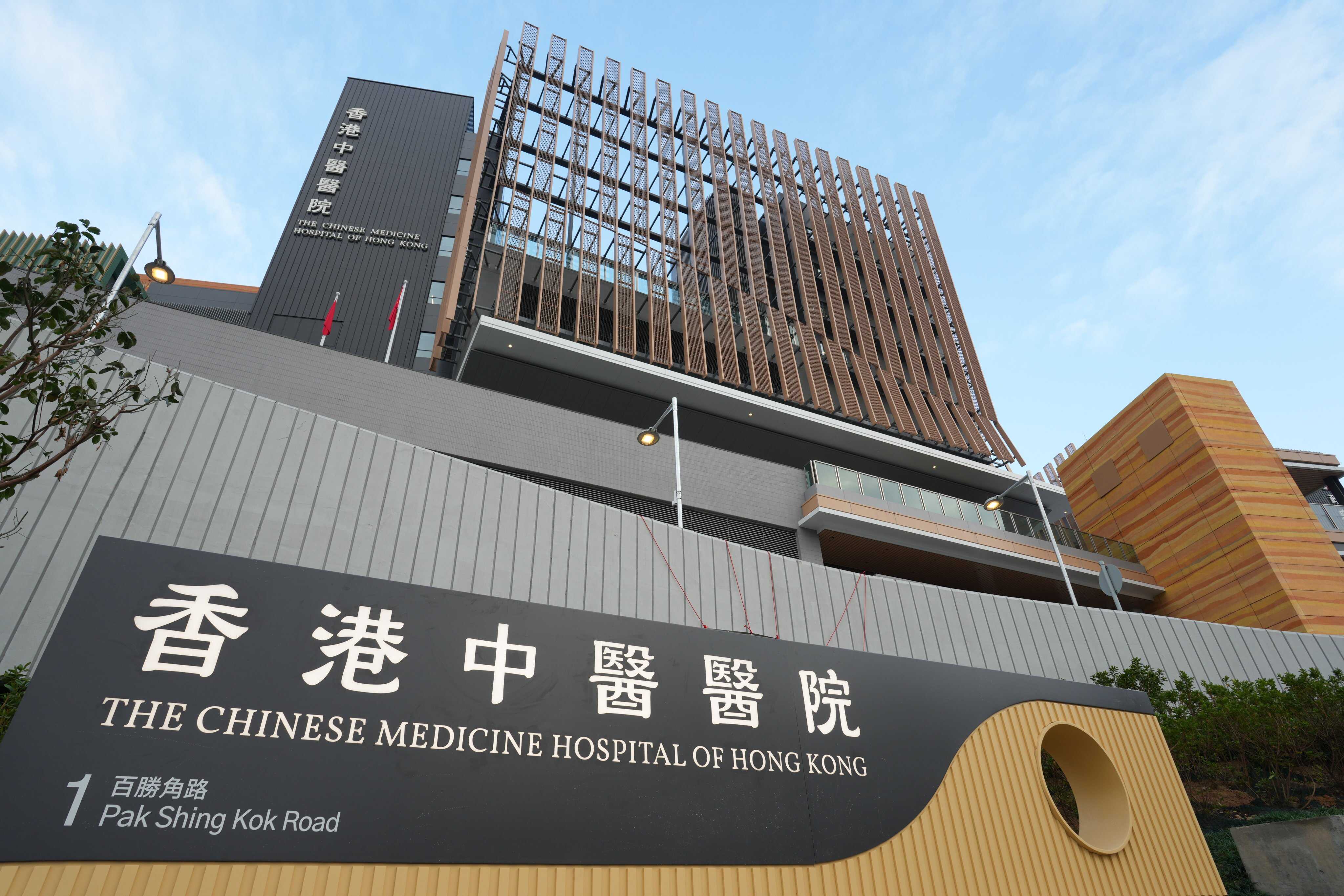
Hong Kong’s first traditional Chinese medicine (TCM) hospital opened its doors to patients this month.
The Chinese Medicine Hospital of Hong Kong, located in Tseung Kwan O, aims to provide services for more complex cases under a model that features Chinese medicine as the primary approach, integrated with Western medicine. Its subsidised services have been in high demand by patients.
In the first year, the hospital will offer general outpatient consultation, specialist clinics and day hospitalisation services. It focuses on specialised Chinese medicine services across six areas, including internal medicine, external medicine, gynaecology, paediatrics, orthopaedics, traumatology, acupuncture and moxibustion. Inpatient service will be available from the second year.
The facility aims to develop a “Hong Kong model” that it hopes would be easier for overseas institutions to adopt. This consists of three service types: pure Chinese medicine, another where traditional Chinese medicine plays a predominant role, and Chinese-Western medical services.
The hospital will roll out 12 special disease programmes in its first year of operation. Four will follow a purely Chinese medicine model, covering conditions such as chronic pain, according to the Health Bureau.
Five programmes, including those for digestive disorders, will run under the service model where Chinese medicine plays the predominant role. The remaining three will operate under the integrated model.
TCM-Klinik Bad Koetzting, the first officially recognised Chinese medicine hospital in Germany, has already agreed to collaborate with the Hong Kong facility.
The German hospital’s general manager, Christina Staudinger, said the partnership covered the exchange of expertise in traditional Chinese medicine, discussions on clinical pathways and opportunities for collaborative research.
“Both institutions are engaged in regular scientific exchange and ongoing discussions to explore potential areas of collaboration. New ideas and possible joint projects are being continuously evaluated,” Staudinger said.
Professor Bian Zhaoxiang, the hospital’s chief executive, added: “The country hopes that Hong Kong, during the development of Chinese medicine, can become a flagship and a bridgehead in bringing [the treatments] to the world.”
Staff writers
Question prompts
1. List TWO services provided by Hong Kong’s first Chinese medicine hospital.
2. According to the information in News, what does Professor Bian Zhaoxiang hope The Chinese Medicine Hospital of Hong Kong will achieve?
3. To what extent do you think this new medical facility will be able to popularise traditional Chinese medicine? Explain using News and Glossary.
Photo
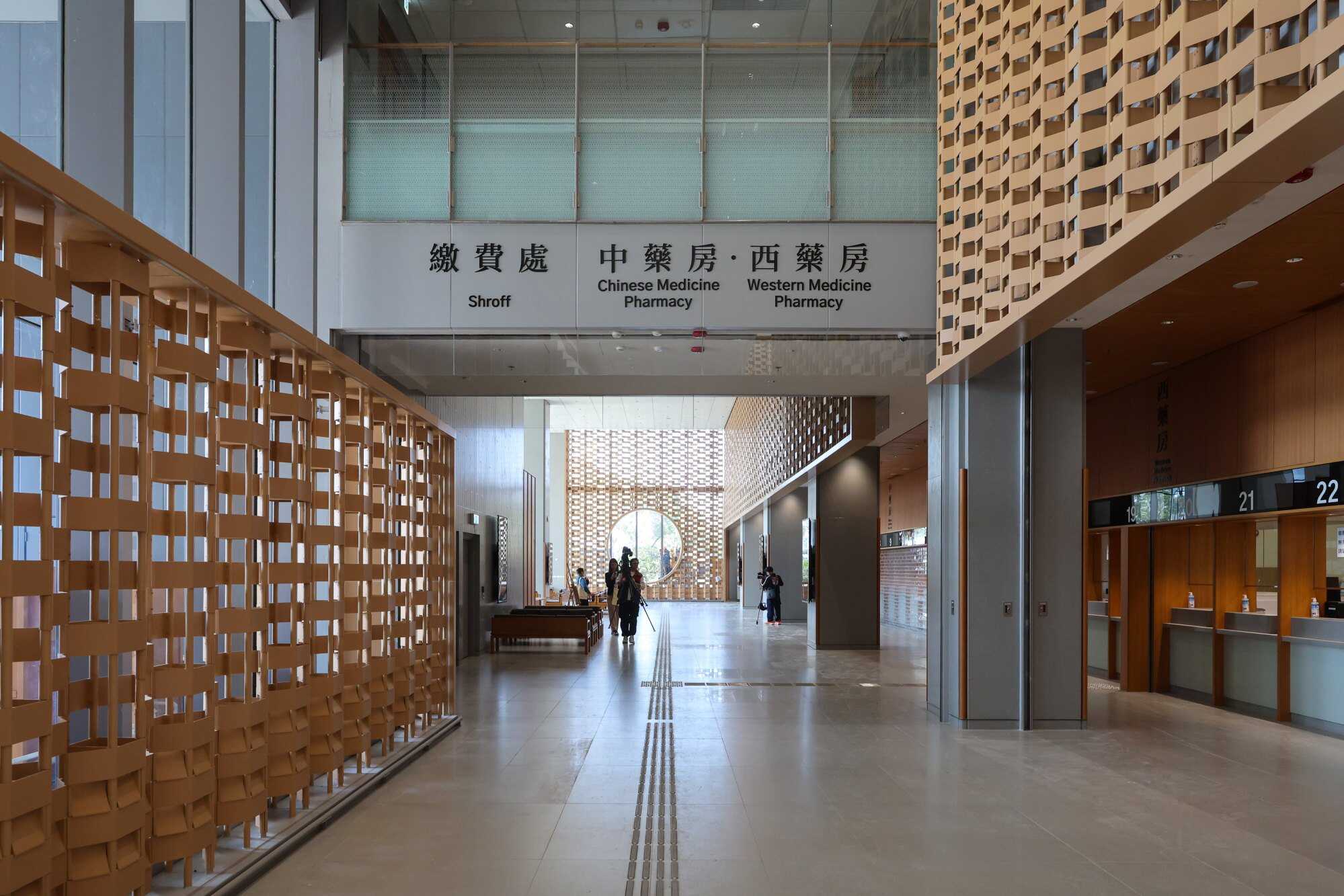
Question prompts
1. What parts of this photo show how the new facility in Hong Kong differs from other hospitals?
2. Do you agree with developing the “Hong Kong model” in the new hospital? Explain using News, Glossary and your own knowledge.
Issue: Hong Kong hospital wants TCM to go global
-
New TCM facility will co-develop the world’s first clinical database on interactions between its healing practices and Western treatments
-
Institution hopes to attract international talent and promote research
Hong Kong’s first traditional Chinese medicine (TCM) hospital aims to co-develop the world’s first clinical database on interactions between its healing practices and Western treatments to help provide evidence-based therapy guidelines.
Dr Cheung Wai-lun, project director of the Health Bureau’s Chinese Medicine Hospital Project Office, said in October that no such database currently existed.
He hoped the launch of The Chinese Medicine Hospital of Hong Kong would help fill that gap as well as train potential practitioners from the international community.
“When we are integrating Chinese and Western medicine, it remains a question whether the combination of the two kinds of medicines would lead to side effects. It would be problematic if we did not have such information,” he said. “Hong Kong will work on co-developing a database on this front with other regions and countries.”
Such research would give the medical community a better understanding of how the two sides could collaborate to deliver the best outcomes, Cheung said.
“Under what conditions would Western medicine perform better, or would it be better to see Western doctors first? Under what conditions would it be better to see a Chinese medicine practitioner first? These questions will need to be addressed by research,” he said.
Professor Justin Wu Che-yuen, founding director of the Hong Kong Institute of Integrative Medicine at the Chinese University of Hong Kong, said the hospital would need to meet several goals to internationalise Chinese medicine successfully.
Wu, a member of the hospital’s board, stressed that the institution had to ensure its services met standards of safety, efficacy and sustainability.
“Will those extra Chinese medicine treatments improve the patients’ clinical outcomes?” Wu asked. “And can they help save medical costs in our community?”
The new hospital will also serve as a teaching and research hub for Chinese medicine schools at three local universities – the University of Hong Kong, the Chinese University of Hong Kong and Baptist University.
In addition, Cheung explained that the hospital would regularly invite local, mainland Chinese and international experts to offer training or conduct research. The move would make Hong Kong a convenient location for members of the international medical community to witness the capabilities of TCM treatments, he added.
On the research front, Cheung also hoped that experts at the hospital could work with researchers in other regions to conduct multinational TCM application studies, so as to obtain larger and more diverse research samples.
“In this case, the coverage will be wider and the data will be more reliable, while the results will be widely recognised,” he said.
Staff writers
Question prompts
1. Which of the following are true, according to the information in Issue?
(1) The new hospital will help establish a clinical database about the reactions when TCM practices and Western treatments are combined.
(2) Doctors have already done years of research into the interactions between TCM and Western medicine.
(3) Hong Kong will be the sole developer of the TCM-Western medicine clinical database.
(4) Chinese medicine students at three Hong Kong universities will be able to do research at the new hospital.
A. (1), (2) only
B. (2), (3) only
C. (1), (4) only
D. (3), (4) only
2. According to Professor Justin Wu Che-yuen, what needs to be done at the new facility to help internationalise Chinese medicine?
3. Do you think Hong Kong needs a traditional Chinese medicine hospital? Explain using News, Issue, Glossary and your own knowledge.
Chart
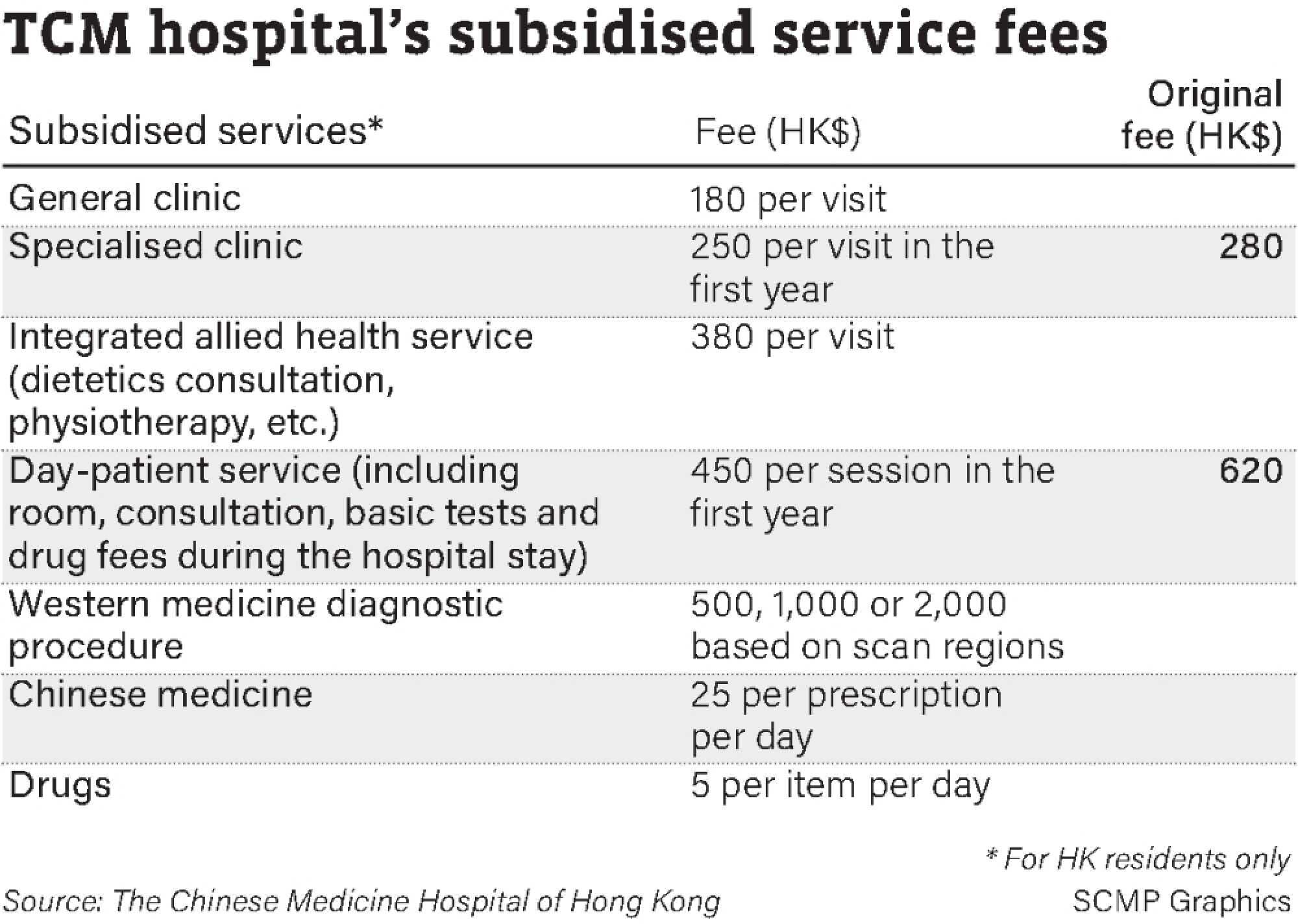
Question prompts
1. How much does it cost for a general appointment at The Chinese Medicine Hospital of Hong Kong?
2. Are the service fees financially sustainable for the general public? Explain using News, Issue, Glossary and your own knowledge.
Glossary
subsidised services: services partially paid for by the government to lower costs and make them more affordable. About 65 per cent of services at The Chinese Medicine Hospital of Hong Kong are subsidised by the government. The remaining 35 per cent are private services. For example, a subsidised outpatient consultation costs HK$180, while a private consultation starts at HK$450.
traumatology: the study and surgical treatment of injuries caused by violence or accidents, focusing on wounds and their impact
moxibustion: a traditional Chinese therapy that uses the heat from burning dried mugwort near or on specific body points to promote healing and stimulate energy flow
side effects: unintended, typically negative, reactions to a medical treatment or drug that occur in addition to the desired effect
Sample answers
News
1. General outpatient consultation, specialist clinics and day hospitalisation services (accept any two).
2. Professor Bian Zhaoxiang hopes that Hong Kong can become a flagship and a bridgehead for bringing Chinese medicine treatments to the world.
3. The new hospital will help popularise traditional Chinese medicine (TCM) because it combines Chinese and Western medical approaches under the “Hong Kong model”. This model can serve as a reference for other countries, making it easier to adopt. The hospital also has international collaborations planned, for example, with a hospital in Germany, enabling the global exchange of expertise and research in TCM. Moreover, since 65 per cent of its services are subsidised, many patients can access affordable treatments, increasing public exposure and trust in TCM. By offering advanced care, such as traumatology, acupuncture and moxibustion, alongside inpatient services, the hospital showcases TCM’s ability to handle complex conditions. Therefore, through international partnerships, affordable care and integrative medical practices, the facility will likely play a major role in promoting TCM both locally and globally. (accept all reasonable answers)
Photo
1. The photo shows two separate pharmacies: one for Chinese medicine and one for Western medicine. This highlights the hospital’s integrated approach, combining traditional Chinese treatments with modern Western medical practices, a key part of the “Hong Kong model”.
The design of the hospital also reflects its connection to Chinese culture and healing philosophy. The use of wooden textures and open spaces creates a sense of calm and balance, aligning with TCM’s belief in harmony between people and nature, unlike the more clinical atmosphere of typical hospitals.
2. Yes, I agree with adopting the “Hong Kong model” in the new facility because it represents a balanced and progressive approach to healthcare. The model brings together three service types: pure Chinese medicine, Chinese-led treatments and integrated Chinese-Western care, allowing patients to receive a combination of traditional and modern medical approaches. This integration may enhance effectiveness by combining TCM’s preventive, holistic focus with Western medicine’s diagnostic precision and evidence-based methods.
The hospital’s use of subsidised services also helps make care more affordable and accessible, encouraging more people to try TCM. This model can therefore help popularise Chinese medicine among patients who might previously have relied solely on Western healthcare. Additionally, by collaborating with international institutions, the hospital is promoting global research and knowledge exchange, solidifying Hong Kong’s role as a “bridgehead” for introducing TCM to the world.
This integrative model not only benefits patients by offering more comprehensive care but also reflects cultural inclusivity and adaptability in modern healthcare. It shows how traditional practices can coexist with scientific advances to improve overall well-being, making the “Hong Kong model” a valuable example for other regions to follow. (accept all reasonable answers)
Issue
1. C
2. Professor Justin Wu Che-yuen believes that to internationalise TCM successfully, the new hospital must ensure its services meet high standards of safety, efficacy and sustainability. He emphasised that Chinese medicine treatments should improve patients’ clinical outcomes and reduce medical costs within the community.
3. Yes, Hong Kong needs this traditional Chinese medicine hospital because it plays an essential role in integrating traditional healing with modern medical science while advancing research and education. The hospital provides both subsidised and private services, making healthcare more accessible and affordable. This ensures that patients from various backgrounds can experience the benefits of traditional Chinese medicine (TCM).
The hospital aims to create the world’s first clinical database on interactions between TCM and Western treatments, addressing the growing demand for evidence-based healthcare. This is crucial, as without reliable data on how the two medical systems interact, potential side effects could go unnoticed. By conducting collaborative research, Hong Kong can fill this knowledge gap and provide global leadership in integrative medicine.
Subsidised services account for 65 per cent of treatments, strengthening public access to quality care and promoting trust in TCM. This hospital also supports education and internships for future practitioners, helping sustain the field for generations to come.
Therefore, the new TCM hospital is not only needed but also strategically important. It helps Hong Kong bridge Eastern and Western medical systems, builds an international reputation for safe and effective treatments, and contributes to public health innovation, making it a vital step in the city’s medical and cultural development. (accept all reasonable answers)
Chart
1. HK$180
2. I believe the service fees are sustainable for the general public. Around 65 per cent of the services at the clinic are subsidised by the government, making the services more accessible for low-income residents. (accept all reasonable answers)