Deep Dive delves into hot issues in Hong Kong and mainland China. Our easy-to-read articles provide context to grasp what’s happening, while our questions help you craft informed responses. Check sample answers at the end of the page.
News: Second-hand luxury shopping on the rise in China
-
Chinese consumers are becoming more focused on getting value for their money
-
Instead of buying new luxury items, more people are turning to resale platforms
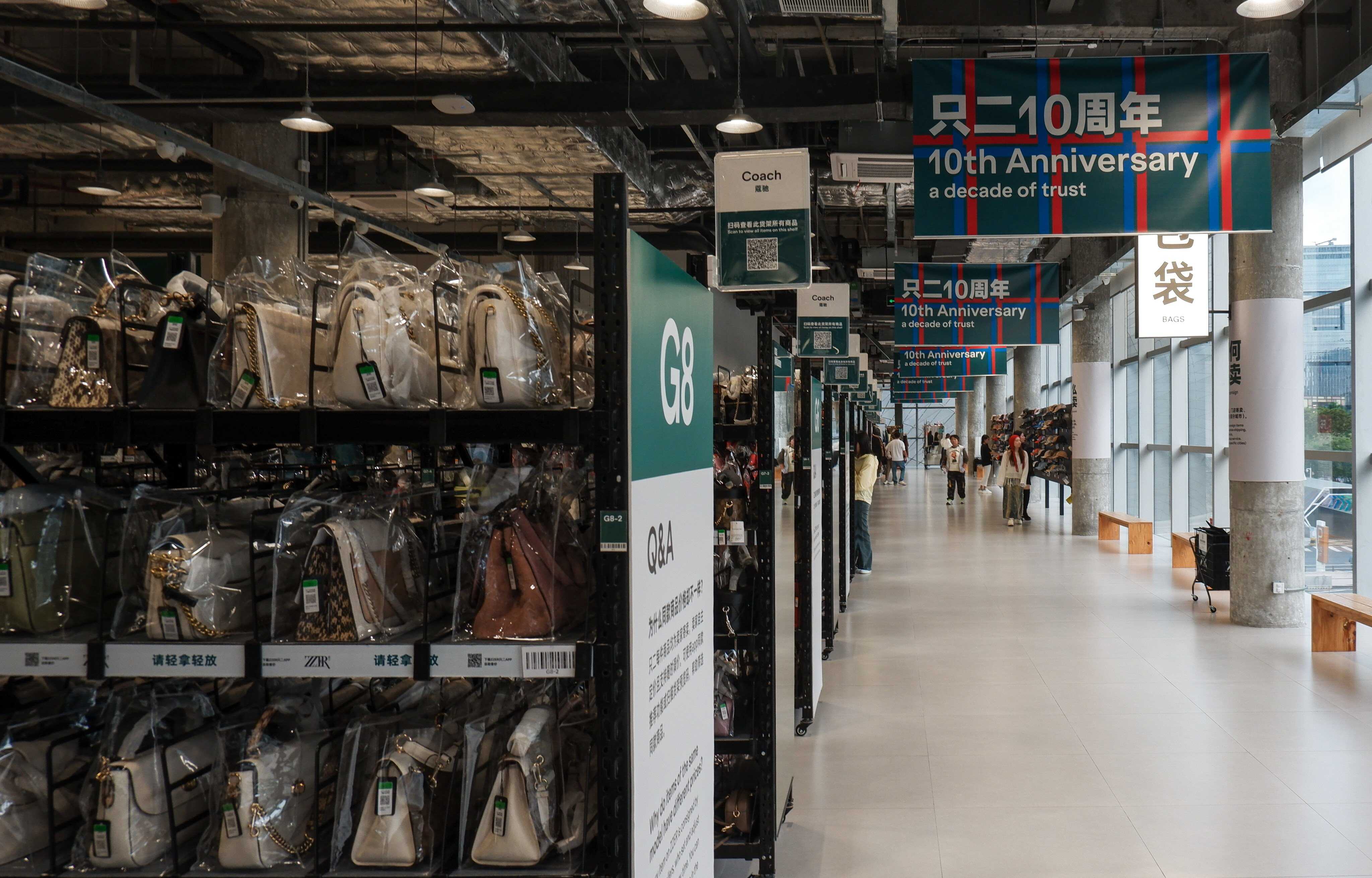
At a shopping centre in Shenzhen, China, a store’s entrance feels more like a security checkpoint than a retail gateway. Customers check their bags, put on white silk gloves and pass through a gate.
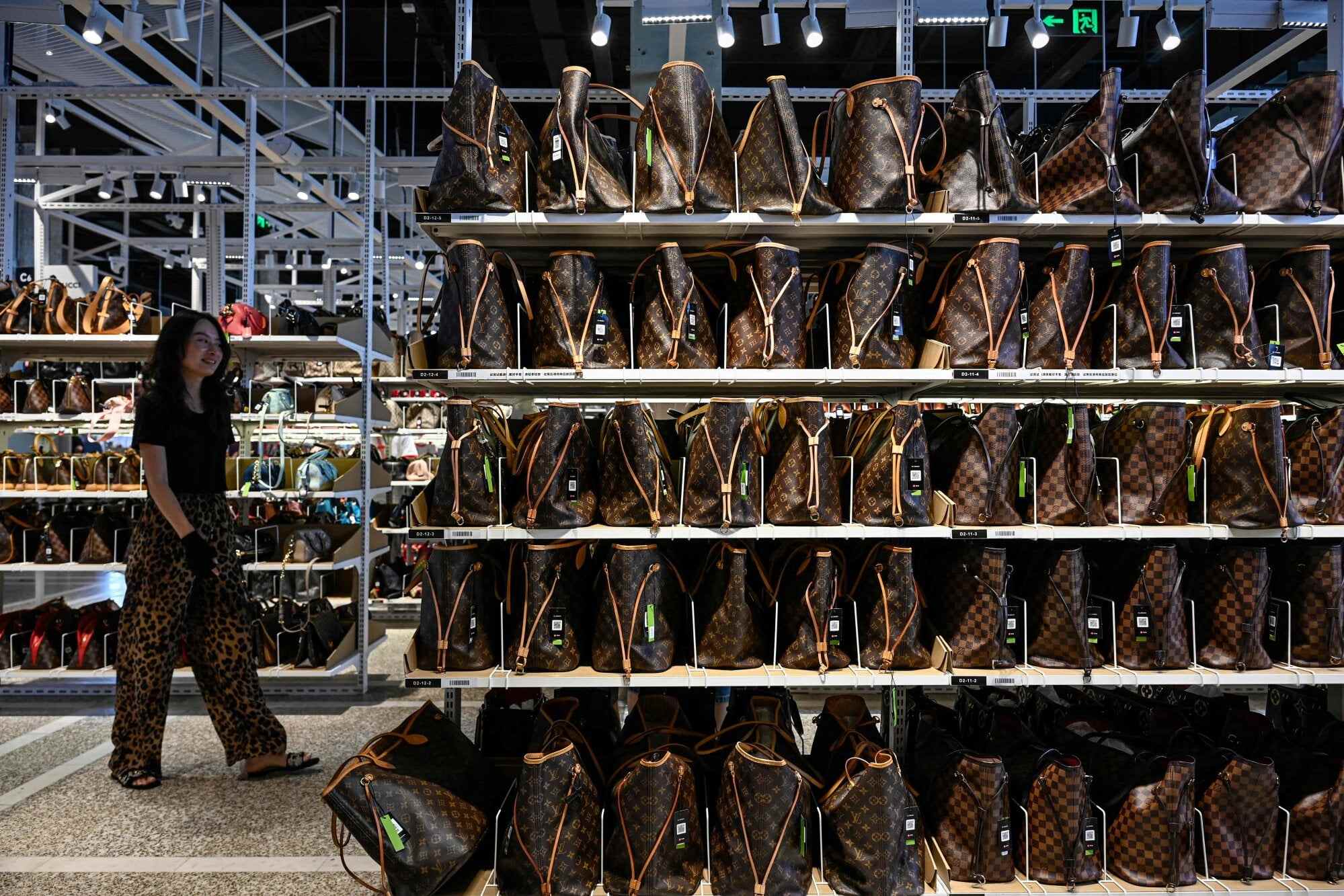
Inside, luxury handbags are not displayed under artful lighting. Instead, they are tightly arranged in transparent cases. They are not organised by style but by brand – Chanel, Gucci, Dior and so on – and cost.
It’s like a vault for luxury bags, and one’s smartphone is the key. QR codes replace price tags, revealing discounts of up to 80 per cent off retail.
This is ZZER, a second-hand luxury platform transforming how China’s wealthy – and aspirational – shoppers consume high-end goods.
The Shenzhen store opened in 2024, following a massive debut in Shanghai in 2022. Founded a decade ago as an online platform, ZZER has recently expanded its bricks-and-mortar footprint, opening stores in Hangzhou and Chengdu. A Beijing location also opened in December, according to information on its app.
The expansion mirrors a broader shift, fuelled by a mature e-commerce infrastructure and backed by a deep inventory reservoir from years of spending. China’s second-hand luxury market is growing rapidly as consumers become increasingly value-conscious.
Competitors are following suit. Hongbulin was founded in 2017 and acquired by resale giant Zhuanzhuan in 2024. It made its offline debut at a Beijing store last year.
“We are seeing very active transactions in the second-hand luxury sector,” Zhuanzhuan said. “The growing momentum of offline retail is feeding back into online channels.”
The stakes are high. China’s second-hand luxury market was projected to hit US$30 billion (HK$234.15 billion) in 2025, up from US$8 billion (HK$62.43 billion) in 2020.
In contrast, China’s primary luxury sector is in decline.
According to a November report by US consulting firm Bain & Company, China’s luxury sales were expected to decline by 3 to 5 per cent year on year in 2025. In 2024, there was an estimated drop of 18 to 20 per cent in luxury sales among individual Chinese consumers.
“The turning point came during the pandemic,” said Jacques Roizen, managing director of China consulting at Geneva-based Digital Luxury Group.
Overseas travel halted during Covid-19, he explained.
This means consumers turned to domestic e-commerce platforms such as Dewu, which had established credibility by authenticating rare sneakers.
Staff writers
Question prompts
1. Which of the following is false, according to the information in News?
(1) ZZER started as an online platform before expanding to physical stores.
(2) ZZER’s stores display luxury items under artful lighting to attract customers.
(3) The second-hand luxury market in China is projected to decline by 3 to 5 per cent by 2035.
(4) Many consumers shifted to domestic e-commerce platforms during the pandemic.
A. (1), (2) only
B. (1), (4) only
C. (2), (3) only
D. (2), (4) only
2. Using News, explain the role technology has played in the expansion of second-hand luxury retailers.
3. Why has China seen a rise in second-hand luxury platforms alongside a decline in primary luxury sales?
Photo
Question prompts
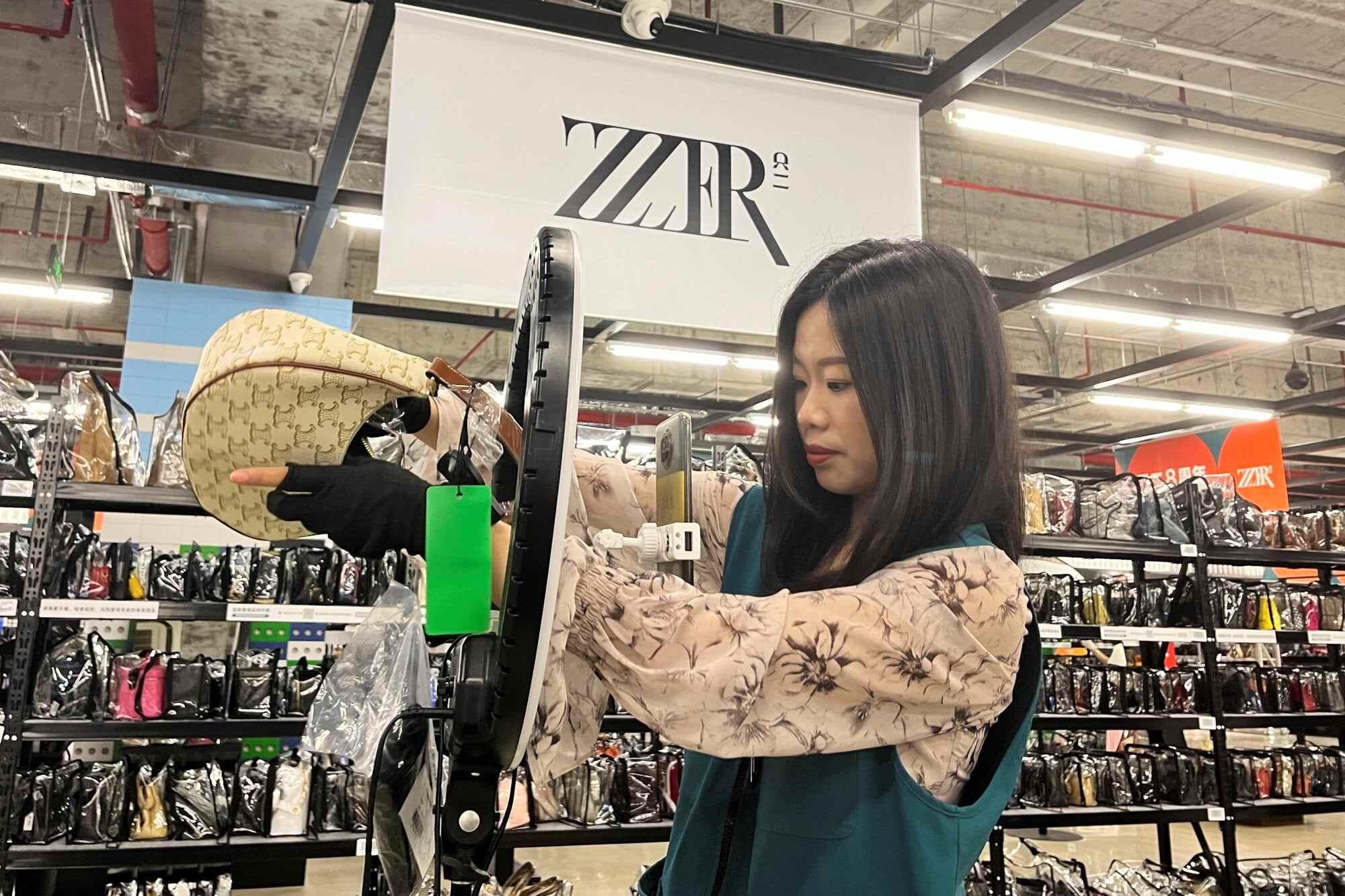
1. Using News, explain what this shop sells.
2. Based on your understanding of News, why might ZZER want to promote its goods through a live stream?
Issue: Digital infrastructure, economic shifts fuel growth of second-hand luxury
-
Resale platforms earn consumer trust through live streams and professional assessments
-
Trend is a result of China’s uneven post-pandemic recovery and property crisis, which has caused people to reduce spending
China’s digital infrastructure boom over the past decade has fuelled the growth of its luxury resale market, enabling online platforms to control operational costs before expanding and addressing a key concern for the country’s luxury shoppers: authentication.
Jacques Roizen, managing director of China consulting at the Geneva-based Digital Luxury Group, said there has been historical resistance among Chinese consumers to purchasing pre-owned goods, often because they fear they are cheap knock-offs.
But the rise of digital shopping platforms and their integration into daily life has helped build customer trust.
“The new infrastructure of the last five years was an essential element to address one of the key concerns, [the authentication], that was preventing the second-hand market from thriving in China,” Roizen said. “It is a growth facilitated by the business infrastructure.”
On Hongbulin, part of resale giant Zhuanzhuan, professional dealers and individuals deliver items, with the platform handling authentication, logistics and pricing, for a fee.
Meanwhile, the second-hand luxury e-commerce platform ZZER live streams its luxury item inventory daily, allowing users to book private viewings or watch recordings later.
Another reason for the rise of China’s second-hand luxury market is a vast accumulation of luxury goods during the years of economic expansion, with the current economic transition now prompting a shift in how consumers view these items.
“Second-hand markets tend to grow as an economy matures,” said Xu Tianchen, a senior economist with the Economist Intelligence Unit (EIU). “After 20 years of economic boom … ownership of luxury goods has risen, creating a potential market for second-hand transactions.”
Xu likened the trend to Japan’s post-bubble era, when belt-tightening consumers prioritised value over conspicuous consumption.
China’s uneven post-pandemic recovery and property crisis are widely seen as having accelerated this mindset. Pressure has spread across industries, and much of the middle class has felt the painful pinch of once-unthinkable real estate losses.
Ms Zhang was once a loyal Chanel customer, but she turned to resale after closing her business two years ago.
“It’s much harder to make money,” the 34-year-old said. “Second-hand bags feel like a sensible choice … of good quality, but much cheaper.”
Despite its growth, China’s resale market accounts for just 5 per cent of the total luxury sector, whereas in a developed country it is around 20 to 30 per cent, according to Zhuanzhuan. It also noted that the volume of luxury goods in private hands exceeds that of consumer electronics, signalling massive untapped potential.
Xu at the EIU said that hurdles remain in the second-hand sector’s shift as it fights a “traditional stigma” against used goods: “Platforms must successfully leverage advanced authentication … to overcome the historical stigma of fakes and build consumer confidence.”
Staff writers
Question prompts
1. According to Issue, what are TWO ways companies have used technology to address consumer concerns over authenticity within China’s luxury resale market, and how has this affected the growth of this sector?
2. In what ways does this shift in consumer behaviour parallel historical trends observed in Japan’s post-bubble era? Explain using News, Issue and Glossary.
3. Based on your understanding of News and Issue, explain why China’s luxury resale market represents only 5 per cent of the total luxury sector compared with 20 to 30 per cent in more developed markets.
Illustration
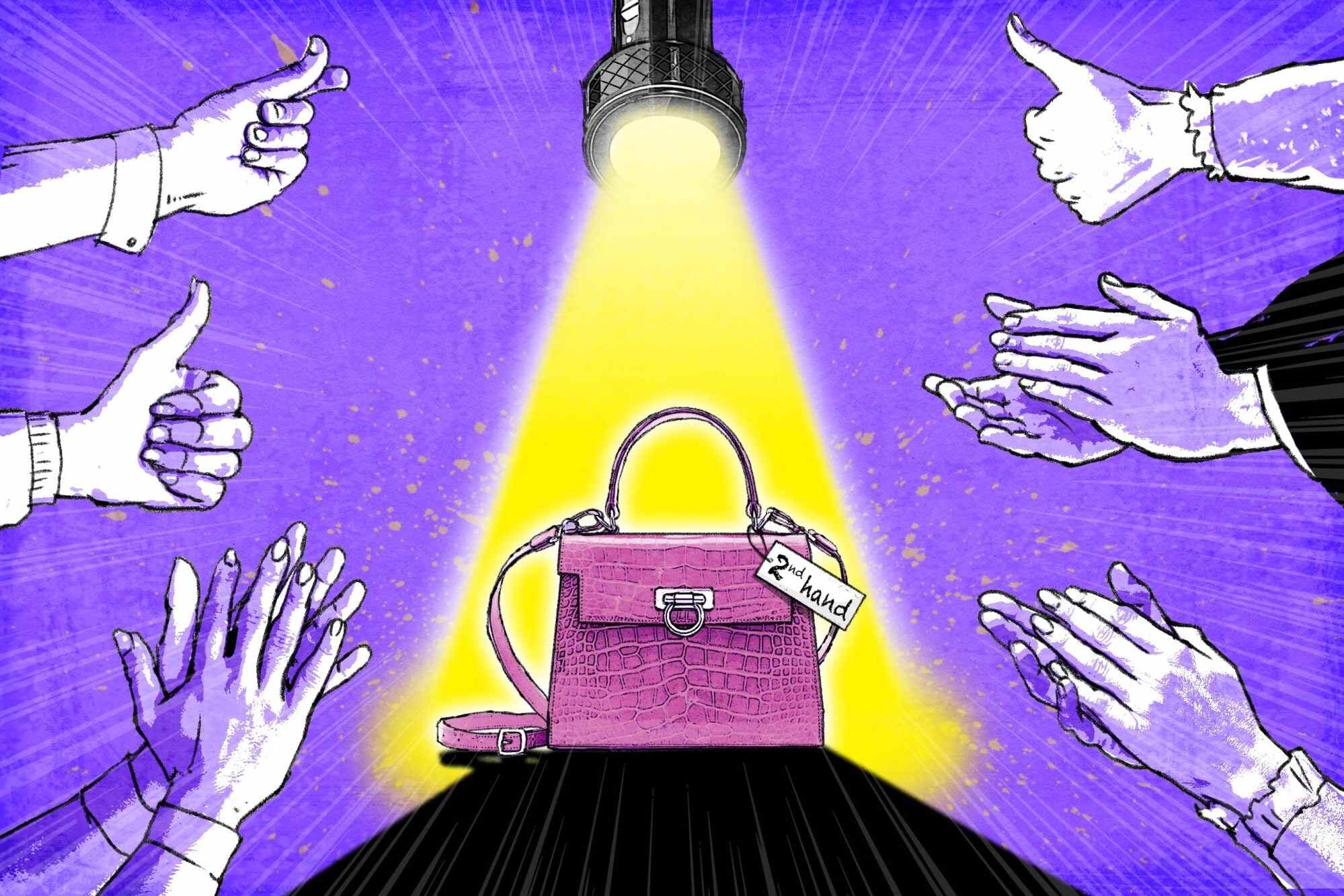
Question prompts
1. Describe what you see in this illustration and explain how it relates to News and Issue.
2. What implications do shifting attitudes towards luxury consumption in China have for the future of the luxury market? Explain your opinion using News, Issue and your own knowledge.
Glossary
-
bricks-and-mortar footprint: the number, size and locations of a company’s physical stores, offices or other operational buildings
-
deep inventory reservoir: refers to having a large amount of certain goods
-
cheap knock-offs: inexpensive, unauthorised copies of a branded product
-
belt-tightening consumers: people who significantly reduce their spending due to financial difficulties
-
conspicuous consumption: buying expensive goods and services to show other people your wealth or social status. These purchases usually include branded technology, cars, clothing and handbags.
Sample answers
News
-
C
-
Technology has played a crucial role in the expansion of second-hand luxury retailers, as they leverage smartphones and e-commerce infrastructure to enhance the shopping experience. For instance, ZZER uses QR codes instead of traditional price tags, allowing customers to access up-to-date information on discounts directly on their smartphones. This tech-savvy approach not only simplifies transactions but also engages a digitally literate consumer base that values convenience and transparency. (accept all similar answers)
-
Consumers in China have shifted their focus from new luxury purchases to pre-owned goods. The primary luxury sector is experiencing a decline as shoppers, particularly wealthy and aspirational consumers, increasingly turn to second-hand options that offer significant discounts. Since people in China have been making primary luxury purchases for many years, there is a significant supply of these items available for resale in the second-hand market. (accept all similar answers)
Photo
-
This shop is called ZZER, and based on News, it sells second-hand luxury handbags.
-
ZZER got its start as an online retailer before expanding into bricks-and-mortar shops. Many of its customers are shopping online, so seeing someone show the bags in a live stream might help them confirm their purchase. (accept all similar answers)
Issue
-
Technology enhances consumer trust by providing robust authentication processes, which have historically been a major barrier for Chinese consumers hesitant to purchase pre-owned luxury goods due to fears of counterfeit items. The digital second-hand resale platform Hongbulin has integrated its network of professional authenticators into its logistics and pricing models, thereby reducing operational costs for businesses while fostering customer trust. ZZER has live streams and private viewings to help customers look more closely at the items they want to buy. These technological advancements have opened avenues for market growth, allowing the resale market to attract more buyers. (accept all similar answers)
-
The evolving consumer behaviour in China reflects a maturation of its economy, similar to what Japan experienced after its economic bubble burst. During this period, consumers shifted their focus from ostentatious luxury ownership to practicality and cost-efficiency in response to economic conditions. In China, the current pressures from a post-pandemic recovery and the property crisis have led consumers to reduce spending by reconsidering their luxury purchases. The de-emphasis on conspicuous consumption and the acceptance of second-hand luxury goods indicate a broader trend towards economic prudence. (accept all similar answers)
-
The limited share of China’s luxury resale market can be attributed to cultural attitudes, historical preferences for new luxury items over pre-owned goods, and ongoing trust issues surrounding the authenticity of second-hand items. Although growth has been driven by technology and changing consumer mindsets, the market must overcome ingrained perceptions to expand further. To foster greater acceptance of luxury resale among Chinese consumers, companies will need to focus on education and marketing, in addition to continued enhancements to the customer experience. (accept all similar answers)
Illustration
-
The illustration encapsulates the shifting mindset of consumers who are now more open to purchasing high-end items from the secondary market, emphasising value-consciousness in their buying decisions. Overall, the image reflects the broader narrative of how second-hand luxury items are becoming not only a smart choice but also desirable for wealthier shoppers in China. (accept all reasonable answers)
-
The implications of the shift in China’s consumption behaviour for the luxury market are profound. As more consumers embrace the second-hand sector, brands may need to adapt their strategies to prioritise authenticity and resale value. Additionally, the success of these platforms may further complicate the dynamics of luxury goods marketing and distribution, prompting a re-evaluation of how new luxury items are positioned in the marketplace. (accept all reasonable answers)