Deep Dive delves into hot issues in Hong Kong and mainland China. Our easy-to-read articles provide context to grasp what’s happening, while our questions help you craft informed responses. Check sample answers at the end of the page.
News: Hong Kong’s new law on subdivided flats
-
The new Basic Housing Units Ordinance aims to ensure that subdivided flats meet minimum standards
-
Some residents of subdivided flats are at risk of eviction under the new law
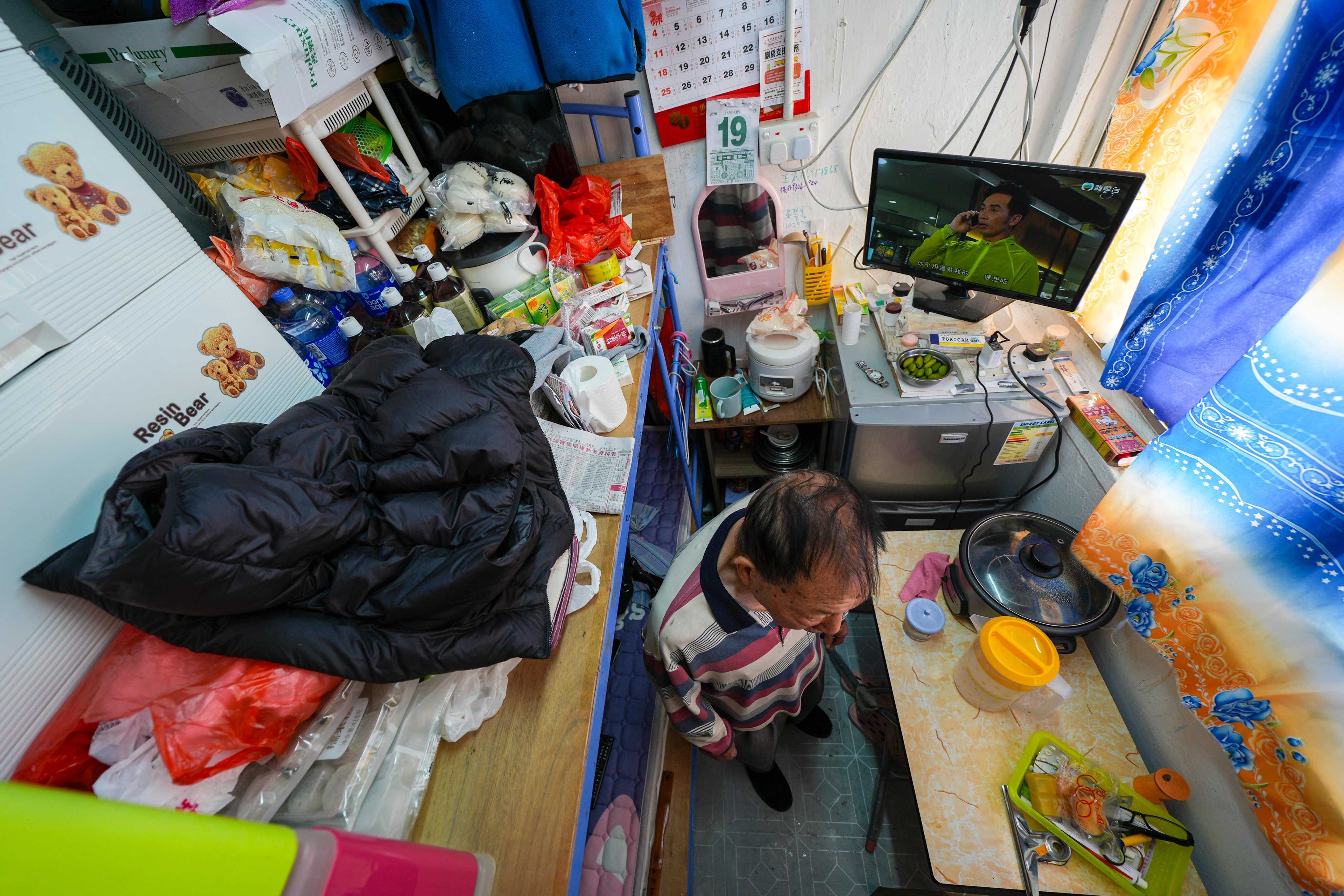
Chan Sai-chiu lives on a fixed income. He receives approximately HK$5,000 in social security benefits and a HK$2,500 rental subsidy. His 60 sq ft subdivided flat, which costs HK$3,000 (US$383) in rent, fits the 72-year-old’s tight budget.
However, Chan was caught off guard last December when the landlords of Yee Wa Building in Sham Shui Po gave more than 200 households three months’ notice to vacate. The decision was prompted by renovation plans to ensure the properties complied with the Basic Housing Units Ordinance, which took effect on March 1.
It mandates that subdivided homes meet minimum standards and must be certified by building professionals to be legally leased. Certificates must be renewed every five years.
Landlords can apply for certification or register for a one-year grace period. This gives them time to complete the changes while still legally leasing their properties. Those who do not comply could face a maximum fine of HK$300,000 (US$38,343) and up to three years in prison.
As of March 11, only one landlord in Hong Kong had applied for certification approval. Authorities reported that applications for a grace period had been submitted for more than 1,100 subdivided flats.
“Under the new law, unless the government has accommodation arrangements for tenants, there will be evictions forever,” Chan said.
As the ordinance takes effect, advocates and professionals have called for ensuring a stable supply of temporary accommodation for subdivided housing tenants likely to be uprooted.
The Housing Bureau sent an NGO to help Chan and other tenants of his building after news of the evictions made headlines.
According to the bureau, as of late February, among the 138 households it had contacted, 43 had applied for transitional flats. Ten had moved to light public housing. Thirty-nine households had been approved to stay at a nearby hostel with single-person rooms.
But Chan said it was inconvenient to move to transitional housing in the New Territories. He did not want to share a kitchen with other tenants in a nearby hostel.
There are currently about 220,000 residents living in subdivided homes. An earlier government survey estimated that around 33,000 subdivided flats – 30 per cent of the city’s total – would require significant fixes before they could be deemed basic housing units.
Staff writers
Question prompts
1. Which of the following statements is false, according to the information in News?
(1) The certification for subdivided flats must be renewed every five years.
(2) The landlords of Yee Wa Building gave over 200 households six months to move out.
(3) Hong Kong has approximately 33,000 subdivided flats, which account for less than one-third of the total homes in the city.
(4) Of the Yee Wa Building residents contacted by the Housing Bureau, less than half had applied for transitional flats.
A. (1), (2) only
B. (2), (3) only
C. (2), (4) only
D. (3), (4) only
2. Why were Chan and other residents of his building asked to move out?
3. Based on Chan’s situation, what problems might other residents of subdivided flats also be facing? Explain your answer using News and your own knowledge.
Cartoon
Question prompts
1. According to News, what punishment could landlords face if their subdivided homes fail to meet the government’s minimum standards?
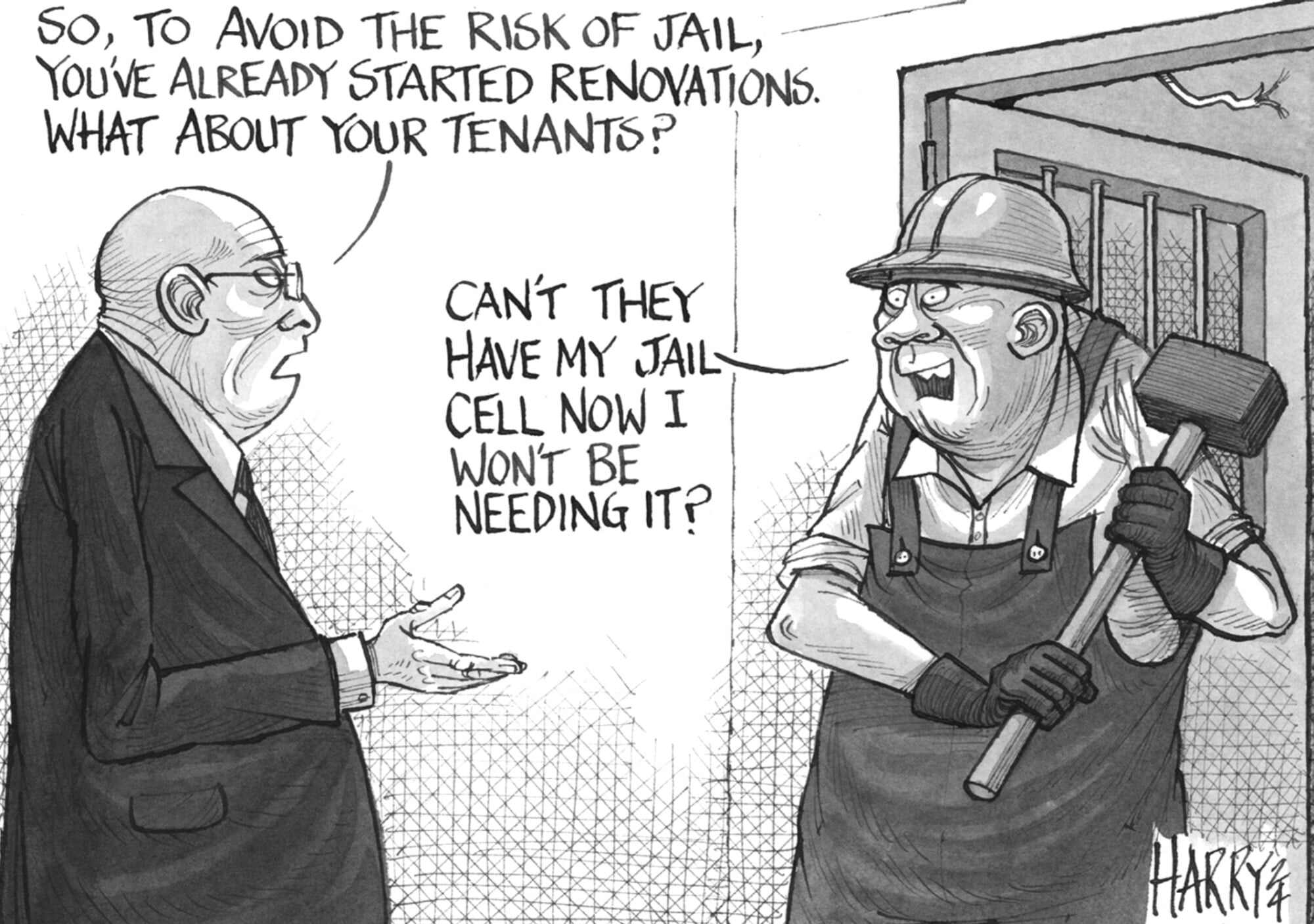
2. What does this cartoon reveal about the effects of the Basic Housing Units Ordinance on tenants living in subdivided flats?
Issue: Problems with the new housing ordinance
-
Some warn that living conditions for residents of subdivided flats may worsen during the transition phase
-
Elderly people, single-parent families may be most affected by new regulations
Advocates and professionals have expressed concerns regarding potential issues with the implementation of Hong Kong’s Basic Housing Units Ordinance.
Angela Lui Yi-shan, a community organiser with the Society for Community Organisation, noted that residents evicted from subdivided flats often relocate to other substandard housing.
Unfortunately, these individuals may find themselves uprooted once again when landlords begin making renovations to meet basic legal requirements.
Lui stated that low-income individuals and two-person households, including the elderly and single-parent families, would be the most affected by the new law.
These residents may only be able to rent small, substandard properties costing around HK$3,000 and could not afford a standard basic housing unit under current regulations.
She noted that rents for subdivided flats of a better quality were naturally higher, and their leases could increase by 5 to 15 per cent following renovations.
“Those with the lowest purchasing power and or the most underprivileged may have to resort to renting a substandard flat on the black market or resort to bed-space flats,” she said.
“The law aims to improve living quality ... but we need to observe whether the living quality has been downgraded in some cases.”
Eradicating substandard housing and regulating the subdivided housing market would require the government to ensure a sufficient supply of affordable housing and strong enforcement, she said, adding that tenants often preferred to remain silent about issues with their flats.
“Tenants tend not to report substandard properties for fear of losing their homes, especially if they cannot find housing that meets their needs. It is not ideal if the burden of reporting lies with tenants,” she said.
Tenants affected by the new law can apply for temporary housing, subject to availability. Residents who have waited for a public rental home for at least three years can apply for the light public housing homes built by the government, while others can apply for flats under the transitional housing scheme introduced in 2018.
Currently, around 4,000 transitional flats have been reserved for affected subdivided flat tenants, and the government is exploring the idea of increasing the supply of such homes in urban areas.
As of December, around 16,690 transitional flats were in operation, with another 2,700 set to be built by 2027.
Robin Leung Chi-tim, the immediate past president of the Hong Kong Institute of Surveyors, observed a possible loophole in the new law, which only regulates flats with two or more subdivided housing tenancies.
A homeowner could claim that they only leased one subdivided home and were living in the rest of the space. But in reality, they might be leasing their properties to several tenants.
Staff writers
Question prompts
1. What types of subdivided flat renters will be most affected under the new rules, and why? Explain your answer using Issue.
2. According to Lui, why might subdivided flat renters not report their conditions to the government even if they are living in a substandard flat?
3. To what extent do you agree with Lui that adequate supply and strict enforcement are necessary to eliminate substandard housing in Hong Kong? Explain using News, Issue, Glossary and your own knowledge.
Infographic
Question prompts
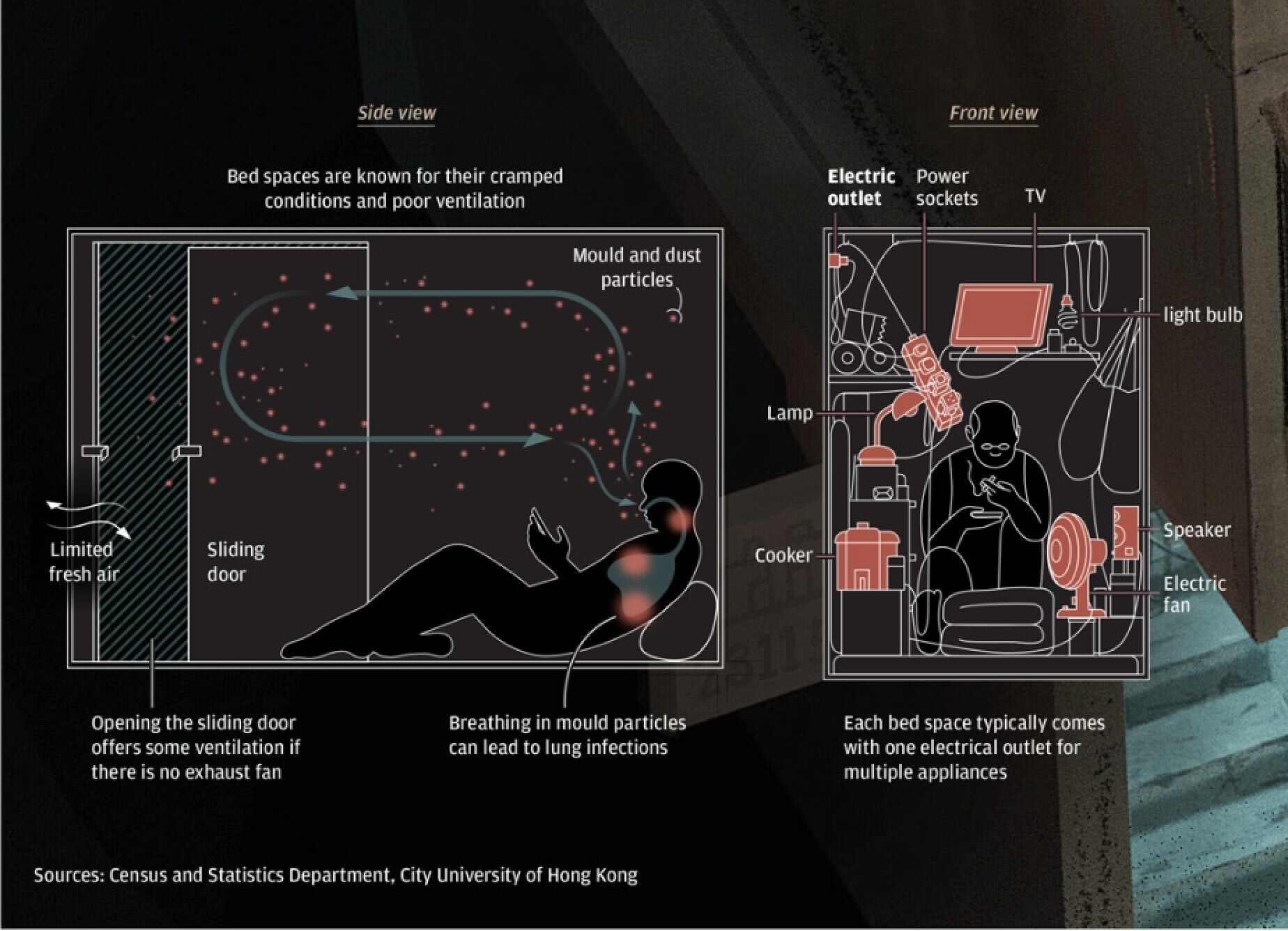
1. According to the infographic, what are the problems with the living conditions in a subdivided flat?
2. In your opinion, will the new Basic Housing Units Ordinance improve the quality of life for residents in subdivided flats in the long term? Explain using Issue, Glossary and your own knowledge.
Glossary
Basic Housing Units Ordinance: a new law outlining minimum requirements for subdivided flats, stating they must be at least 86 sq ft, have a proper window and come with an individual toilet
grace period: a designated period during which a person can postpone an action without penalty
transitional flats: a government-supported programme that offers temporary housing for low-income families living in substandard conditions while they await permanent public rental housing
substandard properties: properties that fail to meet the minimum legal requirements set by the government
loophole: ambiguity or omission in a law that allows people to technically follow the rules while bypassing the law’s original intent
Sample answers
News
1. B
2. The landlord asked Chan and the other residents to vacate the building to renovate it, ensuring compliance with the Basic Housing Units Ordinance.
3. Residents of subdivided flats face several challenges. First, some landlords are evicting tenants due to the new Basic Housing Units Ordinance, which allows them to renovate their units during the grace period stipulated by the law. Second, even if some landlords have not yet initiated renovation plans, they may still pass the costs on to tenants, potentially leading to higher rents and greater financial strain. Additionally, current tenants may experience housing pressure due to limited budgets and a competitive housing market in the city. Currently, about 220,000 residents live in subdivided flats, and finding suitable temporary accommodations for all of them within the grace period will require the availability of transitional flats and light public housing. Public Rental Housing and Light Public Housing will be under immense pressure to accommodate displaced tenants. Finally, even if tenants successfully relocate, the new locations and facilities may not be appropriate for their needs. For instance, in Chan’s case, he is hesitant to move to the New Territories due to his age and personal preferences.
Cartoon
1. If landlords do not comply with the new Basic Housing Units Ordinance standards, they could face fines of up to HK$300,000 (US$38,343) and imprisonment for three years.
2. The cartoon implies that while the ordinance aims to enhance the quality of life for tenants in subdivided housing, it may inadvertently lead to some tenants becoming homeless or facing even more dire situations. The landlord in the cartoon ironically inquires whether the tenants could live in his “jail cell”, highlighting the severe shortage of affordable housing that is comparable to living in a prison.
Issue
1. The most affected individuals will likely struggle to afford the higher-priced subdivided flats after renovation. Ultimately, they may have to rent substandard flats on the black market because that is all they can afford.
2. According to Lui, renters of subdivided flats may not report their living conditions because they often remain silent to avoid the risk of losing their homes. This is especially true for those who cannot find housing that meets their needs, as it would increase their burden.
3. I largely agree with Lui that both adequate housing supply and strict enforcement are necessary to eliminate substandard housing in Hong Kong. These two elements are equally important; relying solely on strict enforcement may push vulnerable individuals, particularly low-income earners, onto the streets, especially if they are unable to afford an abrupt relocation. On the supply side, the new Basic Housing Ordinance is encouraging more renovation plans for existing subdivided flats. However, the government needs to find a balance between providing public rental housing, light public housing, and transitional housing for affected tenants. On the enforcement side, measures such as setting deadlines and making the occupancy of unregistered or uncertified units a criminal offence will compel landlords to take compliance seriously. Additionally, this new regulation can help eliminate substandard units, including those located in industrial buildings or those posing severe fire safety risks. Once housing meets the approved standards, the likelihood of tenants living in extremely poor conditions will be significantly reduced.
Infographic
1. From the infographic, the living conditions within a subdivided flat appear very poor: the air is stagnant, the space is overcrowded, and fire risks are high. The side view shows that the bed spaces are very cramped, even for a single person, and the circulation of fresh air is limited because it is blocked by the sliding door of the “cubicle”. Therefore, residents have to cram in and breathe mould and dust particles, which could cause lung infection. Another problem is the high fire risk suggested by the front view: residents crowd multiple electrical devices, such as a cooker, TV, and electric fan, into a single outlet. Such improper wiring increases the chance of fire.
2. I believe that the new Basic Housing Units Ordinance will improve the quality of life for residents of subdivided flats in the long term. There are multiple potential benefits: housing standards will improve, including size, ceiling heights, windows for circulation and individual toilets. With the new regulations, safety and hygiene will improve, and cramped living conditions will be reduced, mitigating risks such as fires and improper power connections. However, there are some challenges we should not neglect. To meet the new standards, landlords will have to spend more on renovations, which may lead them to increase rents in the future, adding financial pressure on residents. Some landlords may also choose to stop renting rather than invest in meeting the standards, which could eventually reduce the supply of low-cost flats.