Content provided by British Council
Read the following text and answer the quiz below.
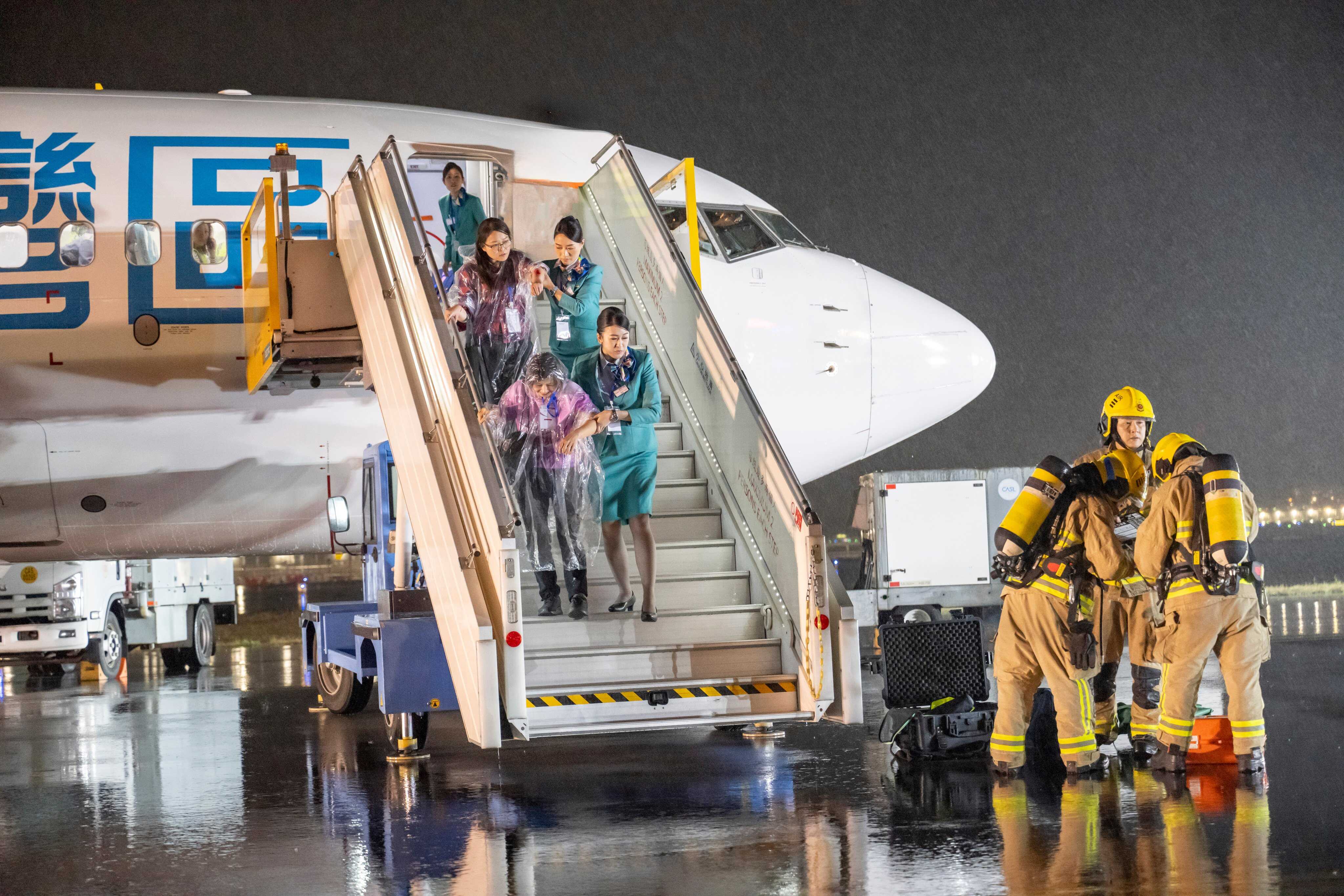
[1] Hong Kong International Airport staged a large-scale emergency drill to test its ability to respond to a major aircraft accident, with more than 1,000 personnel and hundreds of volunteers taking part. The annual aircraft crash and rescue exercise was held on the airport’s centre runway early this month, starting at 2.15am and concluding around four hours later. It simulated a departing flight forced to abort take-off after smoke was reported from a passenger’s power bank.
[2] In the simulation, the aircraft carrying 120 passengers attempted to stop on the runway but suffered a burst tyre while braking. It then veered off the runway as its landing gear collapsed and a fire broke out on the tarmac. Air traffic controllers immediately activated the crash alarm, triggering a coordinated emergency response across the airport.
[3] The Airport Authority activated its emergency centre to coordinate communication among government departments, airport operators and other relevant organisations. Emergency teams from the Fire Services Department and the Hong Kong Police Force were deployed to the “crash site” to carry out firefighting and rescue operations, provide medical care and transport casualties.
[4] More than 400 volunteers took part as role players, acting as passengers and relatives of those affected. The exercise included simulated fatalities and injuries, with those hurt sent to five public hospitals: Kwong Wah Hospital in Yau Ma Tei; North Lantau Hospital; Princess Margaret Hospital in Kwai Chung; Tuen Mun Hospital; and Yan Chai Hospital in Tsuen Wan.
[5] Passengers who escaped unscathed went through simulated immigration and customs procedures and were then taken to a family reception centre, where humanitarian help and psychological support services were provided by participating NGOs.
[6] Authorities also staged a mock joint press conference to simulate how representatives from the Airport Authority, the Air Accident Investigation Authority, Greater Bay Airlines, the Fire Services Department and police would provide updates during a real crisis. About 30 students from six local universities acted as reporters during the briefing.
[7] Steven Yiu Siu-chung, the authority’s executive director of airport operations, said such drills were vital as passenger traffic continued to grow under Hong Kong’s three-runway system. “Safety always comes first at Hong Kong International Airport,” he said. The Airport Authority said the exercise was conducted in accordance with aerodrome licensing requirements and was part of regular drills covering emergency scenarios such as severe weather, system failures, public health incidents and security threats.
Source: South China Morning Post, March 3