Read the following text and answer the quiz below.
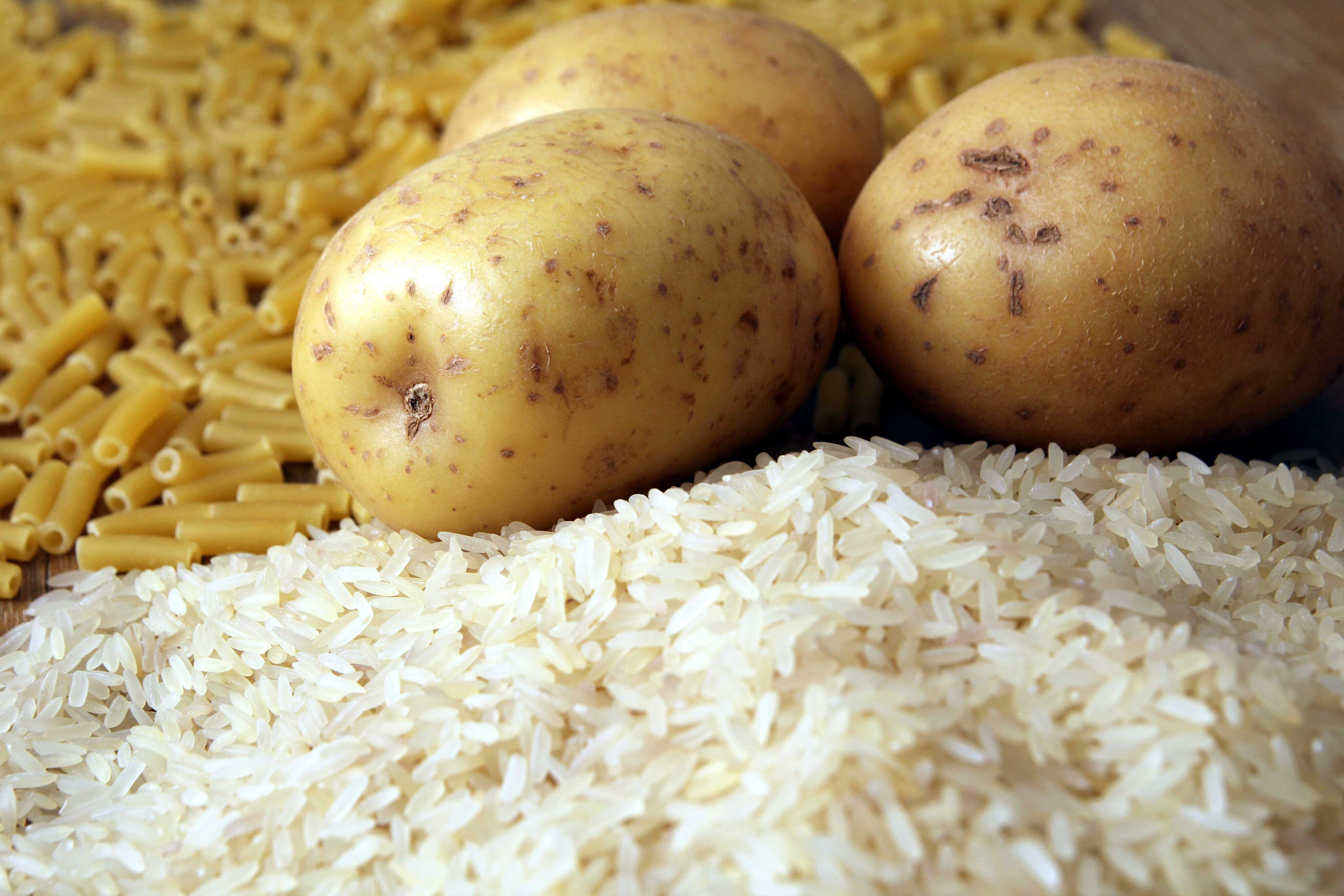
[1] Online influencers suggest that the secret to low-calorie rice, pasta and potatoes might be as simple as letting them cool down. However, the reality is a bit more complex. While a small but credible body of research indicates that chilling these carbohydrate-rich foods after cooking may aid in weight loss, the process isn’t as straightforward as influencers claim. For several years, proponents of wellness and nutrition have advocated a method called retrogradation, which involves cooking, chilling and then reheating carbohydrate-rich foods. Retrogradation is a genuine phenomenon, but it is important to understand that it’s not that simple.
[2] Most of the carbohydrates in these foods – as well as most of the calories – come from starch. There are two types of starch: hard-to-digest amylose and easily digested amylopectin. The latter is processed quickly and spikes blood sugar. The former is processed slowly and moderates blood sugar.
[3] Most raw carbohydrates, such as uncooked potatoes, are largely hard-to-digest starch, also known as resistant starch. However, cooking converts it into a form that is more easily digested. This is why diabetics need to be mindful when eating starchy foods. Here’s where the influencers get excited. Chilling those cooked foods triggers retrogradation, a process that converts easily digested starch back into resistant starch, making it harder to digest even if the food is then reheated.
[4] Studies of how retrogradation influences diet have mostly been small and focused on how consumption of resistant starches influences blood sugar, particularly for diabetics. Multiple studies since 2015 have found that people who ate rice that was cooked and then cooled sometimes had significantly lower blood glucose levels after eating than those who ate freshly cooked rice. Those findings are generally well-accepted.
[5] Less attention has been given to whether retrogradation reduces the calories available from these foods. “It doesn’t appreciably change the calorie content of that food,” Dr David Ludwig, an endocrinologist and researcher at Boston Children’s Hospital, explained.
[6] Though retrogradation’s effect on calories is neither as direct nor as dramatic as some suggest, it nonetheless has promise as part of healthier eating, Ludwig said. Eating foods high in resistant starch reduces the surge in blood sugar typically seen after consuming cooked carbohydrates, he explained. “When the food retrogrades, it digests more slowly,” he said. “It’s going to keep your blood sugar more stable. You’ll have less insulin to drive fat storage and likely have an easier time avoiding overeating.”
[7] Dr Walter Willett, professor of epidemiology and nutrition at Harvard T.H. Chan School of Public Health, noted that retrogradation only helps with blood-sugar effects. “Chilling does not restore the losses of fibre, minerals and vitamins that have been removed in the refining process,” he said. Better, he said, would be to keep it simple: Substitute minimally processed whole grains cooked as one normally would.
Source: Associated Press, February 26
Content provided by British Council