
Deep Dive delves into hot issues in Hong Kong and mainland China. Our easy-to-read articles provide context to grasp what’s happening, while our questions help you craft informed responses. Check sample answers at the end of the page.
News: Hong Kong aims to boost pet economy
-
The new pet-friendly scheme targets local restaurants to boost local spending
-
Nearly 10 per cent of Hong Kong households keep cats and dogs as pets
The Hong Kong government hopes to develop the city’s “pet economy” by becoming more accommodating to furry friends so their owners are more likely to spend locally.
The Environment and Ecology Bureau recently proposed that up to 1,000 restaurants be allowed to obtain a HK$140 permit to allow dogs to enter their premises.
The initial phase of the scheme would launch by mid-2026 and allow a maximum of two dogs per diner. The bureau aimed to submit the proposed amendments to the Food Business Regulation to the Legislative Council within the first quarter of this year.
Currently, customers cannot bring dogs into any food premises, and operators may not permit them. Penalties for breaking these regulations include up to three months in jail and a maximum fine of HK$10,000.
Pet-friendly Uluru Cafe in Wan Chai is owned by Ricky Tam Wai-kit. He was previously told that if officers spotted one more dog, the cafe would have to close for a week. Another offence could mean losing his licence.
“We like pets and animals, but this has made us a target for attack,” Tam said. “I don’t understand why they have to weaponise the law to punish us.”
To save his business, Tam was forced to ban customers from bringing their pets. Business dropped by 20 to 30 per cent. He is waiting for the law to change and hopes his business can survive the transition.
According to the latest census, nearly 10 per cent of Hong Kong households kept more than 400,000 cats and dogs as pets.
Shopping malls like K11 Musea and The Mills have become popular among “paw parents” for their pet-friendly policies, such as allowing pets in designated areas and leashed dogs on the premises.
Angela Chan Nga-chi is the president of the Hong Kong Pet Trade Association. She said the city’s retail, entertainment and transport sectors would benefit from more pet-friendly policies. Chan noted that the pet market was already substantial, with more than HK$6 billion spent on pet food and HK$800 million on services.
Local owners spent an average of HK$2,000 monthly on their pets. This excluded insurance premiums, which could cost around HK$1,000.
“Ten years ago, pet owners might just buy basic kibble, but now they buy higher-premium products for their pets. They truly treat their pets as family members,” Chan said.
“Judging by product trends, pet ownership is becoming increasingly sophisticated. People are focused on how to improve their pets’ quality of life.”
Staff writers
Question prompts
1. Which of the following statements is false, according to the information in News?
(1) The proposed pet-friendly scheme would allow 3,000 restaurants to apply for a permit allowing dogs on the premises.
(2) Pet owners cannot bring dogs into restaurants, and restaurants cannot allow them.
(3) Around one-third of Hong Kong households own more than 400,000 cats and dogs as pets.
(4) Hong Kong pet owners spend an average of HK$2,000 monthly on their pets, not including insurance.
A. (1), (2) only
B. (1), (3) only
C. (2), (3) only
D. (3), (4) only
2. Why might restaurant owners like Tam want to welcome pets despite the current regulations? Explain using News and your own knowledge.
3. How could allowing dogs in restaurants help the city’s economy? Explain using News, Glossary and your own knowledge.
Photo
Question prompts
1. What concerns might customers who are allergic to or dislike dogs have about dining in a restaurant that allows dogs inside?
2. To what extent do you think pet-friendly restaurants would be popular in Hong Kong? Explain using News and your own knowledge.
Issue: Critics question cost-effectiveness of new pet-friendly dining scheme
-
Government says it will consider safety and hygiene regulations while giving operators flexibility
-
Proposal must account for profitability and livelihood issues, industry representatives say
As Hong Kong prepares to make its restaurants more dog-friendly, critics have questioned the plan’s cost-effectiveness, while supporters believe this move could help many restaurant operators.
Some believe the existing laws are too rigid, leaving pet-friendly businesses struggling to survive a legal framework that treats their competitive advantage as a liability.
In addition to penalties such as fines, restaurant operators could also face administrative action under the current regulation, including suspension of their food business licence for seven days for a first major offence or the accumulation of demerit points.
The ban stems from legislation introduced in the 1990s aimed at preventing rabies and improving public health and hygiene in the city’s cramped urban environment.
The Food and Environmental Hygiene Department said that between 2021 and 2025, it received 1,781 complaints and prosecuted 17 operators for allowing dogs into restaurants.
In response to the South China Morning Post, the environment bureau said it had conducted a series of consultations with the catering trade and other stakeholders, with “broad support” to lift the ban on dogs in Hong Kong eateries.
It added that it had developed proposed regulations on safety and hygiene considerations while giving operators flexibility in other areas, including clearing and displaying signage outside restaurants allowing dogs and excluding hotpot and barbecue restaurants from the scheme.
But representatives from the catering industry have questioned whether the pet economy push can drive profits, especially when operators have to focus on details related to animal welfare and environmental hygiene.
They argue that the new measure will only benefit a small number of businesses and appeal more to cafes and brunch spots rather than Chinese restaurants.
Michael Leung Chun-wah, chairman of the Association for Hong Kong Catering Services Management, said there were many issues to consider, asking: “For example, if pets defecate on the carpeted floors, who will be liable for the cost of cleaning?”
Simon Wong Ka-wo, president of the Hong Kong Federation of Restaurants and Related Trades, said allowing dogs into restaurants was the least of the industry’s priorities right now, as caterers were more concerned with livelihood issues.
“The government needs to balance this with clear application protocols, costs and regulation in the future while maintaining food safety and hygiene,” he said.
He also questioned whether the purchasing power of pet owners was strong enough to convince operators to make the leap, since “the new measure could backfire and turn away customers who are allergic to or dislike dogs”.
Yet Jonathan Leung Chun, the newly elected lawmaker for the catering industry, said the sector was exploring various ways to attract consumers.
“Allowing pets in restaurants, or encouraging more eateries to offer halal food, are options for restaurants to consider to tap into the different markets,” he said.
He believed it was up to operators to decide how to strike a balance between the cost and profitability of allowing dogs.
Staff writers
Question prompts
1. List TWO actions that Hong Kong’s Environment and Ecology Bureau has taken regarding the pet-friendly scheme proposal.
2. Identify ONE situation in which allowing pets in a restaurant could create unclear responsibility for pet owners and restaurant operators.
3. Do you think pet-friendly restaurants could benefit Hong Kong’s economy? What problems could arise? Explain using News, Issue, Glossary and your own knowledge.
Cartoon

Question prompts
1. While dogs don’t smoke cigarettes, what situations might require owners to control their pets in a restaurant? What problems could this cause other diners?
2. What is ONE advantage and ONE disadvantage of having a designated area for pets in restaurants? Explain using Issue, Glossary and your knowledge.
Glossary
-
weaponise: to adapt or exploit something and use it as a tool for attack, defense or gaining a strategic advantage
-
transition: the process of changing from one state or condition to another
-
insurance premiums: regular payments made to keep an insurance policy active, covering a variety of risks and aiming to protect the policyholder from financial loss
-
liability: to be legally responsible for something
-
backfire: to have the opposite effect to the one intended, often with bad or dangerous results
Sample answers
News
-
B
-
Pet-friendly restaurants like Tam’s cafe cater to pets and their owners who would otherwise need to leave their pets at home if they need to go out. Pet owners often want to bring their animals outside to get fresh air and socialise. Because the current law bans pets in restaurants, eateries that find ways to bring animals into outdoor areas can attract pet owners who do not have many choices in where they can go with their furry friends. This can be a major selling point for businesses that want to retain loyal customers. (accept all reasonable answers)
-
Allowing dogs in restaurants can significantly benefit Hong Kong’s economy for several reasons. Firstly, nearly 10 per cent of the city’s households own pets, and many dog owners view their pets as family members. This prompts pet owners to seek out pet-friendly businesses, and they are more willing to venture out for longer since they don’t need to rush home to care for their animals. Thus, all of those pet-friendly businesses would see more foot traffic and spending. Having more pet-friendly restaurants encourages more pet owners to go out to eat more often since they have more options to choose from, and they are likely to spend more on additional purchases, such as taxis, pet-related items and other services nearby. This not only increases the revenue of the restaurants but also stimulates local businesses, including pet shops, parks, and entertainment venues, where these owners may choose to spend their time and money. Therefore, embracing dogs in restaurants can boost local spending and improve Hong Kong’s economic landscape. (accept all similar answers)
Photo
-
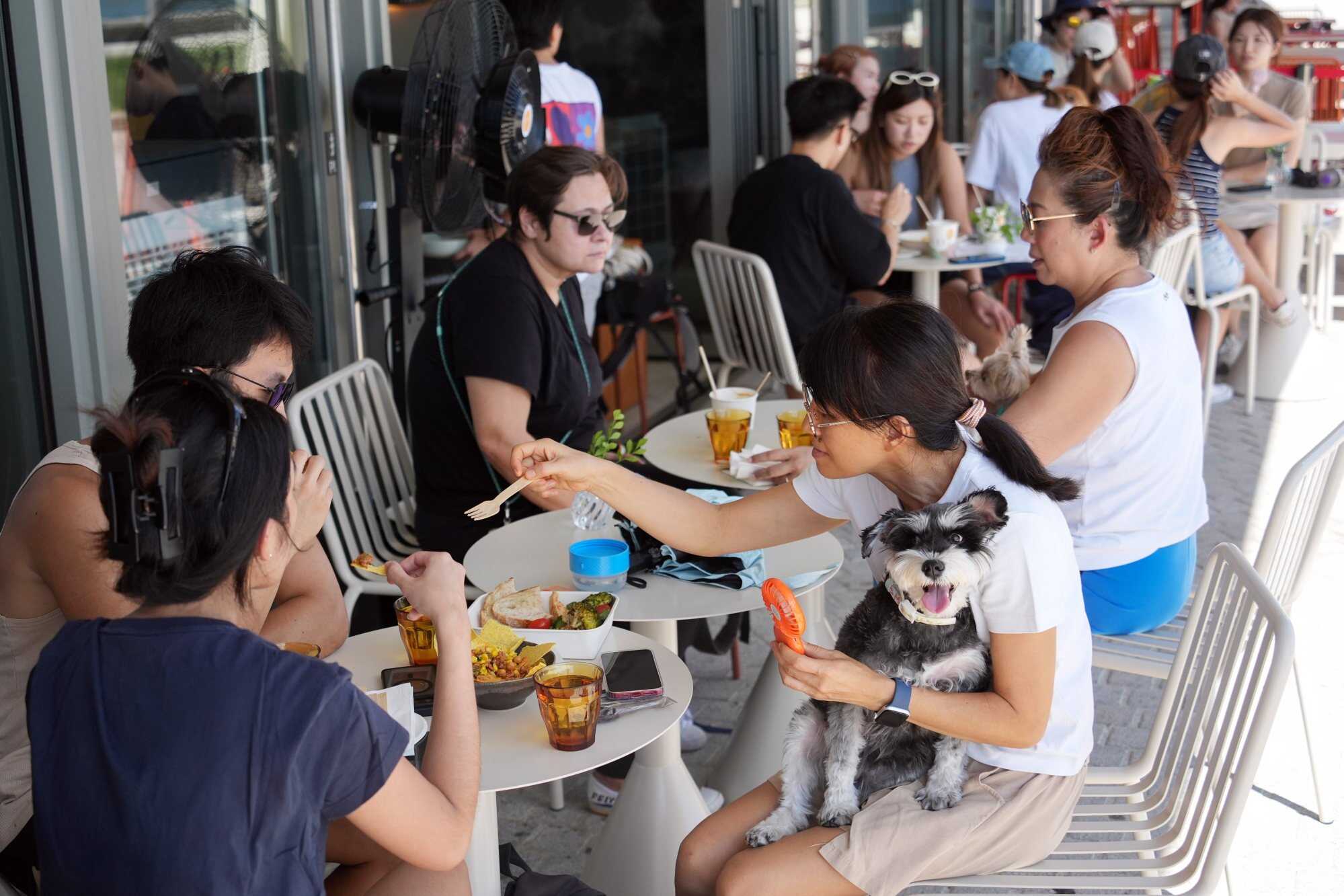
Customers with dog allergies may worry that exposure to pets could trigger allergic reactions, while diners who dislike dogs might feel anxious or uncomfortable. Sometimes, dogs bark and whine, which can also be disturbing to some customers. (accept all reasonable answers)
-
Pet-friendly restaurants would likely be popular in Hong Kong, given that 10 per cent of households have pets and are willing to spend quite a lot of money on their furry friends. Additionally, there is a growing acceptance of pets in public spaces, such as some forms of public transport and some shopping malls. All of these pet-friendly initiatives create a better environment that encourages people to go to restaurants with their pets. (accept all reasonable answers)
Issue
-
Hong Kong’s Environment and Ecology Bureau conducted a series of consultations with the catering trade and other stakeholders about allowing dogs into restaurants, and it developed proposed regulations on safety and hygiene considerations.
-
If pets defecate on carpeted floors, it might be unclear whether pet owners or restaurant operators are responsible for the cost of cleaning. (accept all reasonable answers)
-
Pet-friendly restaurants could driving economic activity among the growing population of pet owners in Hong Kong. Almost 10 per cent of households in Hong Kong own pets, increasing the demand for pet services and facilities. This not only boosts revenues at restaurants but also at nearby businesses, such as pet shops, parks and entertainment venues, contributing to overall economic growth. However, several problems could arise with the integration of pets in dining spaces. Dog hygiene and noise are significant concerns that can deter customers and create challenging situations for regulation. If restaurants fail to manage these incidents properly, they risk facing legal repercussions and damage to their reputations, which could backfire by driving away customers who do not want to dine in the same space with animals. Additionally, regulatory issues may complicate the operation of pet-friendly venues. Restaurant operators must comply with hygiene and safety regulations, which can involve considerable costs for cleaning, maintenance, and staff training to ensure a safe environment for patrons and pets alike. Balancing the needs of pet owners with those of customers who may have allergies or dislike animals is another challenge. Additional guidelines for pet-friendly restaurants could make the restaurant operation more complicated, requiring stakeholders to collaborate closely to clarify responsibilities. In conclusion, while pet-friendly restaurants have the potential to enrich Hong Kong’s economy, addressing these challenges is critical for their sustainable success.
Cartoon
-
Although dogs don’t smoke cigarettes, they may sometimes misbehave, running around restaurants or defecating on carpeted floors. These situations can make diners who are allergic to or dislike dogs feel unwelcome or disturbed.
-
The advantage of having a designated area for pets in restaurants is that it can create a more controlled environment where pets can be better managed. This separation keeps dogs away from customers who may have allergies or discomfort around animals, balancing the needs of both pet owners and non-owners. However, the downside is that there might be a limited experience for pet owners if they are excluded from some parts of the dining experience. For example, if restaurants designate outdoor areas for pet owners, they may not be able to fully enjoy the experience.