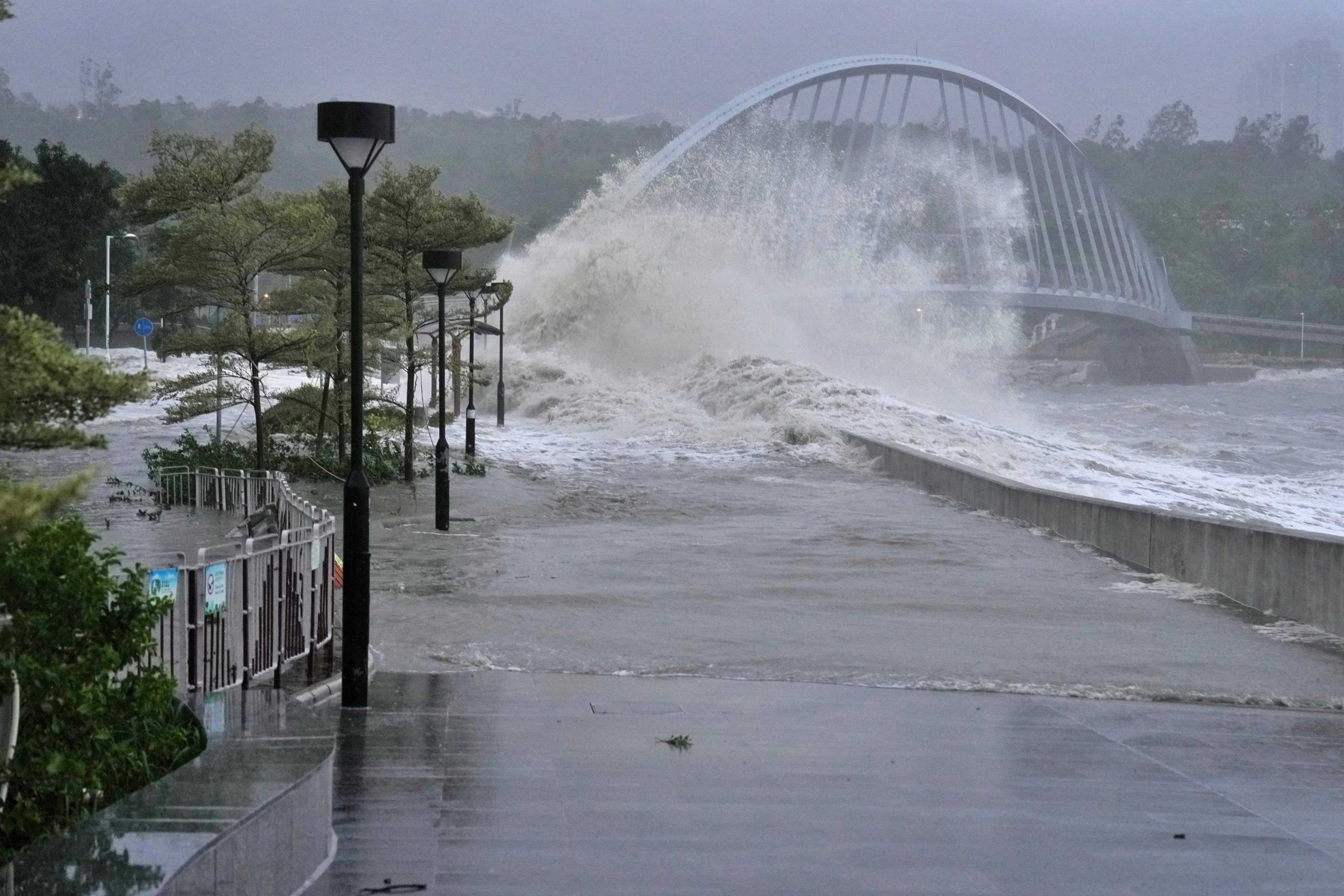
Hong Kong authorities have assembled 50,000 sandbags and several sets of water-filled flood barriers in preparation for the coming typhoon season. Enhancement works at the high-risk Tseung Kwan O promenade are expected to be completed by the end of this year.
The Civil Engineering and Development Department also introduced new guidelines on shoreline management for communities, property managers and businesses operating near coastal areas.
The guidelines include simple infographics on how to set up protective barriers against high tides and flooding.
The Observatory has forecast that the city will experience between four and seven typhoons from June to October, with heavy rain and localised torrential downpours expected during the season.
Cheung Wing-hong, the acting deputy head of the department’s civil engineering office, said construction of flood walls at the Tseung Kwan O promenade was expected to be completed by the end of this year.
Works for the existing restaurants by the waterfront had also already begun, he added.
“The concrete water-retaining wall is almost finished and can serve as a protection barrier,” he said.
The final stage would involve installing glass extensions on top of the concrete structure, further strengthening its resistance, Cheung added.
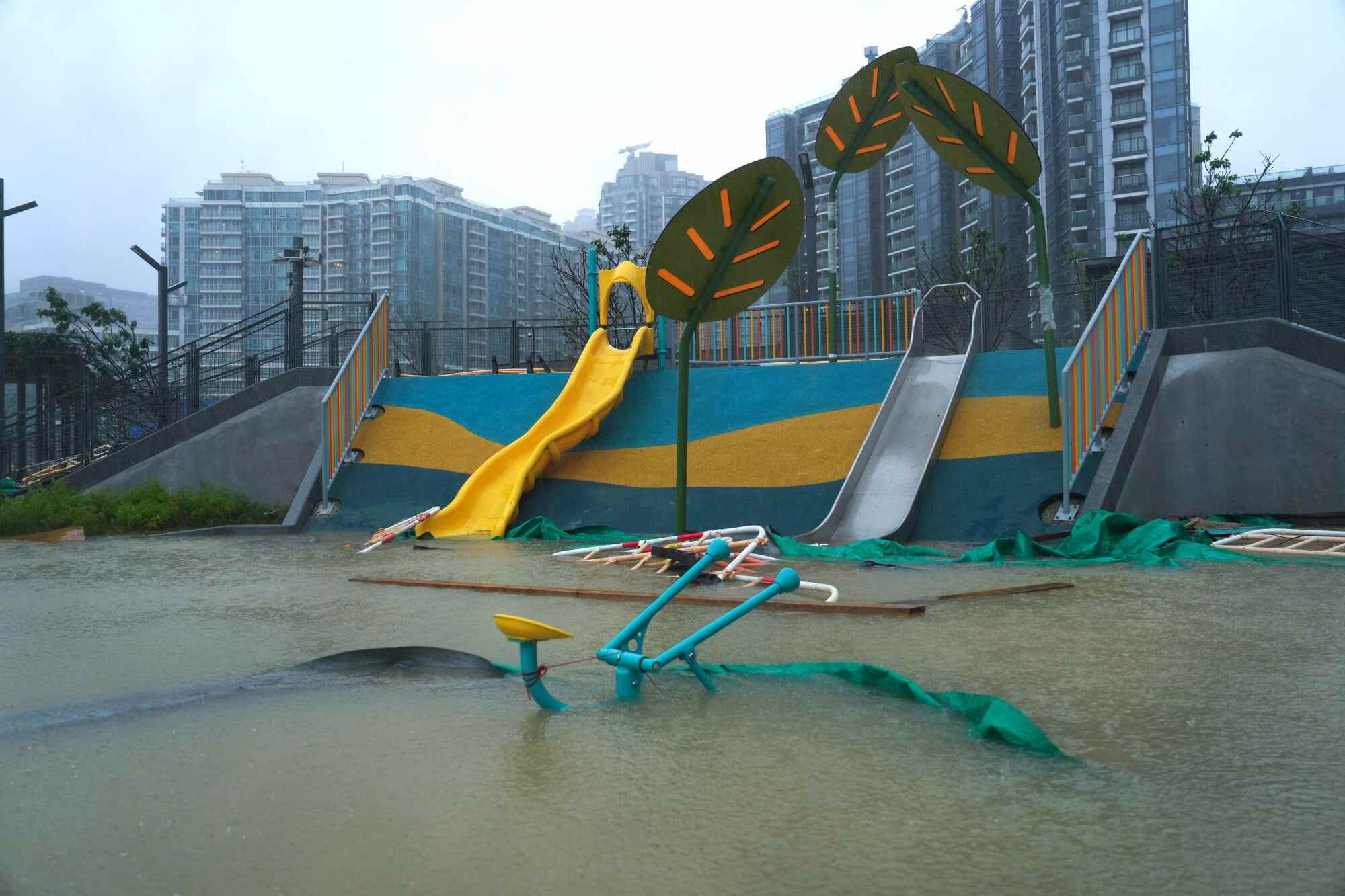
Noting that the entire project would only be completed by the end of this year, Cheung said the department had already instructed the contractor to set up water-filled flood barriers if a strong typhoon were to hit the city.
He added that the government had three sets of water-filled flood barriers – one at Tseung Kwan O, another at Lei Yue Mun and the third for emergency use. Contractors have tested the barriers to ensure their effectiveness.
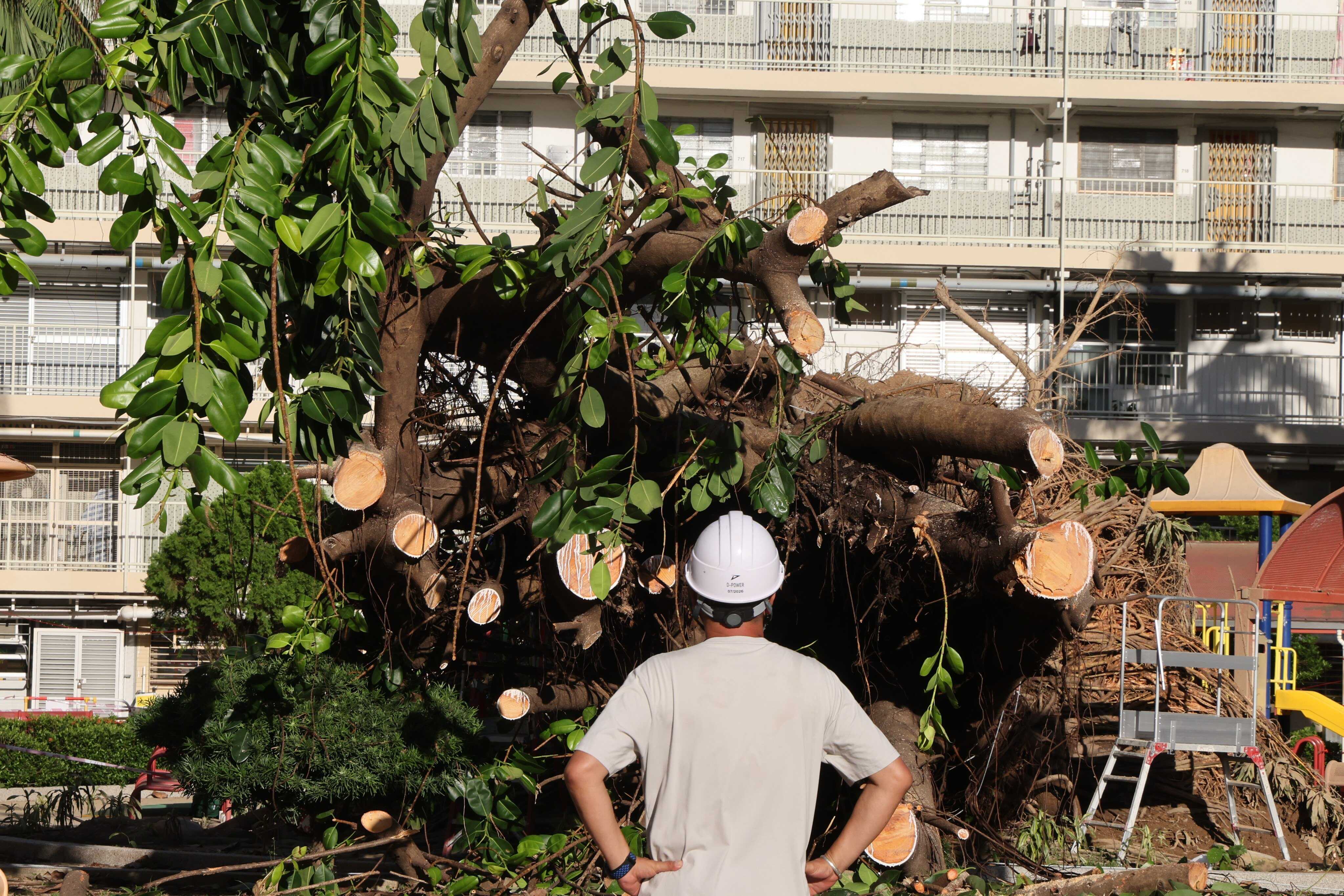
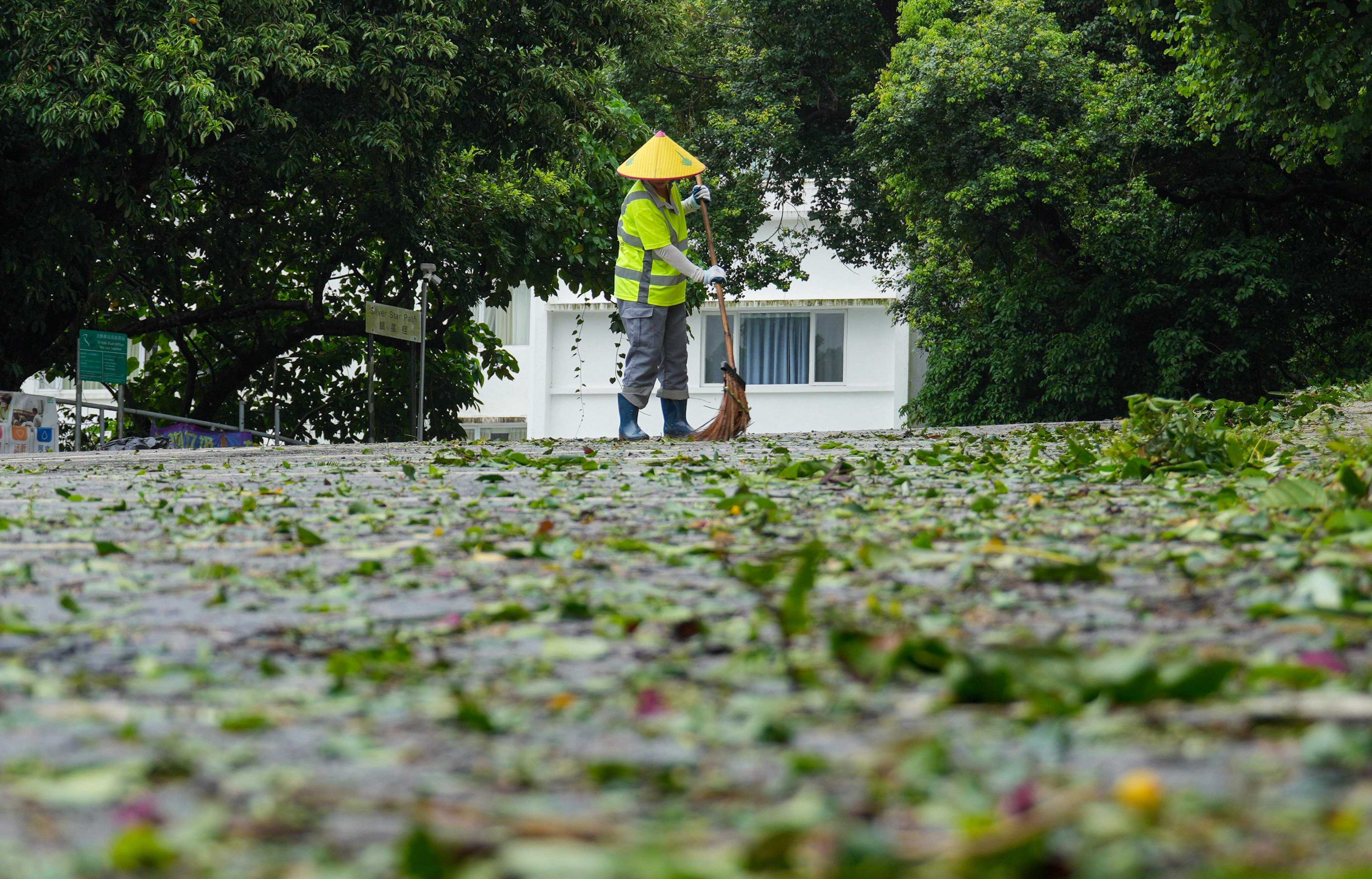
After Hong Kong was battered by Super Typhoon Ragasa last September, Cheung said the department had learned from the experience and prepared 50,000 sandbags ready to be deployed to flood-prone areas.
Super Typhoon Ragasa caused damage to three harbourfront restaurants in Tseung Kwan O.
At Bistro La Baie, glass doors shattered after being thrown wide open by the storm. The restaurant’s CEO and founder, Mark Cholewka, said Ragasa damaged the shop’s electrical equipment, floors, walls and furniture.
The newly-released “Shoreline Management Guideline for Coastal Development” covers risk-based planning and design. It advises property owners to install wooden coverings over glass panels and to place barriers outside entrances as part of flood-prevention measures.
Cholewka said that his landlord was erecting stronger barriers outside the restaurant and would install more protection at its doors, as well as the breakwater built by the government. But he noted that he lacked the expertise to assess the effectiveness of these measures.
He said that if a catastrophic storm such as Ragasa struck the city, he would not reopen the restaurant again.
“We are kind of playing the odds here now,” he said.

Lawmaker Christine Fong Kwok-shan, who also serves as a district councillor for Sai Kung and Hang Hau, said authorities should consider installing temporary flood barriers at other spots in Tseung Kwan O, such as a nearby park.
Fong added that the government should also urge coastal shopping malls to step up mitigation measures.
According to department data, 257 landslides induced by rainfall were logged in 2025.
Lawrence Shum Ka-wah, deputy head of the department’s geotechnical engineering office, said the government would deploy three drones powered by artificial intelligence to respond to landslides in four areas – Chai Wan, Wong Tai Sin, Tseung Kwan O and Sai Ying Pun – which had flooding in previous heavy rainstorms.
He said that when police receive a landslide report, the office can deploy a drone to the site and monitor the situation by uploading captured images to a smart platform shared by multiple departments. He said drones could also help with regular slope inspections.