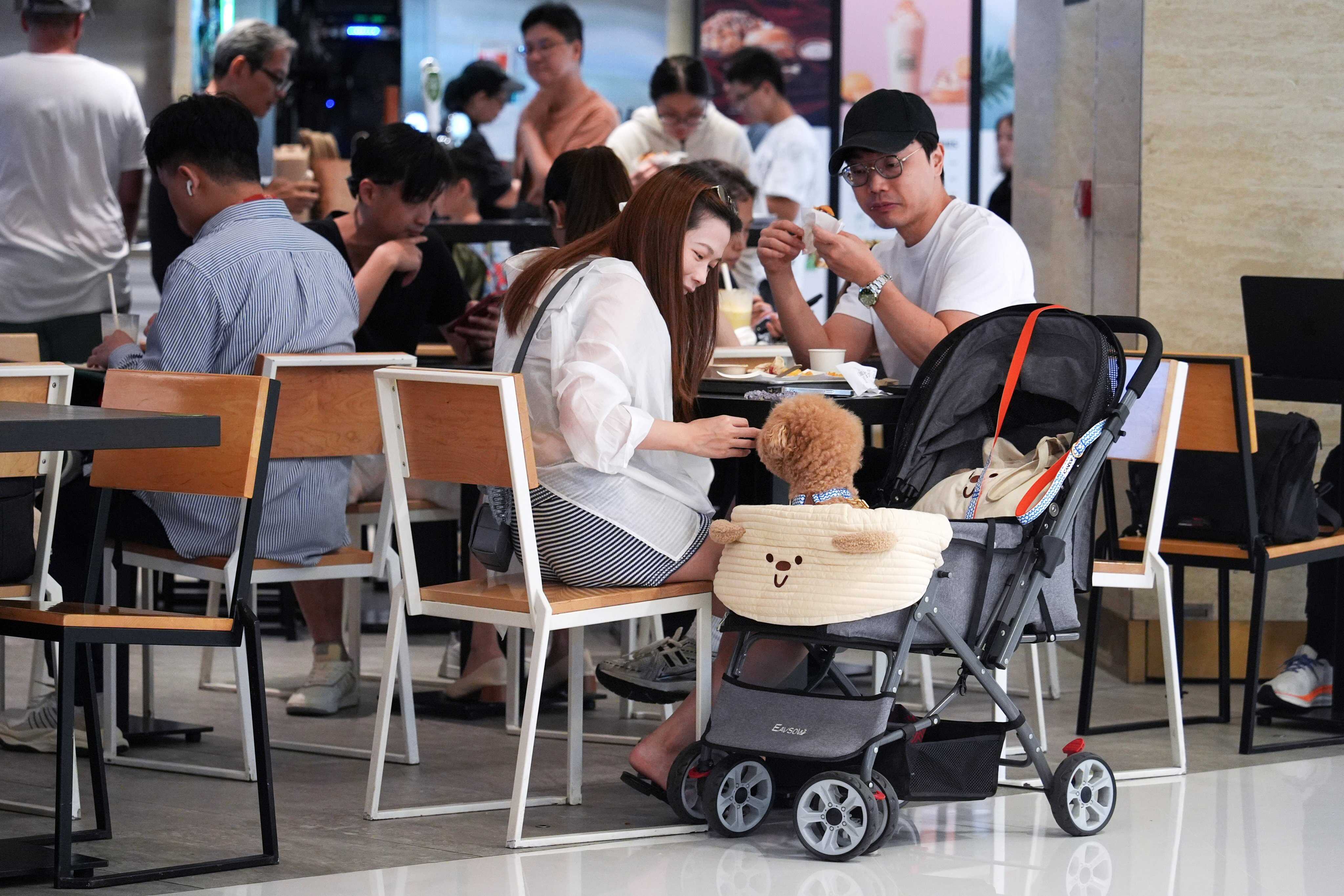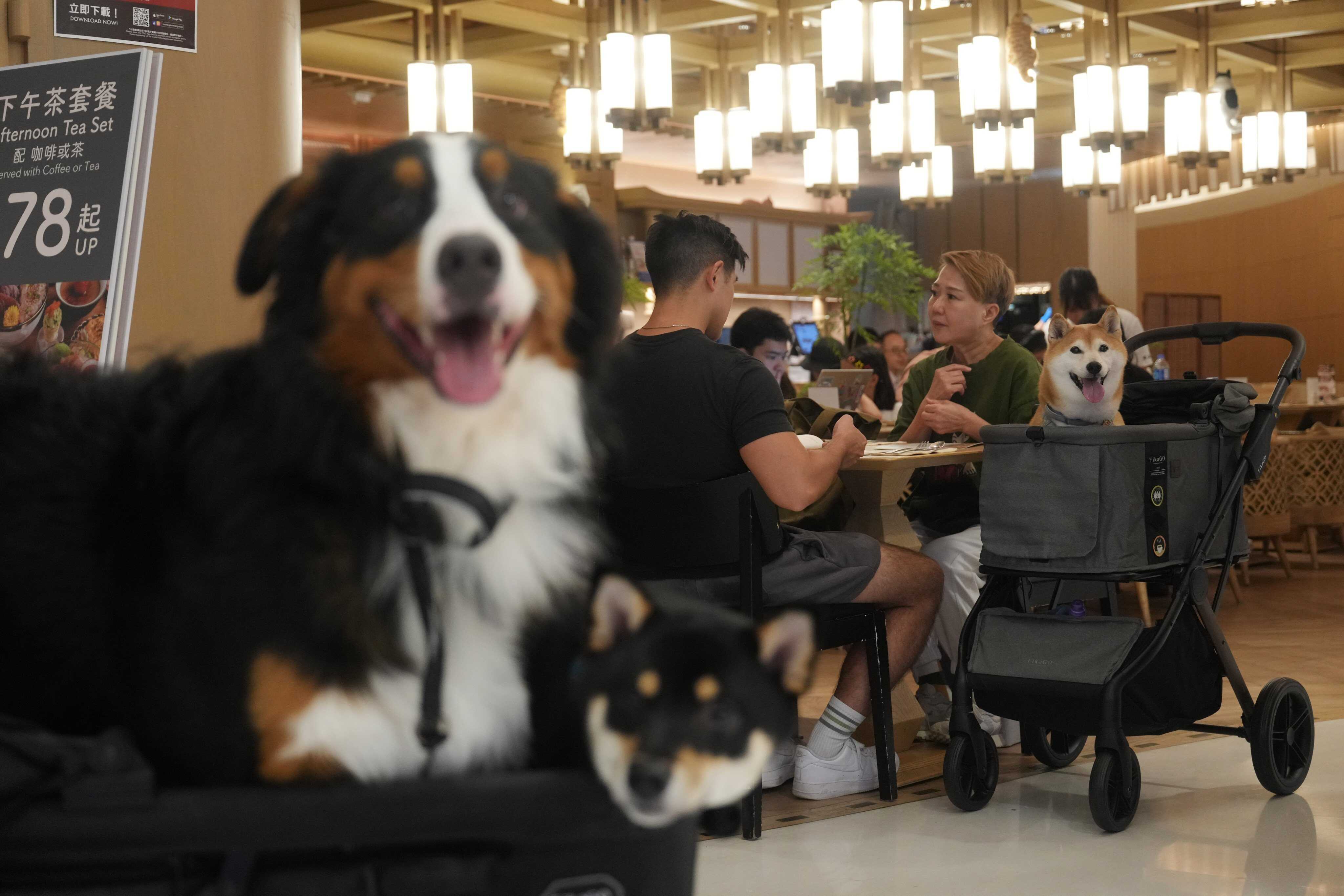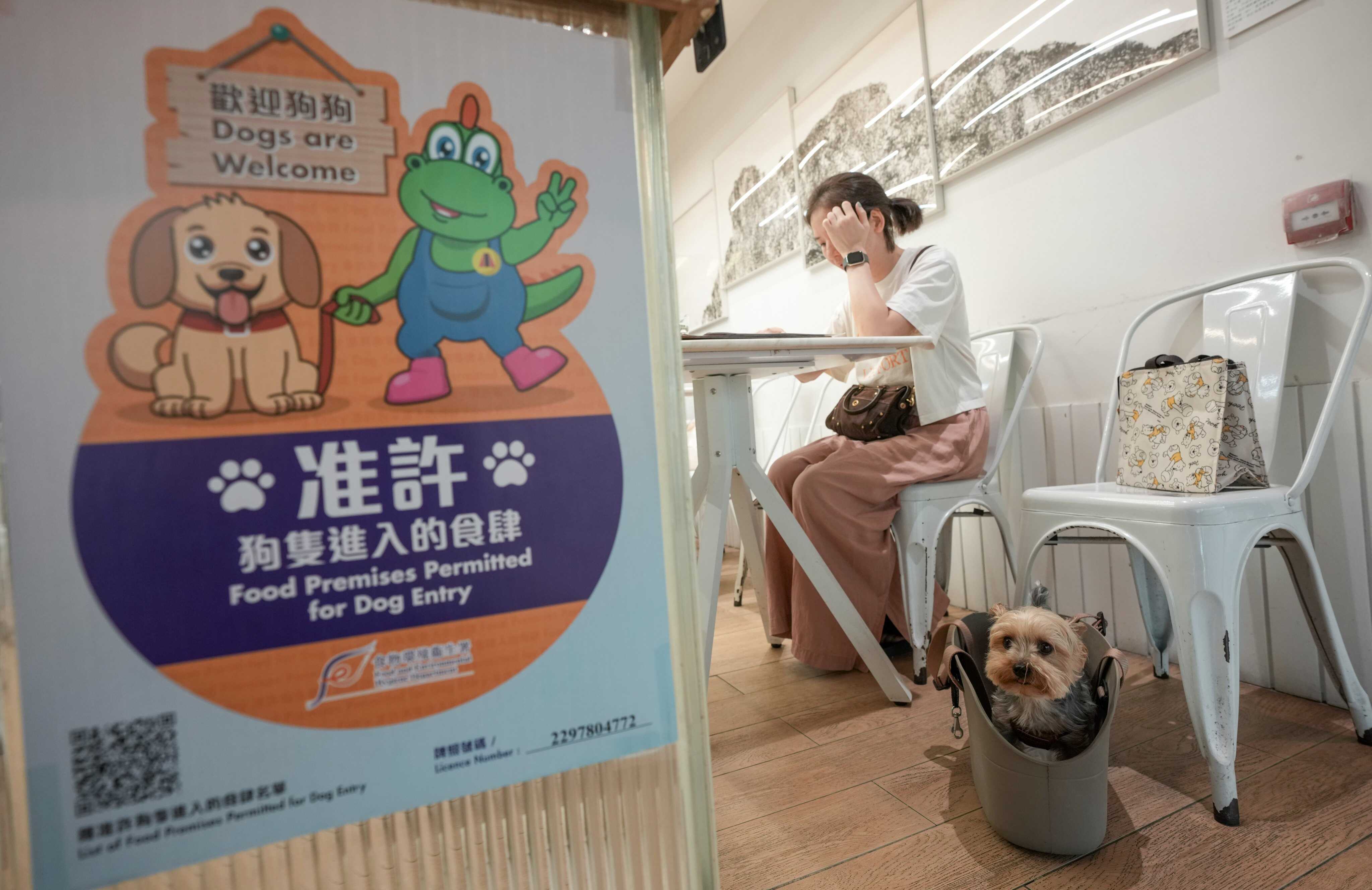
Lawmakers are calling for increased vetting of licences after Hong Kong’s introduction of pet-friendly dining in designated restaurants drew significant public criticism.
The Food and Environmental Hygiene Department has received about 20 complaints since the scheme began on July 9.
The department earlier said most complaints involved minor issues such as leash length and seating arrangements.
However, viral clips showing dogs licking plates and sitting on tables and chairs have drawn widespread criticism.
On Monday, a Chinese restaurant in Kai Tak that holds a pet-friendly permit received a warning letter after the department found that food was repeatedly cooked or heated on the dining table over three days.
In response, catering sector lawmaker Jonathan Leung Chun said the initial “chaos” would calm down as the industry adjusts to the new scheme.
“This is a learning phase ... if the restaurants find dog-friendliness is not their thing, they should return the permits, but those who are good at it will thrive,” he said.
“Some operators tell us their business has doubled; that is a surge you do not even see during holidays.”
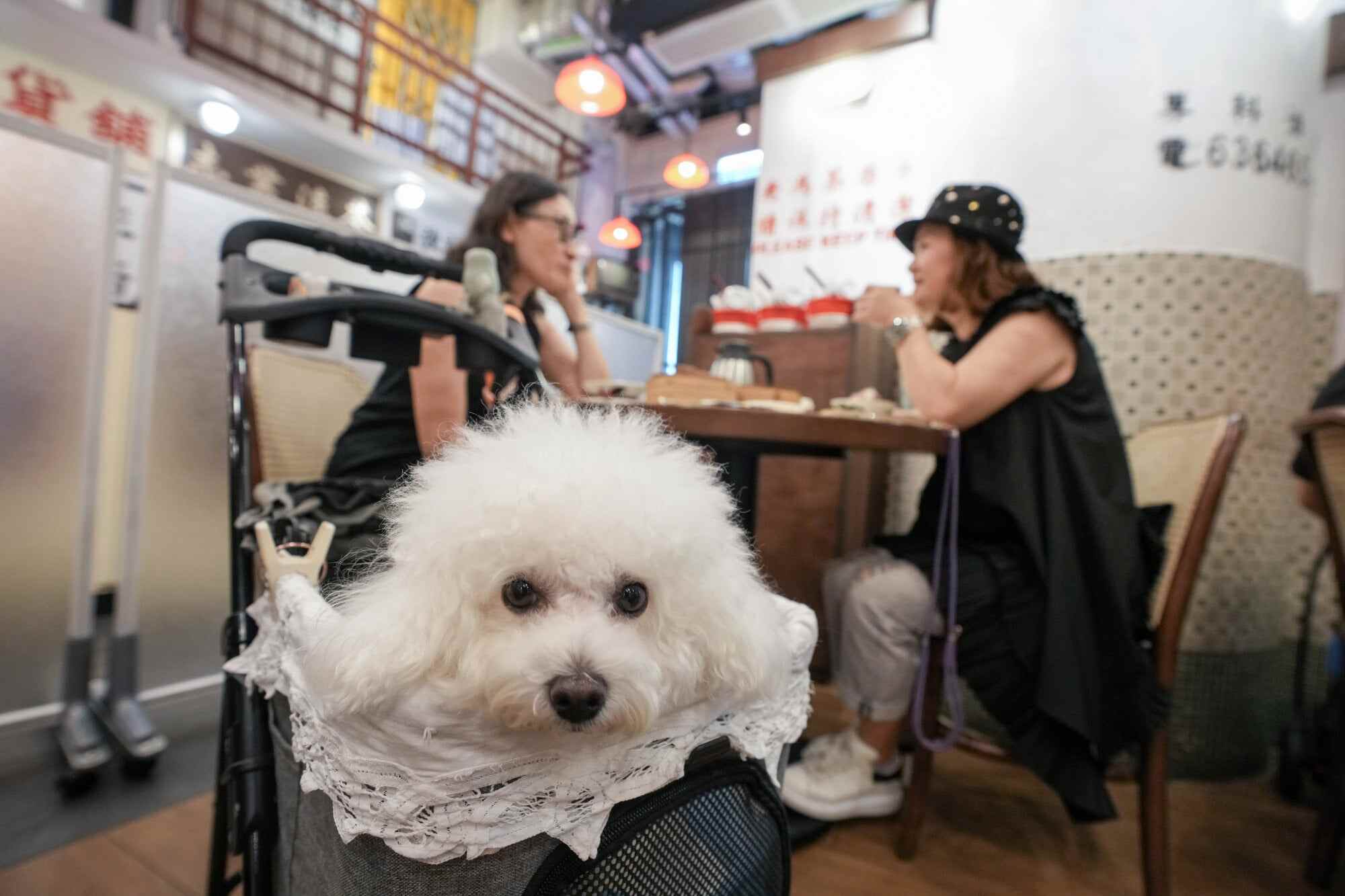
Leung said businesses should not be banned from becoming dog-friendly based on the type of food they offer because that would be unfair to those that perform well.
However, Leung admitted that many rushed to apply purely out of fear of missing out, without assessing whether their customers owned pets or whether their building’s deed of mutual covenant legally allowed dogs.
He believed that by the next round, businesses would be better prepared, having familiarised themselves with what is required to operate as dog-friendly.
According to the department list, the number of dog-friendly restaurants fell from over 940 on Thursday to 937 on Saturday, before climbing to 947 by Wednesday as more eateries received permits.
Dog-owner Damon Chan, in his thirties, told the SCMP that he has not visited any dog-friendly restaurants in the past week because of a wave of online hostility towards pets at dining venues.
“I originally thought dining out with my dog would be a happy thing, but I don’t want to feel pressured by the feeling that we are constantly being monitored [by other customers],” Chan said, adding he would feel safer to visit once those comments died down.
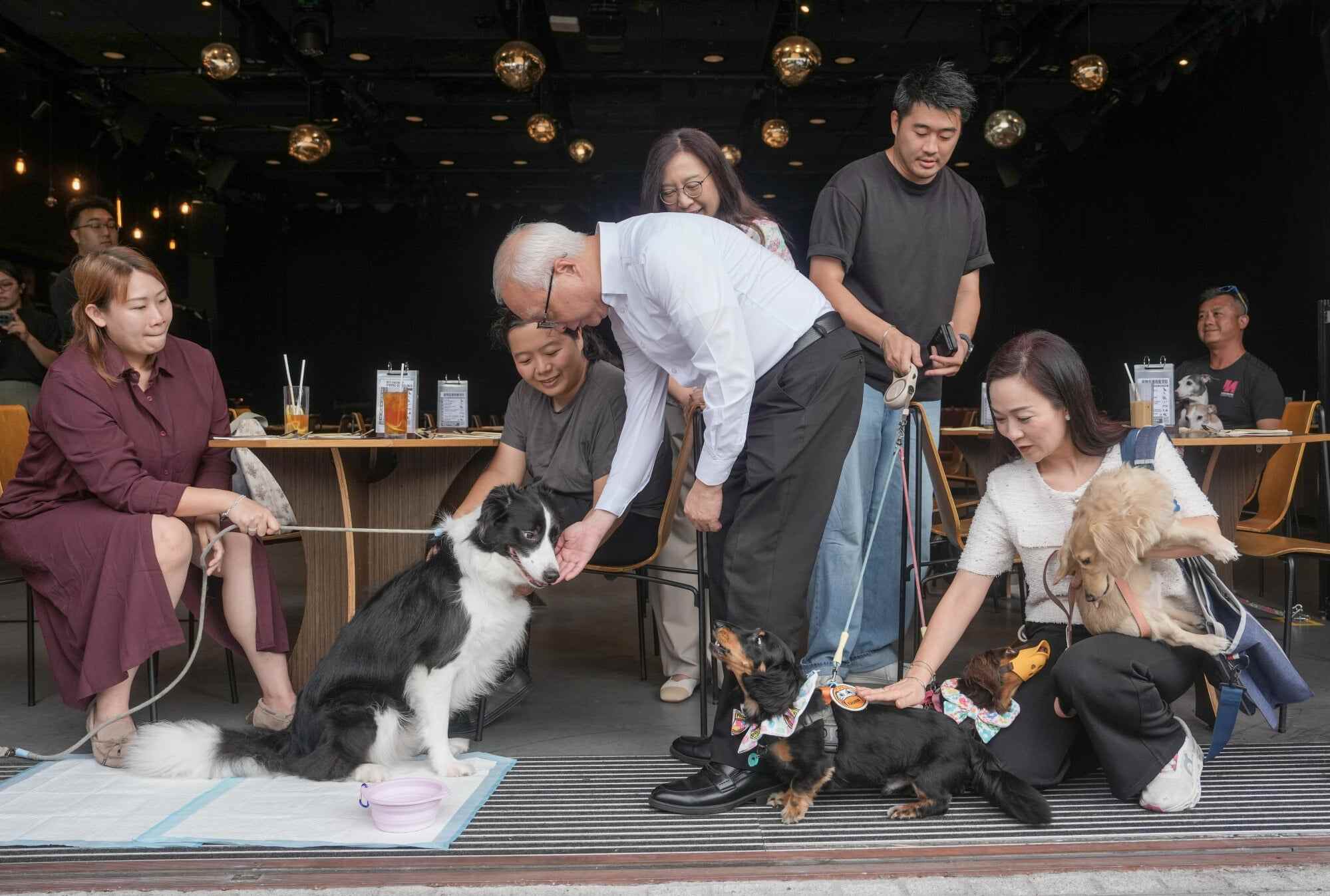
He said dog owners must exercise self-discipline and urged non-dog owners to be more understanding. “Only then can everyone dine together comfortably and happily,” he added.
Lawmaker Adrian Pedro Ho King-hong, who is also a pet owner, described the initial friction as an expected “adjustment period,” saying there was clear room for improvement.
He argued that certain venues – such as cha chaan teng, fast-food outlets and traditional Chinese teahouses – were fundamentally unsuited for animals due to their cramped layouts and high foot traffic.
However, he stressed that operators had to adapt, saying that restaurants should either redesign their space to accommodate pets or simply opt out of the scheme. “The policy itself isn’t wrong; the issue is the unsuitable hardware.”