Every week, Talking Points gives you a worksheet to practise your reading comprehension with exercises about the story we’ve written.
Tasked with writing a short story for a literature course, English major Suri Chan Tin-wing thought she lacked the vocabulary to tell a compelling story.
Because the 19-year-old did not study at a Hong Kong secondary school where English was the medium of instruction (EMI), she felt uncertain about her English as a student at the Chinese University of Hong Kong.
“I felt hesitant the moment I started writing,” said Chan, who graduated from Yan Chai Hospital Law Chan Chor Si College in Kowloon Bay.
“I questioned whether my plot would be as well-written or creative as those of students from EMI schools. I thought my writing was formulaic and lagged behind [theirs].”
Why are authorities reviewing this policy?
Following calls to transform Hong Kong into a global education hub, the city’s education authorities have said they will review the policy on the medium of instruction in public secondary schools.
The current arrangement follows a six-year cycle. Schools can use English as the medium of instruction if 85 per cent of their Form One intakes perform in the top 40 per cent of all students citywide over the past two years of the previous cycle.
Earlier this month, Secretary for Education Christine Choi Yuk-lin said she was considering relaxing this threshold and simplifying the process for schools to switch their medium of instruction.
Hong Kong has 114 EMI government and subsidised schools. The other 270 public secondary schools use Chinese as the medium of instruction (CMI) or use English to teach certain subjects.
CMI schools can conduct extended learning activities in English, or teach at most two subjects in English.
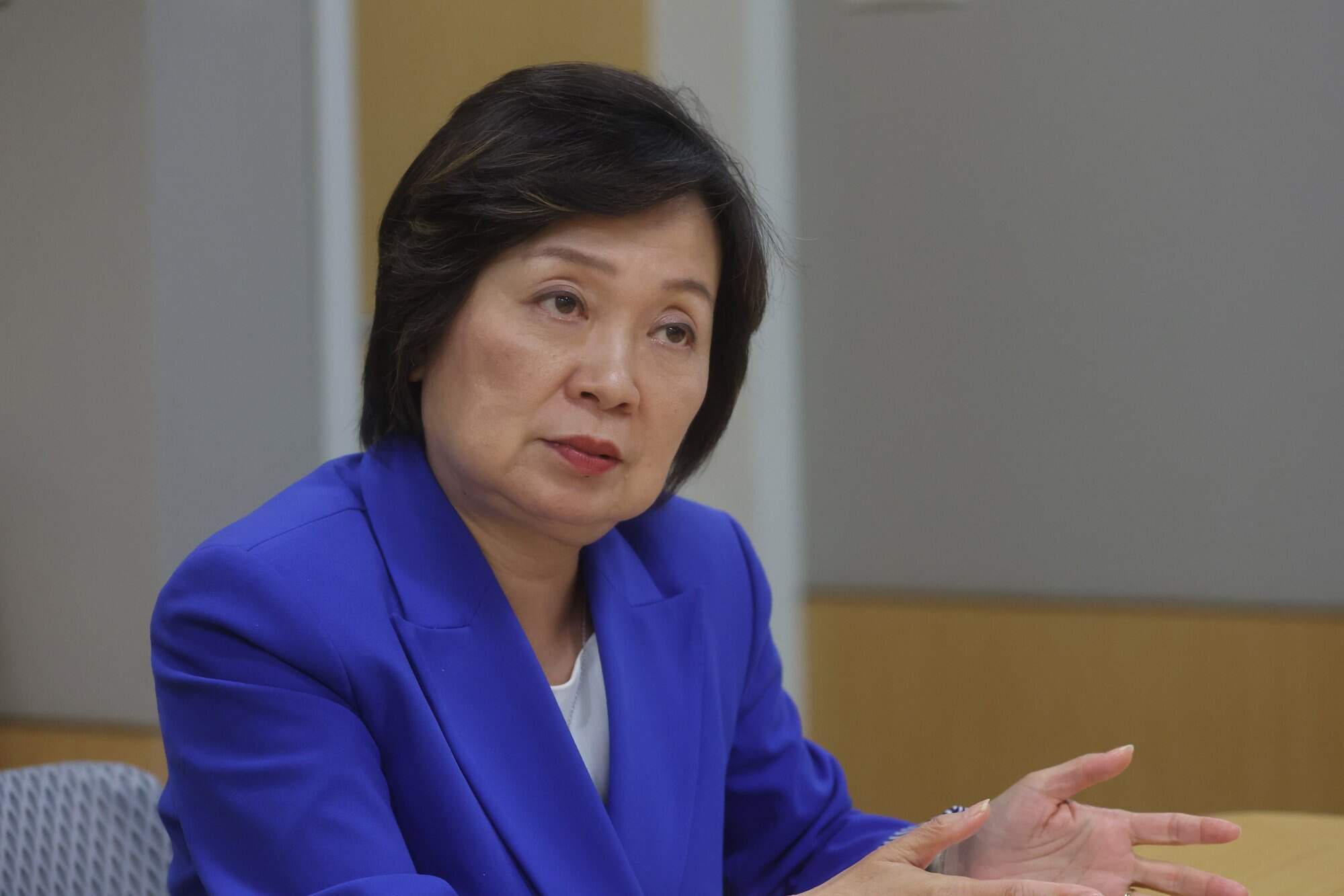
Ansley Lee Kwan-ting, who has 15 years of English teaching experience and works at a CMI school, said she supported the proposal to have more EMI schools.
She noted that Hong Kong could attract more global talent by elevating the city’s English education levels.
“Now, you have so many overseas professionals coming to Hong Kong to study,” she said.
“If you don’t strengthen English education, how will the children of mainland Chinese families ... catch up in English in Hong Kong?”
But Lee said that many teachers who were educated in CMI schools might struggle to instruct students in English.
“Despite studying in English for four years at university, the problem is that many teachers still lack the confidence to teach their own subjects in English,” she said.
“Teachers who came from CMI schools are actually quite far behind.”
Confidence for more students
For Chan, she has struggled with studying literature in university because of the subject’s complex and specialised vocabulary.
“It just takes me a lot more time to truly grasp a piece of writing,” the student said.
She wished she had studied literature and history in English during secondary school: “Even though I feel my English proficiency might be slightly better than my former classmates, being at university is different,” she said.
“They never strictly required or pushed us to read the classics back in secondary school. We mostly stuck to very basic English books.”
Apart from English class, only science subjects were taught in English at Chan’s school, so she said humanities and arts students had limited exposure to the language. She added that even in English class, teachers would switch to Cantonese during lessons so more students could keep up.
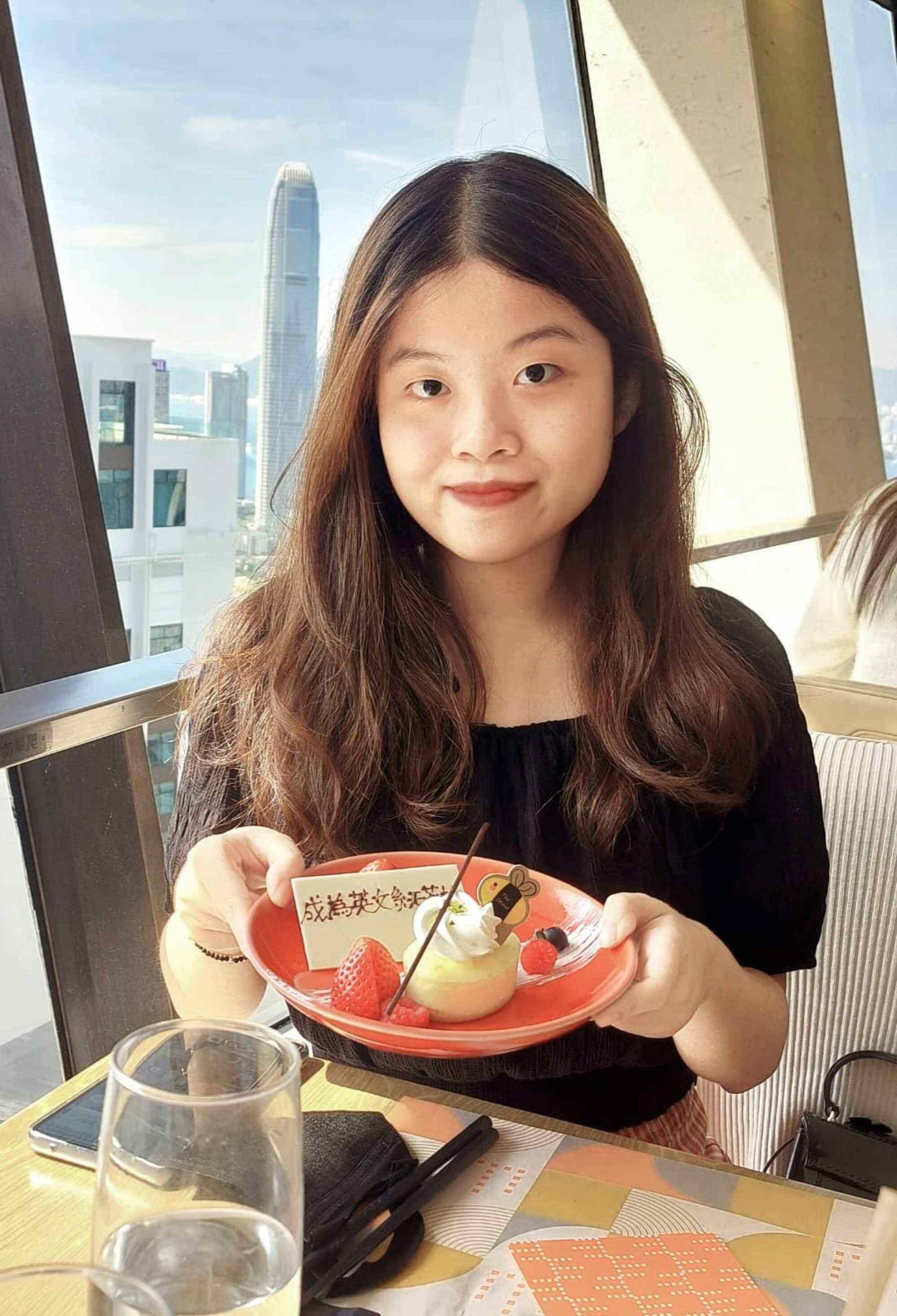
Chan said only one or two students from her school would achieve level 5 or above in the Hong Kong Diploma of Secondary Education (DSE) English examination every year. The highest possible score is 5**. Chan was the only pupil in her cohort to achieve a level 5 in the DSE’s English exam.
When preparing for the English paper, Chan recalled teachers telling pupils to avoid creative writing.
“Teachers believed our language ability and creativity couldn’t be compared with those in EMI schools,” she said. “As a result, they often encouraged us to choose argumentative essay questions or those that allowed more room for memorisation.”
Chan agreed that more secondary schools should use English as the medium of instruction to better prepare students for university, but said the transition should be gradual to avoid disadvantaging pupils with weaker English proficiency.
“Many of my friends didn’t expect English at university to be this challenging ... They are struggling in their first year, and even high-achieving students see English as their weakness,” she said. “I noticed that CMI students often struggle with academic writing or reading journal articles at university.”
She added: “If more [secondary school] subjects were taught in English, students would feel more confident.”
Now, Chan is an English tutor at her alma mater, where she has noticed pupils’ difficulties with learning the language.
“That made me want to study linguistics,” she said. “I wanted to understand what the problems were and see if I could help address them.”