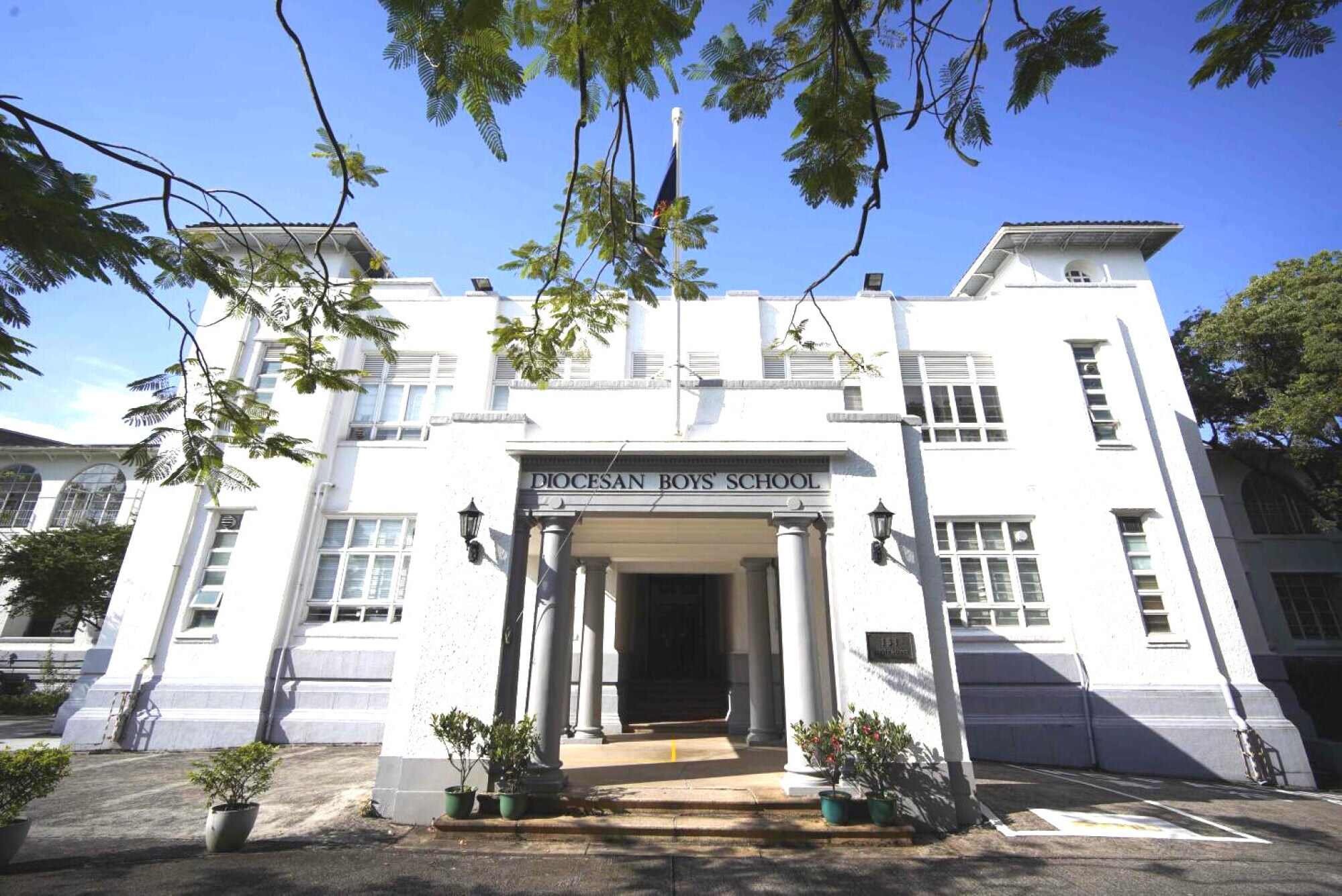
Hong Kong’s prestigious Diocesan Boys’ School is planning to introduce the International Advanced Level curriculum starting in 2027. If the school receives approval from the Education Bureau, it will become the first institution in the city to offer three university pathways.
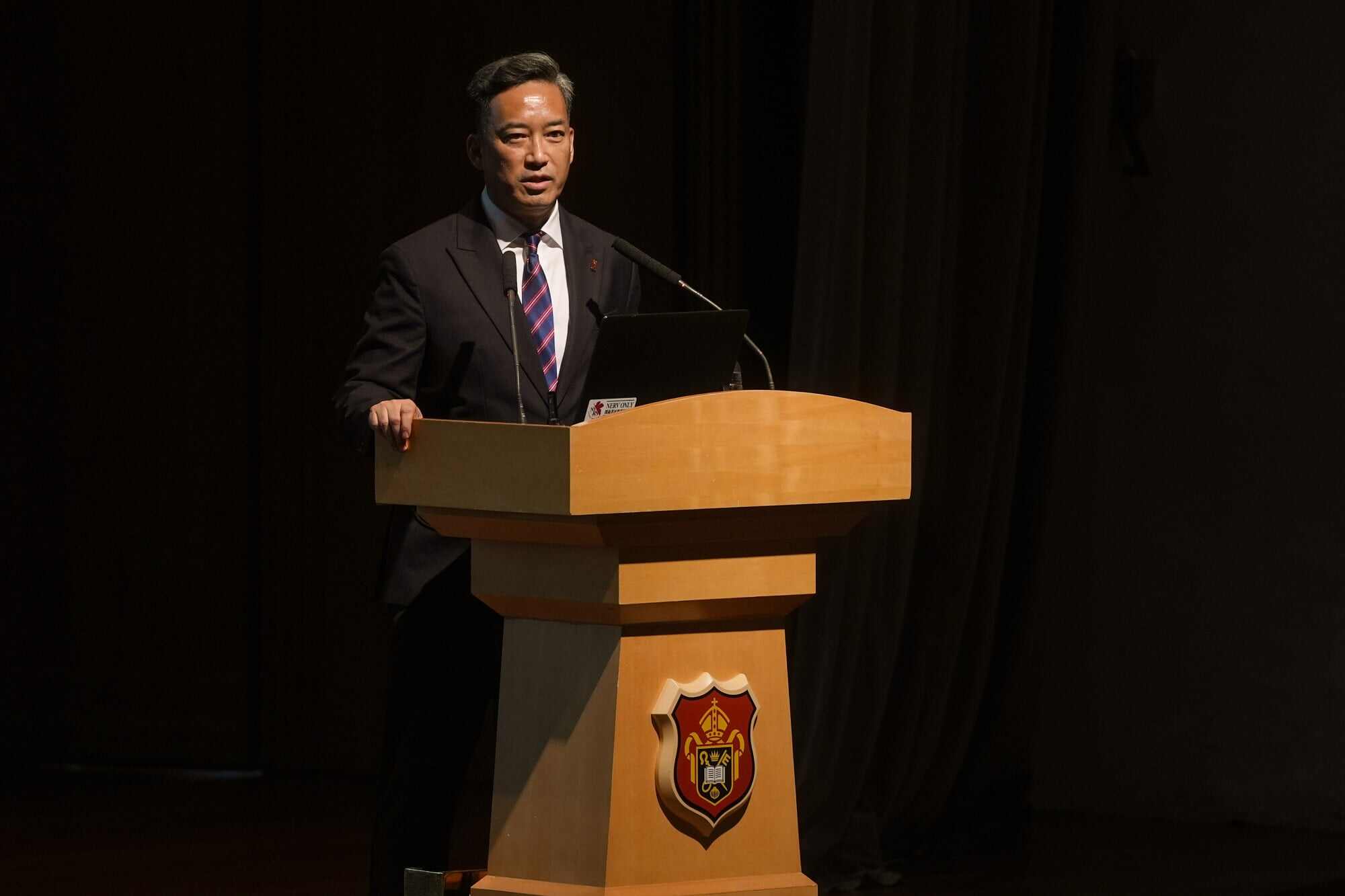
Headmaster Ronnie Cheng Kay-yen announced this development on Saturday during a Primary One admission talk at the school’s Mong Kok campus. This announcement follows the school’s approval from both Cambridge International Education and the Hong Kong Examinations and Assessment Authority.
“We are now waiting for the Education Bureau’s green light,” Cheng said.
“We are going full throttle to offer the Diploma of Secondary Education, the International Baccalaureate and the International Advanced Level,” he added.
“We have 1,400 secondary students and 900 primary students. Their learning speed, ability and direction are very different. We should strive to find ways so they can find a suitable learning model.”
Cheng said Form Three students in the 2026-27 school year, which starts next Tuesday, were expected to opt for the Diploma of Secondary Education (DSE), International Baccalaureate (IB) or International Advanced Level (IAL) curricula.
DSE is the city’s main university entrance pathway, while the IB and IAL are internationally recognised curricula.
The South China Morning Post earlier reported that Hong Kong public universities admitted a record number of students applying outside the local DSE exam system, jumping by 63 per cent from 2,706 in 2019-20 to 4,401 in 2025-26.
Meanwhile, the intake of home-grown students taking the DSE exam dropped by 7 per cent, from 12,355 to 11,503 over the same period.
Samuel Chan Sze-ming, founder of education consultancy Britannia StudyLink, said parents weighing the three curricula must balance international competitiveness against their child’s individual suitability.
He noted that the DSE showed weakness in overseas university applications and was better suited for students who performed well in rote memorisation.
“The DSE is newer compared with the IB and A-levels, and it can be seen as more of a spoon-feeding curriculum in overseas university applications,” he said.
Chan described the IB as more comprehensive, blending science and humanities through a project-based approach. But he cautioned that its framework required strong time management and self-discipline.
“It suits well-rounded students, but not those who struggle to balance different areas,” he said.
The IAL was better suited for students who excelled in specific subjects while avoiding weaker areas, Chan said.
“It has become a popular choice for students seeking a different route into top local universities through the non-JUPAS pathway,” he said, referring to the centralised system for local students applying to full-time undergraduate programmes.
He added that the IAL’s modular structure allowed students to pick subjects that matched their strengths, offering greater flexibility.
“If more Hong Kong Direct Subsidy Scheme schools follow the lead of institutions like Diocesan Boys’ School and embrace IAL, I believe Hong Kong will become more internationally competitive,” he said.
Currently, non-local curricula are offered at 53 international schools, eight private independent schools and 21 semi-private local schools in Hong Kong.
Florence Yu, whose elder son is enrolled in Form Two at the Diocesan Boys’ School, said she was glad to see the school offering more options.
“It’s up to him to choose the curriculum, whether he wants to enrol in local [universities] through the DSE, or he wants to challenge himself and try the IB or even IAL. More options are always better,” the mother in her thirties said.
But Yu noted that competition for admission into the school’s IB programme was intense.
She added that teachers would observe students’ academic performance and personality, and advise them to pick a suitable curriculum, noting that the IB and IAL might better align with overseas universities.
Another parent, surnamed Tsang, whose son is nearly five years old, said having more curriculum choices increased the school’s appeal.
His wife, surnamed Chau, said it was too early to tell which curriculum would suit her son, as circumstances could differ in nine years, such as the popularity and international recognition of the curricula.
She added that her child’s interest in certain subjects, and his language as well as time management skills, would also affect his choice.
The Education Bureau said on Saturday evening that it had received the application from the school and was reviewing it.