Crowds could be seen early last Saturday morning at Ap Lei Chau Park. Residents and visitors alike had gathered by the waterfront promenade on the island’s northern coast to celebrate Hung Shing, the God of the South Sea.
The deity’s birthday is celebrated throughout Hong Kong every year on the 13th day of the Chinese calendar’s second month.
On Ap Lei Chau, an island just off Hong Kong Island that looks over Aberdeen Harbour, this takes place as a weeklong cultural festival that organisers hope will both support the community and invite newcomers to witness century-old traditions.
Once home to a small fishing village, Ap Lei Chau is now one of the most densely populated islands on Earth. The Ap Lei Chau Hung Shing Cultural Festival has grown to become one of the Southern district’s most prominent events.
The festival is organised by Tung Hing Association Limited. The NGO is dedicated to preserving Ap Lei Chau’s cultural heritage: serving its residents, promoting charities in the area and maintaining and revitalising local customs and religious traditions.
This year is the event’s seventh overall, with a programme featuring opening and closing ceremonies, the blessing of water lanterns and dragon boats, a lion dance, Operas for Deities and a parade. Organisers hope this will help younger generations appreciate customs that have over 100 years of history.
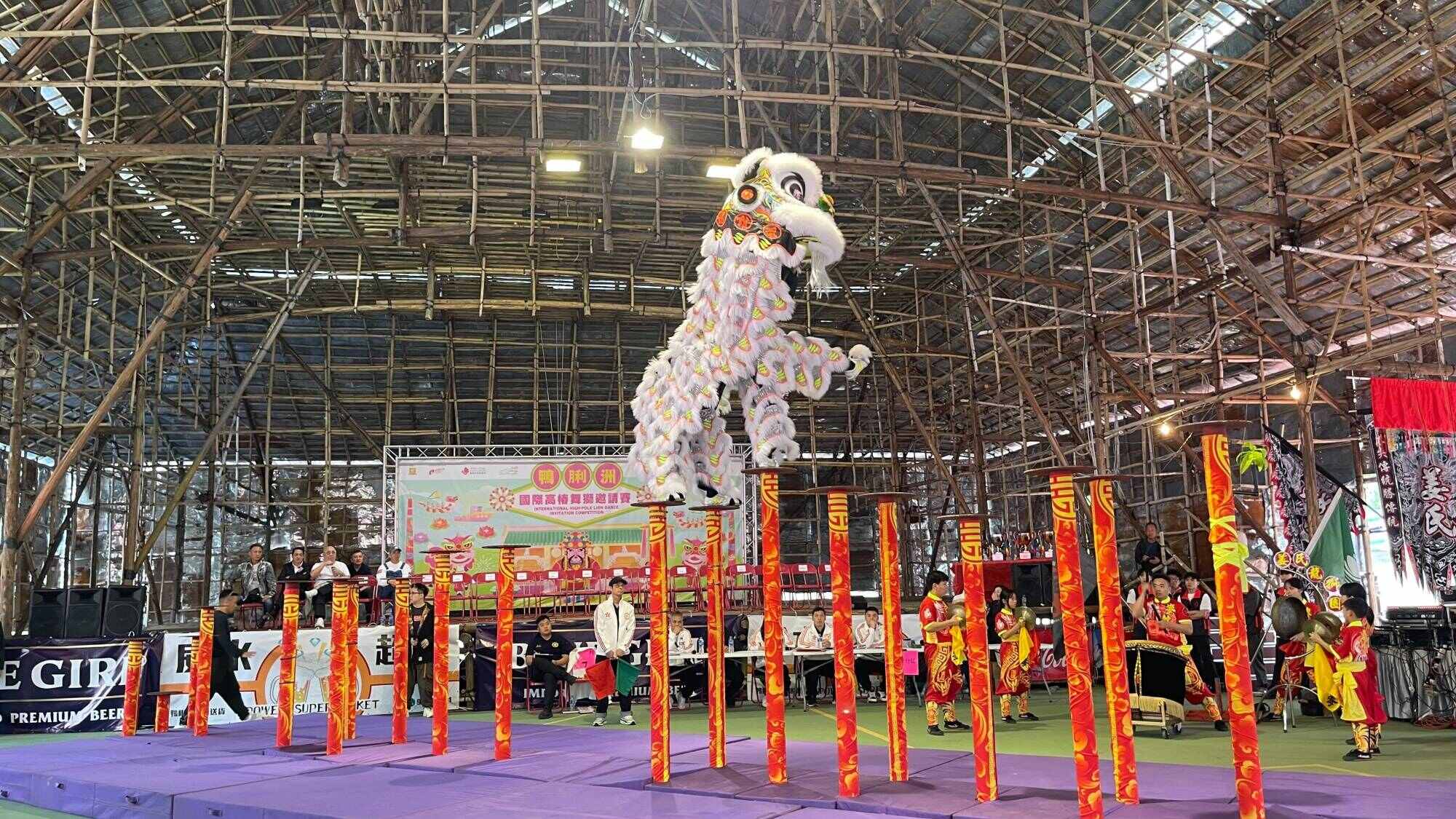
God of the South Sea
Hung Shing is believed to have been a real government official named Hung Hei who served in present-day Guangdong province during the Tang dynasty (618-907). A skilled mathematician and astronomer, he established an observatory to help fishermen predict the weather. This saved lives, and he was deified as a protector of seafarers.
The worship of Hung Shing is deeply rooted in Hong Kong’s early fishing communities. As the fishing industry grew across the Pearl River Delta, so did the number of temples dedicated to Hung Shing.
Believers regard the god as a guardian of sea traders and travellers. Before setting sail, upon returning or when launching a new boat, fishermen pray to him. They also place Hung Shing statues or mirrors on their vessels to protect them during voyages.
Praying to and entertaining the gods
In Hong Kong, there are around 11 Hung Shing temples that are declared monuments or graded historic buildings.
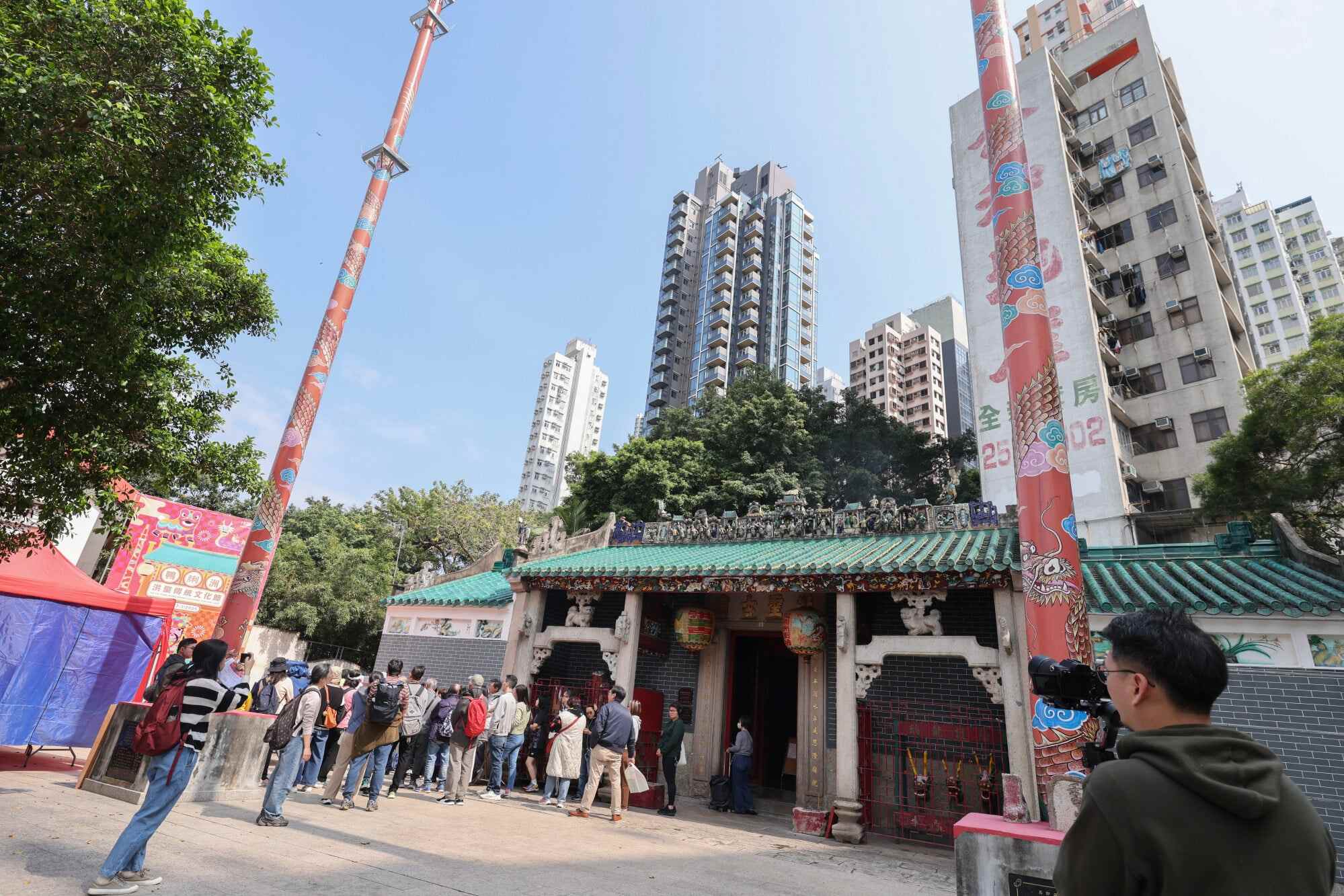
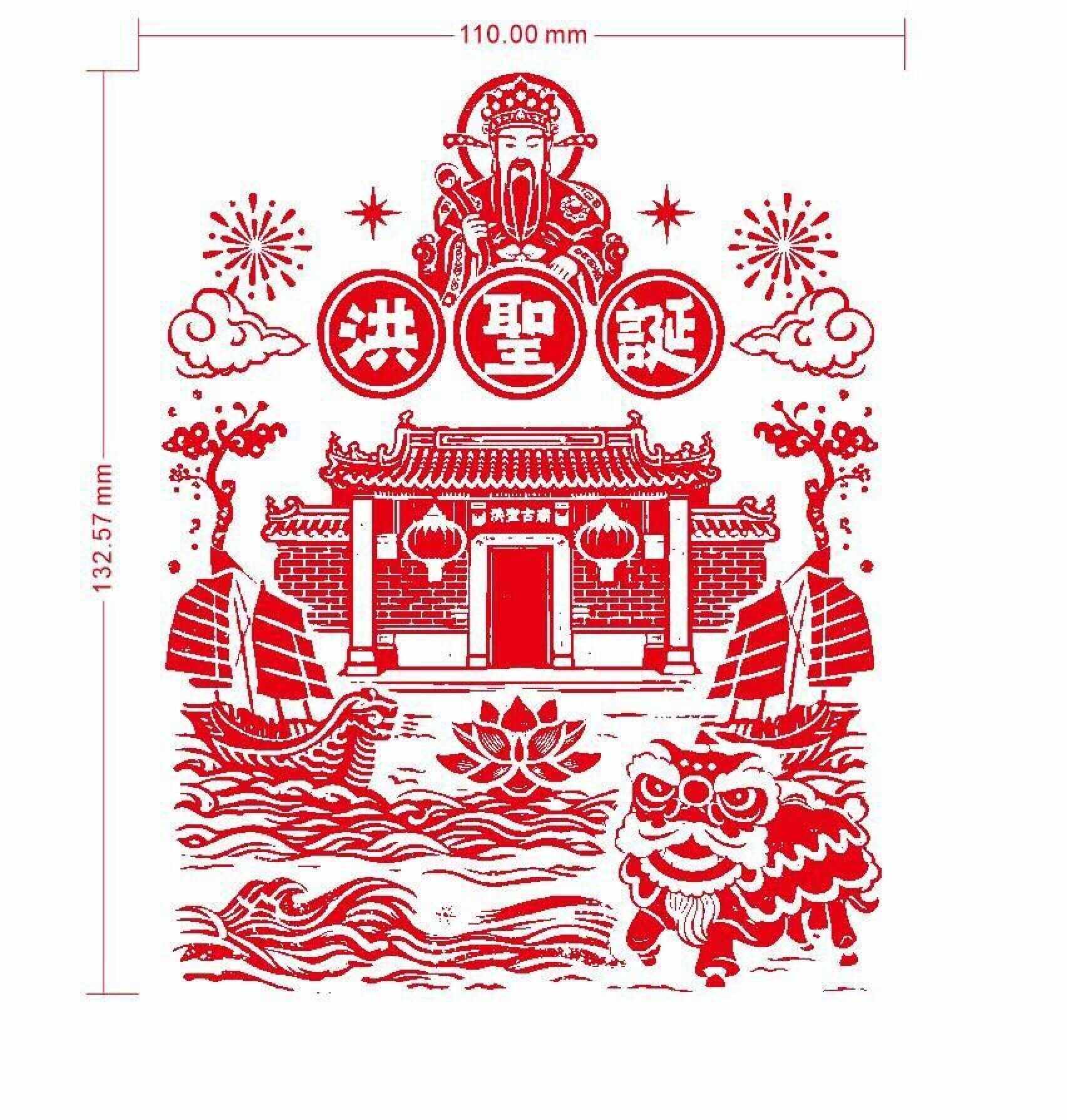
The Hung Shing Temple in Ap Lei Chau, declared a monument in 2014, is thought to have been built in 1773. It once stood on a small island only accessible by a wooden bridge at high tide and on foot at low tide.
Today, after various reclamation projects, the temple is now in Ap Lei Chau Park. It retains its original feng shui position – facing the sea and backed by mountains.
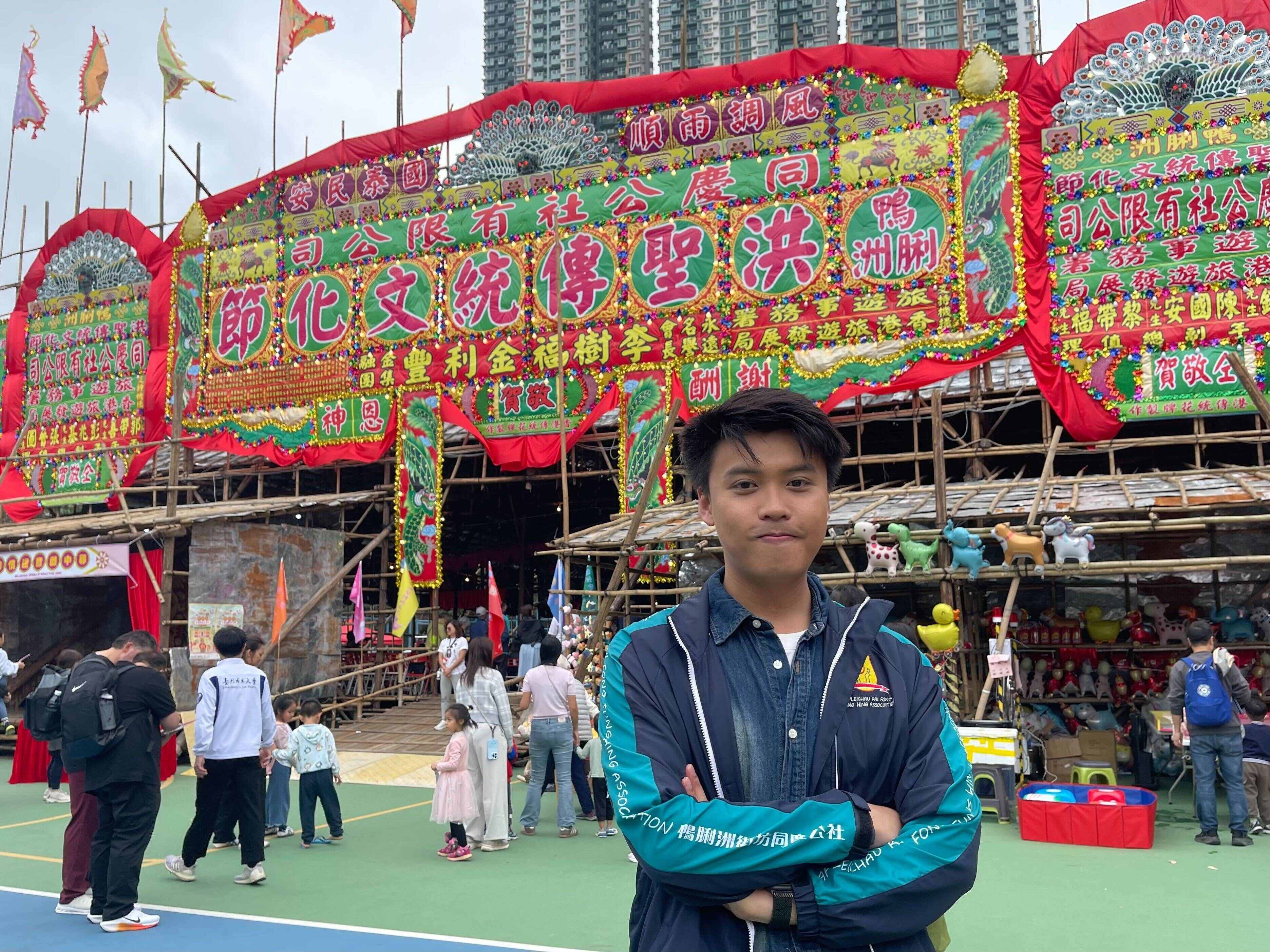
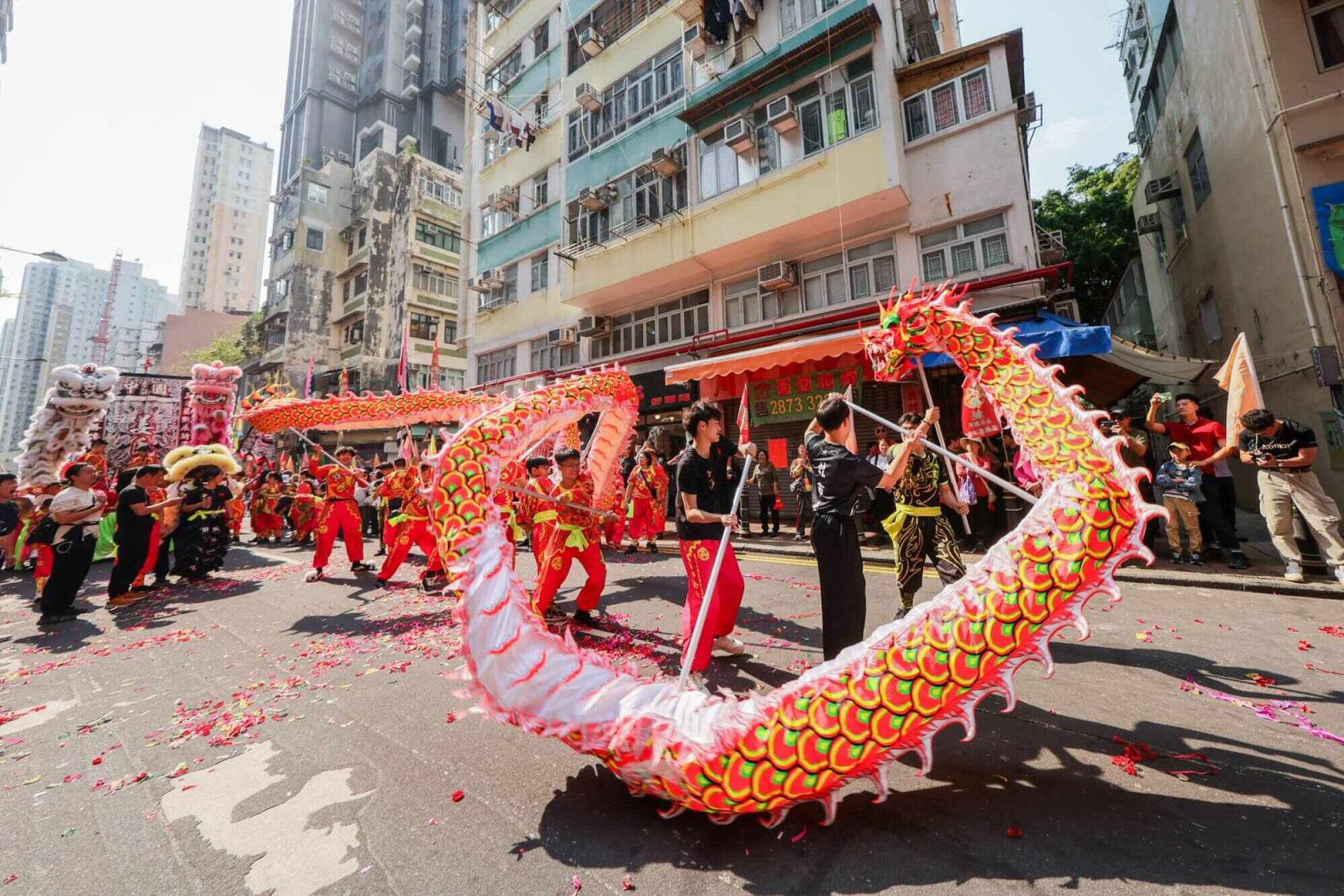
During the Hung Shing festival, Ap Lei Chau Main Street transforms into a parade ground. On Sunday, 16 teams took part in a procession complete with drums, folk dance and lion and dragon displays.
Earlier in the morning, visitors released lotus-shaped water lanterns into the sea, passing birthday wishes to Hung Shing and praying for misfortune to be removed.
Starting this Friday, a series of special Cantonese opera shows, Operas for Deities, will be staged to entertain the gods.
Passing old customs on to a new generation
Derek Lee Ka-kiu, manager of the Tung Hing Association Limited, said he hopes to broaden the festival’s appeal.
“Our goal is to continue preserving and promoting traditional culture and its unique heritage to both residents and tourists,” the 28-year-old said.
Interactive workshops and booths were arranged in collaboration with other organisations, including the Hong Kong Young Ambassador Scheme.
“We hope to promote not only Hung Shing and lion dance through these activities, but also [other] elements of intangible cultural heritage,” said Jackson Hung Kin-hang, a 21-year-old volunteer with the scheme.
To pass on old customs to new generations, participants in the workshops can learn to make traditional handicrafts such as a marquis hat, a Chinese opera prop, and a lion dance lantern. They can also explore screen printing.
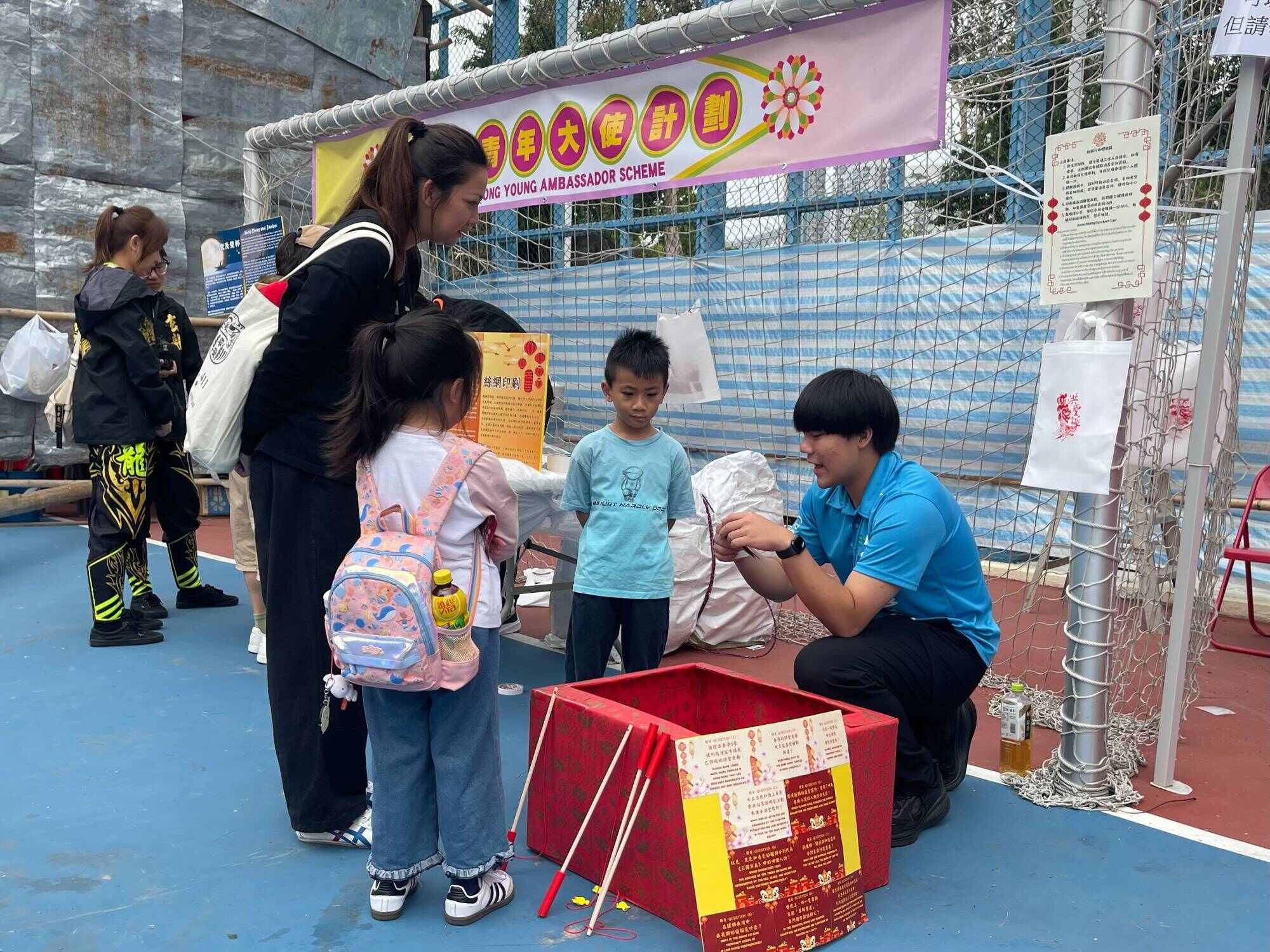
A highlight this year is the opportunity to try on exquisite Cantonese opera costumes and headpieces, and a lion dance experience workshop where participants can take on different roles in a troupe, learn basic dance and martial arts movements and immerse themselves in the unique art form.
Lee said: “All these activities aim to attract young audiences and help them learn about traditional cultures.”
Katie, a 12-year-old Ap Lei Chau resident who asked not to share her full name, said she has attended the festival three times after first learning about it through a street parade.
“Through the festival, I learned about traditional customs, such as the water lantern night, which is something I hadn’t known before,” she said.
Mimi Parker, a seven-year-old who grew up in Ap Lei Chau, said she returned to the festival “because it was fun”.
“I know more about this culture by coming here,” she said. “I like watching the lion dance, and I joined the [lion dance experience] workshop.”
Traditionally, parades and rituals were held on Hung Shing’s birthday, but organisers adjusted the festival schedule to attract more visitors. To broaden its reach, the festival has added English translations to booths and promotional materials.
“We hope that, in addition to local residents, overseas tourists and expatriates in Hong Kong can also learn about it,” Lee said.
The Ap Lei Chau Hung Shing Cultural Festival began on March 15 and will run until April 1. Upcoming events include a cultural tour of Ap Lei Chau landmarks, including the Hung Shing Temple, water lantern nights and workshops.
Renowned performer Joyce Koi will stage 11 classic Cantonese opera tales from March 27 to 31, with shows at 1pm and 6.45pm. To see details and timings for all events, head to Ap Lei Chau Tung Hing Association’s Facebook page.