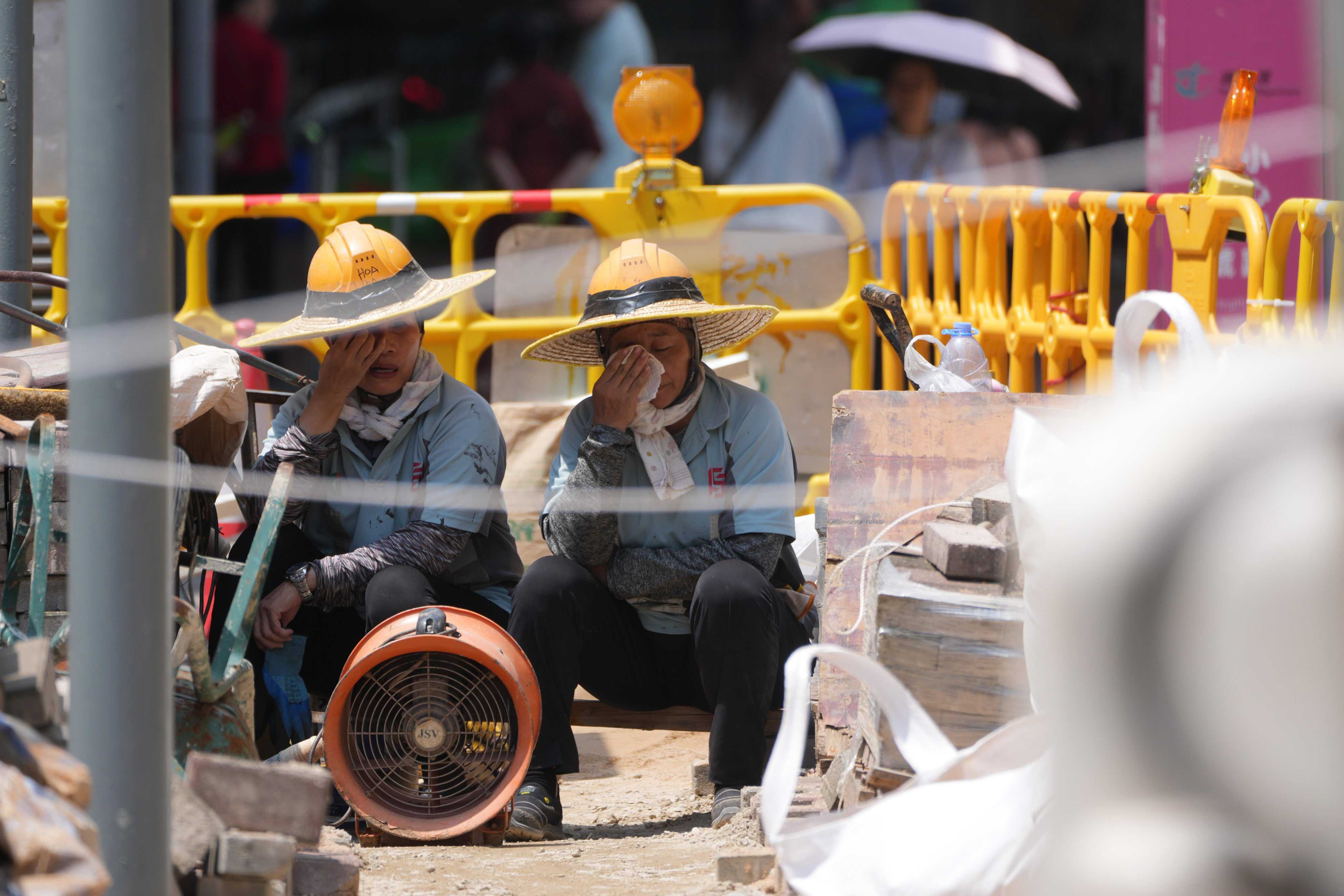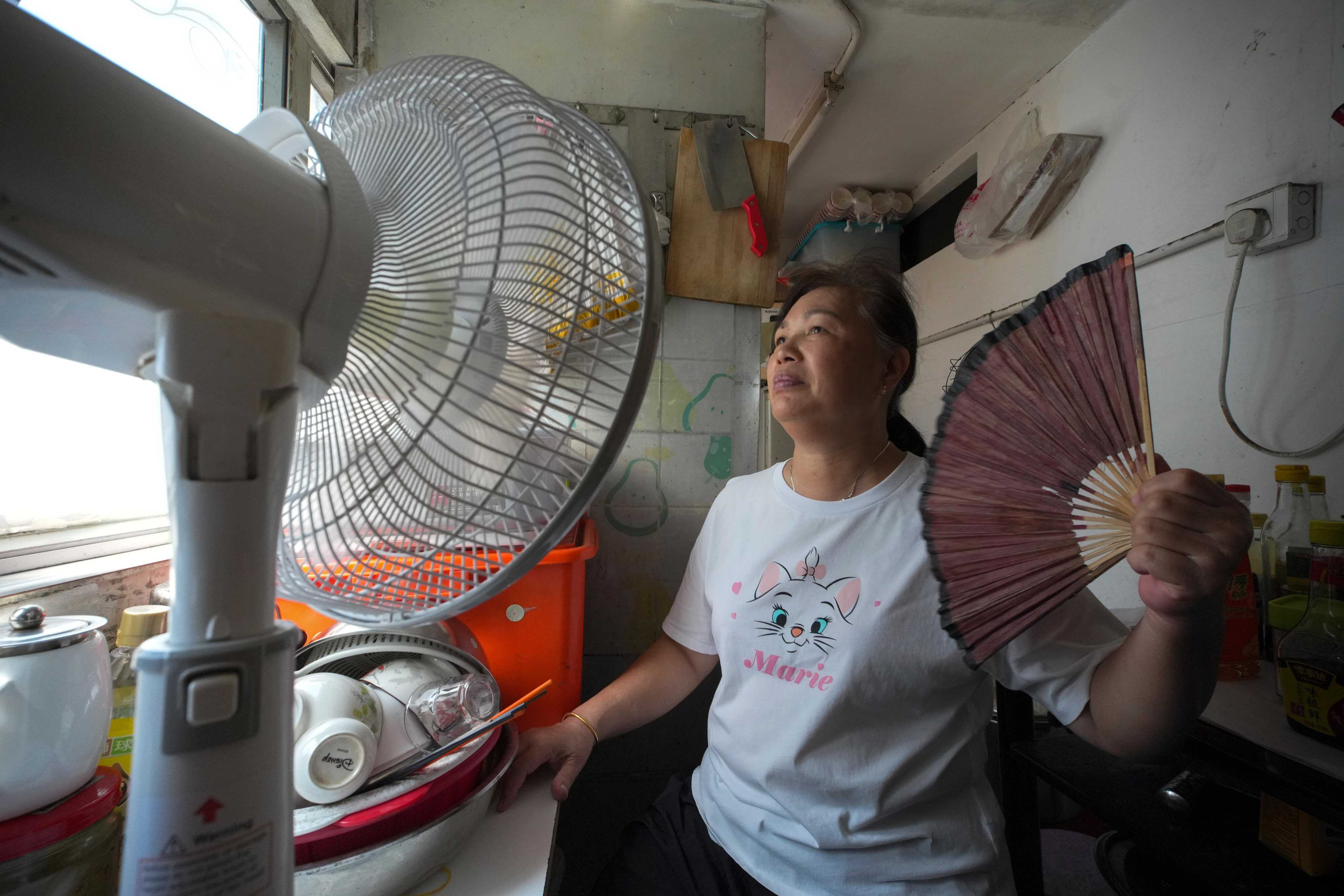
Heat levels inside subdivided flats and rooftop huts in Hong Kong soared to an extreme 52.21 degrees Celsius (126 degrees Fahrenheit) this summer. A survey published on Sunday revealed that 80 per cent of residents living in these conditions experienced symptoms such as dizziness and headaches.
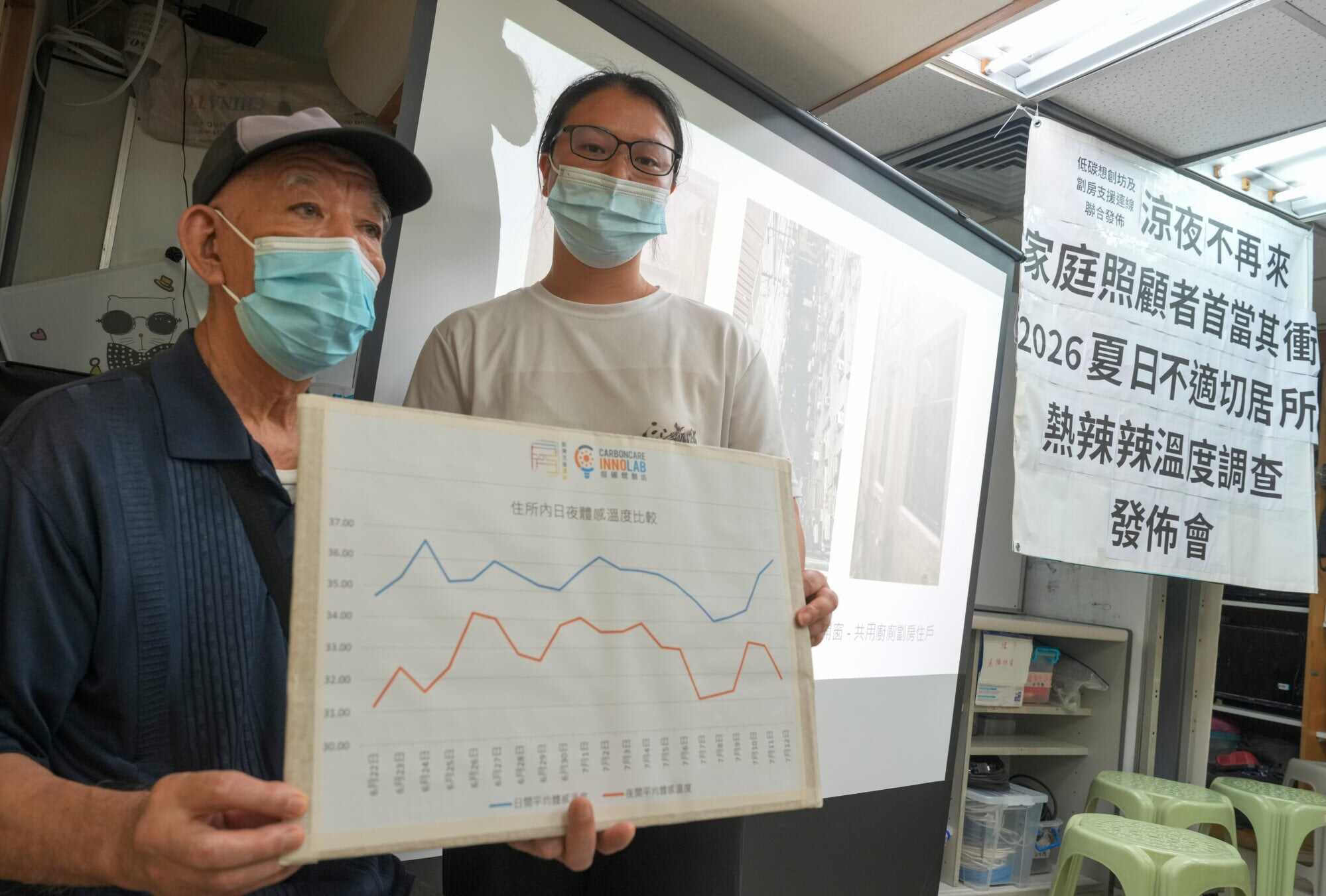
The research, carried out by CarbonCare InnoLab in collaboration with the Concerning Subdivided Units Alliance, involved 86 households across nine districts from June 22 to July 12. Of these, 78 households were living in subdivided flats or rooftop huts, among other substandard housing options.
It measured “apparent temperatures” – referring to how hot people actually feel, taking humidity into account – which averaged 35.58 degrees in the daytime, with the highest of 52.21 degrees recorded in a subdivided flat, the survey found.
Average temperatures reached 29.93 degrees during the day and 29.42 degrees at night, both exceeding the Hong Kong Observatory’s threshold of 28 degrees for a “hot night”.
According to the Observatory, the monthly mean temperature for July, recorded at its headquarters in Tsim Sha Tsui, was 28.7 degrees. The heat persisted on Sunday, with the highest temperature reaching 34 degrees.
Homemakers, who made up 48 per cent of the households surveyed, were the most affected group, with about 83 per cent saying they often or always felt fatigued.
About 80 per cent of them reported at least one heat-related physical symptom, including feeling very thirsty, dizzy and having a headache, while 69 per cent said the heat in their homes affected their mood.
Among all respondents, 70 per cent said that their sleep quality had been affected, and 74 per cent reported heat-related discomfort.
Families in inadequate housing paid an average of HK$3.90 (50 US cents) per square foot in electricity charges over the summer, nearly twice the HK$1.90 per square foot paid by public flat tenants.
Liu Qingzhu, a 58-year-old security guard, said she was paying more than HK$1,000 a month for electricity during the summer – about 10 per cent of her monthly income.
That was on top of the HK$3,250 rent for her tin-roofed home on a rooftop in Kwun Tong, which she shares with a flatmate.
“It’s very expensive to turn on the air conditioner, but I have to. I would die of heatstroke if I did not,” she said. “But it does not cool me down much because it is simply too hot in here with the metal roof.”
Ventilation was also poor because she had to keep the windows closed to keep out rats, she said.
To save money, she sometimes lingered in air-conditioned shopping centres while waiting for her 12-hour shifts to begin.
“The government should provide electricity subsidies to poor people like us. I’m left with almost nothing after paying my bills, rent and commuting costs.”
Sai Wan Ho resident Ah Kam, who did not disclose her full name, lives in an 80 sq ft subdivided flat with her family of three, spending most of her day in a community living room to enjoy the air conditioning.
“[My flat] is really hot – it is just like a steamer,” she said, adding that she often felt dizzy and irritable at home, and that her daughter had developed heat rash because of the conditions.
After the facility closed at 10pm every day, Ah Kam had to return home and run the air conditioner until 2am or 3am to fall asleep, which cost her HK$400 in electricity per month during the summer.
She said she paid about HK$4,500 in bills for rent, electricity and water each month, which was about one-third of her income.
Kwok Hiu-chung, a senior programme manager at CarbonCare InnoLab – an NGO promoting climate action – said the findings reflected the “cruel reality of heat injustice”, with those who contributed least to carbon emissions bearing the most extreme heat exposure in the worst-conditioned homes.
“Indoor heat is no longer a housing issue, but a shared crisis of climate adaptation, public health and social protection,” he said, noting that the government should put “health adaptation” for the grass roots into core considerations of their climate footprint.
The two groups are calling on the government to mandate insulation, shading, ventilation and necessary cooling equipment as part of the minimum living standards for basic housing units.
Dr Terry Leung Ming-fung, director of the Hong Kong, Macau and Taiwan programme at Oxfam Hong Kong, said energy subsidies would be the most helpful form of support for tenants living in inadequate housing.
He said the NGO had provided cooling paint and window film to households in subdivided flats to help them cope with the heat, but these were only temporary fixes.
The organisation had also come across windowless “shoebox” homes where it was impossible to install air conditioners.
“Before Hong Kong successfully phases out all inadequate housing, we have to ensure that tenants have fair access to air conditioning during this transitional period, as it is the most effective way to mitigate the effects of extreme heat,” he said.
Hong Kong’s energy suppliers previously launched a HK$1,000 subsidy for some tenants of subdivided flats.
But Leung noted that people living in illegal structures, such as rooftop huts and units in industrial buildings, would still need help from NGOs. They are also not eligible to use community living rooms.
“Energy subsidies should become part of targeted poverty-alleviation measures, given that tenants of subdivided flats are already one of the target groups, especially as the weather gets increasingly hot,” he said.