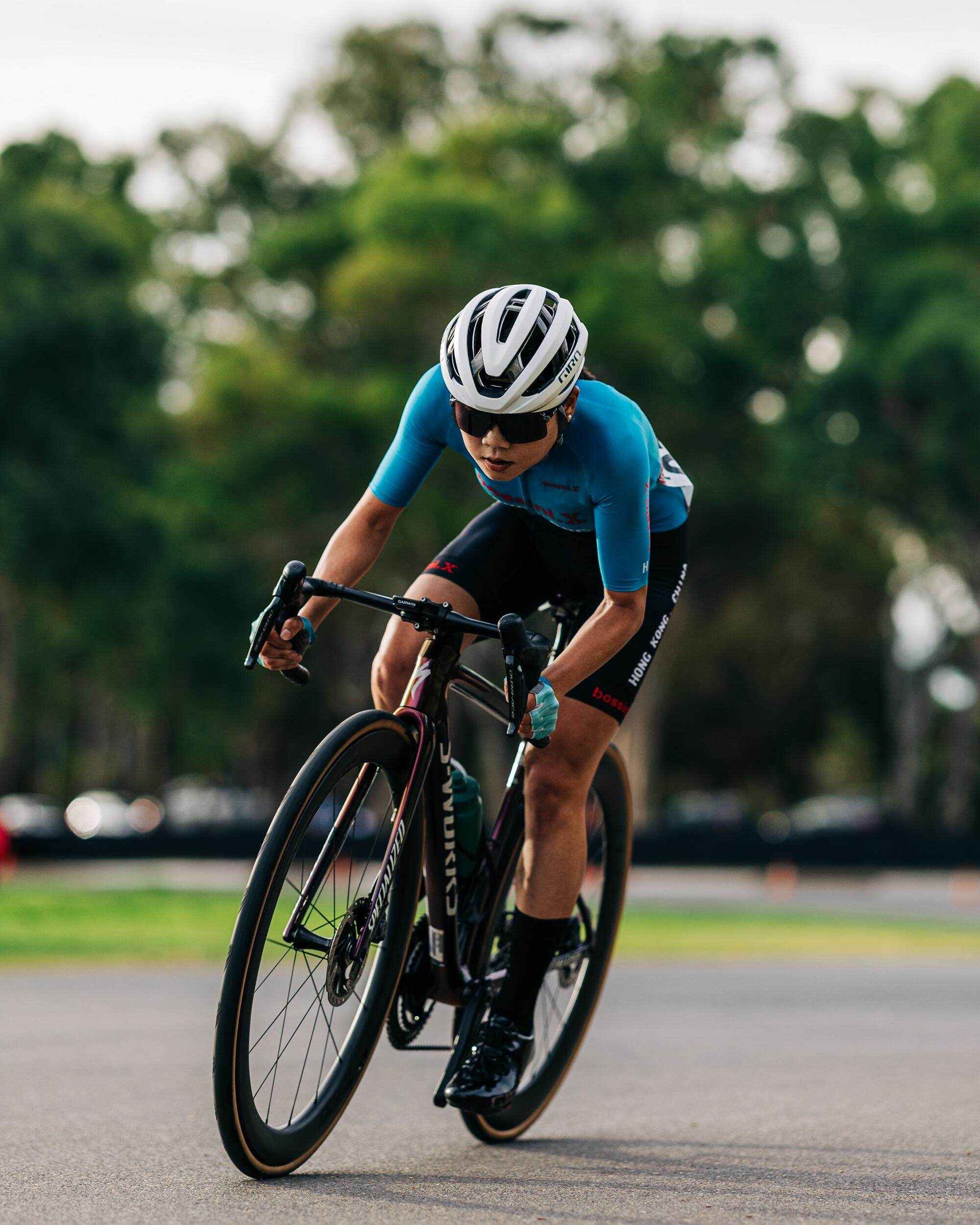
Four years ago, Hong Kong cyclist Chloe Leung Wing-yee was devastated after the 2021 National Games road race.
“I spent the whole year preparing carefully for this, but in the end, I found that I was completely useless,” the 29-year-old told Young Post.
Even though her teammate Ceci Lee Sze-wing won gold, Leung said she hit a “mental low point” when the race route she had been training for switched to a completely different terrain.
Leung – who said this event might have triggered mental health issues she already developed during the pandemic – recalled thinking: “What have I been doing here all year?”
But even in the months it took her to recover from her lowest point, Leung was steadfast in her love for cycling.
“It was very conflicting – wanting to ride but also wanting to avoid being hurt by it,” she said.
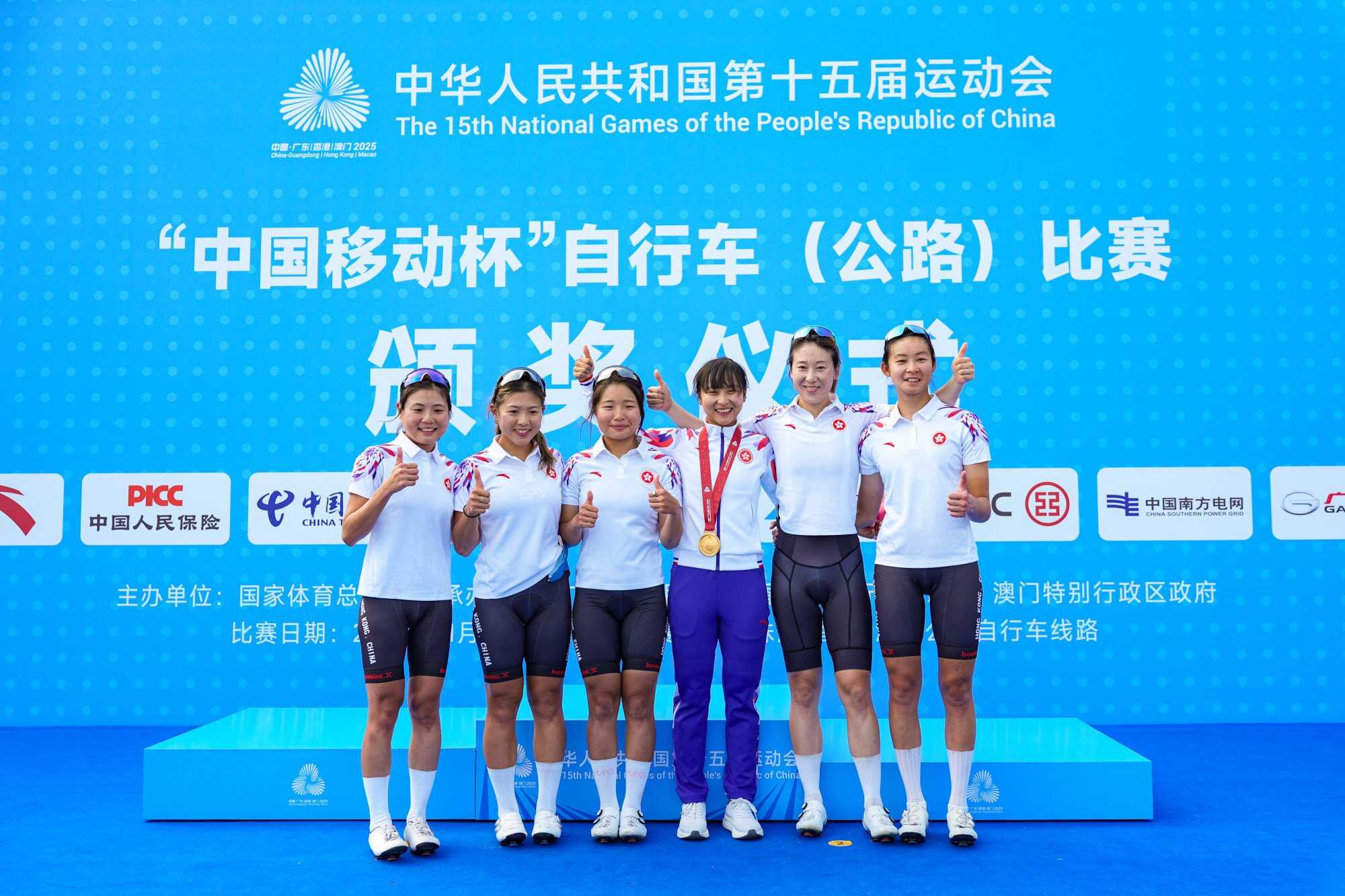
Last week, in the same race that once nearly broke her, Leung delivered what she called a “perfect race”, playing a key role in helping her teammate Lee defend her gold at this year’s National Games.
“This time, I felt much more relaxed. I knew exactly what I had to do, and every teammate had a clear role. We just needed to execute. And we did,” Leung said.
The race was tense in the second half when their rivals launched repeated attacks, she said.
“But I knew if we could chase down the breakaway, Ceci would win. She positioned herself perfectly and took the victory,” Leung said.
“I was so happy when I heard her scream over the radio that she won ... We all trusted each other completely.”
Leung explained how road racing required team members to work together.
Every course favours different types of riders, such as sprinters who can accelerate to the finish line, climbers who specialise in high inclines and time trialists who can keep high speeds for long periods.
“There’s a team behind that win – helping with pacing, shielding from the wind, leading sprints [and] fetching bottles. Everything is teamwork,” she explained.
On Sunday afternoon, Leung and Lee clinched a gold medal at the Madison track cycling event in the Hong Kong Velodrome.
“Racing on a track I know so well gives me a sense of comfort and safety. I’m familiar with everything: the venue, the environment [and] even the little details,” Leung said.
A battle off the track
After her slump in the 2021 National Games, Leung recalled that it took her about three to four months to recover.
“When I got back to Hong Kong, it was my birthday. I was training that day, and I just broke down crying on the bike,” she said. “I told my coach that I still wanted to ride, but in this condition, I couldn’t train properly. So he let me stay in Hong Kong to recover gradually.”
While her teammates continued training in mainland China, Leung took a break.
In this sport, coaches often emphasise stoicism, but Leung believes athletes do not always need to be tough.
“During races, I can focus and do what I need to do, but after a race, my way of releasing emotion is often through crying,” she shared.
She said she used to bottle up her emotions when she was under Shen Jinkang, the former Hong Kong coach who led the team on the world stage for three decades.
“He emphasised toughness, like, ‘You have to stay strong’ and ‘Don’t let emotions affect you’. That made me too afraid to share how I was actually feeling – fear, pressure [or] anything,” Leung recalled.
The cyclist added that this had changed since Herve Dagorne became the head coach last year. To alleviate stress, Leung now speaks more openly with psychologists.
“In the past, I thought that talking about these things would make me look weak. But now, I even talk to my coach about it when I’m lacking confidence or struggling mentally,” Leung said.
Persistence and intuition
While other cycling stars like two-time Olympian Sarah Lee Wai-sze are known for their powerful ascents to success, Leung is a slow but persistent learner.
“Unlike some teammates or others who can figure out race tactics or pacing after just one or two competitions, I need much longer. I have to keep trying, failing and slowly figuring out what suits me best,” she said.
Leung added: “I wouldn’t say I have outstanding talent, but I’m very tough – I can endure.”
Despite not making it to the 2024 Paris Olympics, Leung spent the last year attracting attention with stellar international performances.
At the UCI Road World Championships in September, she placed 22nd in the women’s time trial and 39th in the road race – the first among the Asian competitors to finish.
Leung’s grit traces back to her childhood spent riding bicycles with her father in Tai Mei Tuk. She first learned to balance on a two-wheeler at just three years old.
“I was quite slow back then, and sometimes, he’d give me a little push to go faster. But I hated being pushed, so I’d force myself to keep up on my own,” she said.
Besides her persistence, Leung has also been praised by the head coach for her sharp tactical sense. As the third-oldest member of the women’s team, Leung said years of trial and error helped her develop her intuition.
“Sometimes, I’ll fake an attack just to throw off opponents – pretending to break away but actually setting up things for my teammates,” Leung said.
Cycling involved a battle of will, she said, adding that mental strength was what truly defined a cyclist.
“When things get painful, do you still push on? That’s the key for me ... What truly matters is what’s going on in your mind during the race,” she noted.
“Whenever I feel like I really can’t go on, I tell myself: ‘Just hold on for one more second or one more push – 10 more metres. Keep pedalling a bit more.’ And before I know it, I’ve reached the finish line,” she said.
To Hong Kong students hoping to pursue a career in sports, she encouraged them to go after their dreams.
“If you don’t try, years later you might look back and ask yourself, ‘Why didn’t I do it then?’ Don’t leave yourself with regrets,” she said.