YoungPost Club Learn
DOWNLOAD OUR APP
appstoregoogleplay
FIND US AT
My JourneyMy VocabularyMy Leaderboard
My AccountSearchAbout UsContact Us
Subscription Plan
School Subscription
YOUNG POST
NewsTrendingBeing wellLearning zoneShare with usQuizzes
SPARK
NewsTrendingBeing wellLearning zoneShare with usQuizzes
POSTIES
Big readEye on the newsHa-ha-happeningsThings to doYour saySteam studioHealth and happinessQuizzes
Subscribe to Young Post Club to access our great content
ABOUT US|CONTACT US|WRITE FOR US|PRIVACY POLICY|TERMS & CONDITIONS
©2025 Young Post Club. All rights reserved.
My Journey Hello
Brand Avatar
Young Post
My Journey illustration

With a subscription, you can answer quizzes and track your reading progress.

Read / Eye on the news

North America’s total solar eclipse: birds and other animals fall silent while planets and stars pop out

An eclipse is when the moon is in front of the sun and blocks it
byAssociated Press
Published: 11:30pm, 21 Apr 2024
Length: 194 words
North America’s total solar eclipse: birds and other animals fall silent while planets and stars pop out

The moon partially covers the sun during a total solar eclipse in North America earlier this month. Photo: AP

Difficulty: Summiteer (Level 3)

Mexico, the US and Canada experienced a chilly, midday darkness earlier this month as a total solar eclipse raced across the continent. It was a thrill for those lucky enough to behold the spectacle.

During the full eclipse, the moon slipped right in front of the sun, entirely blocking it. The resulting twilight, with only the sun’s outer atmosphere or corona visible, was long enough for birds and other animals to fall silent and for planets and stars to pop out.

Almost everyone in North America could see at least a partial eclipse. The darkness lasted up to four minutes and 28 seconds.

It was the continent’s biggest eclipse audience ever. A couple hundred million people lived in or near the shadow’s path, and they were joined by visitors flocking in to see the eclipse. The next coast-to-coast eclipse is 21 years away.
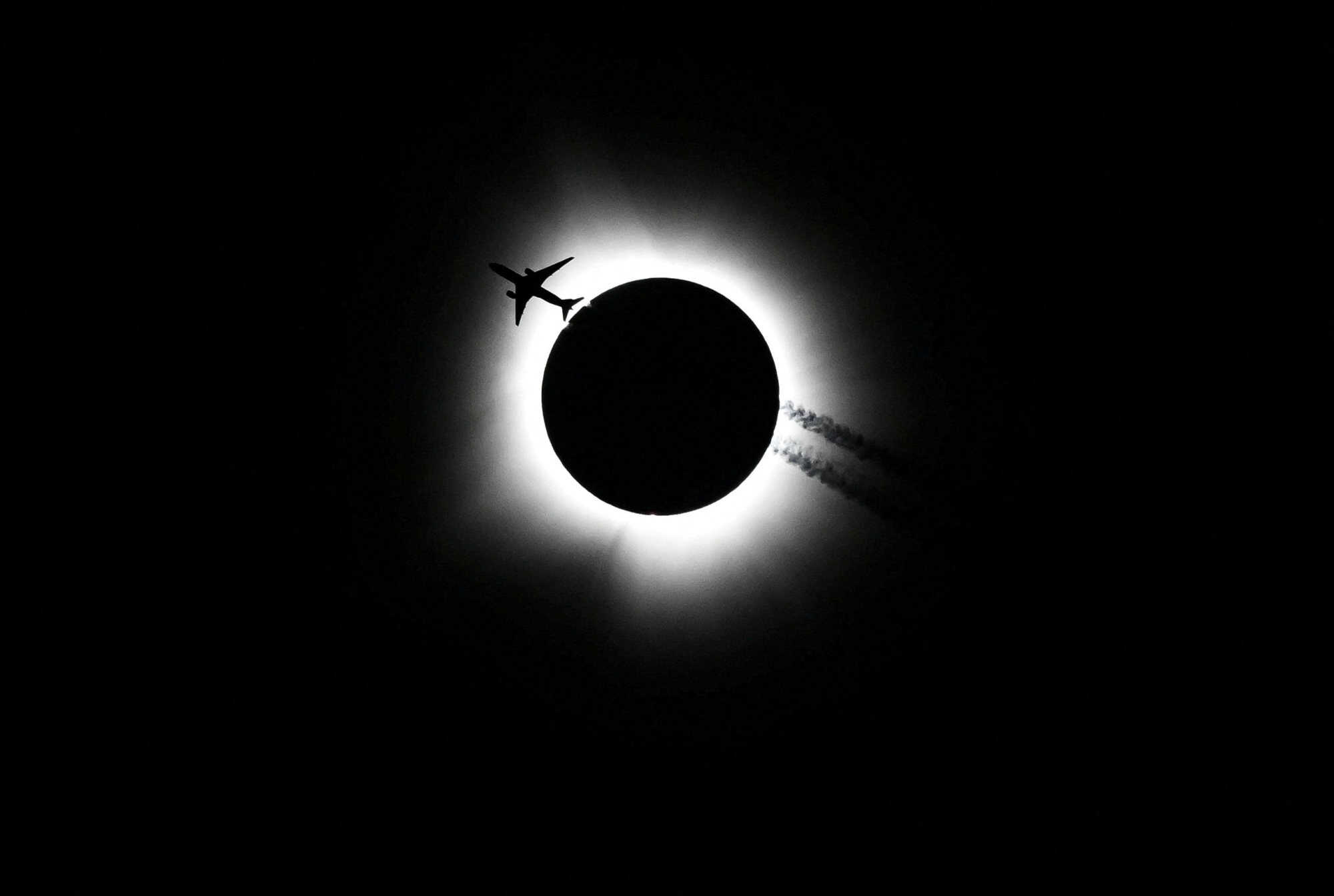

An airplane passes near the total solar eclipse in Bloomington, Indiana, US. Photo: USA Today Network via Reuters
IN THIS ARTICLE
United States of America

KEEP READING
cover
STEAM studio
All you need to know about an ice age and how it impacts our planet
10 Mar 2024
cover
Big read
Here’s what scientists know about the possibility of life on Mars
14 Jan 2024
cover
Eye on the news
Europe’s space telescope sends first images of ‘galactic zoo’
19 Nov 2023