YoungPost Club Learn
DOWNLOAD OUR APP
appstoregoogleplay
FIND US AT
My JourneyMy VocabularyMy Leaderboard
My AccountSearchAbout UsContact Us
Subscription Plan
School Subscription
YOUNG POST
NewsTrendingBeing wellLearning zoneShare with usQuizzes
SPARK
NewsTrendingBeing wellLearning zoneShare with usQuizzes
POSTIES
Big readEye on the newsHa-ha-happeningsThings to doYour saySteam studioHealth and happinessQuizzes
Subscribe to Young Post Club to access our great content
ABOUT US|CONTACT US|WRITE FOR US|PRIVACY POLICY|TERMS & CONDITIONS
©2026 Young Post Club. All rights reserved.
My Journey Hello
Brand Avatar
Young Post
My Journey illustration

With a subscription, you can answer quizzes and track your reading progress.

Read / Eye on the news

Artist Fu Junsheng transforms China’s plastic waste into powerful beachside installations

The art highlights the environmental impact of rapid development and the enduring nature of plastic pollution.
byAgence France-Presse
Published: 11:30pm, 15 Dec 2024
Length: 188 words
Artist Fu Junsheng transforms China’s plastic waste into powerful beachside installations

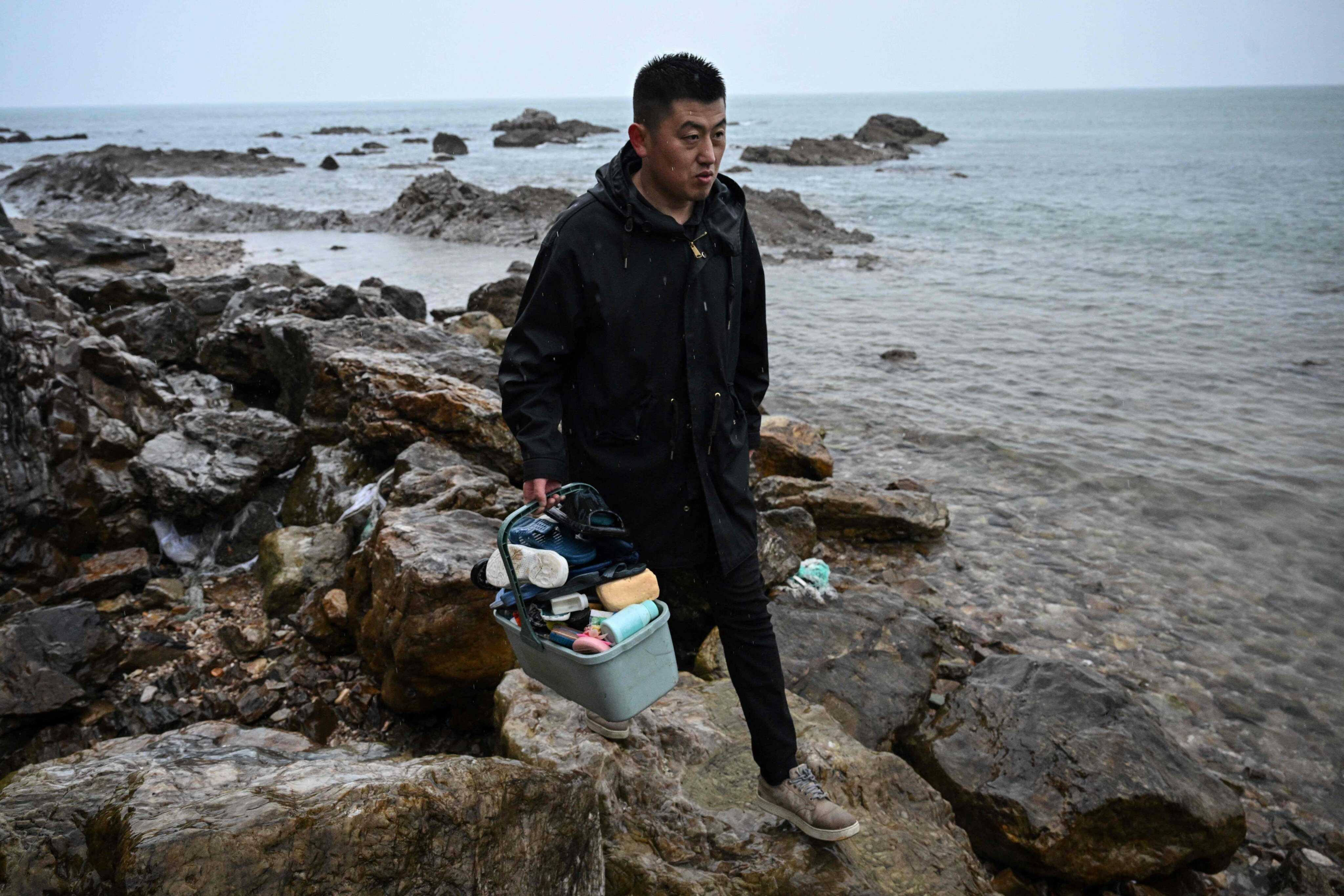
Chinese artist Fu Junsheng transforms plastic waste washed ashore on Miaodao islands into striking art installations. Photo: AFP

Difficulty: Summiteer (Level 3)

As clouds gather over a beach in China’s Miaodao islands, artist Fu Junsheng picks his way through piles of plastic waste washed up along the shoreline, looking for inspiration.

China is the world’s largest plastic producer, and the islands sit in the cross-stream of several highly developed eastern peninsulas. Eight years ago, Fu decided to make plastic waste both his artistic message and medium.

“Our generation has witnessed rapid societal development. In the process, we’ve sometimes neglected nature and, at times, even ignored it altogether,” the 36-year-old said.

One of his most striking installations features nearly 900 pairs of flip-flops displayed in front of his seascape oil paintings.

The oldest item Fu has collected is an instant noodle packet from 1993. Despite over 30 years of exposure to the elements, it remains intact, showing hardly any signs of decomposition.

Answer: China

IN THIS ARTICLE
Art
China
Environment

KEEP READING
cover
Big read
Board game teaches Hongkongers with special needs about sustainability
10 Mar 2024
cover
STEAM studio
Don’t waste: farmers in Japan are using shimogoe, fertiliser made with poop
17 Dec 2023
cover
Big read
What’s wrong with single-use plastics?
17 Dec 2023