Do you have something to share? Send us your creative writing using this form.
In Egypt, there is a desert called the Sahara. It has the Nile River, which is the longest river in the world.
The Nile was very important in ancient Egypt because it helped people grow crops, travel and trade. Papyrus plants grew on the banks of the Nile; they were used for paper, boats and furniture.
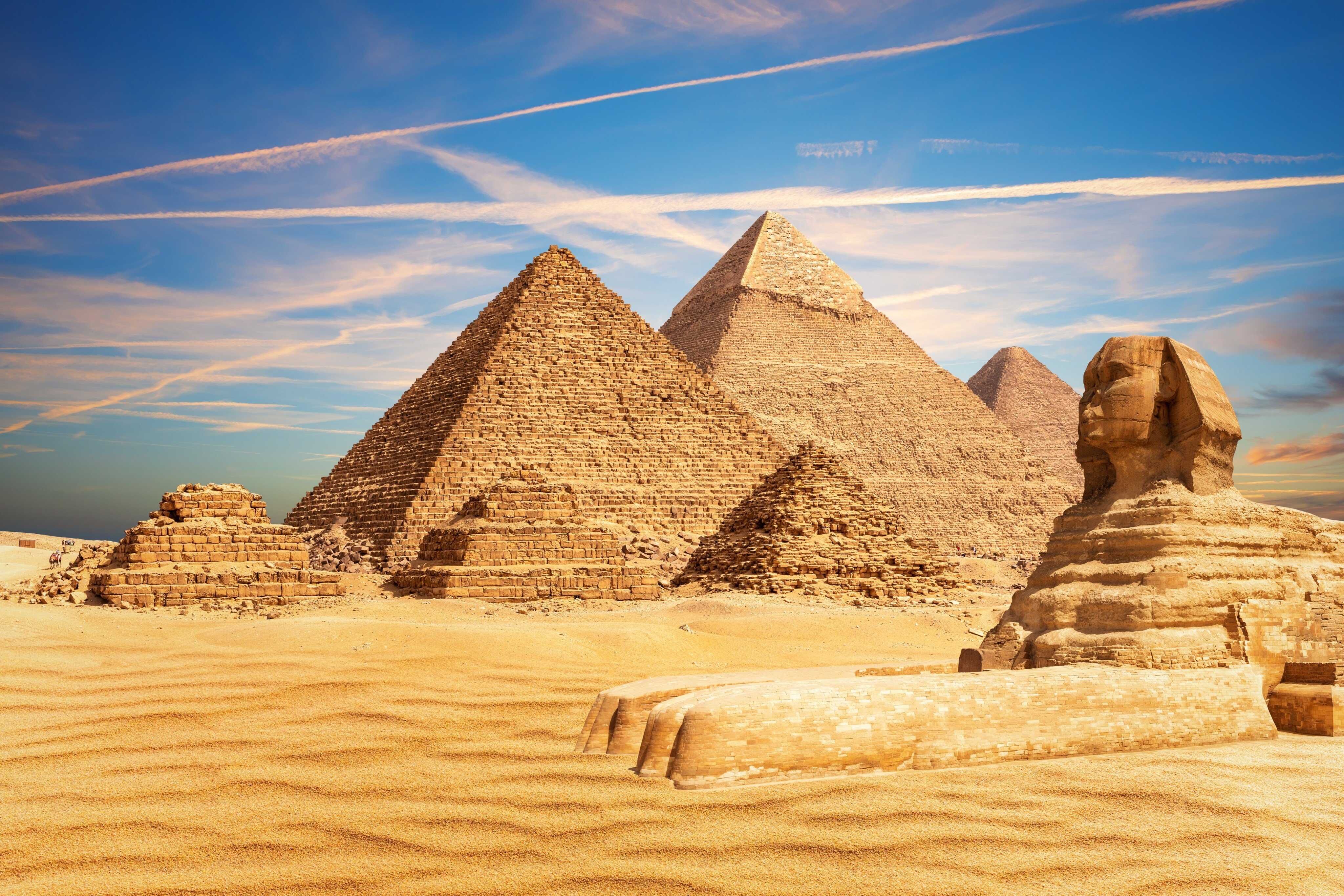
A statue called the Great Sphinx of Giza sits on the west bank of the Nile. A sphinx is a mythical creature that is half human and half lion. It guards the Great Pyramid of Giza.
The pyramid was built around 2600BC. It consisted of around 2.3 million stone blocks, with the heaviest stones weighing about 13.6 tonnes. Rolling ramps were used to add stones to the pyramid.
Pyramids were houses for the dead. Tomb robbers would steal the treasure buried inside pyramids.
The rulers of ancient Egypt were called pharaohs. Hatshepsut was a rare female pharaoh. Her father and husband both died, so the throne was passed on to one of her husband’s other sons. However, he was just a baby, so Hatshepsut took on the role.
Ancient Egyptians believed in more than 2,000 gods and goddesses. For example, Sobek was the crocodile god of the Nile, and Ra was the god of the sun. Osiris was the god of the dead, Thoth was the god of wisdom, and Seth was the god of chaos. Isis was the goddess of motherhood, and Horus was the god of pharaohs.
Ancient Egyptians would mummify dead bodies to prepare them for the afterlife. The process of mummifying began with removing the brain.
They took out the other organs, and then they washed and dried the bodies. Finally, they wrapped the body with bandages. They did this because they believed their spirit could live forever if the body were intact.
I researched this topic by reading about it and watching films set in ancient Egypt.