Deep Dive delves into hot issues in Hong Kong and mainland China. Our easy-to-read articles provide context to grasp what’s happening, while our questions help you craft informed responses. Check sample answers at the end of the page.
News: More Hongkongers choosing care homes in Guangdong
-
Over 1,100 elderly people from Hong Kong have opted for residential care services in the mainland
-
City’s government says it will negotiate with mainland China operators to increase capacity
Hong Kong authorities will negotiate with operators of popular care homes in mainland China’s Guangdong province to secure more places for elderly Hongkongers, the city’s welfare minister has said.
Hong Kong’s Social Welfare Department launched the Residential Care Services Scheme in Guangdong in 2014. The scheme gives elderly residents on Hong Kong’s central waiting list for subsidised care and attention the choice to live in designated care homes in the southern Chinese province. The scheme provides fully subsidised care, covering accommodation, nursing and meals.
Secretary for Labour and Welfare Chris Sun Yuk-han said the number of elderly Hongkongers living in care homes under the scheme had surged ninefold.
He stressed the growing popularity of retiring in mainland China: “By March this year, there were 1,100 elderly people in Hong Kong who opted for residence in one of the 26 residential care homes in Guangdong. Just by the end of 2022, the number was 120.”
Sun said that Shenzhen and Guangzhou were among the most popular choices. He added that authorities would negotiate with operators to increase capacity if demand continued to rise.
“Based on usage statistics, response from the users and the service level, we can always adjust,” he said. “We’re trying to grow, to develop the whole programme, so there are different choices all over the Greater Bay Area.”
The number of facilities under the scheme has risen from the initial two to 26. It is part of a government push to help older residents relocate to nine Guangdong cities in the bay area, which also includes Hong Kong and Macau, amid an ageing population.
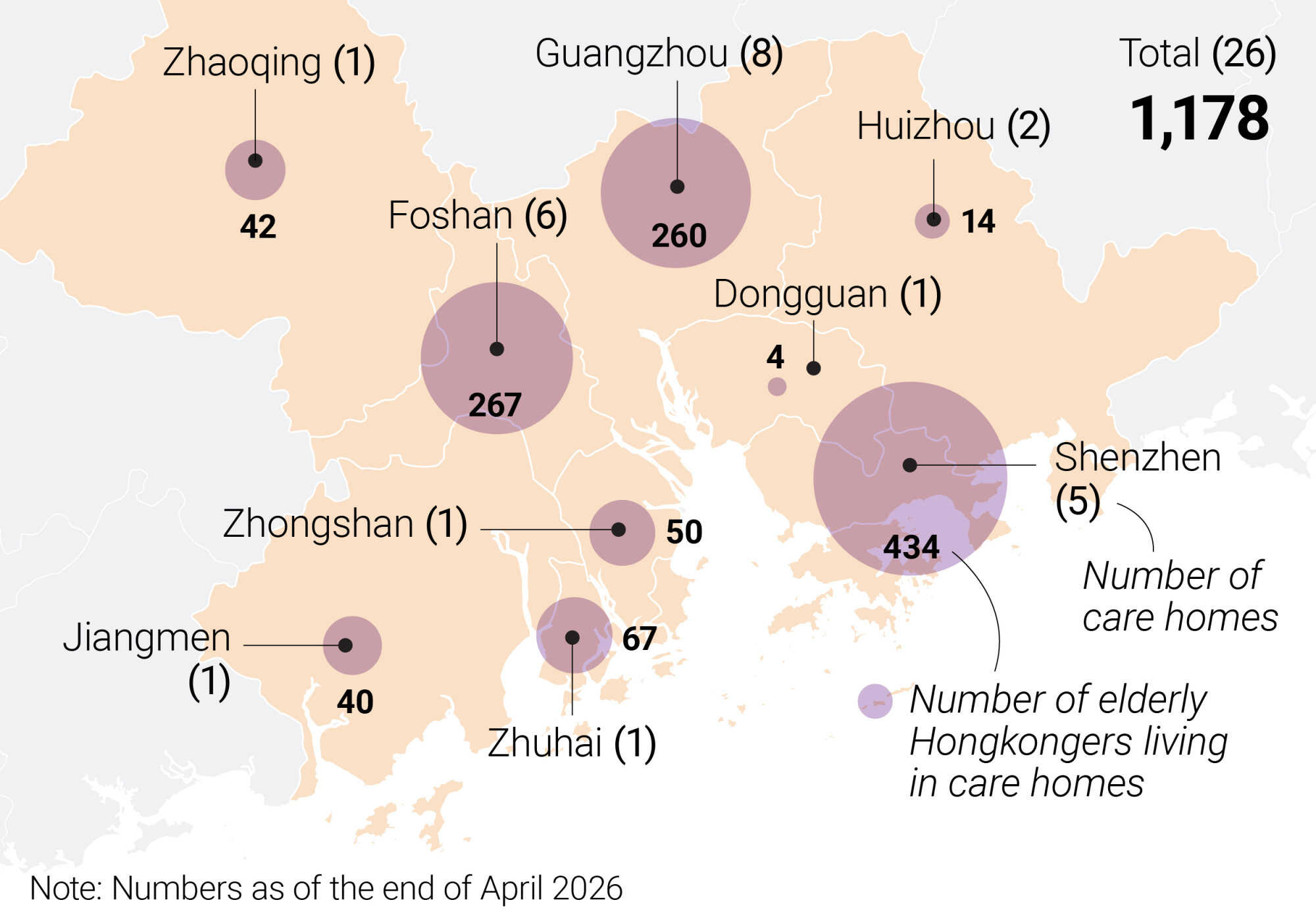
Of the cities, Guangzhou has the most care homes – eight. There are six in Foshan, five in Shenzhen and two in Huizhou. Zhongshan, Zhaoqing, Jiangmen, Zhuhai and Dongguan each have one care home.
Statistics from the Social Welfare Department showed that 1,178 Hongkongers were living in the 26 care homes under the scheme by the end of March.
Under the scheme, the department negotiates and signs contracts with care homes based on the type of facility, service packages and location. It pays the service fees based on the number of elderly participants.
Since last December, participants have also been able to apply for a subsidy for medical expenses received at designated medical institutions under the coverage of China’s National Basic Medical Insurance Policy.
Staff writers
Question prompts
1. Which of the following statements is false, according to the information in News?
(1) The number of older Hongkongers who are moving into care homes in mainland China has increased by nine times in recent years.
(2) The number of available elderly care facilities under the government scheme was initially set at 26.
(3) By April, there were 1,178 Hongkongers living in 26 care homes under the scheme.
(4) The government negotiates and signs contracts with care homes in Guangdong based solely on location, then pays the fees for elderly Hongkongers.
A. (1), (2) only
B. (2), (3) only
C. (2), (4) only
D. (3), (4) only
2. Why do you think some elderly Hongkongers are choosing care facilities outside the city? Explain using News, Glossary and your own knowledge.
3. Why might some elderly people choose not to join the Guangdong care services scheme? Use Glossary to identify how many are on the central waiting list for subsidised care in Hong Kong to illustrate your point.
Photo
Question prompts
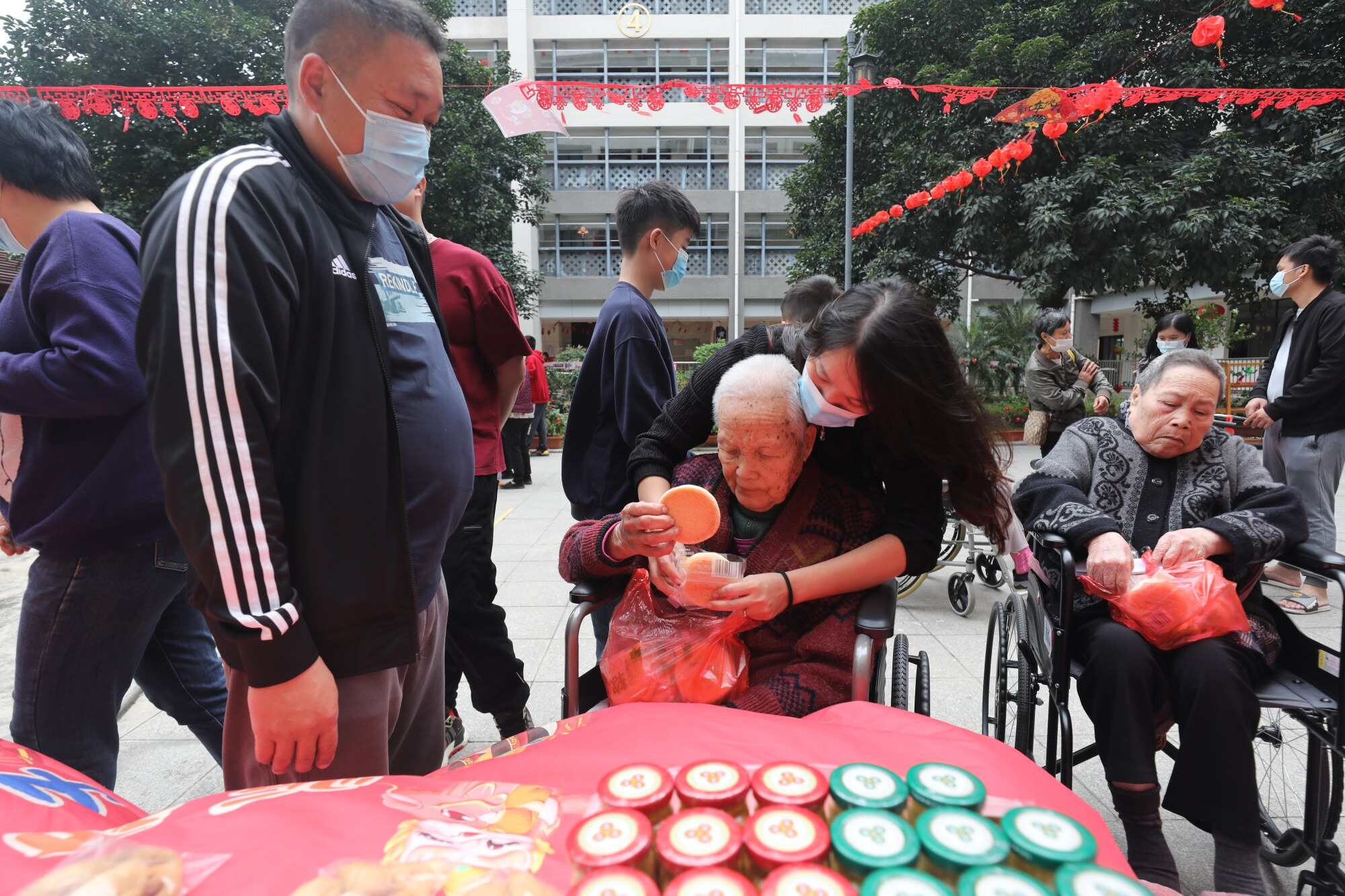
1. Who are the people in the photo and what are they doing?
2. Using News and your own knowledge, name TWO ways care homes in Guangdong can make themselves more appealing to Hongkongers.
Issue: Hong Kong’s subsidy pilot scheme for elderly care places in Guangdong
-
Pilot scheme was launched last year to financially support older CSSA recipients
-
Shenzhen and other mainland cities are expanding care home places for Hong Kong people
More elderly Hongkongers are heading across the border for long-term care. To support these residents, the Hong Kong government launched a three-year pilot scheme last October, giving elderly recipients of Comprehensive Social Security Assistance (CSSA) HK$5,000 a month to live in care homes in Guangdong province.
While the quota is set at 1,000 people, only five have joined the scheme as of May 2026.
Secretary for Labour and Welfare Chris Sun Yuk-han said some applicants were in the process of filing paperwork, and that the government would review the scheme later.
“We can review the situation maybe towards the end of this year when we deal with more cases. If necessary, we can also consider some refinements to the scheme,” he said. He added that a pilot programme would help the government learn which factors persuade elderly residents to move to Guangdong and which prevent them.
Sun noted that many elderly CSSA recipients lived in dilapidated private flats and said the scheme would offer an alternative: “If we can provide them with an extra choice, they can choose to go to one of the 26 residential care homes in the Greater Bay Area,” he said.
“With the extra HK$5,000 support from the government, they will [have] a much better living space and much better living standard while keeping our cost on a cost-neutral basis.”
Asked whether the government would consider increasing subsidies to make the scheme more attractive, Sun stressed the need to keep it cost-neutral.
“When they stay here in Hong Kong in a very small dilapidated place, more or less the cost for us is about HK$9,000 to HK$10,000. With that same amount of money, we can provide a better living space, better living environment for them over the border,” he said.
“If we increase the subsidy and it’s no longer cost-neutral, that means we pay more if they go over the border. It’s not fair to those who are living here.”
Kenneth Chan Chi-yuk, chairman of Hong Kong-based Hygge Living, which operates three of the designated care homes in Shenzhen, Zhuhai and Foshan, said the company would expand care places for Hongkongers as more retirees moved across the border.
The company also aimed to add two to three facilities under the scheme each year to meet rising demand, with Shenzhen, Guangzhou, Zhuhai and Zhongshan among the locations, Chan said.
“We have seen a surge in the trend of elderly people heading north for retirement, especially in cities closer to Hong Kong, with the number of older residents choosing to move into the care facilities there increasing significantly every month,” he said.
Staff writers
Question prompts
1. What are Hygge Living’s plans for its facilities in Guangdong? Explain why the company aims to do this.
2. Why does the welfare minister think it would be unfair to elderly Hongkongers living in the city if the government increased the subsidy for the three-year pilot scheme?
3. Explain the differences between the two schemes provided by the government. Suggest one way the government can attract more elderly recipients of CSSA to join the three-year pilot scheme. Use News, Issue, Glossary and your own knowledge.
Map
Question prompts
1. Which THREE cities have the most elderly Hongkongers living in care homes? Why might they be so popular?
2. What are the possible long-term challenges of shifting elderly care services to the Greater Bay Area? Explain using News, Issue and your own knowledge.
Glossary
-
Residential Care Services Scheme in Guangdong: a cross-border programme run by Hong Kong’s Social Welfare Department that provides fully subsidised accommodation, care and meals at residential care homes in Guangdong province
-
central waiting list: in Hong Kong, 18,338 applicants are waiting for various types of subsidised residential care services for the elderly as of April 30. The average waiting time is 12 months.
-
ageing population: when the percentage of older people in a demographic increases. The city’s number of people aged 65 and above is expected to nearly double by 2046 and reach 2.74 million.
-
National Basic Medical Insurance Policy: China’s state-run, tiered universal healthcare system providing subsidised medical and hospital coverage to residents
-
Comprehensive Social Security Assistance: a government scheme that gives monthly cash allowances to households in financial need
Sample answers
News
-
C
-
Many elderly residents are currently on the central waiting list for subsidised care in Hong Kong, where the average waiting time is about 12 months. Therefore, they might opt for options close to the city, such as the Residential Care Services Scheme in Guangdong, which provides fully subsidised care covering accommodation, nursing, and meals.
-
According to News, the Guangdong care services scheme provides fully subsidised care across various mainland cities outside Hong Kong, such as Foshan, Huizhou, and Jiangmen. These cities offer different lifestyles, languages, and facilities. Elderly residents who have lived in Hong Kong their entire lives might struggle to adapt to a new environment, with language barriers a major concern. Local Hong Kong seniors may find it difficult to communicate basic and urgent needs, such as requesting bathroom use, describing their body discomfort, or explaining dietary preferences, to care home staff who only speak Mandarin. This communication gap can cause immense frustration and even lead to dangerous misunderstandings of medical instructions. Second, moving across the border can place psychological pressure on elderly residents due to social disconnection. Relocating to Guangdong means leaving behind a lifelong social safety net. Elderly citizens who have spent their lives in Hong Kong, even those currently living in dilapidated subdivided flats, remain in a familiar urban area close to their families, neighbours, and local communities. To them, familiar surroundings and emotional proximity outweigh a larger room. Additionally, there were 18,338 applicants in Hong Kong waiting for subsidised residential care services for the elderly as of April 30. This figure reflects that a vast number of residents still hope to stay in the city, despite the government having established the cross-border scheme more than 10 years ago.
Photo
-
The photo shows several elderly people participating in a community gathering where volunteers are distributing food and providing care. The caption notes that this Chinese New Year celebration took place at one of the 26 care homes under the Guangdong care services scheme.
-
To make relocating to care homes in Guangdong more appealing and comforting for Hong Kong seniors, it is critical to help them maintain connections with their families and original social networks. This can be achieved in two ways. First, Guangdong elderly homes can provide dedicated shuttle bus services for family members travelling from Hong Kong to the mainland facilities, making frequent visits much more convenient. Second, the care homes can organise more cultural events for residents. Increasing participation in traditional festivals like Chinese New Year and the Dragon Boat Festival creates opportunities for seniors to gather and meet new people, helping alleviate the loneliness of adapting to a new living environment.
Issue
-
According to the chairman of Hygge Living, the company plans to expand its care capacity for Hongkongers by adding two to three facilities to the scheme each year. The company has noticed a growing trend of elderly individuals heading north for retirement, particularly to locations closer to Hong Kong. Therefore, they aim to meet the rising demand in accessible cities like Shenzhen, Guangzhou, and Zhuhai.
-
The welfare minister explained that increasing the cross-border subsidy would be unfair to seniors staying in Hong Kong because the policy must remain cost-neutral. This constraint exists due to the disparity in real estate and living costs between Hong Kong and the mainland. If the government were to increase subsidies exclusively for those residing in Guangdong, it would mean valuing one senior over another purely based on their choice of location.
-
The major differences between the two schemes lie in their target audiences and the specific benefits provided. First, the Residential Care Services Scheme in Guangdong (GDRCS Scheme) targets elderly individuals on the central waiting list for subsidised care and attention places, allowing them to choose a residential care home in Guangdong. This scheme is fully subsidised; the government pays the care home directly, meaning seniors pay zero dollars for room, board, and nursing care. Conversely, the other scheme targets elderly recipients of Comprehensive Social Security Assistance (CSSA) who choose to retire in Guangdong residential care homes. Under this scheme, the government offers a cash allowance of HK$5,000 per month on top of their standard CSSA payout, and the seniors pay the care homes directly. To attract more CSSA recipients to the pilot scheme, the government could establish a transportation voucher allowance for family members. Specifically, this allowance would cover the costs of cross-border train or bus tickets to Guangdong. This initiative would encourage more frequent visits from relatives, thereby reducing the social isolation and loneliness seniors feel when adjusting to a new environment.
Map
-
Shenzhen, Foshan, and Guangzhou have the highest number of elderly Hongkongers living in care homes. It could be because these three cities are the most connected cities to Hong Kong. Shenzhen is right next to the Hong Kong border, while Foshan and Guangzhou are along the High-Speed Rail network from Hong Kong.
-
There are two possible long-term challenges of shifting elderly care services to the Greater Bay Area. One major issue is the lack of integration between the medical histories held by Hong Kong’s Hospital Authority and those of mainland hospitals. Consequently, when a Hong Kong senior falls ill in Guangdong, mainland doctors may struggle to efficiently review their history and prescribe suitable treatments. Another challenge is pharmaceutical accessibility. Hong Kong seniors may not be able to obtain the specific medications they rely on, as Hong Kong and the mainland operate under different pharmaceutical standards and regulatory frameworks.